
Aenictus powersi
- Sci. Name
- Aenictus powersi
- Subfamily
- Dorylinae
- Author
- Wheeler, 1930
- Distribution
- Found in 1 countries
Introduction
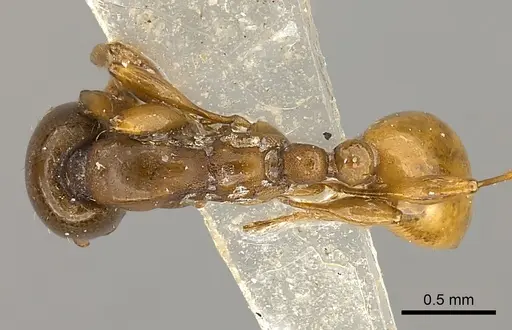
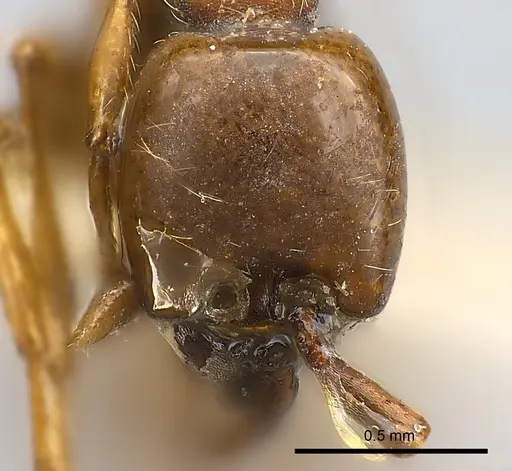
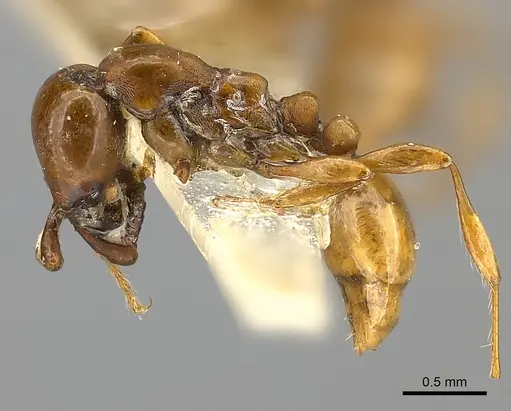
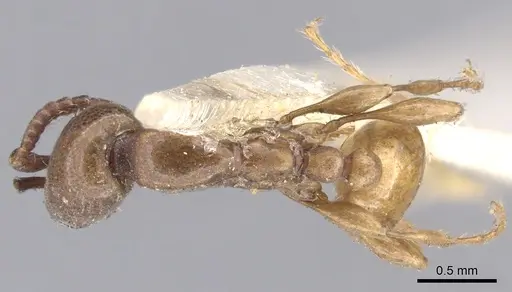
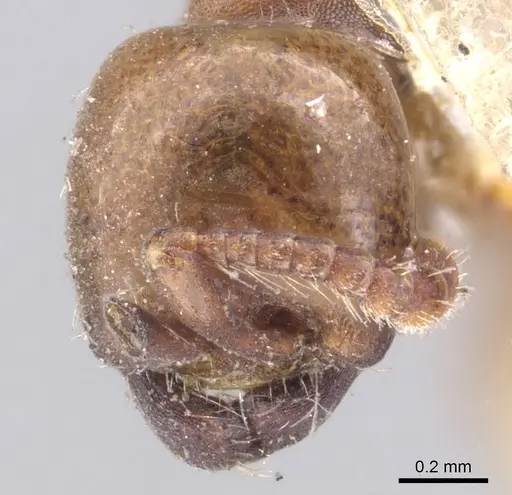
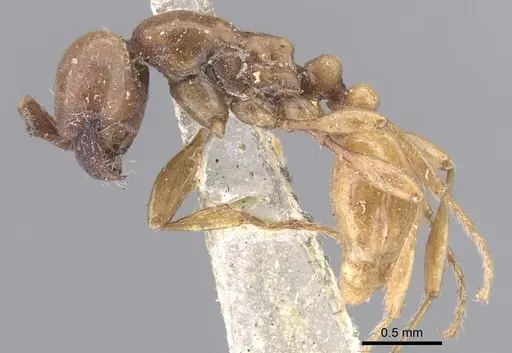
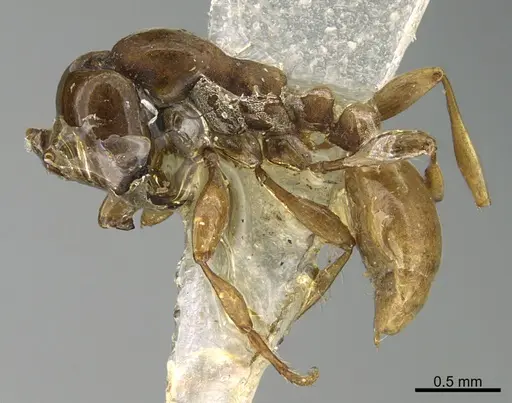
Aenictus powersi is a tiny yellow army ant from the Philippines, with workers measuring 2.5-3 mm in total length . These ants belong to the pachycerus group within the genus Aenictus, characterized by smooth, shiny heads and sparse body pilosity . The species was first discovered beneath a piece of wood in a garden in Dumaguete, Negros Island, at 540m elevation . This is a hypogaeic (underground-dwelling) species known only from worker castes . Unlike typical ants kept by hobbyists, Aenictus powersi displays specialized army ant biology: they are nomadic predators with no permanent nest structure.
Quick Summary
- Difficulty: Expert
- Origin & Habitat: Philippines (Negros Island), found in gardens under wood at 540m elevation, hypogaeic lifestyle [1][4].
- Colony Type: Army ant reproductive system unconfirmed, only worker caste known [4].
- Size & Growth:
- Queen: Unknown, no queens described for this species [4].
- Worker: 2.5-3 mm total length [1].
- Colony: Unknown for this species, related Aenictus species maintain colonies of hundreds to thousands of workers.
- Growth: Unknown
- Development: Unknown (Army ant development timelines are poorly documented in captivity.)
- Antkeeping:
- Temperature: Tropical warmth, keep around 24-28°C based on Philippine lowland climate.
- Humidity: High humidity required, soil should remain moist but not waterlogged, matching their damp garden habitat [1].
- Diapause: No, tropical species without winter rest periods.
- Nesting: Does not build permanent nests. In nature they form temporary living camps. Standard formicaria are unsuitable.
- Behavior: Underground army ant with nomadic lifestyle. Workers are tiny (2.5-3mm) requiring extreme escape prevention [1]. They are specialized predators of other social insects.
- Common Issues: colony reproduction requires splitting existing colonies, you cannot start a colony from a single queen., nomadic behavior means they do not stay in one place, they will abandon any nest setup quickly., massive prey requirements, they need constant supplies of live ants or termites to survive., tiny worker size means they can escape through the smallest gaps in standard enclosures., no described queen caste makes traditional colony founding impossible.
Army Ant Biology and Why They Are Not Pet Ants
Aenictus powersi belongs to the Old World army ants, which possess radically different biology from the ants typically kept by hobbyists [4]. These ants do not build permanent nests. Instead, they form temporary living structures using their own bodies, and they relocate frequently during nomadic phases. The species has only been documented from worker specimens, no queens have ever been described [4]. In related Aenictus species, reproduction occurs through colony fission, where a colony splits into two or more daughter colonies, each taking some workers and brood. This means you cannot start a colony from a single queen in a test tube. You would need to obtain an entire established colony and successfully induce fission, which requires massive space and resources.
Housing Requirements
Standard ant farms, test tubes, and formicaria are completely unsuitable for Aenictus powersi. As nomadic army ants, they require enormous enclosures that allow for natural movement patterns and frequent relocation. In captivity, they would need a large, sealed terrarium with deep soil layers to accommodate their underground foraging habits [1]. The enclosure must be absolutely escape-proof, these are tiny 2.5-3mm ants that can squeeze through minute gaps [1]. However, even with perfect housing, they will likely die quickly because they cannot satisfy their ecological needs in confined spaces.
Feeding and Diet
Aenictus powersi is a specialized predator of other social insects. In the wild, Aenictus species hunt other ants, termites, and social insect brood. They require massive quantities of live prey, not occasional feeding, but constant availability. A colony would consume hundreds of prey items daily. They do not accept sugar water, honey, or standard ant keeping foods like mealworms or crickets. You would need continuous cultures of small ants or termites to feed them, making maintenance practically impossible for hobbyists.
Temperature and Humidity
Based on their collection from Negros Island in the Philippines at 540m elevation, these ants require tropical conditions [1]. Keep temperatures around 24-28°C with high humidity. As underground ants living under wood in gardens, they need moist soil that mimics damp ground conditions [1]. They do not require hibernation as they come from a tropical climate without seasonal cold periods.
Frequently Asked Questions
Can I keep Aenictus powersi in a test tube?
No. Army ants like Aenictus powersi cannot be kept in test tubes. They require massive enclosures and do not found colonies from single queens. Additionally, they are nomadic and will not stay in a small space.
How do I start an Aenictus powersi colony?
You cannot start a colony from a single queen. No queens have ever been described for this species [4]. Army ants reproduce by colony fission, meaning you would need to split an existing mature colony. This requires obtaining a large established colony first, which is extremely difficult and not recommended.
What do Aenictus powersi eat?
They are specialized predators of other social insects, primarily other ants and termites. They require constant access to live prey in large quantities. They do not accept sugar sources or typical ant keeping foods like mealworms.
Are Aenictus powersi good for beginners?
No. They are unsuitable for ant keeping due to their specialized army ant biology, massive space requirements, constant need for live prey, and the impossibility of starting colonies from queens. They are considered impossible to maintain in standard captivity.
Do Aenictus powersi need hibernation?
No. They come from tropical Philippines and do not experience cold seasons. They remain active year-round.
How big do Aenictus powersi colonies get?
The exact colony size is unknown, but related Aenictus species maintain colonies ranging from hundreds to thousands of workers.
Why are my Aenictus powersi dying?
If you somehow obtained these ants, they are likely dying because they cannot be kept in standard ant setups. They require constant movement, massive amounts of specific prey such as other ants or termites, and reproduce only by colony fission. They will starve or die from stress in captivity.
Report an Issue
The current care sheet is based fully on literature. See inconsistencies, or something that's incorrect? Please , it will be resolved after review from an admin. Contributing to the blogs tab also helps providing information, to make us be able to further improve the caresheets. Thank you for your support!
References

This caresheet is licensed under CC BY-SA 4.0 .
Community Blogs
Literature
Loading distribution map...Loading products...