
Aenictus laeviceps
- Sci. Name
- Aenictus laeviceps
- Subfamily
- Dorylinae
- Author
- Smith, 1857
- Distribution
- Found in 6 countries
Introduction
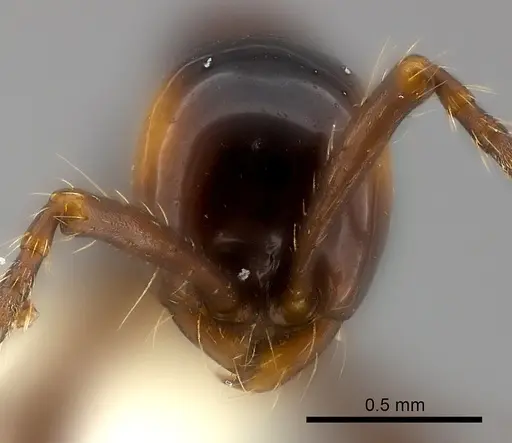
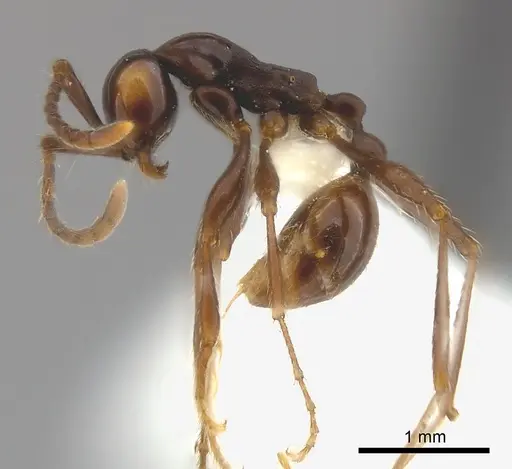
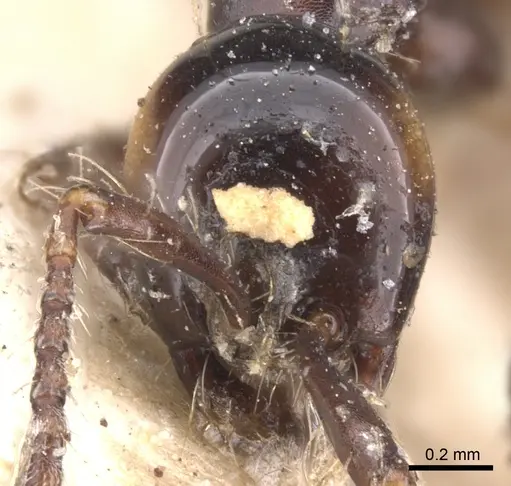
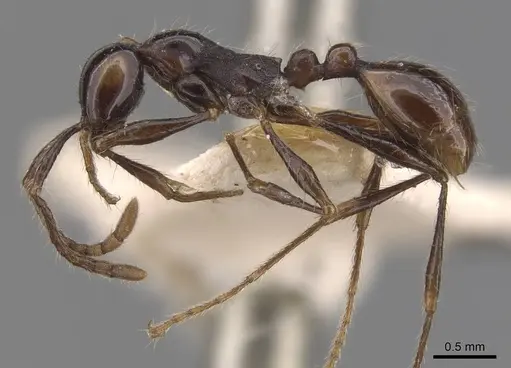
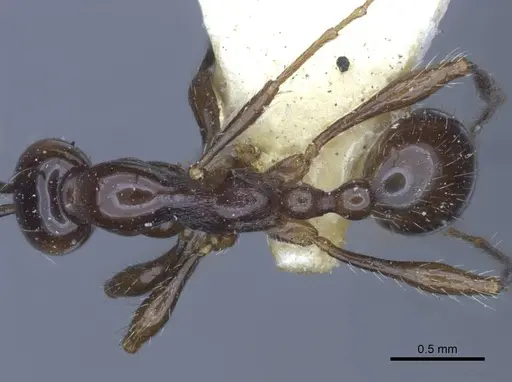
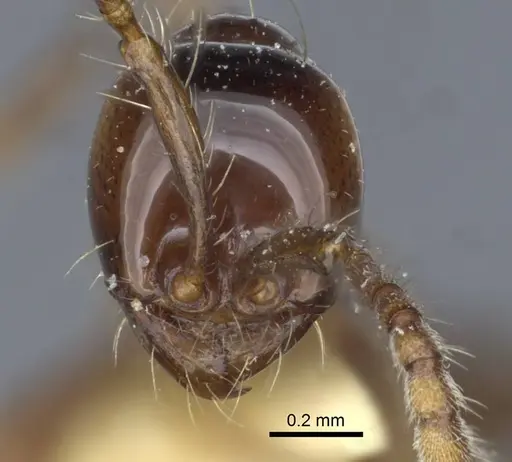
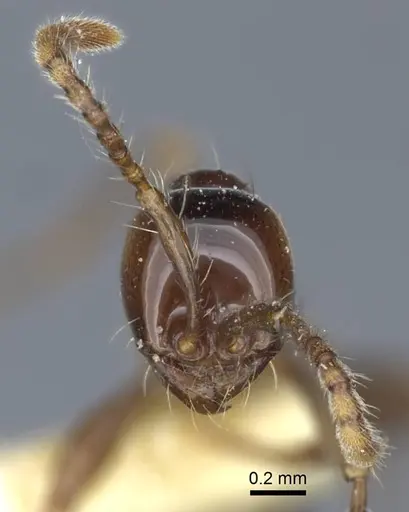
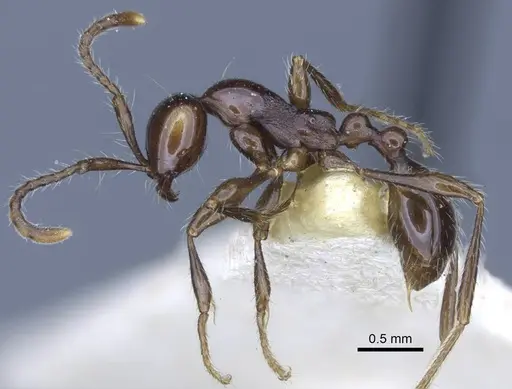
Aenictus laeviceps is a small army ant found in Southeast Asian rainforests. Workers measure 3.9-4.2 mm in total length and have distinctive yellowish spots on the sides of their heads called Typhlatta spots . They range across Thailand, Malaysia, Indonesia, the Philippines, India, and China [AntWiki]. These ants inhabit lowland tropical rainforests, typically below 1,000 meters elevation . This species exhibits the true army ant syndrome. Colonies are massive, containing up to 110,000 workers . Unlike typical ants that build permanent nests, Aenictus laeviceps lives nomadically, forming temporary bivouacs and moving regularly to hunt . They are specialist predators that feed almost exclusively on other ant species, particularly Camponotus, Polyrhachis, and Dolichoderus .
Quick Summary
- Difficulty: Expert
- Origin & Habitat: Tropical rainforests of Southeast Asia including Thailand, Malaysia, Borneo, Sumatra, and the Philippines [1][3]
- Colony Type: Monogyne, single ergatoid (wingless) queen per colony, reproduces by colony fission [6][7]
- Size & Growth:
- Antkeeping:
- Temperature: 24-28°C (inferred from tropical lowland habitat) [1]
- Humidity: High humidity, keep substrate consistently moist but not waterlogged
- Diapause: No, active year-round in tropical climate [1]
- Nesting: Nomadic, requires massive foraging arena and bivouac simulation, cannot use standard formicaria [4]
- Behavior: Highly aggressive specialist predators. Form massive foraging columns. Dismember large prey items. Extremely high escape risk due to small size (under 4mm) and exploratory nature [5][1].
- Common Issues: colony requires up to 110,000 workers, impossible to house in standard enclosures., obligate predator of other ants requiring constant supply of live ant colonies as food., nomadic lifestyle requires frequent relocation of entire colony and bivouac formation., reproduces by colony fission, cannot be founded from a single queen., tiny workers escape through standard mesh and barriers.
Natural History and Army Ant Biology
Aenictus laeviceps exhibits the classic army ant syndrome. Colonies alternate between nomadic phases, where they move daily and hunt aggressively, and statary phases, where they remain in one place while the queen lays eggs [2]. Unlike most ants that establish permanent nests, these ants form temporary living structures called bivouacs, clustering together in hollow trees, under rocks, or in soil cavities [2].
Reproduction occurs through colony fission, not independent founding. The queen is ergatoid (wingless) with an enlarged abdomen (dichthadiigyne form) [2][6]. When a colony grows large enough, it splits into daughter colonies, each taking workers and brood [7]. You cannot start a colony from a single queen in a test tube, you would need to obtain an entire functioning colony.
Three worker morphotypes exist: L1, L2, and S. These differ in body surface pilosity, petiole shape, and antennal thickness. Morphotype L1 has setae on the petiole dorsal tip, L2 lacks these setae, and S has a thicker, shorter antenna and setae on the alitrunk [7].
Feeding and Diet
These ants are specialist predators that feed almost exclusively on other ant species. In Borneo, their diet consists primarily of Camponotus (48%), Pseudolasius (21%), and Polyrhachis (15%) [1]. They also prey heavily on Dolichoderus (29% of prey) and various other genera including Crematogaster, Pheidole, and Prenolepis [5][8].
When hunting, workers form massive column raids and attack prey colonies directly. They dismember large prey items, such as Camponotus workers up to twice their size, into smaller pieces for transport [5]. A colony of up to 110,000 workers requires enormous amounts of food, essentially constant access to live ant colonies [1].
Housing Requirements
Standard ant farms, test tubes, and formicaria are completely unsuitable for Aenictus laeviceps. Their nomadic lifestyle requires massive space, in nature, foraging columns extend several meters from the bivouac [5]. Captive housing would require warehouse-sized enclosures with multiple connected chambers to simulate bivouac formation and extensive foraging trails.
The enclosure must allow regular relocation of the entire colony as they move between statary and nomadic phases. Humidity must remain high to prevent desiccation of the bivouac, but ventilation must prevent mold growth in tropical conditions.
Temperature and Environment
As a tropical lowland species found in rainforests below 1,000 meters elevation, Aenictus laeviceps requires warm, stable temperatures between 24-28°C year-round [1]. They do not undergo diapause, colonies remain active throughout the year.
Humidity should mimic tropical rainforest conditions, consistently high but not waterlogged. The bivouac area needs to stay humid to protect the queen and brood.
Why This Species Is Not Captive-Suitable
While fascinating biologically, Aenictus laeviceps is effectively impossible to keep in standard ant-keeping setups. The combination of massive colony size (up to 110,000 workers), obligate predation on other ants requiring live colonies as food, nomadic lifestyle requiring frequent moves, and reproduction by fission makes them suitable only for specialized research facilities with unlimited space and prey supplies.
If you encounter these ants in the wild, observe them in their natural habitat rather than attempting collection. Their ecological role as top predators of other ants makes them important rainforest inhabitants. [1][7]
Frequently Asked Questions
Can I keep Aenictus laeviceps in a test tube?
No. These ants cannot be kept in test tubes. They require massive colonies of up to 110,000 workers and reproduce by colony fission, not by founding from a single queen [1][7].
How do I start an Aenictus laeviceps colony from a single queen?
You cannot. Queens are wingless (ergatoid) and colonies reproduce by splitting (fission). There is no way to found a colony from a single queen [7][6].
What do Aenictus laeviceps eat?
They are specialist predators that eat almost exclusively other ants, particularly Camponotus, Polyrhachis, and Dolichoderus species. They require live ant colonies as prey [5][1].
How big do Aenictus laeviceps colonies get?
Colonies reach up to 110,000 workers [1].
Do Aenictus laeviceps need hibernation?
No. They are tropical ants active year-round and do not diapause [1].
Can I keep Aenictus laeviceps in a standard formicarium?
No. Their nomadic lifestyle and massive colony size require warehouse-scale enclosures, not standard formicaria [4][2].
Are Aenictus laeviceps good for beginners?
No. They are unsuitable for any standard ant-keeping setup due to their massive colony size, specialized diet, and reproductive biology.
Report an Issue
The current care sheet is based fully on literature. See inconsistencies, or something that's incorrect? Please , it will be resolved after review from an admin. Contributing to the blogs tab also helps providing information, to make us be able to further improve the caresheets. Thank you for your support!
References

This caresheet is licensed under CC BY-SA 4.0 .
Community Blogs
CASENT0217377
View on AntWeb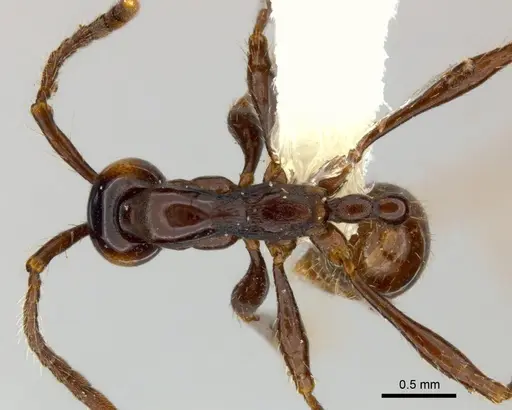
CASENT0902684
View on AntWeb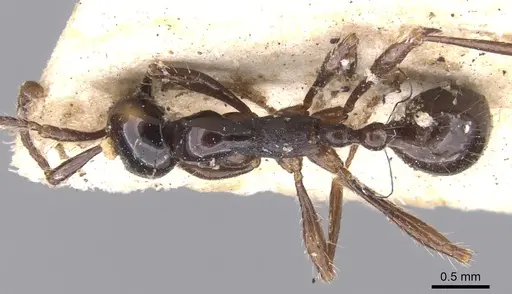
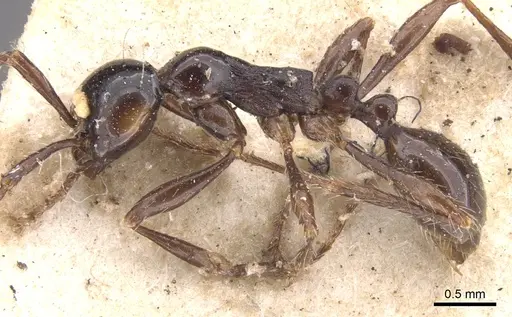
CASENT0907011
View on AntWeb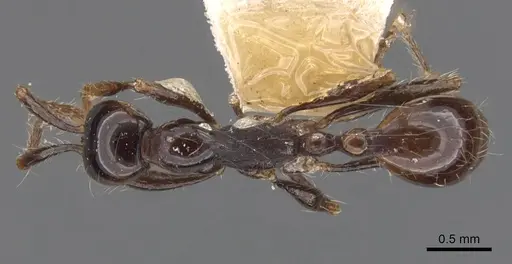
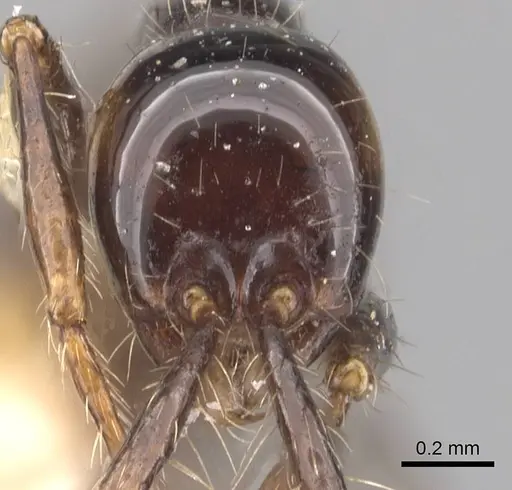
CASENT0916859
View on AntWeb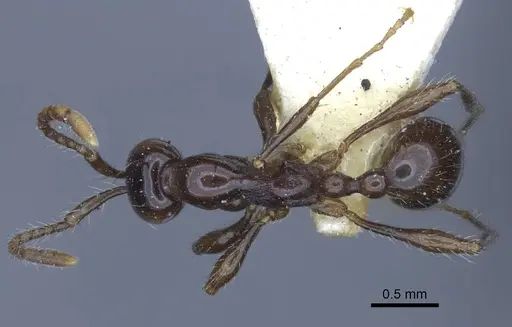
Literature
Loading distribution map...Loading products...