
Aenictus hoelldobleri
- Sci. Name
- Aenictus hoelldobleri
- Subfamily
- Dorylinae
- Author
- Staab, 2015
- Distribution
- Found in 1 countries
Introduction
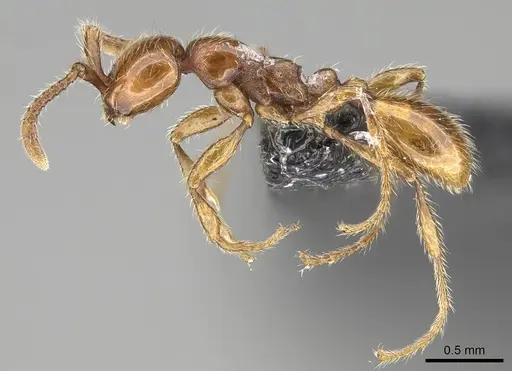
Aenictus hoelldobleri is a tiny army ant species from southeast China, described in 2015 based entirely on worker specimens . Workers measure 2.34-2.88 mm in total length and display a reddish-brown to yellowish-brown coloration . They inhabit secondary mixed evergreen broadleaved forests at mid-elevations between 300-620 meters in Zhejiang and Jiangxi provinces . Unlike typical ant-keeping species, these ants are specialized predators of other small ants, with researchers observing daytime raids carrying pupae of Technomyrmex species and ant larvae . Only the worker caste has ever been collected - no queens or males are known to science .
Quick Summary
- Difficulty: Expert
- Origin & Habitat: Secondary mixed evergreen broadleaved forests at 300-620m elevation in Zhejiang and Jiangxi Provinces, Southeast China [1].
- Colony Type: Unknown, only workers described. Based on typical Aenictus genus patterns, colonies likely contain thousands of workers with a single queen, but this remains unconfirmed [1].
- Size & Growth:
- Antkeeping:
- Temperature: Unknown, likely warm subtropical conditions based on habitat at 300-620m in southeast China [1]
- Humidity: Unknown, forest floor conditions likely moderate to high based on evergreen broadleaved forest habitat [1]
- Diapause: Unknown, no seasonal data available for this subtropical species [1]
- Nesting: Ground-dwelling species observed foraging on forest floor [1]. Nest structure unknown.
- Behavior: Specialized predator of other small ants. Researchers observed workers raiding during daytime (around 3pm) and carrying ant pupae and larvae [1]. Ground-foraging army ant with nomadic lifestyle typical of the genus (inferred from Aenictus patterns) [1]. Tiny worker size (under 3mm) means escape prevention would be extremely difficult.
- Common Issues: only workers known to science, no queens have ever been described, making colony founding impossible., specialized ant predator requiring live ant colonies as food source., army ant biology with nomadic lifestyle unsuitable for standard formicarium keeping., tiny worker size under 3mm requires extreme escape prevention measures.
Why This Species Is Not Suitable for Captive Keeping
You cannot keep Aenictus hoelldobleri using standard ant-keeping methods for three critical reasons. First, science has never described a queen or male for this species, only workers exist in museum collections [1]. Without queens, you cannot start a colony. Second, these are army ants (Dorylinae subfamily), meaning they likely have a nomadic lifestyle with huge colony sizes and frequent nest movements, requiring specialized facilities far beyond standard formicaria [1]. Third, they are specialized predators of other ants, observed carrying pupae of Technomyrmex species and ant larvae during raids [1]. This diet requires maintaining colonies of other ant species as live food, which is impractical for most keepers and raises ethical concerns.
Natural History and Foraging Behavior
Researchers observed Aenictus hoelldobleri foraging on the ground during daytime, specifically around 3pm [1]. Workers raid other ant colonies and carry off brood, including pupae of Technomyrmex species and ant larvae [1]. This makes them a specialized predator similar to other members of the Aenictus ceylonicus group. They inhabit secondary mixed evergreen broadleaved forests at mid-elevations between 300-620 meters [1]. These forests range from young to old successional stages, suggesting the species tolerates some habitat disturbance [1]. The type series was collected by hand on the ground, while additional specimens were captured in pitfall traps [1].
Identification and Morphology
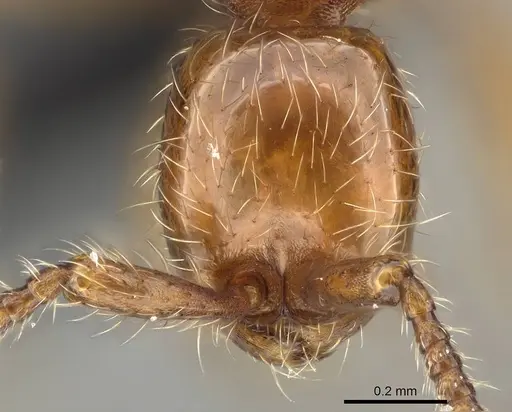
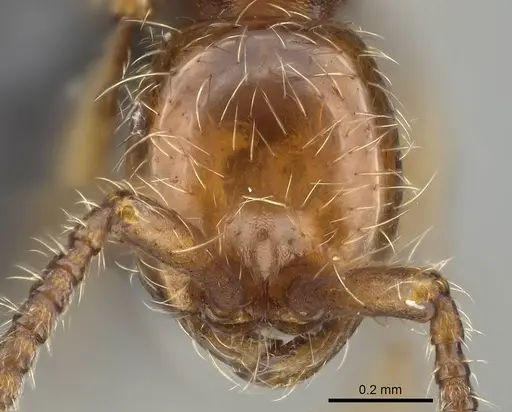
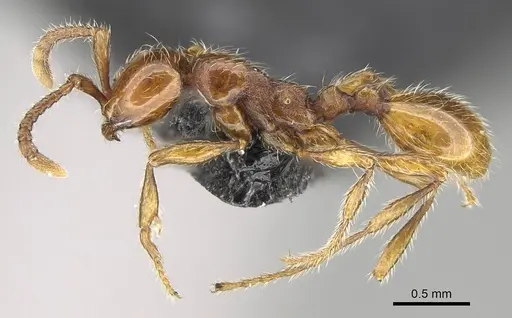
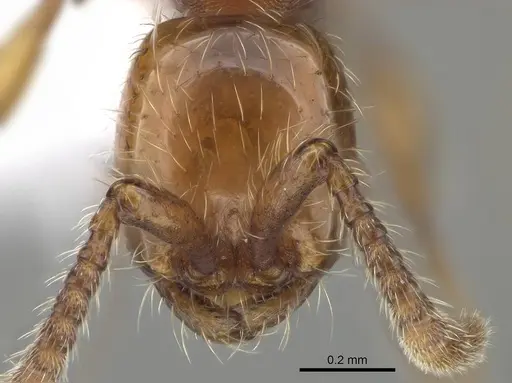
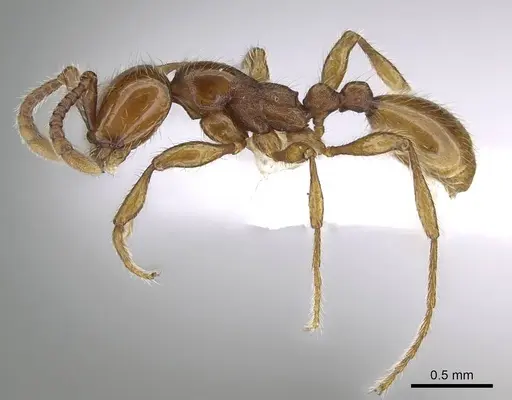
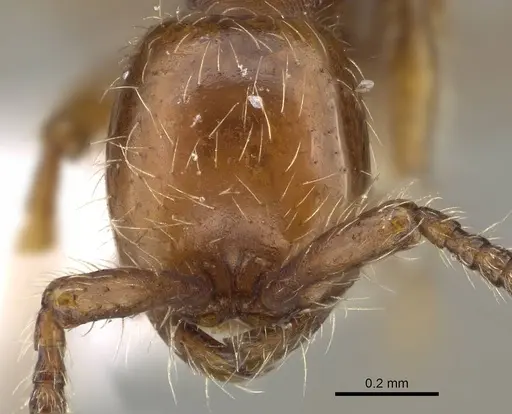
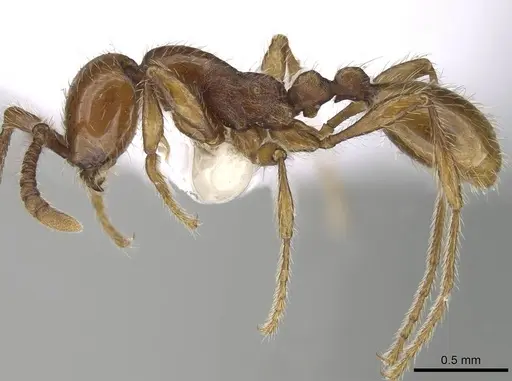
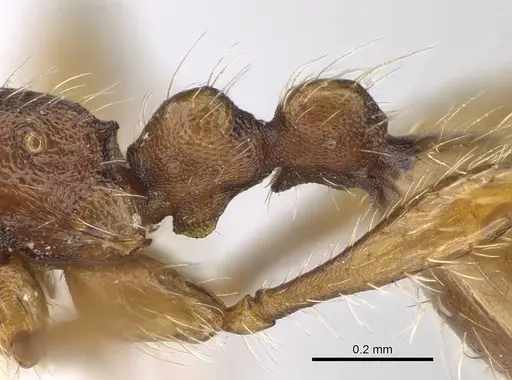
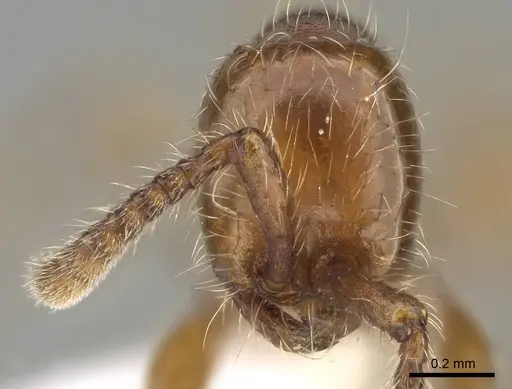
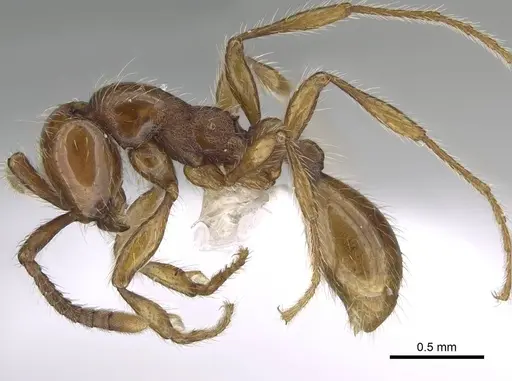
Workers are tiny, measuring 2.34-2.88 mm in total length [1]. They have a reddish-brown to yellowish-brown coloration on the antennae, mesosoma, petiole and postpetiole, with a yellowish-brown gaster and legs [1]. The head is slightly longer than broad and smooth and shiny [1]. Mandibles contain 6-7 teeth total: a large acute apical tooth, medium-sized subapical tooth,3-4 small denticles, and a medium-sized basal tooth [1]. The subpetiolar process has a rectangular-trapezoidal shape with a thin transparent lamellae on the ventral outline [1]. You can distinguish them from similar Chinese species like Aenictus henanensis and Aenictus wudangshanensis by the subpetiolar process shape and mandible dentition [1].
Habitat and Distribution
Aenictus hoelldobleri occurs in Zhejiang and Jiangxi Provinces in southeast China [1]. The type series comes from near Xingangshan, about 15 km southeast of Wuyuan in Jiangxi Province at 300 meters elevation [1]. Additional specimens were collected in Gutianshan National Nature Reserve in Zhejiang Province at elevations between 345-620 meters using pitfall traps in May to August 2009 [1]. They live in secondary mixed evergreen broadleaved forests across various successional stages from young to old growth [1].
Frequently Asked Questions
Can I keep Aenictus hoelldobleri in a test tube?
No. This species is only known from workers, no queens have ever been described, so you cannot start a colony [1]. Additionally, they are army ants with specialized biology that makes them unsuitable for standard ant keeping.
How do I found an Aenictus hoelldobleri colony?
You cannot. Founding behavior is completely unknown because queens have never been collected or described [1].
What do Aenictus hoelldobleri eat?
They are specialized predators of other ants. Workers were observed carrying pupae of Technomyrmex species and ant larvae during foraging raids [1].
How big do Aenictus hoelldobleri colonies get?
Unknown. Based on related Aenictus army ants, colonies likely contain thousands of workers, but this is unconfirmed for this species [1].
Do Aenictus hoelldobleri need hibernation?
Unknown. No seasonal data is available for this subtropical species living at 300-620m elevation [1].
Are Aenictus hoelldobleri dangerous?
No. Workers are tiny (under 3mm) and while army ants have stings, they are too small to penetrate human skin effectively [1].
Where do Aenictus hoelldobleri live in the wild?
They inhabit secondary mixed evergreen broadleaved forests at 300-620m elevation in Zhejiang and Jiangxi Provinces, Southeast China [1].
Can I keep multiple Aenictus hoelldobleri queens together?
Not applicable, no queens are known for this species. Colony structure (monogyne vs polygyne) has never been documented [1].
How long until Aenictus hoelldobleri get their first workers?
Unknown. Development time has not been documented because queens and brood have never been observed [1].
What is the difficulty level of keeping Aenictus hoelldobleri?
This species is considered impossible to keep in standard captivity due to the lack of known queens, specialized diet requiring other ant species, and army ant lifestyle [1].
Report an Issue
The current care sheet is based fully on literature. See inconsistencies, or something that's incorrect? Please , it will be resolved after review from an admin. Contributing to the blogs tab also helps providing information, to make us be able to further improve the caresheets. Thank you for your support!
References

This caresheet is licensed under CC BY-SA 4.0 .
Community Blogs
CASENT0914929
View on AntWeb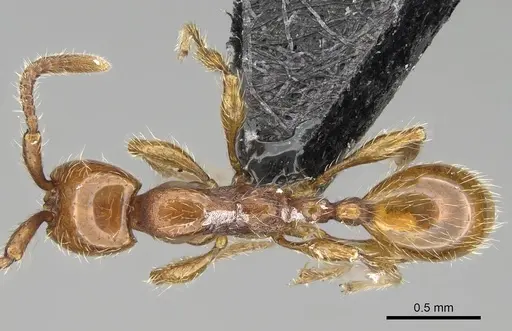
CASENT0914930
View on AntWeb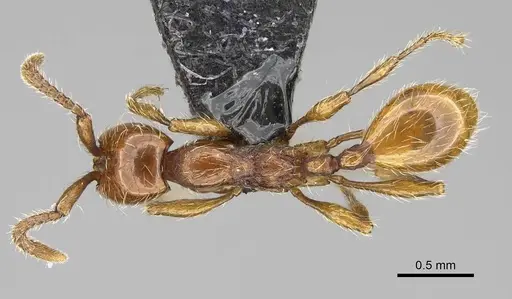
CASENT0914931
View on AntWeb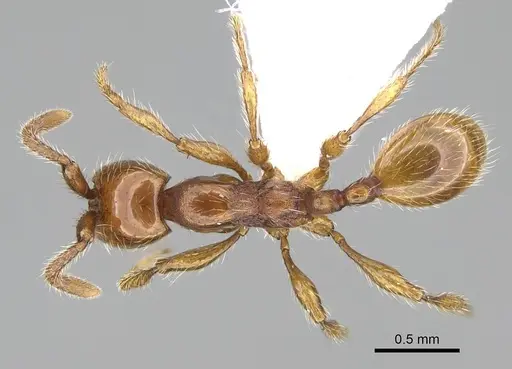
CASENT0914932
View on AntWeb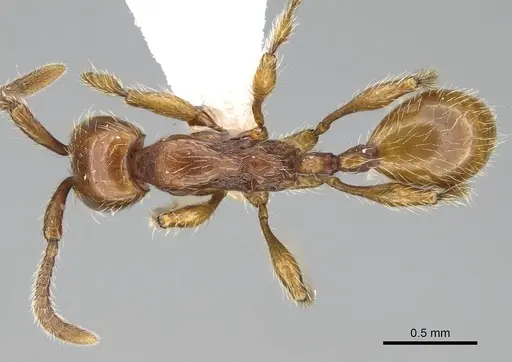
CASENT0914933
View on AntWeb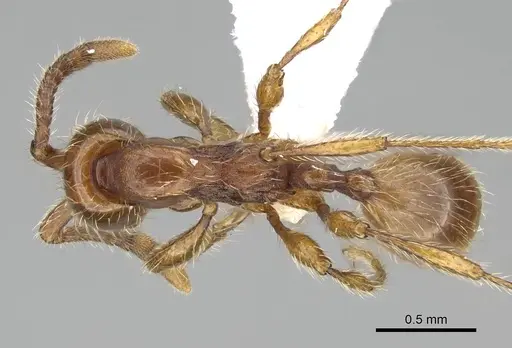
Literature
Loading distribution map...Loading products...