
Adelomyrmex samoanus
- Sci. Name
- Adelomyrmex samoanus
- Tribe
- Solenopsidini
- Subfamily
- Myrmicinae
- Author
- Wilson & Taylor, 1967
- Distribution
- Found in 3 countries
Introduction
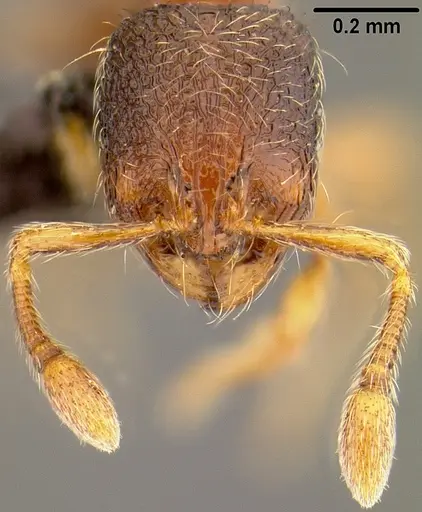
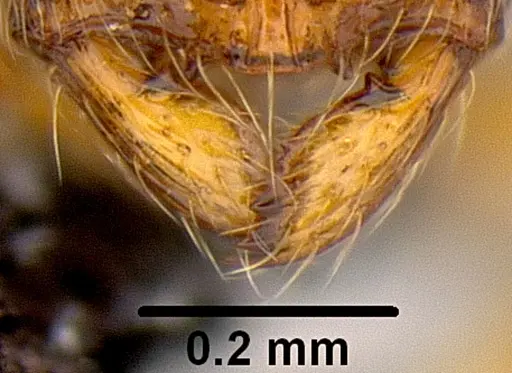
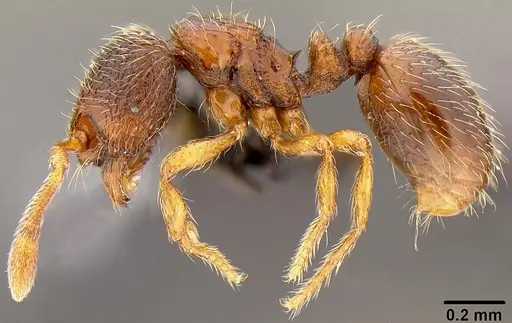
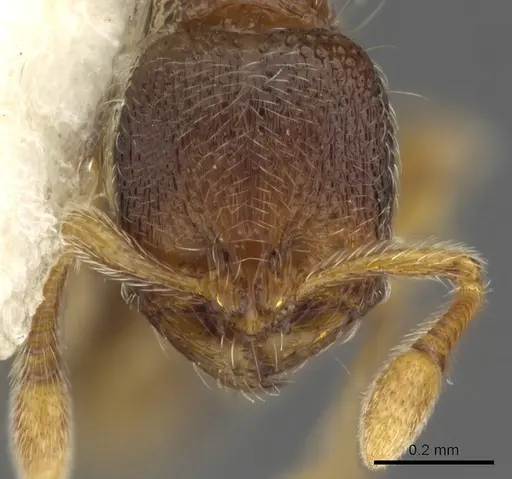
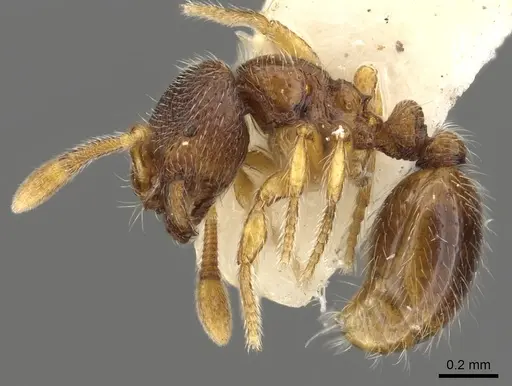
Adelomyrmex samoanus is an extremely tiny rainforest ant endemic to Samoa. Workers measure 1.94mm total length, making them one of the smallest ants in the hobby. They have a brown body with lighter appendages, very small eyes with only about 4 ommatidia, and distinctive longitudinal ridges on their head. These ants live in leaf litter and rotting wood in Samoan rainforests, typically at elevations around 130-400 feet. The queen and male have never been described - only workers are known from the original collection. This species is a true specialist of Pacific island rainforests, making it a unique and challenging species for experienced antkeepers.
Quick Summary
- Difficulty: Expert
- Origin & Habitat: Endemic to Western Samoa (Upolu, Savai'i, Tutuila). Found in leaf mold and rainforest litter at low elevations [1][2].
- Colony Type: Unknown, only worker caste has been described. Queen and male remain unknown [3].
- Size & Growth:
- Antkeeping:
- Temperature: Keep at tropical room temperature. Provide a gentle heat gradient and observe colony activity to find their preferred range.
- Humidity: Keep the nest substrate consistently moist but not waterlogged. These ants live in rainforest leaf litter and need access to moisture.
- Diapause: No, Samoa has no cold winter. Keep at stable tropical temperatures year-round.
- Nesting: These tiny ants live in leaf litter and rotting wood in nature. In captivity, a small test tube setup with moist substrate works well. They need tight spaces scaled to their minute size.
- Behavior: These ants are extremely small and likely cryptic. Workers have very small eyes with only about 4 ommatidia, suggesting they rely more on chemical trails than visual navigation. They are probably predaceous on tiny arthropods like springtails, typical of the Solenopsidini tribe. Escape prevention is critical, their tiny size means they can slip through gaps invisible to the naked eye. Use fine mesh barriers and tight-fitting lids.
- Common Issues: queen unknown, you cannot start a colony from a wild-caught queen because none have ever been described, escape prevention is critical, at under 2mm, they can slip through standard test tube cotton and mesh barriers, no established husbandry guidelines, this is an unstudied species in captivity, extreme humidity requirements, too dry and they may desiccate
Why Keep Adelomyrmex samoanus?
This species is genuinely unusual in the antkeeping hobby. It represents completely unstudied biology, the queen has never been described, colony structure is unknown, and no one has documented captive husbandry. If you're an experienced antkeeper looking for a genuine challenge and the opportunity to contribute new knowledge, this is the species for you. You'll be essentially pioneering captive husbandry for a species that exists only in Samoan rainforests. The tiny size also makes them fascinating to observe, they occupy a scale of ant life that most hobbyists never experience. [2][3]
Housing and Setup
Given their minute size, standard ant housing needs serious modification. A small test tube with a cotton barrier works as a founding chamber, but you'll need to use fine mesh for any escape barriers. The nest chamber should have very tight dimensions, these are tiny ants that would be overwhelmed by large spaces. Fill the outworld with moist substrate to maintain humidity. Because they're from rainforest litter, they need constant access to moisture.
Feeding and Diet
Based on their placement in Solenopsidini (the tribe that includes fire ants), these ants are likely predaceous or omnivorous, feeding on small arthropods and likely tending aphids for honeydew. Feed tiny live prey like springtails, fruit flies, or small mealworm pieces. Offer sugar water or honey very occasionally. Given their unknown biology, experimentation will be necessary.
Temperature and Humidity Management
As a tropical species from Samoa, these ants need warmth and humidity year-round. A small heating cable on one side of the nest creates a gentle gradient. Check the substrate regularly and mist if it dries out. The key is consistency, sudden drops in either temperature or humidity can be fatal. Keeping them in a small enclosed space helps maintain stable conditions.
The Challenge of the Unknown Queen
Perhaps the biggest challenge with this species is that no one has ever described a queen. This means you cannot catch a founding queen from the wild. Your best option would be to find an established captive colony if one exists, or to try importing from researchers working in Samoa with proper permits. This species is not available through typical ant suppliers and represents a true frontier for dedicated hobbyists. [3][2]
Escape Prevention
At just under 2mm total length, Adelomyrmex samoanus is an extreme escape risk. Standard ant keeping barriers that work for larger ants will fail completely. Use fine mesh on all ventilation holes. Check test tube cotton barriers regularly. Keep housing in an enclosed space like a plastic tub with smooth walls.
Frequently Asked Questions
Can I keep Adelomyrmex samoanus in a test tube?
Yes, a small test tube can work as a founding chamber, but you must use fine mesh for ventilation and ensure the cotton barrier is packed tightly. Their tiny size means standard test tube setups need modification.
How do I get a colony of Adelomyrmex samoanus?
This is the biggest challenge, the queen has never been described, so you cannot catch a founding queen from the wild. You would need to find an existing captive colony or work with researchers in Samoa. This species is not available through typical ant suppliers.
What do Adelomyrmex samoanus eat?
Based on their genus placement in Solenopsidini, they likely eat small arthropods. Offer tiny live prey like springtails, fruit flies, or small pieces of mealworms. Sugar sources may be accepted but are not reliable.
How long does it take for Adelomyrmex samoanus to develop from egg to worker?
This is unknown, no development data exists for this species.
Do Adelomyrmex samoanus need hibernation?
No, they come from Samoa, a tropical island with no winter. Keep them at stable tropical temperatures year-round.
Are Adelomyrmex samoanus good for beginners?
No. This is an expert-level species. The queen is unknown, no captive husbandry guidelines exist, and their tiny size creates extreme husbandry challenges.
How big do Adelomyrmex samoanus colonies get?
Unknown, colony size has never been documented in the literature.
What temperature should I keep Adelomyrmex samoanus at?
Keep them at tropical room temperature. Provide a gentle heat gradient and observe colony activity to find their preferred range.
Why are Adelomyrmex samoanus so hard to find in the antkeeping hobby?
They are endemic only to Samoa, the queen has never been described, and no one has documented captive breeding. They represent a genuinely unstudied species that has never entered the hobby mainstream.
What makes Adelomyrmex samoanus different from other Myrmicinae?
They are one of the smallest Myrmicinae, endemic only to Pacific islands, and have completely unstudied biology. The queen being unknown is extremely unusual, most ant species have at least queen descriptions. Their tiny eyes also suggest unique sensory biology.
Report an Issue
The current care sheet is based fully on literature. See inconsistencies, or something that's incorrect? Please , it will be resolved after review from an admin. Contributing to the blogs tab also helps providing information, to make us be able to further improve the caresheets. Thank you for your support!
References

This caresheet is licensed under CC BY-SA 4.0 .
Community Blogs
CASENT0171037
View on AntWeb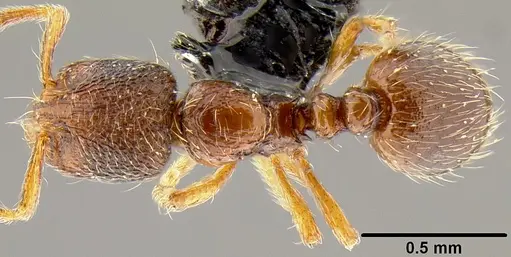
CASENT0901015
View on AntWeb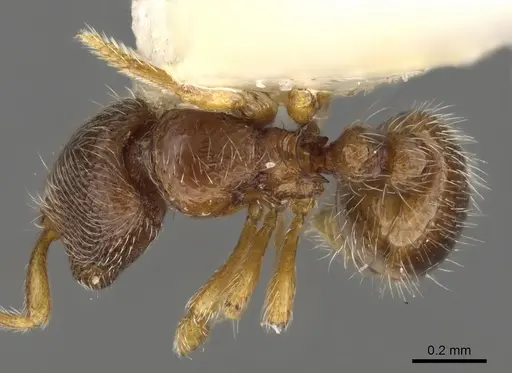
Literature
Loading distribution map...Loading products...