
Yellow Forest Sugar ant
Acropyga arnoldi
- Sci. Name
- Acropyga arnoldi
- Tribe
- Plagiolepidini
- Subfamily
- Formicinae
- Author
- Santschi, 1926
- Common Name
- Yellow Forest Sugar ant
- Distribution
- Found in 4 countries
Introduction
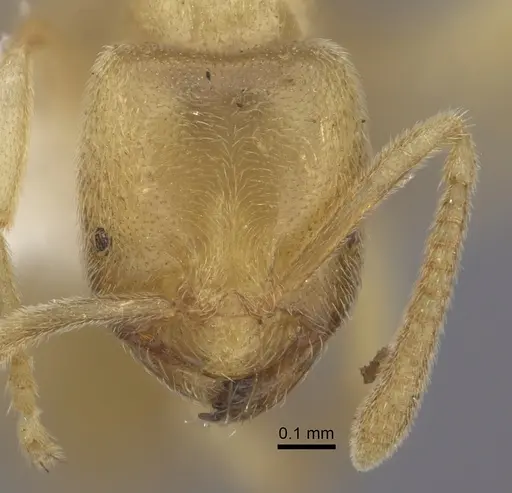
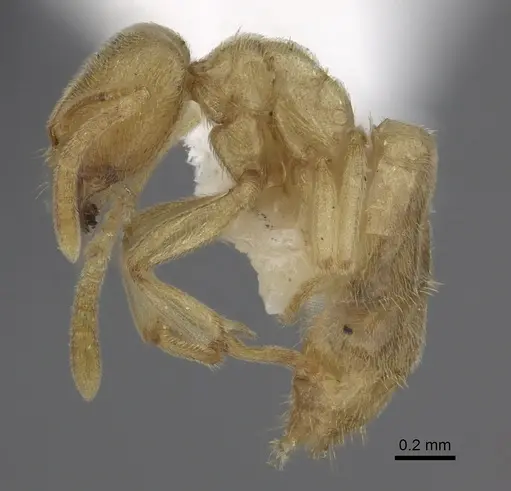
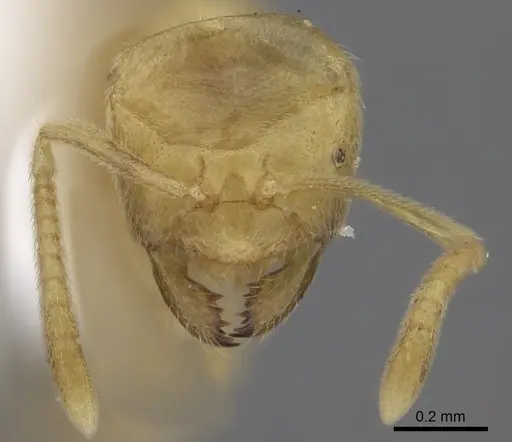
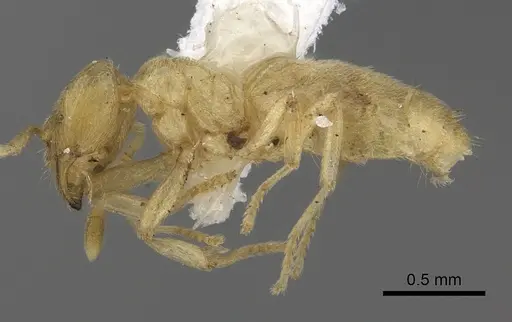
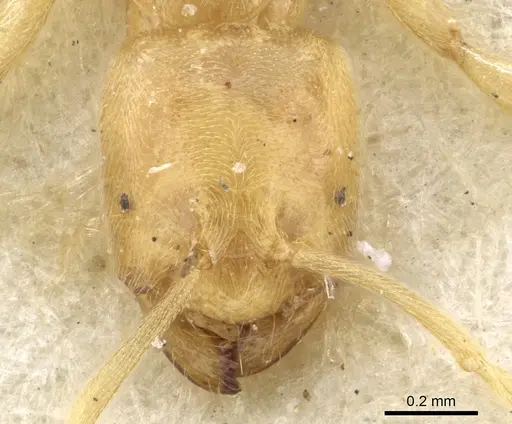
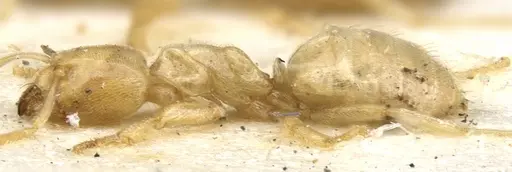
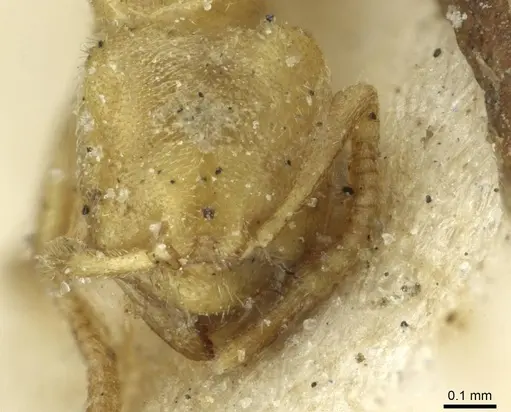
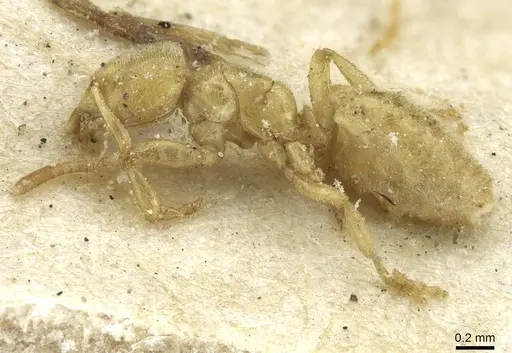
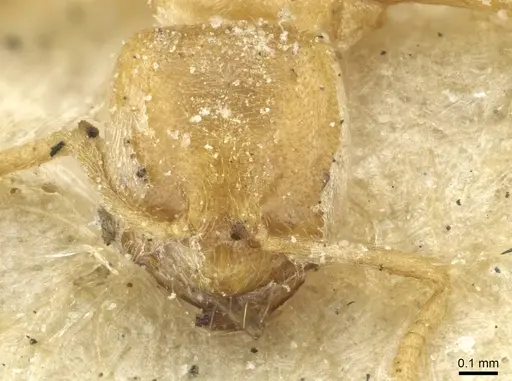
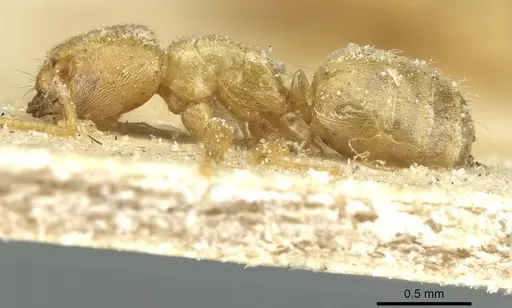
Acropyga arnoldi is a tiny yellow ant species native to southern Africa, found in South Africa, Namibia, Zimbabwe, and the Central African Republic . Workers measure 2.13-2.4 mm in total length and possess distinctive broad mandibles with 6-9 uneven teeth . This is the only Acropyga species known from south of the Zambezi River . The most remarkable trait of this species is its absolute dependence on mealybugs. These ants farm a specific species called Eumyrmococcus scorpioides, carrying these sap-sucking insects in their mandibles and collecting the honeydew they produce . When new queens leave to start colonies, they carry mealybugs in their mouths - a behavior called trophophoresis - ensuring their new nest has an immediate food source .
Quick Summary
- Difficulty: Expert
- Origin & Habitat: Southern Africa including South Africa, Namibia, Zimbabwe, and the Central African Republic. Found in habitats ranging from deserts to woodlands [1][3][2].
- Colony Type: Colony structure is unconfirmed. Based on typical Acropyga patterns, likely single-queen colonies.
- Size & Growth:
- Antkeeping:
- Temperature: Keep warm, roughly 24-28°C, with a gentle heat gradient. Provide stable warmth year-round.
- Humidity: Moderate, nest material should be lightly moist to support mealybug symbionts.
- Diapause: No, they remain active year-round in their native range.
- Nesting: Naturalistic soil setups with living plant roots to support mealybug colonies. Standard formicaria cannot support their dietary needs.
- Behavior: Cryptic and slow-moving. Workers stay close to their mealybug herds underground. They are not aggressive but may spray formic acid if threatened. Their tiny size makes escape prevention critical.
- Common Issues: cannot survive without their specific mealybug partner (Eumyrmococcus scorpioides), colonies starve without this symbiont., extremely small worker size (under 2.5mm) means they escape through the tiniest gaps in standard setups., mealybug maintenance requires living plant roots and specific humidity conditions that are hard to replicate in captivity., overheating kills the mealybugs and thus the colony, temperature must stay stable.
The Mealybug Symbiosis: An Obligate Partnership
Acropyga arnoldi maintains a strict partnership with the mealybug Eumyrmococcus scorpioides [1][4]. These mealybugs feed on plant roots underground, and the ants protect them while collecting the sweet honeydew they excrete. The ants cannot survive on substitute foods like sugar water or insects alone, they have evolved to depend entirely on their mealybug partners for nutrition [1][2].
This symbiosis makes captive keeping extremely challenging. You must first establish a healthy colony of these specific mealybugs on living plant roots before introducing the ants. If the mealybugs die, the ant colony starves. The mealybugs require specific root systems and humidity levels, meaning you need a bioactive setup with living plants rather than a standard ant farm.
Colony Founding: Trophophoresis
New queens practice trophophoresis, they carry mealybugs in their mandibles when leaving for their nuptial flights. Alates have been collected from March to July, with trophophoretic queens discovered in July [1].
After mating, the queen digs a small chamber and seals herself inside. This is claustral founding. Unlike most claustral queens who survive entirely on stored body fat, she immediately begins tending her carried mealybugs. These insects provide her with honeydew while she raises her first generation of workers. This unique founding strategy means you cannot start a colony from a lone queen unless you provide her with living mealybugs immediately.
Nest Setup and Housing
In nature, Acropyga arnoldi nests in soil, under flat stones, or in rotting wood where their mealybugs can access plant roots [1]. They need darkness and stable conditions.
In captivity, use a naturalistic setup with a soil mix and living plants that can host mealybugs. Standard test tubes or acrylic nests will not work because they cannot support the mealybug population these ants require. The enclosure must be escape-proof, with workers under 2.5mm, they can squeeze through the smallest gaps in mesh or around lids [3]. Use fine mesh and barrier products carefully.
Temperature and Seasonal Care
Coming from southern Africa, these ants need warm conditions. Keep them between 24-28°C with a gentle heat gradient so they can choose their preferred spot. Place the heat source on top of the nest rather than underneath to prevent condensation from flooding the chambers.
They do not require hibernation or diapause, they remain active year-round in their native range. Alates have been collected from March through July, suggesting this is their primary activity period, though they likely forage throughout the year [1].
Feeding in Captivity
You cannot feed Acropyga arnoldi standard ant foods. They require honeydew from their specific mealybug partner Eumyrmococcus scorpioides [4]. While some keepers have experimented with offering sugar water or other honeydew sources as supplements, long-term colony survival depends entirely on maintaining healthy mealybug populations on living roots.
The mealybugs feed on plant sap, so you need healthy plants with good root systems. If the plants die or the mealybugs fail to thrive, the ant colony will collapse within weeks. This dietary specialization is why these ants are considered expert-only in the hobby.
Frequently Asked Questions
Can I keep Acropyga arnoldi without mealybugs?
No. They are obligate partners with Eumyrmococcus scorpioides mealybugs and will starve without them. They cannot survive on sugar water or insects alone [1][4].
What do Acropyga arnoldi eat?
Honeydew produced by their mealybug partners. They do not eat solid food like other ants. The mealybugs process plant sap, and the ants consume the resulting honeydew [1][2].
How long until Acropyga arnoldi gets their first workers?
Unknown. Development time is not documented for this species.
Are Acropyga arnoldi good for beginners?
No, they are expert-level only. Their specialized mealybug requirements make them one of the most challenging ant species to maintain in captivity.
Can I keep multiple Acropyga arnoldi queens together?
Not recommended. Acropyga typically form single-queen colonies, and combining multiple queens has not been documented for this species.
What temperature do Acropyga arnoldi need?
Keep them warm at 24-28°C with a gentle heat gradient. They come from southern Africa and need stable warmth year-round.
Do Acropyga arnoldi need hibernation?
No, they come from southern Africa and remain active year-round. They do not require a winter rest period.
How big do Acropyga arnoldi colonies get?
Exact numbers are unknown, but they likely remain small to moderate, probably under 1000 workers based on patterns seen in other Acropyga species.
Can I keep Acropyga arnoldi in a test tube?
Only if you can maintain their mealybug symbionts inside, which is nearly impossible. They need soil and living plant roots to support their food source. Standard test tube setups will result in colony starvation.
Report an Issue
The current care sheet is based fully on literature. See inconsistencies, or something that's incorrect? Please , it will be resolved after review from an admin. Contributing to the blogs tab also helps providing information, to make us be able to further improve the caresheets. Thank you for your support!
References

This caresheet is licensed under CC BY-SA 4.0 .
Community Blogs
CASENT0170538
View on AntWeb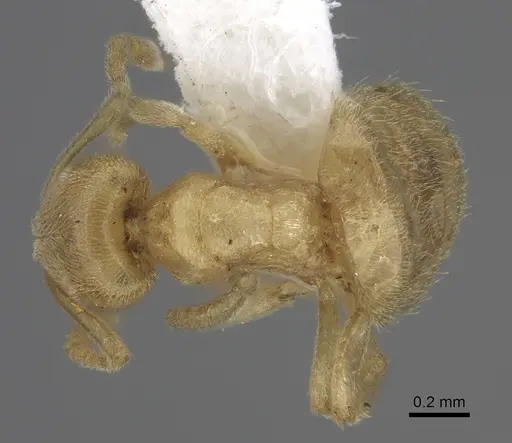
CASENT0235249
View on AntWeb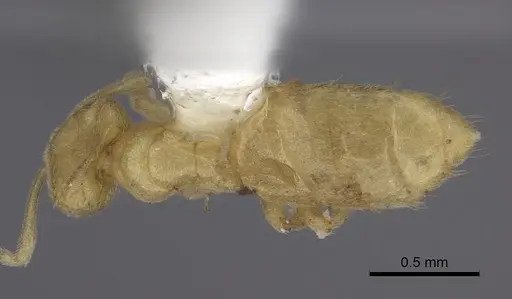
CASENT0903180
View on AntWeb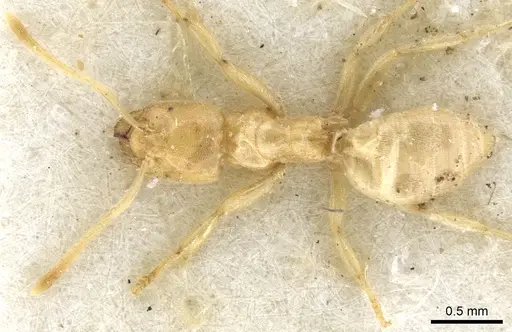
CASENT0912352
View on AntWeb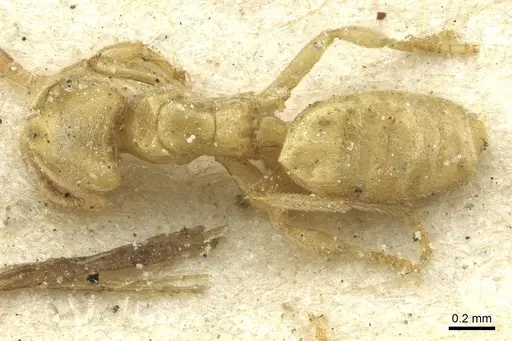
CASENT0912353
View on AntWeb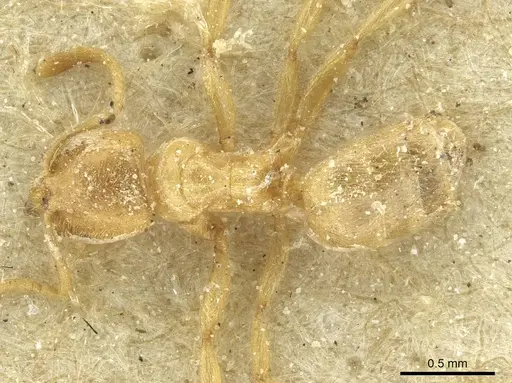
Literature
Loading distribution map...Loading products...