
Acanthostichus quirozi
- Sci. Name
- Acanthostichus quirozi
- Subfamily
- Dorylinae
- Author
- MacKay, 1996
- Distribution
- Found in 1 countries
Introduction
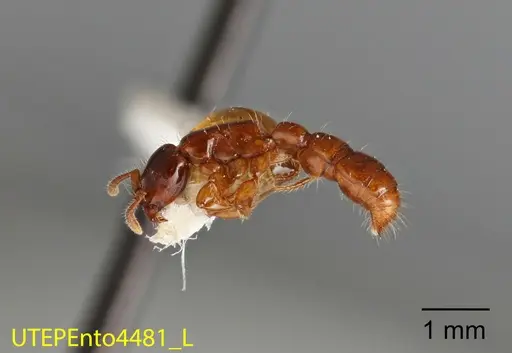
Acanthostichus quirozi is a tiny golden-red ant known only from nine workers collected in 1992 in Los Tuxtlas, Veracruz, Mexico . Workers have smooth, shiny bodies with distinctive long erect hairs covering their backs . No queens have ever been found, and nothing is known about their biology - what they eat, how they found colonies, or how large their nests grow . They belong to the subfamily Dorylinae, which includes army ants and other specialized predators . This species remains one of the most mysterious in ant keeping. The original nine specimens represent the only record of this species ever existing . Without a queen or any biological observations, keeping this species is currently impossible. They serve as a reminder of how much we still do not know about ant diversity, even in relatively well-studied regions like Mexico.
Quick Summary
- Difficulty: Expert
- Origin & Habitat: Tropical rainforest in Los Tuxtlas, Veracruz, Mexico [1][3].
- Colony Type: Unknown, only workers have ever been collected, so queen number and colony structure remain mysteries [2].
- Size & Growth:
- Antkeeping:
- Temperature: Unknown, based on the tropical location (Los Tuxtlas), conditions around 24-26°C may be suitable, but this is speculative [1].
- Humidity: Unknown, likely requires humid conditions given the tropical forest origin, but unconfirmed [1].
- Diapause: Unknown, tropical origin suggests they may not hibernate, but this is unconfirmed [1].
- Nesting: Unknown, natural nesting habits have never been observed [2].
- Behavior: Unknown, only nine preserved specimens exist, so no observations of living behavior exist [1][2].
- Common Issues: species is only known from workers, no one has ever found a queen, making captive colonies impossible to establish., biology is completely unknown, diet, nesting preferences, and temperature needs are mysteries., tiny size means escape prevention would be extremely difficult if living colonies were available., specimens are extremely rare, only nine exist in museum collections, so obtaining them is practically impossible.
Discovery and Distribution
Acanthostichus quirozi is known from a single collection event on August 28,1992,in the Los Tuxtlas region of Veracruz, Mexico [1]. The collector, L. Quiroz, found nine workers total, one became the holotype and eight became paratypes [1][2]. The species has never been seen alive since that day [2].
Los Tuxtlas is a tropical rainforest biosphere reserve on the Gulf Coast of Mexico [1]. This region is warm and humid year-round, which suggests the species may prefer stable tropical conditions, but this remains speculation [1]. The area is heavily forested with high rainfall, indicating these ants probably nest in soil or leaf litter, but this is unconfirmed [1][4].
Morphology and Identification
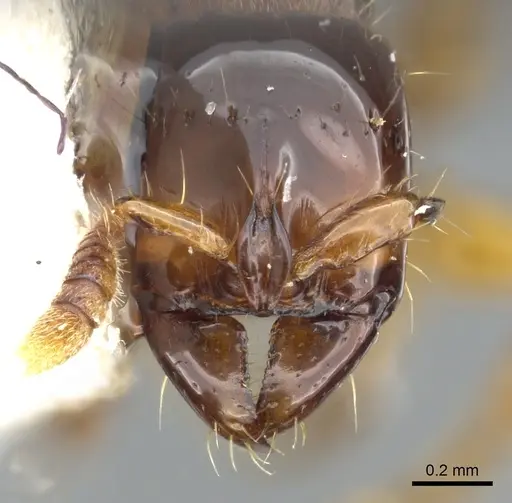
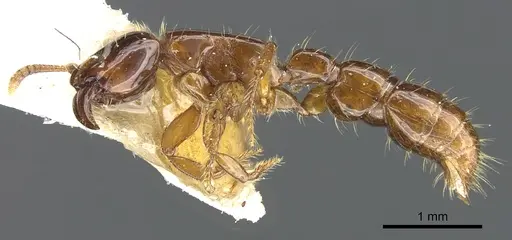
Workers of Acanthostichus quirozi are recognizable by their golden-red color and extremely hairy appearance [2]. Their most distinctive feature is the abundance of long erect hairs, up to 0.25 mm long, covering the back of the head, middle body section (mesosoma), waist (petiole), and abdomen (gaster) [2].
The petiole is elongated, smooth, and highly polished, wider at the back than the front [2]. Their eyes are extremely tiny and lack defined facets [2]. The mandibles have no teeth, which is typical for the genus [2]. They closely resemble Acanthostichus skwarrae but can be distinguished by their much hairier bodies [2].
Inference from Genus Patterns
While Acanthostichus quirozi itself is a mystery, other Acanthostichus species are specialized predators of termites [2]. Based on typical Acanthostichus patterns, they likely hunt termites and may follow termite trails to find prey [2]. They may be subterranean specialists given their tiny eyes and pale coloration [2].
If queens are ever discovered, they may found colonies through a claustral method, but this is speculative based on related species [2]. Until actual biological data is collected, any care requirements remain educated guesses.
Captive Keeping Reality
Currently, keeping Acanthostichus quirozi is impossible. No queens exist in captivity, and no one has ever observed a living colony [2]. The nine museum specimens represent the entire known population of this species [1].
If future collectors ever find queens and establish colonies, keepers would face challenges. The workers' tiny size would require specialized equipment with extremely fine mesh or barriers to prevent escapes [2]. Their likely status as termite specialists would make feeding difficult and expensive [2]. For now, this species remains a scientific curiosity rather than a potential pet.
Frequently Asked Questions
Can I keep Acanthostichus quirozi in a test tube or formicarium?
No. Only nine workers of this species have ever been collected, and no queens are known to exist in captivity or science [1][2]. Without a queen, you cannot establish a colony. Even if you obtained workers, they would die within weeks without a queen to replace them.
What do Acanthostichus quirozi eat?
Their diet is unknown. Based on other Acanthostichus species, they may prey on termites, but this has never been confirmed for Acanthostichus quirozi [2]. No one has ever observed living specimens feeding.
How big do Acanthostichus quirozi colonies get?
Colony size is completely unknown. Only nine individual workers have ever been seen, so we have no idea if colonies contain 50 workers or 50,000 [1][2].
How long does Acanthostichus quirozi take from egg to worker?
Development time is unknown. No one has ever seen eggs, larvae, or pupae of this species [2].
Do Acanthostichus quirozi need hibernation or diapause?
Unknown. They come from tropical Veracruz, Mexico, which has warm temperatures year-round, so they may not hibernate [1]. However, this is speculative since their biology has never been studied.
Where can I buy Acanthostichus quirozi?
You cannot buy them. This species is not available in the ant keeping trade. The only known specimens are preserved in museums [1][2].
What temperature do Acanthostichus quirozi need?
Unknown. Based on their tropical origin in Veracruz, they may need warm temperatures around 24-28°C, but this is speculative [1].
Report an Issue
The current care sheet is based fully on literature. See inconsistencies, or something that's incorrect? Please , it will be resolved after review from an admin. Contributing to the blogs tab also helps providing information, to make us be able to further improve the caresheets. Thank you for your support!
References

This caresheet is licensed under CC BY-SA 4.0 .
Community Blogs
CASENT0903674
View on AntWeb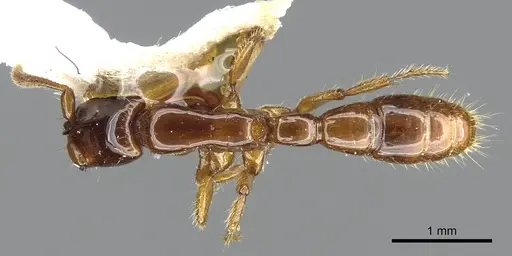
UTEPENTO4481
View on AntWeb
Literature
Loading distribution map...Loading products...