
Acanthomyrmex concavus
- Sci. Name
- Acanthomyrmex concavus
- Tribe
- Crematogastrini
- Subfamily
- Myrmicinae
- Author
- Moffett, 1986
- Distribution
- Found in 2 countries
Introduction
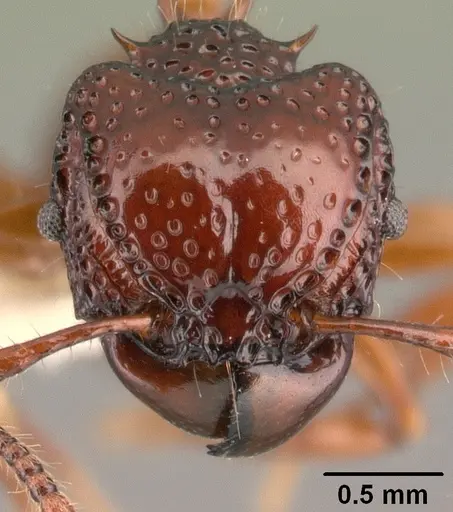
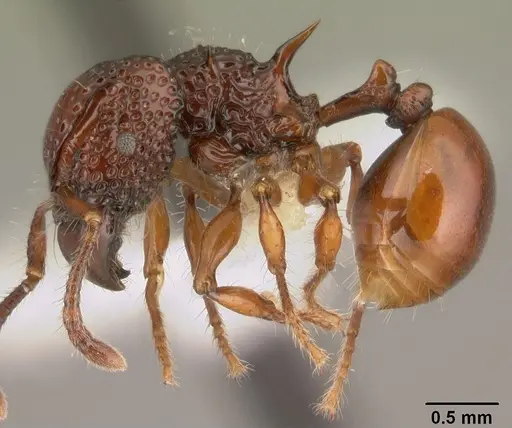
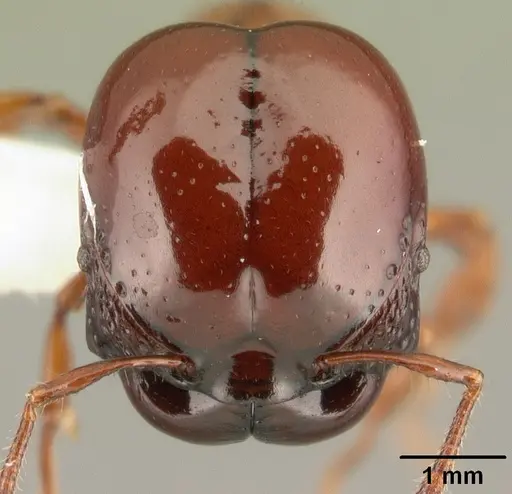
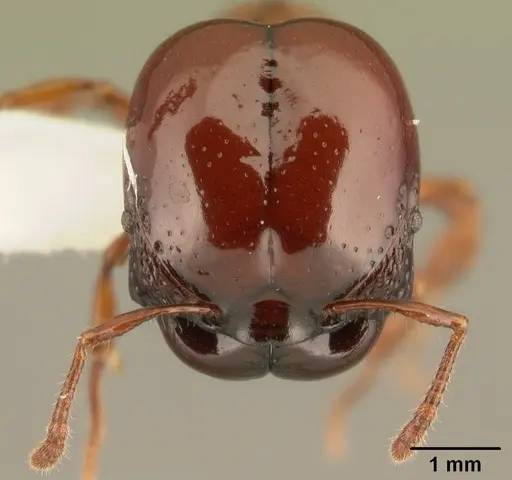
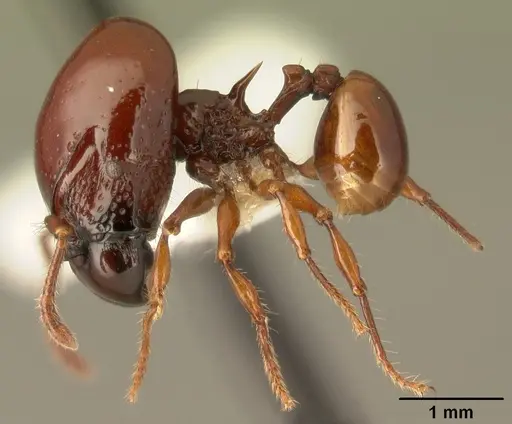
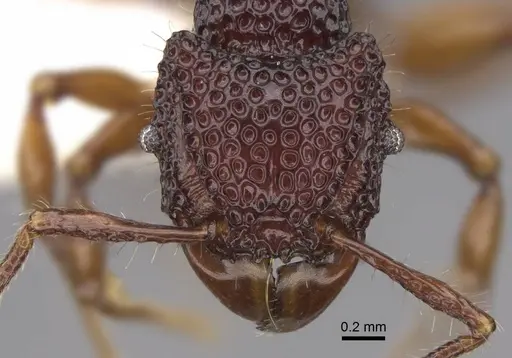
Acanthomyrmex concavus is a tiny leaf litter ant from the rainforests of Borneo, instantly recognizable by the deeply concave rear margin of the minor workers' heads . These ants are among the smallest in the genus, living in the damp leaf litter of lowland rainforests in Sarawak and Sabah . Only minor workers are known for this species - major workers have never been found despite extensive collecting . They reproduce via ergatoid queens, which are wingless reproductive females that resemble oversized workers rather than typical winged queens .
Quick Summary
- Difficulty: Expert
- Origin & Habitat: Borneo (Malaysian states of Sarawak and Sabah) and Indonesia [2][1]. Found in leaf litter of lowland rainforests, mature wet forests, and alluvial forests [1][4][5].
- Colony Type: Single-queen colonies with ergatoid replacement reproductives. Ergatoid queens are wingless and intermediate in morphology between major and minor workers [1][3].
- Size & Growth:
- Queen: size data unavailable, ergatoid queens of related Acanthomyrmex species are intermediate in size between worker castes [3].
- Worker: approximately 2-3mm, inferred from Acanthomyrmex genus patterns [1].
- Colony: up to 100 workers based on related Acanthomyrmex species patterns [3].
- Growth: Slow to moderate.
- Development: timeline unconfirmed for this species. (Development data unavailable.)
- Antkeeping:
- Temperature: Keep warm and stable, roughly 24-27°C. Tropical species requiring consistent warmth without seasonal cooling.
- Humidity: High humidity essential. Keep nest substrate damp but not waterlogged, mimicking rainforest leaf litter conditions.
- Diapause: No. This is a tropical species that remains active year-round [1].
- Nesting: Small cavities in dead twigs, rotten wood, under stones, or in leaf litter on the forest floor [3]. In captivity, use small test tubes or mini naturalistic setups with tight spaces appropriate for tiny ants.
- Behavior: Slow-moving leaf litter specialists that prefer dark, humid conditions. Non-aggressive but shy. Their tiny size means they can squeeze through the smallest gaps, escape prevention must be excellent [1]. They possess a smear-type defense mechanism, using a flattened stinger to wipe venom onto enemies rather than piercing flesh.
- Common Issues: workers are tiny and will escape through gaps that larger ants cannot fit through, requiring fine mesh barriers., colonies are small and easily overfed, excess food can mold quickly in humid setups., require consistently high humidity, dry conditions kill them quickly., may refuse artificial or large prey items, need appropriately small live food., wild-caught colonies may carry mites or parasites from leaf litter habitats.
Identification and Appearance
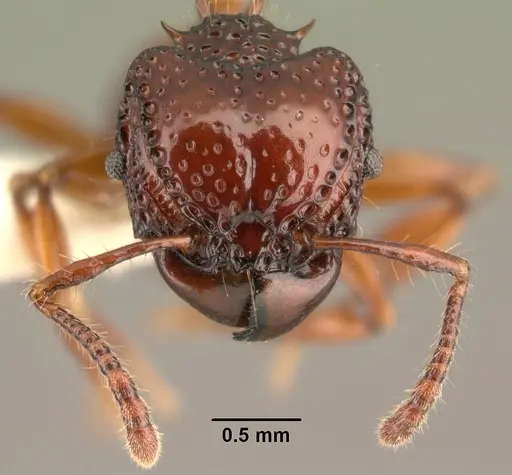
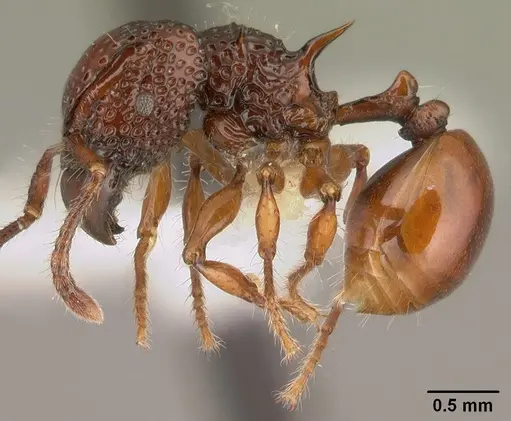
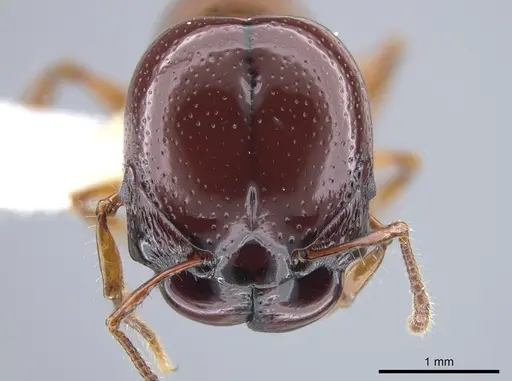
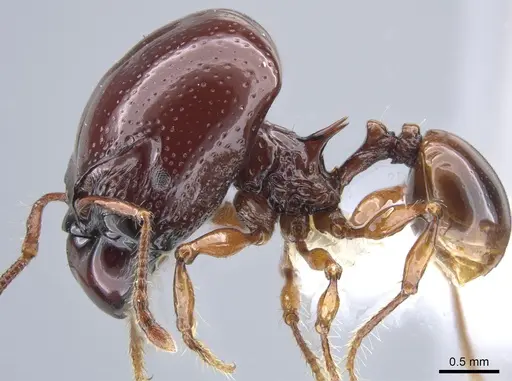
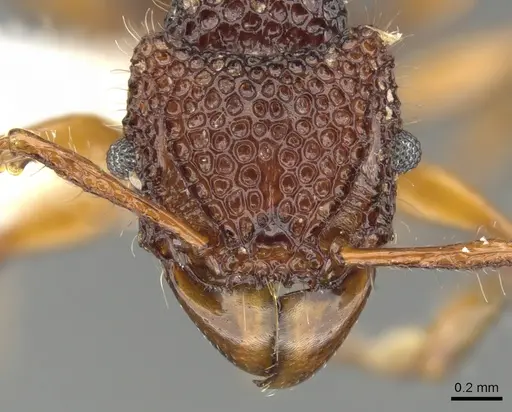
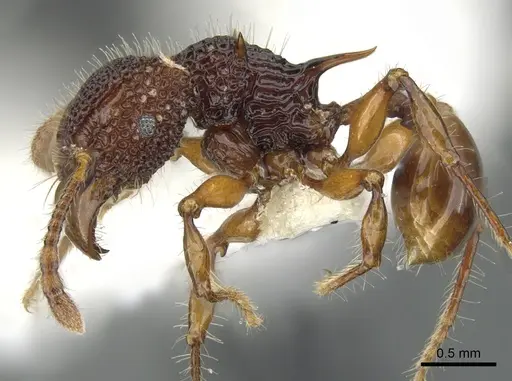
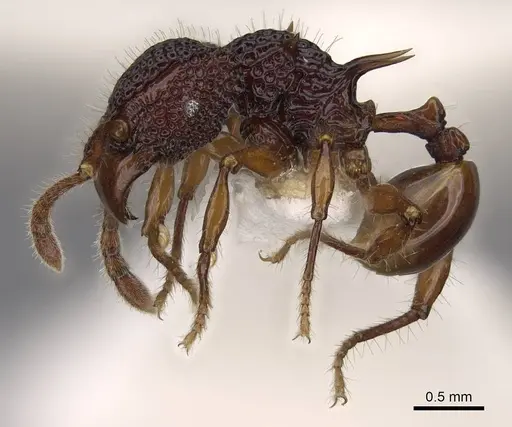
Acanthomyrmex concavus minor workers are instantly recognizable by their deeply concave head margin when viewed from above, which gives the species its name [1]. The head capsule has rounded pits with thick walls, and the antennae are relatively short [1].
Uniquely among Acanthomyrmex, major workers have never been collected for this species despite extensive sampling in their native range [1]. This suggests either that majors are extremely rare, seasonal, or potentially absent in this species. Keepers should expect to see only one worker size in their colonies.
Natural Habitat and Distribution
These ants are found exclusively on the island of Borneo, specifically in the Malaysian states of Sarawak and Sabah [2][1]. The type specimen comes from Gunung Mulu National Park in Sarawak, collected from leaf litter in lowland rainforest [1].
They appear to be true leaf litter specialists, living in the damp decomposition layer of rainforests and mature wet forests [1][4][5]. Stable isotope analysis of a single specimen suggests they occupy a higher trophic level, indicating predatory or scavenging habits rather than reliance on plant-based foods [4]. In the wild, they nest in small cavities within this microhabitat.
Colony Structure and Reproduction
Unlike most ants that have winged queens, Acanthomyrmex concavus reproduces via ergatoid queens [1]. Ergatoid queens are wingless reproductive females that look like large workers rather than having the typical enlarged thorax and wings of standard queens. Based on related Acanthomyrmex careoscrobis, these ergatoid queens are intermediate in size between major and minor workers [3][1].
This reproductive strategy means colonies likely function with a single primary egg-layer (monogyne), but can replace her with one of these ergatoid reproductives if she dies [1]. Colonies remain small, containing fewer than 100 workers based on patterns seen in related species [3].
Housing and Nest Setup
Because these ants are extremely small and require high humidity, standard test tube setups work well for founding and small colonies, but the water reservoir must be carefully managed to prevent flooding of the small chamber [3]. For larger colonies, small naturalistic setups with rotting wood, dead twigs, or tight-fitting stone cavities mimic their natural nesting sites [3].
Avoid large open spaces. These ants prefer narrow chambers and tight passages scaled to their tiny size. The nest must maintain damp conditions, the substrate should feel moist to the touch but not dripping wet. Use fine mesh for ventilation to prevent escapes while allowing air exchange.
Temperature and Environmental Needs
As a tropical rainforest species, Acanthomyrmex concavus requires warm, stable temperatures year-round. They do not require and should not receive any cooling or diapause period. Temperature fluctuations should be minimized.
Humidity is critical. The nest environment should replicate the damp leaf litter of a rainforest floor. This means consistently moist substrate, not occasional misting. However, stagnant air promotes mold, so provide gentle ventilation while maintaining humidity.
Diet and Feeding
Stable isotope data suggests these ants are predators or scavengers rather than relying heavily on sugar sources [4]. In nature, nests of related species often contain tiny seeds, suggesting they may collect and store small seeds [3].
In captivity, offer tiny live prey appropriate for their size, springtails, very small fruit flies, or pinhead crickets chopped into manageable pieces. They may also accept small seeds like chia or poppy seeds. Sugar sources such as honey water or sugar water can be offered but should not be relied upon as the primary food source. Feed small amounts frequently rather than large amounts rarely to prevent mold in their humid environment.
Colony Founding and Growth
Founding behavior for this species is unconfirmed. Given the presence of ergatoid queens, new colonies may form through budding rather than traditional lone queen founding. If you acquire a founding queen, provide her with a small, humid test tube setup and offer food regularly.
Growth is likely slow given the small colony size. Do not expect rapid expansion typical of larger species. Patience is required, and overfeeding is a common mistake with small colonies of this type.
Frequently Asked Questions
Can I keep Acanthomyrmex concavus in a test tube?
Yes, test tubes work well for founding and small colonies, but use smaller tubes appropriate for their tiny size. Ensure the water reservoir is not too large to avoid flooding the small chamber, and maintain high humidity by keeping the cotton damp.
How long until Acanthomyrmex concavus gets first workers?
The egg-to-worker timeline is unconfirmed for this species. Development data is not available.
What do Acanthomyrmex concavus eat?
They appear to be predators or scavengers based on isotope analysis [4]. Feed tiny live prey like springtails, small fruit flies, or chopped pinhead crickets. They may also collect small seeds [3]. Offer sugar water occasionally but do not rely on it as the primary food.
Do Acanthomyrmex concavus ants sting?
They possess a smear-type defense mechanism, using a flattened stinger to wipe venom onto enemies rather than piercing flesh. Given their extremely small size, any sting would likely be ineffective against human skin.
Are Acanthomyrmex concavus good for beginners?
No. These are expert-level ants due to their rarity, specific humidity requirements, tiny size requiring excellent escape prevention, and likely specialized diet. They are also slow-growing with small colonies.
Do Acanthomyrmex concavus need hibernation?
No. They are a tropical species from Borneo and remain active year-round at warm temperatures [1]. Do not cool them.
How big do Acanthomyrmex concavus colonies get?
Likely small, up to 100 workers based on related Acanthomyrmex species [3]. They will never become large colonies.
Can I keep multiple Acanthomyrmex concavus queens together?
Not recommended. They appear to be single-queen species (monogyne). Combining unrelated queens would likely result in fighting.
Why are my Acanthomyrmex concavus dying?
Common causes include insufficient humidity (they need damp substrate, not just occasional misting), escapes due to inadequate barriers for their tiny size, overfeeding leading to mold in humid conditions, or incorrect temperature (too cold or too hot).
What temperature should I keep Acanthomyrmex concavus?
Keep them warm and stable at roughly 24-27°C. Use a heating cable or mat on one side of the nest to create a gentle gradient, but ensure it does not dry out the substrate.
Report an Issue
The current care sheet is based fully on literature. See inconsistencies, or something that's incorrect? Please , it will be resolved after review from an admin. Contributing to the blogs tab also helps providing information, to make us be able to further improve the caresheets. Thank you for your support!
References

This caresheet is licensed under CC BY-SA 4.0 .
Community Blogs
CASENT0101061
View on AntWeb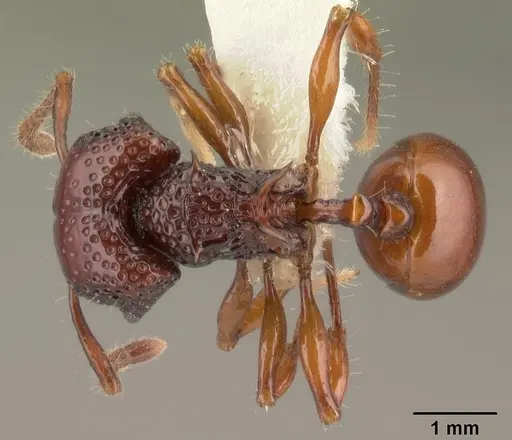
CASENT0101062
View on AntWeb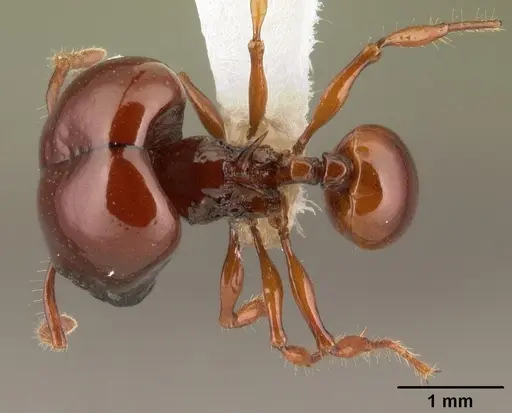
CASENT0634195
View on AntWeb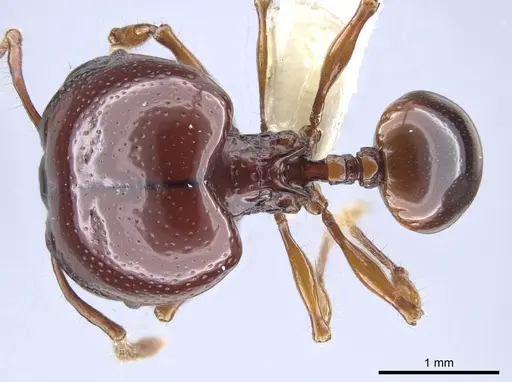
CASENT0901700
View on AntWeb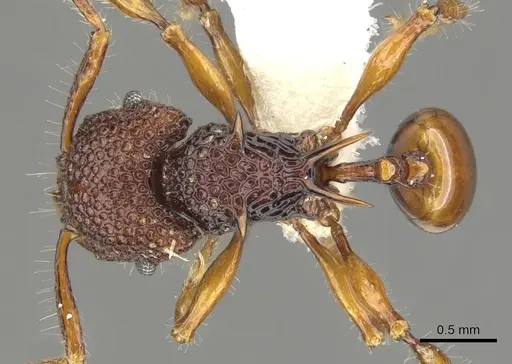
CASENT0922952
View on AntWeb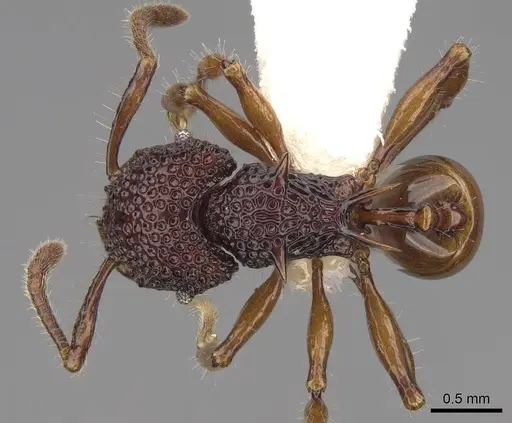
Literature
Loading distribution map...Loading products...