
Tetramorium myops
- Науч. назв.
- Tetramorium myops
- Триба
- Crematogastrini
- Подсемейство
- Myrmicinae
- Автор
- Bolton, 1977
- Распространение
- Встречается в 0 странах
Введение
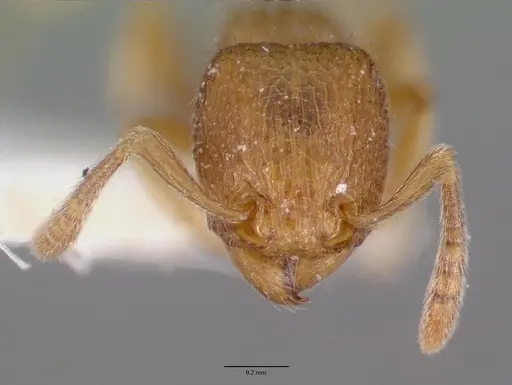
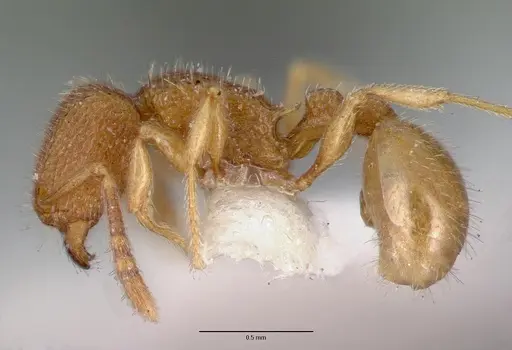
Tetramorium myops is a tiny ant species endemic to India, with workers measuring just 2.6-2.8mm total length . Their most striking feature is their extremely reduced eyes, each consists of only a single facet, the smallest known for any ant outside the Ethiopian region . The species belongs to the Tetramorium inglebyi group, which includes small ground-nesting ants . Workers are yellowish-brown with stout, moderately long propodeal spines that are slightly upcurved, and the petiole has a large rounded lamella on its underside . This species has been recorded only from the Indian states of Chhattisgarh, Kerala, and Madhya Pradesh . Published data on its biology, colony structure, and behavior are completely absent . Because of this, nearly all care recommendations must be inferred from what we know about related Tetramorium species and the genus in general.
Quick Summary
- Difficulty: Medium
- Origin & Habitat: India (Chhattisgarh, Kerala, Madhya Pradesh), endemic to the Indomalaya region [2]. The type locality is near Dhamtari, Madhya Pradesh, at an elevation of about 340 meters [1]. No specific habitat preferences have been recorded, but they are presumed to be ground-nesters in subtropical to tropical environments.
- Colony Type: Unknown, colony structure (single-queen or multi-queen) has not been documented. Most Tetramorium species are monogyne (single queen), but this is unconfirmed.
- Size & Growth:
- Queen: Unknown, queens have never been described [3].
- Worker: 2.6-2.8 mm [1]
- Colony: Unknown, no colony size data exists. Based on related Tetramorium, colonies may reach a few hundred workers, but this is purely speculative.
- Growth: Unknown, no development data available. Moderate growth is typical for many Tetramorium, but not confirmed.
- Development: Unknown, no direct measurements. If similar to other Tetramorium, perhaps 6-10 weeks at optimal temperature. (No specific data exists, the timeline is a rough estimate for the genus.)
- Antkeeping:
- Temperature: Unknown, based on the tropical Indian origin, aim for room temperature around 22-26°C. Avoid prolonged temperatures below 18°C.
- Humidity: Unknown, likely moderate humidity. Keep the nest substrate moist but not waterlogged, these are ground-nesting ants that need some moisture.
- Diapause: Unknown, no data on overwintering. Indian species often don't require true hibernation, but if you notice reduced activity in winter, a short cool period (15-18°C for 2-3 months) may be tried.
- Nesting: Unknown, ground-nesting in nature. In captivity, Y-tong (AAC) or plaster nests work well. Use fine mesh to prevent escapes, as workers are tiny. Test tubes are fine for starting colonies.
- Behavior: Workers are small and active. Based on the subfamily (Myrmicinae) and tribe (Crematogastrini), their primary defense is a 'smear' method: they use a modified, flattened stinger to wipe or smear venom onto enemies rather than stinging. They are likely generalist foragers, accepting sugar water and small protein sources. Their tiny size (under 3 mm) makes escape prevention critical. They may bite if handled but pose no real threat to people.
- Common Issues: no biological data means all care is inferred from genus, actual requirements may differ, tiny size makes escape prevention critical, they can squeeze through gaps under 0.5 mm, unknown moisture and temperature needs, monitor closely and adjust based on colony response, no data on acceptable foods, start with a varied diet (sugar water, small insects) and observe, queen and founding behavior completely undocumented, may not follow typical Tetramorium patterns
Identification and Appearance
Workers of Tetramorium myops are among the smallest ants you might keep, measuring just 2.6-2.8 mm total length [1]. Their most distinctive feature is the extremely reduced eyes, each eye has only a single facet, making them nearly invisible without strong magnification. This is the smallest eye size known for any ant species outside the Ethiopian region [1]. The body is uniformly yellowish-brown. The propodeal spines are stout, moderately long, and slightly upcurved. The petiole has a large rounded lamella on its underside, which is visible in profile. The clypeus has a concave anterior margin. These traits, along with the minute eyes, make identification straightforward under a microscope [1].
Origin and Distribution
This ant is endemic to India, meaning it occurs nowhere else in the world [2]. It has been recorded from three states: Chhattisgarh (type locality near Dhamtari,340 m elevation), Kerala, and Madhya Pradesh [2][1]. The Indomalaya region of India provides a tropical to subtropical climate. No ecological or biological information exists beyond these distribution records [3]. This makes it a challenging species because almost all care must be inferred from related species or genus-level knowledge.
Housing and Nesting
Because workers are under 3 mm, excellent escape prevention is essential. Use a Y-tong (AAC) or plaster nest with very fine mesh (0.5 mm openings or smaller) on all vents. Test tubes work well for starting colonies, use a small diameter tube since the ants are tiny. Keep the nest substrate consistently moist but not waterlogged, a small water reservoir can help maintain humidity. These are ground-nesting ants that prefer dark, enclosed chambers. Provide a foraging area that is easy for them to navigate given their small size. All recommendations here are inferred from typical Tetramorium needs, as no specific data exists.
Feeding and Diet
No observations have been published on the diet of Tetramorium myops. Based on typical Tetramorium behavior, they are generalist omnivores that scavenge and hunt small prey. Offer a constant sugar water or honey source. For protein, provide small live prey like fruit flies, pinhead crickets, or very finely chopped mealworms. They may also accept seeds or dead insects. Start with a varied diet and note what the colony accepts. Remove uneaten food after 24-48 hours to prevent mold. These are general suggestions, as the actual dietary preferences are unknown.
Temperature and Seasonal Care
No specific temperature requirements have been documented. Given the tropical Indian origin, aim for a stable room temperature around 22-26°C. A heating cable on one side of the nest can create a gentle temperature gradient if your room runs cooler. Avoid prolonged temperatures below 18°C. During winter, if the colony shows reduced activity, you may try a short cool period (15-18°C for 2-3 months), but this is optional since the species likely does not require true hibernation. Monitor the colony's behavior and adjust accordingly.
Colony Development
Queens have never been described for this species, so their size, appearance, and founding behavior are completely unknown [3]. Most Tetramorium are claustral founders, where the queen seals herself in a chamber and raises the first workers alone using stored fat reserves. If this species follows that pattern, the first workers (nanitics) will likely be even smaller than normal workers. Development time from egg to worker is unknown but may be similar to other Tetramorium, perhaps 6-10 weeks at optimal temperature. Colony growth is unknown but likely modest. Maximum colony size is purely speculative, perhaps a few hundred workers. All of this is inferred from the genus, as no data exists.
Frequently Asked Questions
How long does it take for Tetramorium myops to raise their first workers?
This is unknown. If the species follows typical Tetramorium patterns, the egg-to-worker period might be around 6-10 weeks at 24°C, but no direct data exists.
What do Tetramorium myops ants eat?
No specific diet has been documented. Based on typical Tetramorium, provide sugar water or honey for carbohydrates and small insects (fruit flies, pinhead crickets) for protein. Experiment to see what your colony accepts.
Can I keep Tetramorium myops in a test tube?
Yes, test tubes are fine for starting colonies. Use a small diameter tube, keep the water reservoir modest to avoid flooding, and ensure fine mesh covers any openings because workers are under 3 mm and can escape through tiny gaps.
Do Tetramorium myops ants sting?
Based on the tribe (Crematogastrini), they have a modified stinger used to smear venom, but given their tiny size (under 3 mm), any sting would be negligible to humans. They may bite if handled.
How big do Tetramorium myops colonies get?
Colony size is unknown. From closely related Tetramorium species, colonies might reach a few hundred workers, but this is pure speculation. No data exists.
Are Tetramorium myops good for beginners?
Probably not. The lack of biological data means all care must be inferred, which can be tricky. Also, their tiny size requires excellent escape prevention. This species is better suited to experienced keepers who are comfortable experimenting.
Do Tetramorium myops need hibernation?
Unknown. As an Indian species, true hibernation is unlikely. If you notice reduced activity in winter, a short cool period (15-18°C for 2-3 months) may be tried, but it is probably optional.
What temperature should I keep Tetramorium myops at?
Aim for 22-26°C. This matches the tropical Indian climate. Avoid prolonged temperatures below 18°C. A gentle gradient using a heating cable can help maintain a warm spot.
Why are my Tetramorium myops escaping?
Their tiny size (under 3 mm) lets them squeeze through gaps as small as 0.5 mm. Use fine mesh, tight lids, and Fluon barriers around all openings. Check connections and ventilation holes carefully.
Is Tetramorium myops monogyne or polygyne?
This has not been documented. Most Tetramorium are monogyne (single queen), but some can be polygyne. Until proven, assume single-queen colonies. Do not combine unrelated queens.
Report an Issue
The current care sheet is based fully on literature. See inconsistencies, or something that's incorrect? Please , it will be resolved after review from an admin. Contributing to the blogs tab also helps providing information, to make us be able to further improve the caresheets. Thank you for your support!
References

Эта инструкция по уходу лицензирована по CC BY-SA 4.0 .
Блоги сообщества
CASENT0901106
Посмотреть на AntWeb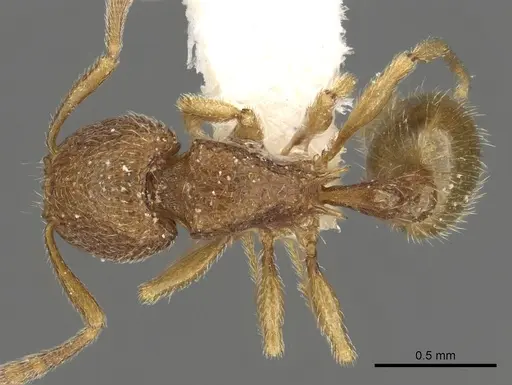
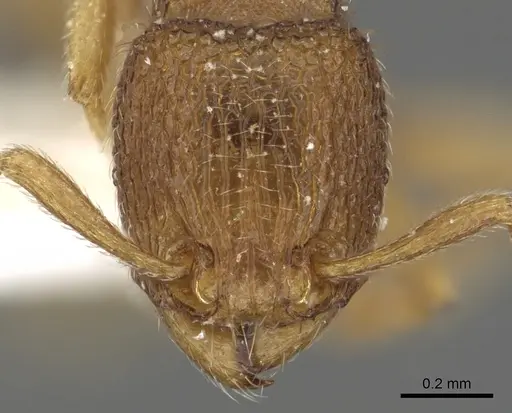
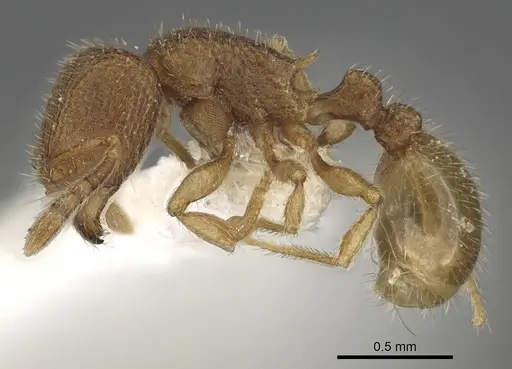
CASTYPE12627
Посмотреть на AntWeb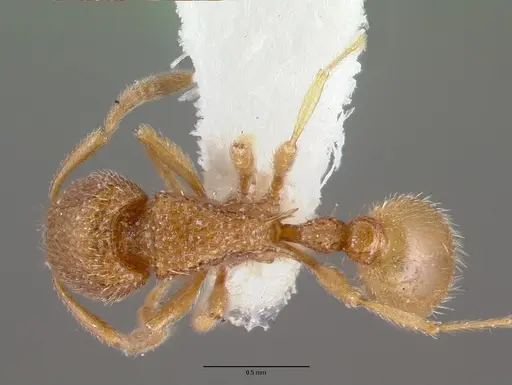
Литература
Загрузка карты распределения...Загрузка товаров...