
Tetramorium elisabethae
- Науч. назв.
- Tetramorium elisabethae
- Триба
- Crematogastrini
- Подсемейство
- Myrmicinae
- Автор
- Forel, 1904
- Распространение
- Встречается в 0 странах
Введение
Tetramorium elisabethae is a tiny ant species native to the Himalayan region of India, specifically found in Jammu & Kashmir . Workers measure just 2.9-3.1 mm in total length and have a uniform pale yellow coloration . This species belongs to the Tetramorium inglebyi group and is characterized by very small eyes with only about seven facets, short triangular propodeal spines, and a high, thin petiolar node [17286,AntWiki]. The reduced eyes and specialized gaster shape may hint at a subterranean or shaded lifestyle, but no field observations exist to confirm this . What makes T. elisabethae particularly challenging is its extreme lack of biological data. It is endemic to India, found at elevations around 2000 m in the western Himalayas . Despite being described in 1904,virtually nothing is known about its colony structure, founding behavior, diet, or seasonal activity . This makes it a species only for experienced keepers who enjoy working with poorly documented ants.
Quick Summary
- Difficulty: Expert
- Origin & Habitat: Endemic to the Himalayan region of India, specifically Jammu & Kashmir, at elevations around 2000 m. The high-altitude temperate setting suggests a preference for cool, seasonal conditions.
- Colony Type: Unconfirmed, no data exists on social structure. Most Tetramorium are monogyne (single queen), but this has not been verified for T. elisabethae.
- Size & Growth:
- Queen: Unknown, queen caste has not been described in the literature.
- Worker: 2.9-3.1 mm (total length) [2]
- Colony: Unknown, no colony size data available.
- Growth: Unknown, no development data exists.
- Development: Unknown, no data exists for this species. (No direct or inferred data available. Any estimate would be pure speculation.)
- Antkeeping:
- Temperature: Unknown, no data. Based on high-altitude origin, cool to temperate conditions (18-22°C) may be suitable, but this is speculative. Provide a gradient and monitor closely.
- Humidity: Unknown. As a preliminary guess, keep the nest substrate moderately moist but not waterlogged, with a drier area for the ants to choose.
- Diapause: Likely required, given the high-altitude Himalayan origin. If kept, provide 2-3 months of cool winter rest at 5-10°C. This is an estimate only.
- Nesting: Natural nesting behavior is unconfirmed [2]. Based on related Tetramorium, they probably nest in soil under stones or in shallow ground cavities. In captivity, a test tube or small Y-tong nest with narrow chambers works.
- Behavior: Behavior is unstudied. Based on the genus, workers are likely ground-foraging ants that scavenge small insects and tend aphids for honeydew. Their tiny eyes suggest they rely heavily on chemical cues rather than vision. Workers are only 2.9-3.1 mm, so excellent escape prevention is mandatory, they can slip through standard mesh. As a member of the Myrmicinae subfamily (tribe Crematogastrini), their defense is a specialized smearing sting, not a piercing one. The venom is unlikely to be noticeable to humans.
- Common Issues: complete lack of biological data, all care recommendations are educated guesses based on habitat and related species, not proven, escape risk is extreme due to tiny worker size, use fine mesh or fluon barriers, temperature and hibernation requirements are uncertain, observe colony response closely, this species is extremely rare in the hobby, obtaining a colony may be difficult and wild collection may be restricted, founding behavior is unconfirmed, do not assume claustral or semi-claustral without observation
Origin and Distribution
Tetramorium elisabethae is endemic to India, recorded only from the Himalayan region of Jammu & Kashmir [1]. It was originally described by Forel in 1904 from specimens collected in the Sind Valley, Kashmir [3]. The species is reported at elevations around 2000 meters above sea level [4]. A dubious record for Nepal exists but is unverified [5]. This restricted distribution makes it a rare, geographically isolated member of the Tetramorium inglebyi group.
Identification and Morphology
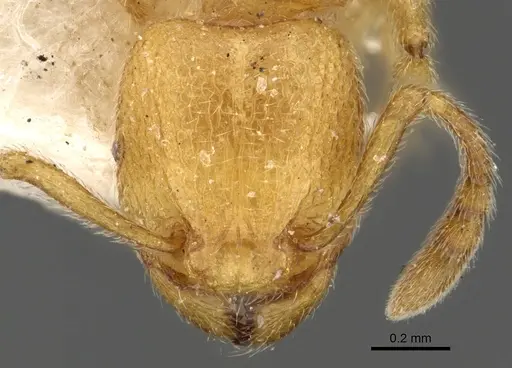
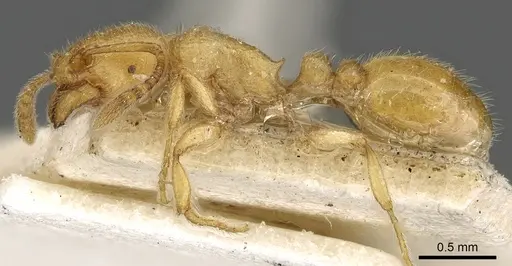
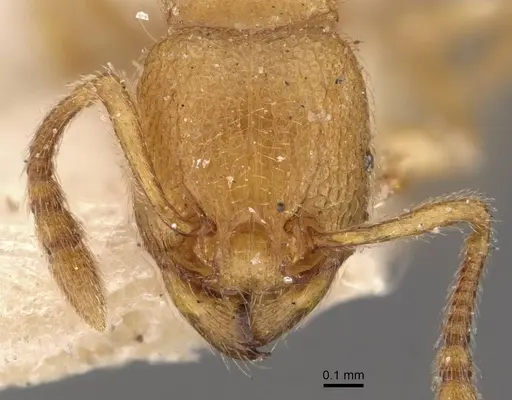
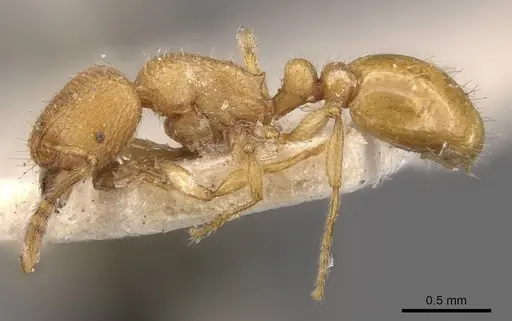
Workers of Tetramorium elisabethae are small, measuring 2.9-3.1 mm in total length [2]. Their body is uniformly pale yellow, without any darker markings [2]. The eyes are extremely reduced, with only about seven facets, and the propodeal spines are short and triangular. The petiolar node is high and thin in profile, and in dorsal view both the petiole and postpetiole are distinctly broader than long [6]. The frontal carinae are very short, ending at or before the anterior margins of the eyes [2]. The first gastral tergite is smooth and shiny, without sculpture [6]. These features place the species in the Tetramorium inglebyi group, characterized by specialized gaster shapes and reduced eyes [6].
Temperature and Care
No biological data exists for this species [2]. Based on its high-altitude Himalayan habitat, cooler temperatures are likely ideal. Start around 18-22°C and watch the colony’s reaction. Provide a temperature gradient by placing a small heating cable on one side of the nest, allowing ants to self-regulate. Unlike tropical species, they probably do not tolerate prolonged heat. Because nothing is known, any specific recommendations are speculative and require careful observation.
Housing and Nesting
With workers only 2.9-3.1 mm, escape prevention is critical. Use test tubes with tight cotton stoppers, fine-mesh ventilation, or fluon-coated barriers. Natural nesting habits are unconfirmed [2], but related Tetramorium often nest in soil under stones or in shallow cavities. For captivity, start with a small test tube setup for founding. Once established, a small Y-tong or soil nest with narrow chambers scaled to their tiny size works well. Avoid oversized chambers, which may stress the colony.
Feeding and Diet
Feeding habits have not been documented [2]. Based on typical Tetramorium behavior, they may scavenge small insects and tend honeydew-producing insects. Offer tiny protein sources such as fruit flies, small mealworms, or springtails. Sugar water or honey can be tried in small amounts. Remove uneaten food within 24-48 hours to prevent mold. Since no data exists, acceptance of any food is uncertain, observe and adjust.
Seasonal Care and Overwintering
The high-altitude Himalayan origin strongly suggests the need for a winter dormancy period. If you keep this species, provide 2-3 months of cold conditions at 5-10°C during winter. This is an estimate based on the habitat of similar high-altitude ants, no direct data exists [2]. Reduce feeding gradually and keep the nest from drying out completely, but avoid excess moisture. Do not move colonies abruptly in or out of cold conditions. The timing of any nuptial flights is unknown.
Frequently Asked Questions
How long does it take for Tetramorium elisabethae to produce first workers?
Unknown. No development data exists for this species [2]. Any estimate would be pure speculation.
Can I keep Tetramorium elisabethae in a test tube?
Yes, a test tube setup is appropriate. Use a well-secured cotton stopper and ensure excellent escape prevention, their tiny size means they can fit through very small gaps. A water reservoir provides humidity. Monitor for mold and replace if needed.
Do Tetramorium elisabethae ants sting?
As a member of Myrmicinae (tribe Crematogastrini), they have a specialized spatulate stinger used for smearing venom, not for piercing. Their venom is unlikely to be noticeable to humans. Defense is primarily chemical and smearing, not a typical sting.
What temperature do Tetramorium elisabethae need?
No data exists [2]. Based on their high-altitude Himalayan origin, cool to temperate conditions (around 18-22°C) are a reasonable starting point. Provide a temperature gradient and monitor the colony closely.
Are Tetramorium elisabethae good for beginners?
No. This species is not recommended for beginners. There is no biological data to base care on [2], and all recommendations are speculative. It is also extremely rare in the hobby.
Do Tetramorium elisabethae need hibernation?
Likely yes, given their high-altitude Himalayan origin. A winter dormancy period of 2-3 months at 5-10°C is recommended, but this is an estimate, no direct data exists [2]. Gradual temperature transition is important.
How big do Tetramorium elisabethae colonies get?
Unknown. No colony size data exists for this species [2]. Any estimate is purely speculative.
Where can I get Tetramorium elisabethae?
This species is extremely rare in the antkeeping hobby. It is endemic to the Himalayan region of India and has not been commonly collected or exported. Wild collection may be legally restricted. Connect with specialized antkeepers or researchers working with Indian fauna.
What do Tetramorium elisabethae eat?
Diet is unconfirmed [2]. As a guess, offer small insects (fruit flies, springtails) and sugar water. Acceptance is not guaranteed. Remove uneaten food within 24-48 hours to prevent mold.
Can I keep multiple Tetramorium elisabethae queens together?
Colony structure is unconfirmed. Most Tetramorium are monogyne, but polygyny occurs in some species. Combining unrelated queens is not recommended given the lack of data. Keep foundresses separately until a colony is established.
Report an Issue
The current care sheet is based fully on literature. See inconsistencies, or something that's incorrect? Please , it will be resolved after review from an admin. Contributing to the blogs tab also helps providing information, to make us be able to further improve the caresheets. Thank you for your support!
References

Эта инструкция по уходу лицензирована по CC BY-SA 4.0 .
Блоги сообщества
CASENT0901107
Посмотреть на AntWeb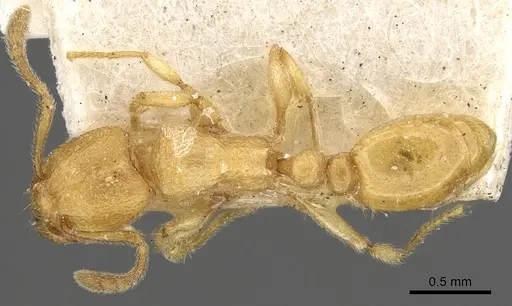
CASENT0909166
Посмотреть на AntWeb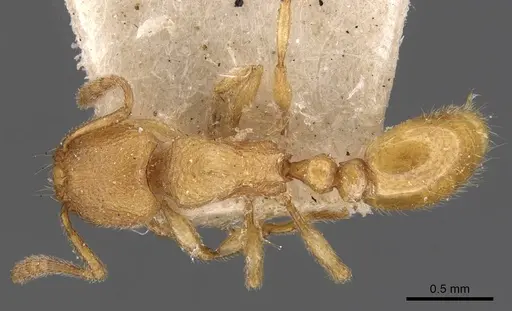
Литература
Загрузка карты распределения...Загрузка товаров...