
Tetramorium cyclolobium
- Науч. назв.
- Tetramorium cyclolobium
- Триба
- Crematogastrini
- Подсемейство
- Myrmicinae
- Автор
- Xu & Zheng, 1994
- Распространение
- Встречается в 0 странах
Введение
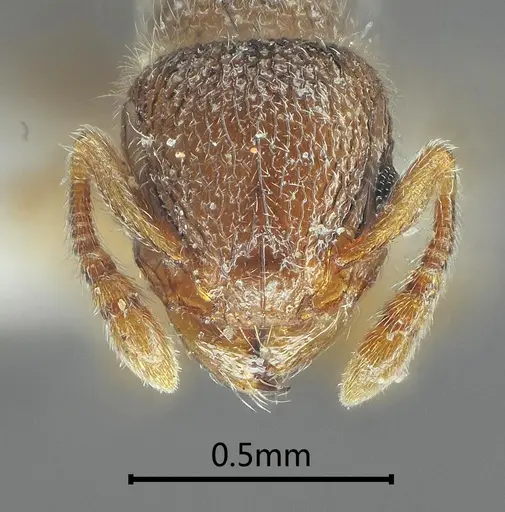
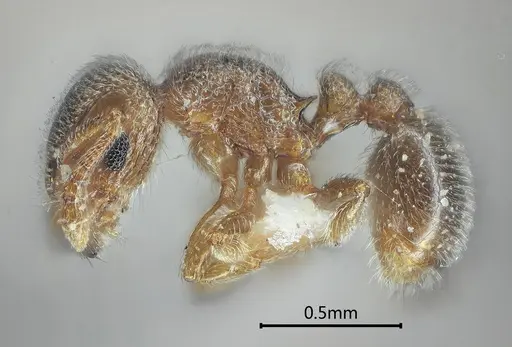
Tetramorium cyclolobium is a tiny ant native to southern China, specifically Guangxi and Yunnan Provinces . Workers measure just 1.9-2.1mm in total length, making them one of the smaller ant species you'll encounter . Their body is yellowish brown with a dark brown to black head and gaster, giving them a two-toned look. The species was described in 1994 by Xu and Zheng; you can tell it apart from its close relative Tetramorium walshi by the rounded metapleural lobes and the arched connection between the petiole node and peduncle . Almost nothing is known about this species in the wild. No one has documented its colony structure, nesting habits, diet, or reproduction. All we know is that it lives in subtropical forests of southern China . That means you'll need to rely on general Tetramorium care principles and be ready to adjust based on how your colony behaves.
Quick Summary
- Difficulty: Unknown
- Origin & Habitat: Guangxi and Yunnan Provinces in southern China, a subtropical region with warm temperatures and high humidity [2][1]
- Colony Type: Colony structure is unconfirmed. Most Tetramorium species have single-queen colonies, but this species has not been studied.
- Size & Growth:
- Queen: Unknown, no queen has been described [2]
- Worker: 1.9-2.1mm total length [2]
- Colony: Unknown, no data exists
- Growth: Unknown, estimated as moderate based on typical Tetramorium patterns
- Development: Estimated 6-8 weeks based on typical Tetramorium development at warm temperatures (This is an estimate based on genus-level data, no species-specific development data exists)
- Antkeeping:
- Temperature: Estimated 22-26°C based on subtropical origin, start around 24°C and observe colony activity [1]
- Humidity: Estimated moderate to high. Keep the nest substrate consistently moist but not waterlogged [1]
- Diapause: Unknown, Guangxi has mild winters, so a true diapause may not be required
- Nesting: No natural nesting data exists. Based on typical Tetramorium preferences, they likely nest in soil or under stones. A test tube or small Y-tong nest works well for their tiny size.
- Behavior: Not documented. Given their tiny size, escape prevention is critical. They can squeeze through very small gaps. Handle gently as their small bodies are fragile. Belongs to the Myrmicinae subfamily with a smearing defense mechanism using a flattened stinger.
- Common Issues: no biological data means care is based on estimates, monitor colony health closely, tiny size makes escape prevention essential, use fine mesh and seal all gaps, diet preferences unknown, start with standard ant foods and adjust based on acceptance, founding behavior unconfirmed, assume claustral but watch for other patterns, humidity requirements are estimated, adjust based on ant behavior
Housing and Nest Setup
Since almost nothing is known about this species' natural nesting, you'll work from general Tetramorium guidelines. Their tiny 2mm body means they need scaled housing, test tubes work well for founding colonies, and small Y-tong (AAC) nests with narrow chambers are great for observation. Avoid large open spaces that make small ants feel exposed. Keep the nest simple and expand it as the colony grows. Providing a small area with soil may be helpful, as many Tetramorium species like to dig [2].
Feeding and Diet
No specific diet data exists for T. cyclolobium. Based on typical Tetramorium behavior, they are generalist omnivores that forage for small insects, honeydew, and seeds. In captivity, start with a sugar source (sugar water or honey) and protein like fruit flies, pinhead crickets, or small mealworms. Offer sugar water constantly and protein 2-3 times a week. Remove uneaten food to prevent mold. Be ready to experiment, watch what your colony accepts best [2].
Temperature and Heating
This species comes from Guangxi and Yunnan, a subtropical region with warm, humid conditions [1]. This suggests they prefer temperatures in the 22-26°C range. Start at 24°C and watch your colony. If workers seem sluggish, warm it slightly. If they avoid the warm area, lower the temperature. A heating cable on one side creates a gradient. Stability matters more than hitting an exact number, room temperature in the low-to-mid 20s°C may be enough.
Humidity and Water
Guangxi has a humid subtropical climate, so T. cyclolobium likely needs moderate to high moisture. Estimate humidity around 60-80%. Keep the nest substrate consistently moist, it should feel damp but not waterlogged. In test tubes, make sure the water reservoir is large enough so the cotton stays damp without flooding. Provide a water source through moist substrate or a small tube. Watch for condensation as a sign of too much humidity. Adjust based on your ants, if they avoid wet areas, reduce moisture, if they cluster near it, increase it [1].
Behavior and Temperament
No behavioral data exists for this species. Tetramorium ants in general are active foragers and moderately territorial. Their tiny 2mm size means they move quickly and may startle easily. Escape prevention is critical, they can slip through gaps you'd think are impossible. Handle colonies gently to avoid crushing them. As a Myrmicinae ant, they may bite or sting, but the tiny size makes any sting very mild. Their primary defense is likely escape. Belongs to a group with a smearing defense mechanism using a flattened stinger. [2]
Colony Founding
No documented colony founding exists for this species. Based on typical Tetramorium patterns, the queen likely seals herself in a chamber and raises her first brood without feeding (claustral founding), living off her fat reserves until nanitics emerge. This is an inference, not a confirmed fact. When founding, provide a quiet, dark spot and minimize disturbances. The tube should be small, too large a space stresses the queen. Wait patiently after she seals herself, don't open the tube to check. First workers (nanitics) may take 6-8 weeks based on genus estimates [2].
Frequently Asked Questions
How long does it take for Tetramorium cyclolobium to go from egg to worker?
Unknown for this species. Based on typical Tetramorium development at warm temperatures (around 24°C), estimate 6-8 weeks from egg to first worker. This is a guess based on genus-level data. Be patient, development may be slower if conditions are not ideal.
What do Tetramorium cyclolobium ants eat?
No specific diet data exists. Likely they accept sugar sources (honey, sugar water) and small protein prey (fruit flies, small insects). Start with these standard foods and watch what your colony prefers. Remove uneaten food to prevent mold.
Can I keep Tetramorium cyclolobium in a test tube?
Yes, a test tube setup is appropriate for this tiny 2mm ant. Use a small tube with a water reservoir and cotton plug. Keep it dark or covered to reduce stress. This works well for founding and can be expanded later. Ensure escape prevention is excellent, small gaps are a risk.
Do Tetramorium cyclolobium ants sting?
This species belongs to the Myrmicinae subfamily, which includes many species with functional stingers. However, no stinging behavior has been documented for T. cyclolobium. Given their tiny 2mm size, any sting would be very mild. They may bite if threatened, but escape is likely their primary defense.
Are Tetramorium cyclolobium good for beginners?
Hard to say since so little is known. Their tiny size makes them slightly more challenging, escape prevention is critical. If you've kept other Tetramorium, this one follows similar principles. For complete beginners, a species with documented care may be easier. But if you're ready to experiment and observe, you can try it.
What temperature should I keep Tetramorium cyclolobium at?
No specific data exists. Based on their subtropical origin in Guangxi and Yunnan, estimate 22-26°C. Start around 24°C and adjust based on colony activity. If workers are active and foraging, temperature is likely fine. Avoid big swings. Room temperature in the low-to-mid 20s°C may be enough [1].
How big do Tetramorium cyclolobium colonies get?
No colony size data exists. Based on typical Tetramorium patterns, colonies likely reach several hundred workers over time, but that's a guess. Their small worker size suggests moderately sized colonies, not supercolonies. Expect slow growth over many months to years.
Do Tetramorium cyclolobium need hibernation or diapause?
No data on overwintering exists. Guangxi has mild winters, so they may not need a true diapause. If the colony naturally becomes less active in winter, you can reduce temperature slightly (to around 18-20°C). Never force hibernation on species with unknown requirements.
Why is nothing known about Tetramorium cyclolobium biology?
This species was described in 1994 from Guangxi, China, but has received little scientific attention since [2]. Many ant species, especially from less-studied regions, lack detailed research. Only a fraction of the thousands of ant species have documented biology. Your observations as a keeper could contribute valuable information.
How do I prevent Tetramorium cyclolobium from escaping?
Escape prevention is critical for this 2mm ant. They can squeeze through very small gaps. Use tight-fitting lids, apply fluon to edges of openings, and seal all connections between outworld and nest. Check for tiny gaps regularly. Use fine mesh for ventilation openings.
Report an Issue
The current care sheet is based fully on literature. See inconsistencies, or something that's incorrect? Please , it will be resolved after review from an admin. Contributing to the blogs tab also helps providing information, to make us be able to further improve the caresheets. Thank you for your support!
References

Эта инструкция по уходу лицензирована по CC BY-SA 4.0 .
Блоги сообщества
ANTWEB1060607
Посмотреть на AntWeb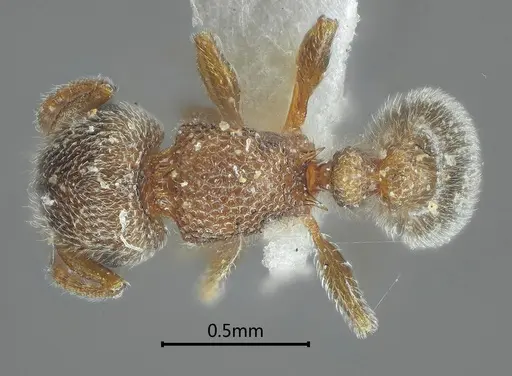
Литература
Загрузка карты распределения...Загрузка товаров...