
Tetramorium bendai
- Науч. назв.
- Tetramorium bendai
- Триба
- Crematogastrini
- Подсемейство
- Myrmicinae
- Автор
- Hita Garcia <i>et al.</i>, 2010
- Распространение
- Встречается в 0 странах
Введение
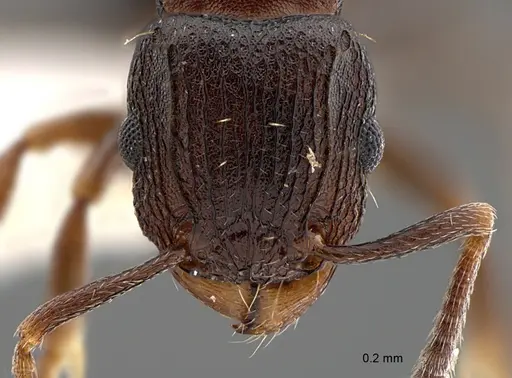
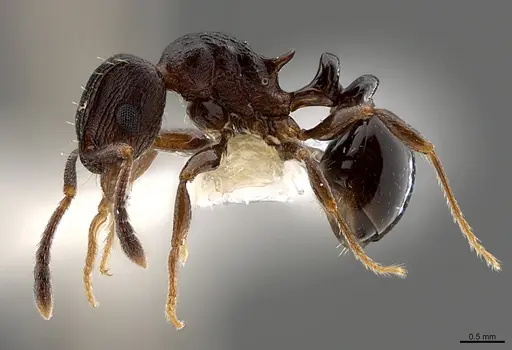
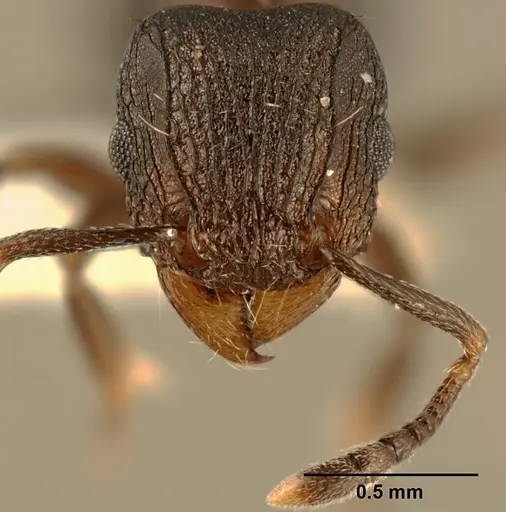
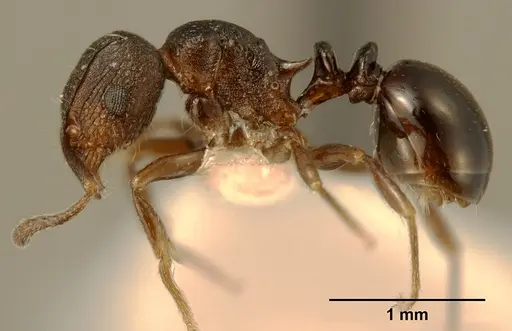
Tetramorium bendai is a tiny African ant known only from a single collection in Burundi . Workers are uniformly dark brown and have a distinct look: the head and mesosoma are covered in a dense, net-like sculpturation overlaid with fine ridges, while the petiole and postpetiole are flattened and scale-like. Unlike most ants, workers have no standing hairs on the mesosoma, petiole, postpetiole, or first segment of the gaster - a rare trait shared with only a few close relatives . This species belongs to the Tetramorium weitzeckeri group, but because only 14 workers have ever been found, almost nothing is known about its biology or behavior .
Quick Summary
- Difficulty: Unknown
- Origin & Habitat: Only known from Bujumbura, Burundi, in the Afrotropical region [1]. The collection site had no ecological notes, but Burundi's tropical highland climate suggests a warm, seasonally wet environment. Based on typical Tetramorium habits, these ants likely nest in soil or under stones [1][3].
- Colony Type: Unknown, no data on colony structure exists. Most Tetramorium species are monogyne (single queen), but this is speculation for T. bendai [1].
- Size & Growth:
- Queen: Undescribed, no queens have been collected or described [1]
- Worker: Body length not directly reported, morphometric data from the type description focus on head and mesosoma lengths, which are small (head ~0.8mm, mesosoma ~1mm). Based on related Tetramorium, workers likely measure around 3-4mm total [1].
- Colony: Unknown, only 14 workers were ever collected [1]
- Growth: Unknown
- Development: Unknown, no developmental data exists. Based on similar Tetramorium species at warm temperatures, expect around 6-10 weeks [1]. (This is a rough estimate from genus-level patterns, no direct observations for T. bendai.)
- Antkeeping:
- Temperature: Based on its Burundi origin (tropical East Africa), keep these ants warm at 24-28°C. This aligns with typical Tetramorium preferences [1].
- Humidity: Provide moderate to high humidity. Keep the nest substrate consistently moist but not waterlogged, these are ground-nesting ants that likely experience stable moisture in their natural habitat [3].
- Diapause: Unknown, no data exists. Given Burundi's equatorial location with minimal temperature variation, diapause is unlikely, but seasonal activity changes have not been studied [1].
- Nesting: Based on typical Tetramorium biology, these ants likely nest in soil or under stones. In captivity, start with a test tube setup for founding, then move to a Y-tong or plaster nest as the colony grows. Use moist substrate and minimal ventilation to hold humidity [1][3].
- Behavior: No direct observations exist for Tetramorium bendai. Based on its subfamily (Myrmicinae), these ants have a functional stinger, but they likely use a 'smear' defense, wiping venom onto enemies rather than piercing them. Typical Tetramorium are non-aggressive ground-nesters that forage individually for small prey and honeydew. Given their tiny size (3-4mm), escape prevention is critical, use fine mesh or tight seals [1][3].
- Common Issues: unknown temperature and humidity needs, your colony may fail without experimenting with conditions, escape risk due to tiny size, workers can squeeze through small gaps in standard setups, lack of feeding observations, start with sugar water and small live prey like fruit flies or springtails, and adjust based on acceptance, queen founding behavior is unconfirmed, treat as claustral (sealed-in queen) until evidence suggests otherwise, but be prepared for surprises, no captive colonies have ever been documented, every keeper is a pioneer, so careful note-taking is essential
Species Identification and Distinction
Tetramorium bendai is easy to tell apart from other ants in its group by three traits: dense net-like (reticulate-punctate) sculpturation on the head and mesosoma, a complete lack of standing hairs on the mesosoma and first gaster segment, and a very wide, flattened postpetiole (scale-like in shape) [1][2]. The postpetiole is wider than in similar species like Tetramorium humbloti, Tetramorium sepultum, and Tetramorium tanaense [1]. Workers are uniformly dark brown [1]. This species belongs to the Tetramorium weitzeckeri group, specifically the weitzeckeri complex [2].
Distribution and Known Range
Tetramorium bendai is known only from Bujumbura, Burundi, where 14 workers were collected on May 27,1977,by A. Dejean [1]. No additional collections or observations have been reported since its description in 2010 [1][2]. This makes it one of the rarest ant species in Africa. Burundi's geography, a tropical highland near Lake Tanganyika, suggests a warm, humid climate, but no ecological data was recorded at the collection site [1].
Housing and Nest Setup
Since no captive husbandry data exists, you will need to rely on genus-level guidance. For a founding queen, set up a simple test tube: fill one-third with water, plug with cotton, and place the queen inside. Keep the cotton damp but not soggy. As the colony grows, move them to a Y-tong or plaster nest with small chambers that match their tiny size. Keep the nest substrate consistently moist but not waterlogged. Connect the nest to an outworld (foraging area) with tubing. Because adult workers are very small (around 3-4mm), use fine mesh barriers on all openings to prevent escape [1][3].
Feeding and Diet
No specific diet is known for Tetramorium bendai. Tetramorium ants generally eat a mix of sugars and small insects. In captivity, offer sugar water or diluted honey as an energy source, plus small protein items like fruit flies, springtails, or pinhead crickets. Since workers are small, choose appropriately sized prey. Remove leftovers after a day to prevent mold. Feed every 2-3 days for established colonies, and keep sugar water available at all times [1][3].
Temperature and Seasonal Care
Based on their origin in Burundi (tropical East Africa), keep Tetramorium bendai warm, aim for 24-28°C. Use a heating cable or mat on one side of the nest to create a temperature gradient so the ants can choose. Avoid long periods below 20°C. No data exists on diapause (hibernation), and since Burundi is near the equator with little temperature change through the year, a true hibernation period is unlikely. You may see less activity in cooler months, if that happens, reduce feeding and keep the temperature around 20-22°C rather than a full cold period [1].
Challenges and Unknowns
Tetramorium bendai is one of the least-studied ant species in the world. No captive colonies have ever been raised, and no biological information exists beyond the original specimen collection [1][2]. Everything about caring for them, founding behavior, growth timeline, colony size, exact temperature needs, must be guessed from related species. This makes T. bendai a species only for experienced keepers who enjoy experimenting. Be ready to adjust conditions based on what your colony does. Document your observations carefully, any data you collect would be scientifically valuable [1].
Frequently Asked Questions
How do I care for Tetramorium bendai ants?
No established care protocol exists, this species is only known from a single wild collection. Based on typical Tetramorium biology, give them a warm (24-28°C), humid setup with moist substrate. Start with a test tube for the founding queen, then move to a Y-tong or plaster nest as the colony grows. Feed sugar water and small insects. This is an experimental species, adjust based on your colony's behavior [1].
What do Tetramorium bendai ants eat?
Specific preferences are unknown. Based on genus patterns, they likely accept sugar sources (honey, sugar water) and small prey (fruit flies, springtails, tiny arthropods). Start with small live prey and sugar water, then watch what your colony accepts. Remove uneaten food promptly to avoid mold [1][3].
How big do Tetramorium bendai colonies get?
Unknown, this species has never been observed in a mature colony. Only 14 workers were ever collected. Related Tetramorium species can reach several hundred to a few thousand workers, but this is pure speculation [1].
Do Tetramorium bendai ants sting?
They have a functional stinger (like other Myrmicinae), but given their tiny size (3-4mm), any sting would be barely noticeable to humans. They are not considered dangerous or aggressive. Their defense is more likely a 'smear' of venom rather than a piercing sting.
What temperature do Tetramorium bendai ants need?
Based on their origin in Burundi (tropical East Africa), keep them at 24-28°C. Avoid temperatures below 20°C for long. Use a heating cable on one side of the nest to create a gradient [1].
Are Tetramorium bendai good for beginners?
No, this is not a beginner species. No captive data exists, and care must be inferred from guesswork. It's best for experienced keepers who enjoy experimenting [1].
How long does it take for Tetramorium bendai eggs to become workers?
Unknown, no developmental data exists for this species. Based on typical Tetramorium development at 24-28°C, expect about 6-10 weeks from egg to worker. That's a rough genus-level estimate [1].
Where is Tetramorium bendai found in the wild?
Only known from Bujumbura, Burundi, a single collection on May 27,1977. No further records exist. It could be one of the rarest ant species [1][2].
Can I keep multiple Tetramorium bendai queens together?
Unknown, colony structure has not been documented. Most Tetramorium are monogyne (single queen), but some species accept multiple queens. Without data, it's not recommended to combine unrelated queens [1].
What makes Tetramorium bendai different from other Tetramorium?
T. bendai has a unique combination: dense net-like sculpturation on head and mesosoma, no standing hairs on the body, and a very wide, flattened postpetiole. It's only known from Burundi and is one of the rarest described ant species [1][2].
Report an Issue
The current care sheet is based fully on literature. See inconsistencies, or something that's incorrect? Please , it will be resolved after review from an admin. Contributing to the blogs tab also helps providing information, to make us be able to further improve the caresheets. Thank you for your support!
References

Эта инструкция по уходу лицензирована по CC BY-SA 4.0 .
Блоги сообщества
CASENT0217328
Посмотреть на AntWeb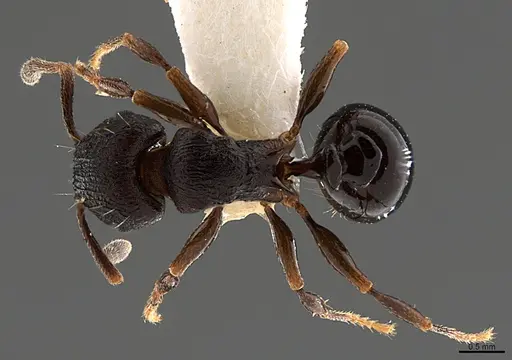
ZFMKHYM20096204
Посмотреть на AntWeb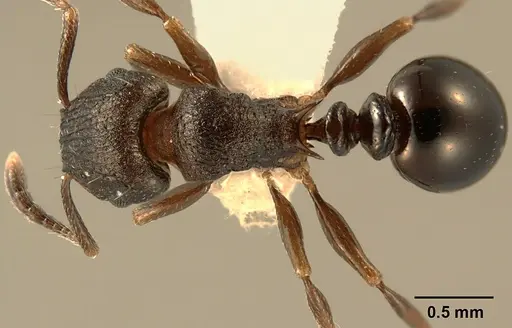
Литература
Загрузка карты распределения...Загрузка товаров...