
Tetramorium barryi
- Науч. назв.
- Tetramorium barryi
- Триба
- Crematogastrini
- Подсемейство
- Myrmicinae
- Автор
- Mathew, 1981
- Распространение
- Встречается в 0 странах
Введение
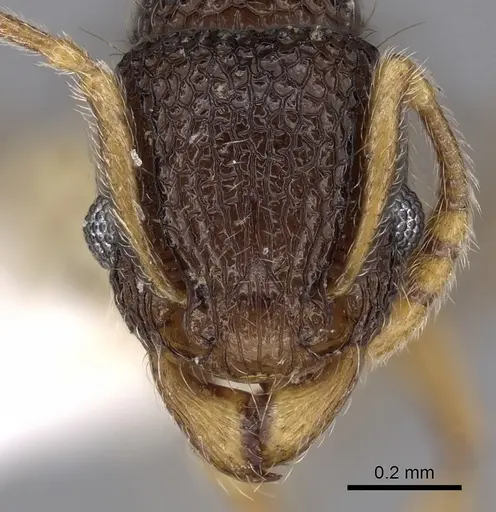
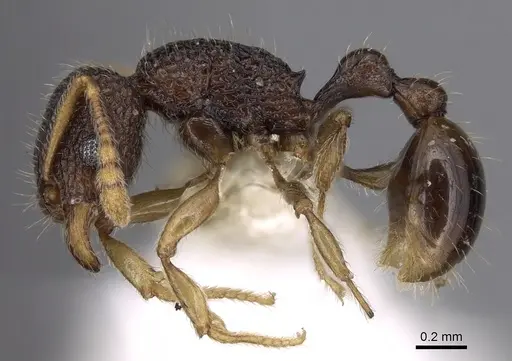
Tetramorium barryi is a small, dark brown ant from northeastern India. Workers are 2.3-2.6 mm long . Their head is longer than broad with mildly convex sides, the body has a rough (reticulate rugose) surface on the head and thorax, while the petiole node and abdomen are smooth and shiny . This species belongs to the *Tetramorium tonganum* group, and its petiolar node is prominently enlarged and elongated in profile . It was first described in 1981 from the East Khasi hills in Meghalaya, and later also recorded in Arunachal Pradesh .
Quick Summary
- Difficulty: Easy
- Origin & Habitat: Endemic to northeastern India: Meghalaya (East Khasi hills) and Arunachal Pradesh [1][3]. The Khasi hills have a humid subtropical climate with moderate elevations.
- Colony Type: Colony structure is unconfirmed, no published data on queen number or social organisation.
- Size & Growth:
- Queen: No specific size data available. Based on related *Tetramorium* species, queens are likely larger than workers (estimated ~5-7 mm).
- Worker: 2.3-2.6 mm [1]
- Colony: Colony size data unavailable. Inferred from related species, colonies might reach up to several hundred workers at maturity.
- Growth: Moderate (inferred from genus patterns)
- Development: No direct data. Based on typical *Tetramorium* development at 24-28 °C, estimated 6-10 weeks. (Timing depends on temperature and feeding, specific measurements for this species are lacking.)
- Antkeeping:
- Temperature: Keep colonies at 24-28 °C for best brood development. Provide a gradient with a cooler zone around 22 °C. These ants come from a warm subtropical climate, avoid prolonged temperatures below 18 °C.
- Humidity: Moderate to high, keep the nest substrate consistently moist but not waterlogged. The Khasi hills are humid, so dry conditions should be avoided.
- Diapause: No true diapause required. Since the species lives in a subtropical region without harsh winters, you can slow activity slightly in winter by lowering to ~20 °C, but it is not necessary.
- Nesting: Y‑tong (AAC), plaster, or test tube nests work well. Provide a moist substrate and fine ventilation holes to prevent escapes due to the ants’ small size.
- Behavior: Workers are active foragers that move relatively slowly. They are not aggressive toward humans but will defend their nest. Like other Crematogastrini, Tetramorium barryi uses a smear defense: it has a modified flattened stinger to wipe venom onto attackers rather than piercing skin. The venom is a mild topical irritant. Their tiny size (2.3-2.6 mm) makes escape prevention critical, use fine mesh or barrier coatings.
- Common Issues: tiny size makes escapes likely unless all gaps are sealed with fine mesh, no data on founding behavior, avoid assuming claustral founding, offer food regularly during the first weeks, wild‑caught colonies may carry mites or diseases, quarantine new stock, overheating above 32 °C can kill brood, while slight under‑heating only slows growth, dry conditions quickly lead to colony decline, monitor nest moisture closely
Housing and Nest Setup
Because workers are only 2.3-2.6 mm [1], all nest openings must be covered with fine mesh (e.g.,0.5 mm). Y‑tong (AAC) or plaster nests with a constant moisture source work well. Test tubes are perfect for starting a queen, keep the tube dark and humid. Once the colony has about 20-30 workers you can move them to a formicarium, but there is no rush. Avoid large outworlds, a small container (e.g.,15 × 20 cm) is enough. The ants are not strong climbers, but still apply fluon or PTFE tape to the edges for safety.
Feeding and Diet
Like most Tetramorium, this species is omnivorous. Offer small insects (fruit flies, pinhead crickets, mealworm pieces) for protein, and sugar water, honey, or diluted jam for carbohydrates. They will also scavenge dead insects. Feed every 2-3 days, remove leftovers to prevent mold. During founding, provide a tiny drop of sugar water and small prey once a week. No specific dietary data exists for T. barryi, so these are general recommendations for the genus.
Temperature and Seasonal Care
Keep the nest area at 24-28 °C for optimal brood development. A heat cable on one side creates a gradient (warm end 26-28 °C, cool end ~22 °C). These ants come from a warm subtropical climate, avoid temperatures below 18 °C for long periods. In winter you can let them slow down slightly at ~20 °C, but true hibernation is not needed. Room temperature (20-24 °C) will work, but development will be slower. [3]
Humidity and Water
Keep the nest substrate consistently moist, not wet, but never bone‑dry. The Khasi hills have high rainfall, so these ants prefer a humid environment. Provide a water source in the outworld (a small dish with cotton or a water tube). Mist the nest only if the substrate starts to dry out. Over‑misting can lead to mold, balance is key. [3]
Behavior and Colony Dynamics
Workers are slow‑moving foragers that search individually. They do not form large raiding columns. The enlarged petiolar node (visible in profile) is a distinguishing feature of the tonganum group [2]. Defense is by venom smearing: the stinger is flattened and used to wipe venom onto enemies rather than injecting it. This means you will not get a typical sting, but the venom can be a mild skin irritant. The tiny size also makes them prone to escaping, so always handle the nest over a tray.
Handling and Safety
Handling is safe, the stinger is not used to pierce, so there is no puncture risk. The venom is mild, but sensitive individuals might experience slight redness. Use a soft brush or aspirator to move ants if needed. Always seal the nest securely, their size means they can squeeze through gaps of 0.5 mm or less. [1]
Frequently Asked Questions
How long does it take for Tetramorium barryi to raise their first workers?
No direct data. Based on related Tetramorium species, expect first workers after about 6-10 weeks at 24-28 °C. Timing depends on temperature and queen condition.
Can I keep Tetramorium barryi in a test tube?
Yes, test tubes work well for founding. Keep the tube dark and humid. Once there are 20-30 workers you can move them to a formicarium, but it is not urgent.
Do Tetramorium barryi ants sting?
They do not sting in the usual way. Instead, they smear venom using a modified flattened stinger (typical of Crematogastrini). The venom is a mild topical irritant, not a piercing sting.
What do Tetramorium barryi eat?
They are omnivorous. Offer small insects (fruit flies, pinhead crickets) and sugar water, honey, or diluted jam. Remove uneaten food after 2-3 days.
Are Tetramorium barryi good for beginners?
Yes, they are small, not aggressive, and do not require hibernation. The main challenge is preventing escapes due to their tiny size. Patience is needed because founding data are lacking.
Do Tetramorium barryi need hibernation?
No true hibernation is needed. They come from a subtropical climate. You may reduce the temperature to ~20 °C in winter for a mild slowdown, but it is optional. Avoid long periods below 18 °C.
How big do Tetramorium barryi colonies get?
No colony size data exist for this species. Related Tetramorium species can reach several hundred workers, but this is a guess.
When should I move Tetramorium barryi to a formicarium?
Move them when the test tube becomes crowded (20-30+ workers). A Y‑tong or plaster nest with controlled humidity works best. Let the ants move on their own by connecting the nests.
Why is my Tetramorium barryi colony declining?
Common causes: dryness (increase nest moisture), temperatures too low (keep at 24-28 °C), mold from overwatering, or parasites from wild colonies. Check humidity first.
Can I keep multiple Tetramorium barryi queens together?
No colony data exist, but most Tetramorium are monogyne. It is safest to assume only one queen per colony. If you catch multiple foundresses, house them separately to avoid fighting.
What temperature is best for Tetramorium barryi?
24-28 °C is ideal, with a cooler zone (~22 °C). Avoid temperatures below 18 °C or above 32 °C.
Where is Tetramorium barryi found in the wild?
It is endemic to northeastern India: Meghalaya (East Khasi hills) and Arunachal Pradesh [1][3][2].
Report an Issue
The current care sheet is based fully on literature. See inconsistencies, or something that's incorrect? Please , it will be resolved after review from an admin. Contributing to the blogs tab also helps providing information, to make us be able to further improve the caresheets. Thank you for your support!
References

Эта инструкция по уходу лицензирована по CC BY-SA 4.0 .
Блоги сообщества
CASENT0280889
Посмотреть на AntWeb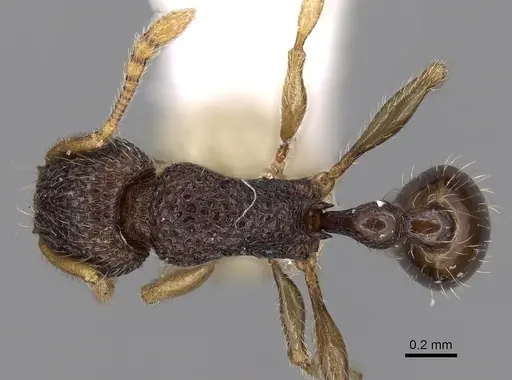
Литература
Загрузка карты распределения...Загрузка товаров...