
Temnothorax wroughtonii
- Науч. назв.
- Temnothorax wroughtonii
- Триба
- Crematogastrini
- Подсемейство
- Myrmicinae
- Автор
- Forel, 1904
- Распространение
- Встречается в 0 странах
Введение
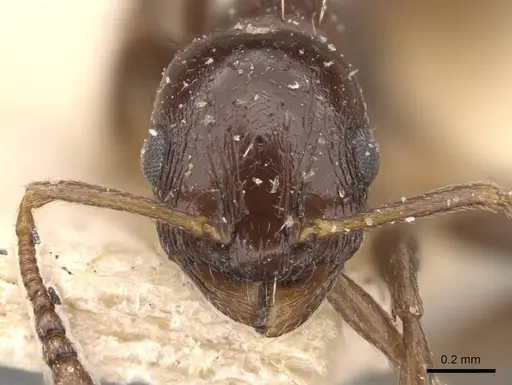
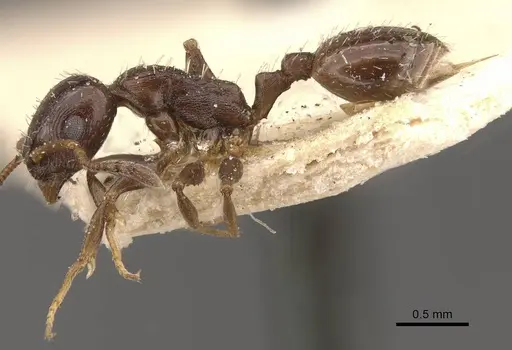
Temnothorax wroughtonii is a small, dark brown ant endemic to the Himalayas . Workers are tiny, estimated around 2-4 mm based on related species . They have very short propodeal spines that appear as blunt tubercles in dorsal view, and a rounded petiole node in profile . This species lives at high elevations between 1981 and 3100 meters above sea level in Jammu & Kashmir . Like other Temnothorax, they use tandem running to recruit nestmates . They typically nest in small cavities under stones or in rotting wood .
Quick Summary
- Difficulty: Medium
- Origin & Habitat: Endemic to the Himalayas in India, specifically recorded from Jammu & Kashmir at elevations of 1981-3100 meters above sea level [5][1]. They inhabit cool, mountainous regions with temperate to subalpine conditions.
- Colony Type: Presumably monogyne (single-queen) based on typical Temnothorax patterns, but colony structure is not directly studied for this species [2].
- Size & Growth:
- Queen: Estimated 5-7 mm based on related Temnothorax species [2]. Not directly measured.
- Worker: Estimated 2-4 mm based on related Temnothorax species [2].
- Colony: Unknown for this species. Related Temnothorax typically reach 100-500 workers [2].
- Growth: Moderate, estimated based on genus patterns [2].
- Development: Estimated 8-12 weeks at 18-22°C based on typical Temnothorax development [2]. (Development likely slower than lowland species due to high-altitude origin.)
- Antkeeping:
- Temperature: Keep at 18-22°C, estimated from high-altitude habitat [5]. Avoid overheating above 25°C.
- Humidity: Provide moderate humidity with good ventilation. Allow substrate to partially dry between waterings to prevent mold. Avoid high humidity.
- Diapause: Yes, required as a Himalayan species. Reduce to 5-10°C for 3-4 months (October-March in Northern Hemisphere) [5].
- Nesting: Y-tong (AAC) nests or test tubes work well. Prefer narrow chambers. Naturalistic setups with flat stones are suitable.
- Behavior: Generally peaceful. Workers use tandem running to recruit nestmates [2]. Escape risk is moderate due to small size. They possess a modified stinger used to smear venom onto enemies rather than piercing (subfamily Myrmicinae, tribe Crematogastrini defense).
- Common Issues: high-altitude species can suffer from overheating if temperatures exceed 25°C, diapause is essential for long-term health, skipping hibernation often leads to colony decline, small size increases escape risk, use fine mesh and tight lids, slow growth may be discouraging for beginners, wild-caught colonies need careful acclimatization from high altitude
Temperature and Care
Temnothorax wroughtonii requires cool-to-temperate conditions reflecting their Himalayan high-altitude habitat. Keep the nest area at 18-22°C [5], with the ability to provide cooler zones around 15-18°C during active periods. This species is sensitive to heat, temperatures above 25°C can be stressful and may harm the colony.
A heating cable on one side of the nest can create a gentle temperature gradient, but many keepers find that room temperature alone (18-22°C) works well. Avoid placing the nest in direct sunlight or near heat sources. During summer months, you may need to use cooling methods if your room temperature exceeds their preferred range.
Winter cooling is essential, reduce temperatures to 5-10°C from October through March to provide their natural diapause period [5]. This mimics the harsh Himalayan winter and is crucial for long-term colony health.
Housing and Nesting
These tiny ants do well in Y-tong (AAC) nests with chambers scaled to their small size [2], or in test tube setups for founding colonies. The chambers should be narrow, too much open space stresses them. A naturalistic setup with flat stones placed over soil or plaster can also work well [2], mimicking their natural nesting under stones in mountainous areas.
For the outworld, a simple plastic container with fine mesh lids works well. Because of their small size, escape prevention must be excellent, use tight-fitting lids and consider applying Fluon or similar barriers to the rim. Provide a shallow water dish and small protein foods in shallow dishes they can access easily.
Keep nesting materials relatively dry, these are not moisture-dependent ants. A small water tube for drinking is sufficient. Good ventilation is important to prevent mold growth.
Feeding and Diet
Temnothorax wroughtonii is likely omnivorous like other Temnothorax species [2], accepting both protein and sugar sources. Offer small protein foods such as fruit flies, small crickets, mealworms, or other tiny insects. They are small ants, so prey items should be appropriately sized, not larger than their head.
For sugar, offer diluted honey water, sugar water, or small pieces of fruit. Change sugar foods every 2-3 days to prevent mold. A constant sugar source is beneficial for established colonies.
Feed small amounts 2-3 times per week for established colonies. Remove uneaten prey after 24-48 hours to prevent mold. Founding colonies will eat very little, a small drop of honey water and one tiny prey item per week is sufficient for a queen with brood.
Diapause and Seasonal Care
As a Himalayan species from 1981-3100m elevation, Temnothorax wroughtonii requires a proper winter dormancy period [5]. This is not optional, without hibernation, colonies often decline and fail to produce sexuals (alates) in subsequent seasons.
From approximately October/November through February/March (3-4 months), reduce temperatures to 5-10°C [5]. This can be achieved by moving the colony to an unheated garage, basement, or refrigerator. If using refrigeration, ensure the container has adequate air holes and check periodically for moisture.
During diapause, reduce feeding to once every 2-3 weeks, the colony will be largely inactive. Do not feed during the deepest winter rest. Resume normal feeding and warming gradually in spring as temperatures rise above 15°C.
Behavior and Observation
One of the most interesting aspects of keeping Temnothorax is observing their sophisticated recruitment behavior. Workers use tandem running, one worker leads another to food or new nest sites by running together, with the follower maintaining contact through antennae [2]. This is one of the more complex communication methods seen in ants.
Workers are active foragers and will emerge to collect food within a day or two of colony establishment. They are not aggressive and rarely bite. If threatened, they may flee rather than engage. Their small size makes them difficult to observe closely without magnification, but their behavior is engaging.
The colony will gradually grow from a founding queen through nanitic (first) workers to larger, normal workers over several months [2]. Be patient, high-altitude species grow more slowly than tropical ants.
Frequently Asked Questions
How long does it take for Temnothorax wroughtonii to have first workers?
Expect 8-12 weeks from egg to first worker at room temperature (18-22°C) [2]. This is slower than many tropical ants due to their high-altitude origin. The first workers (nanitics) will be smaller than normal workers.
Do Temnothorax wroughtonii ants need hibernation?
Yes, absolutely essential. As a Himalayan species living at 1981-3100m elevation, they require 3-4 months of cold dormancy (5-10°C) each winter [5]. Skipping hibernation will weaken and eventually kill the colony.
What temperature is best for Temnothorax wroughtonii?
Keep them at 18-22°C [5]. They prefer cool conditions and are sensitive to heat. Room temperature is often ideal. Avoid anything above 25°C.
Are Temnothorax wroughtonii good for beginners?
Medium difficulty, they are not the easiest but also not among the hardest. Their requirements for cool temperatures and proper hibernation make them better suited for keepers who have already kept at least one successful colony. Beginners may struggle with the diapause requirements.
How big do Temnothorax wroughtonii colonies get?
Colony size is not documented for this specific species, but related Temnothorax species typically reach 100-500 workers [2]. Growth is moderate and depends on proper care including hibernation.
Can I keep multiple Temnothorax wroughtonii queens together?
Not recommended. Like most Temnothorax, this species is presumably single-queen (monogyne) [2]. Combining unrelated queens typically results in fighting. Only attempt pleometrosis (multiple queens founding together) if you have experience.
What do Temnothorax wroughtonii eat?
They accept small insects (fruit flies, tiny crickets, mealworms) for protein and sugar sources (honey water, sugar water) [2]. Offer small prey items appropriate to their tiny size. Remove uneaten food promptly.
Do Temnothorax wroughtonii sting?
They do not sting like typical ants. Instead, they have a modified stinger that smears venom onto enemies (subfamily Myrmicinae, tribe Crematogastrini defense). They pose no danger to keepers.
When should I move my colony to a formicarium?
Wait until the colony has 20-30 workers before moving from a test tube to a larger formicarium. This ensures the colony is established and can handle the stress of relocation. Y-tong nests work well for this species.
Why is my colony declining despite good care?
Check if you're providing proper hibernation, without the winter dormancy period, Himalayan species decline [5]. Also verify temperatures are not too warm (above 25°C). Small colonies are also vulnerable to stress from overfeeding or mold.
Report an Issue
The current care sheet is based fully on literature. See inconsistencies, or something that's incorrect? Please , it will be resolved after review from an admin. Contributing to the blogs tab also helps providing information, to make us be able to further improve the caresheets. Thank you for your support!
References

Эта инструкция по уходу лицензирована по CC BY-SA 4.0 .
Блоги сообщества
CASENT0909057
Посмотреть на AntWeb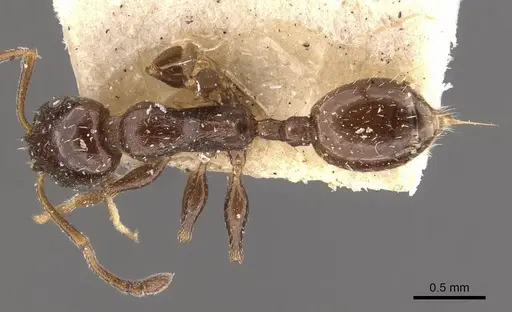
Литература
Загрузка карты распределения...Загрузка товаров...