
Temnothorax punctatissimus
- Науч. назв.
- Temnothorax punctatissimus
- Триба
- Crematogastrini
- Подсемейство
- Myrmicinae
- Автор
- Mackay, 2000
- Распространение
- Встречается в 0 странах
Введение
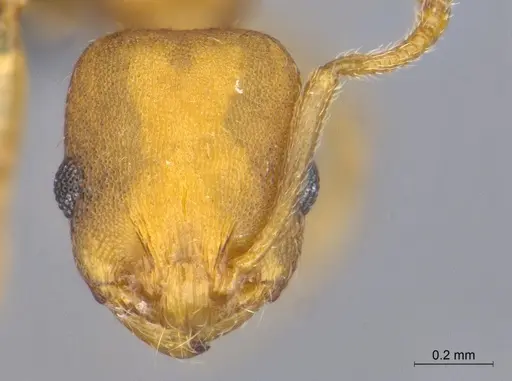
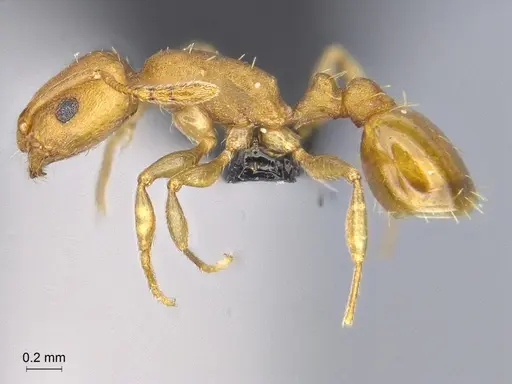
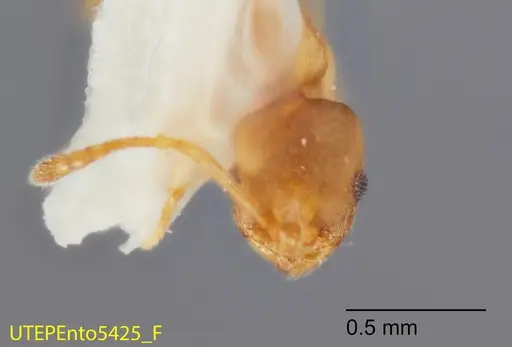
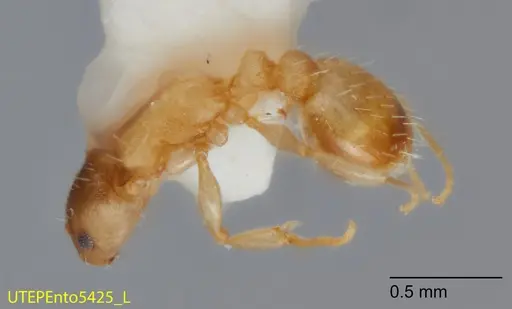
Temnothorax punctatissimus is a tiny ant species native to the oak forests of northeastern Mexico. Workers are yellowish-brown with a darker transverse band on the gaster and a noticeably darker head when viewed from the side. The species gets its name from its most distinctive feature: nearly the entire body is covered with dense, coarse punctures that give it a uniquely textured appearance . It belongs to the Temnothorax andersoni species complex and is closely related to Temnothorax punctaticeps and Temnothorax terrigena, though it can be distinguished by its slightly larger size and finer erect hairs on the petiole . This is an extremely rare species in the antkeeping hobby, known only from its original collection in Nuevo León, Mexico. It was collected at an elevation of 1415 meters on a steep, south-facing oak-covered mountain slope . As a member of the genus Temnothorax, these ants are expected to share the genus-level traits of forming small colonies and using tandem-running to recruit nestmates, but no captive breeding records or detailed behavioral observations exist for this specific species.
Quick Summary
- Difficulty: Unknown, likely Moderate to Hard
- Origin & Habitat: Native to Nuevo León, Mexico, in oak forest habitats at approximately 1415 meters elevation. Collected from a very steep, south-facing mountain slope covered with oak trees [1][2][3].
- Colony Type: Unknown. Based on typical Temnothorax behavior, likely forms single-queen colonies (monogyne), though colony structure has not been documented for this species [1].
- Size & Growth:
- Queen: Size data unavailable. Based on typical Temnothorax queens, estimated total length ~3-5mm (inferred from genus).
- Worker: Size data unavailable. Based on typical Temnothorax workers, estimated total length ~2-4mm (inferred from genus).
- Colony: Unknown. Based on typical Temnothorax species, likely under 500 workers.
- Growth: Unknown. Likely moderate based on genus patterns.
- Development: Unconfirmed. Based on related species in the genus, estimate 6-10 weeks at optimal temperature [1]. (No direct development data exists for this species. Estimates based on typical Temnothorax development patterns.)
- Antkeeping:
- Temperature: Based on the oak forest habitat at 1415m elevation in Nuevo León, these ants likely prefer cooler temperatures than tropical species. Aim for roughly 18-22°C, avoiding overheating [1].
- Humidity: Oak forest environments are damp but not waterlogged. Keep nest substrate consistently moist but not saturated. Provide a humidity gradient so ants can self-regulate [1].
- Diapause: Likely yes. Based on the temperate mountain habitat in Nuevo León, these ants probably require a winter rest period. Provide 2-3 months at 10-15°C during winter [1].
- Nesting: In nature, they likely nest in small cavities under stones, in rotting wood, or in existing hollow stems. In captivity, a small test tube setup or Y-tong nest with narrow chambers works well. The tiny colony size means even small formicaria are suitable [1].
- Behavior: Behavior is unconfirmed for this species. Temnothorax ants are generally non-aggressive and use tandem-running recruitment. Their primary defense is a smear mechanism using a modified spatulate stinger, meaning they can spread venom rather than sting deeply. They are not known to be aggressive to keepers, but their venom may cause mild irritation in sensitive individuals. Workers are small enough to pose an escape risk, use fine mesh barriers and ensure any gaps in housing are sealed. Colonies are likely peaceful and may be suitable for observation.
- Common Issues: extremely limited availability, this species is rarely available in the antkeeping hobby, no captive breeding records exist, making successful keeping uncertain, escape prevention is critical due to their tiny worker size, slow colony growth may frustrate beginners expecting rapid development, wild-caught colonies may carry parasites that can cause colony failure in captivity
Housing and Nest Setup
Given their tiny size and likely preference for cool, stable conditions, a small test tube setup works well for founding colonies. Use a test tube with a water reservoir sealed with a cotton plug, this provides consistent humidity without flooding. For established colonies, a small Y-tong (AAC) nest or a naturalistic setup with flat stones works well. The key is providing appropriately scaled chambers, these are tiny ants, so passages and chambers should be narrow. Avoid large, open spaces that can make them feel insecure. Place the nest in a cool area away from direct sunlight and heat sources. A small outworld for foraging allows you to offer food without disturbing the nest. (Based on typical Temnothorax requirements.)
Feeding and Diet
Temnothorax species are generalist omnivores that typically feed on small insects, honeydew, and nectar. For this species, offer small live prey such as fruit flies, pinhead crickets, or tiny arthropods. They will likely accept sugar sources like honey water or sugar water, though offering small amounts initially lets you test acceptance. Feed small amounts every few days, removing any uneaten prey after 24-48 hours to prevent mold. Since colony size will remain small, overfeeding is a common mistake, err on the side of too little rather than too much. (Based on typical Temnothorax diet.)
Temperature and Seasonal Care
Based on the oak forest habitat at 1415m elevation in Nuevo León, these ants prefer cooler temperatures than many other ant species [1]. Keep the nest area at roughly 18-22°C, room temperature is often ideal. Avoid temperatures above 25°C, as this can stress the colony. During winter, provide a diapause period of 2-3 months at 10-15°C to simulate their natural seasonal cycle. This can be achieved by moving the colony to a cool basement, garage, or refrigerator (for small setups). Do not feed during diapause, and keep humidity lower to prevent mold issues.
Colony Establishment
If you obtain a founding queen, the best approach is to set her up in a small, humid test tube and leave her completely undisturbed for 4-6 weeks. Most Temnothorax queens are claustral, they seal themselves in and raise the first brood without leaving the nest. Do not check on her daily, as this can stress her and cause her to abandon or eat the brood. Once the first workers (nanitics) emerge, you can begin offering tiny amounts of food. Growth will be slow, expect several months to reach even a dozen workers. Patience is essential with this genus. (Based on typical Temnothorax founding.)
Behavior and Observation
Temnothorax ants are known for their interesting recruitment behavior called tandem-running, where one worker physically leads another to a food source. Workers move slowly and deliberately, carefully exploring their environment. Their primary defense is a smear mechanism using a modified spatulate stinger, they wipe venom onto enemies rather than piercing them. They are not aggressive and pose little danger to keepers, though the venom may cause mild irritation in some individuals. Their tiny size makes them easy to accidentally crush. These ants are best suited for observation rather than handling, a well-set-up formicarium lets you watch their daily activities without disturbing the colony.
Frequently Asked Questions
How long does it take for Temnothorax punctatissimus to raise first workers?
This is unconfirmed for this specific species, but based on typical Temnothorax development, expect 6-10 weeks from egg to worker at optimal temperature (around 20°C). The first workers (nanitics) will be smaller than normal workers and the colony growth will be slow. (Based on genus inference.)
Can I keep Temnothorax punctatissimus in a test tube?
Yes, a test tube setup is ideal for this species. Use a small test tube with a water reservoir and provide high humidity. This setup works well for both founding colonies and small established colonies. Just ensure the cotton plug is packed firmly enough to prevent escapes, these tiny ants can squeeze through surprisingly small gaps. (Based on typical Temnothorax care.)
Do Temnothorax punctatissimus ants sting?
They have a modified stinger used for smearing venom rather than piercing. They are not aggressive and rarely sting, but the venom may cause mild irritation in sensitive individuals. Overall, they pose no serious danger to keepers. (Defense mechanism based on subfamily/tribe: Crematogastrini, smear.)
What do Temnothorax punctatissimus eat?
Based on typical Temnothorax diet, they likely accept small live prey (fruit flies, tiny crickets, springtails), honeydew, and sugar water. Offer small amounts of protein food 2-3 times weekly, with a constant sugar source available. Remove uneaten food promptly to prevent mold. (Based on genus inference.)
Do Temnothorax punctatissimus need hibernation?
Based on their mountain oak forest habitat in Nuevo León at 1415m elevation [1], yes, they likely require a winter rest period. Provide 2-3 months at 10-15°C during winter months. This helps maintain their natural seasonal cycle and may improve colony health long-term.
How big do Temnothorax punctatissimus colonies get?
Colony size is unconfirmed for this species, but based on typical Temnothorax colonies, they likely reach a few hundred workers at most. This is a small, slow-growing species that will never produce massive colonies.
Are Temnothorax punctatissimus good for beginners?
This species is not recommended for beginners. It is extremely rare in the antkeeping hobby, has no captive breeding records, and requires specific cool-temperature conditions. Additionally, finding appropriate tiny prey for such small ants can be challenging. Start with more established species like Temnothorax rugulosus or common Lasius species.
Where does Temnothorax punctatissimus live in the wild?
This species is only known from Nuevo León, Mexico, in oak forest habitats at approximately 1415 meters elevation. The original specimens were collected from a very steep, south-facing mountain slope covered with oak trees [1][2][3].
How do I set up a colony of Temnothorax punctatissimus?
If you obtain a queen, place her in a small, humid test tube with a cotton-plugged water reservoir. Seal the tube and place it in a cool, dark location at roughly 18-20°C. Do not disturb her for 4-6 weeks until the first workers emerge. Once workers appear, offer tiny amounts of sugar water and small live prey. Keep the setup humid but well-ventilated to prevent mold. (Based on typical Temnothorax founding.)
Why is Temnothorax punctatissimus so rare in antkeeping?
This species is only known from its original collection in Nuevo León, Mexico, and has never been commonly collected since. It is extremely limited in distribution and was only described scientifically in 2000. The combination of restricted range, tiny colony size, and the fact that it has never been exported for the hobby makes it essentially unavailable to keepers.
Report an Issue
The current care sheet is based fully on literature. See inconsistencies, or something that's incorrect? Please , it will be resolved after review from an admin. Contributing to the blogs tab also helps providing information, to make us be able to further improve the caresheets. Thank you for your support!
References

Эта инструкция по уходу лицензирована по CC BY-SA 4.0 .
Блоги сообщества
CASENT0758783
Посмотреть на AntWeb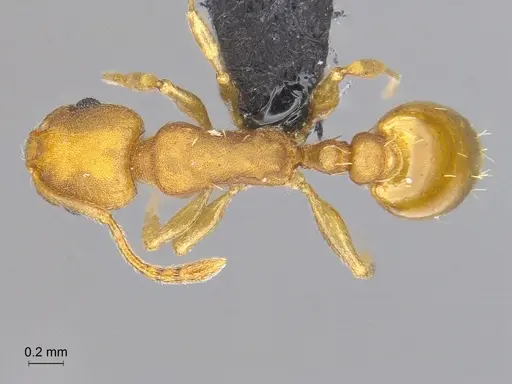
UTEPENTO5425
Посмотреть на AntWeb
UTEPENTO60006
Посмотреть на AntWeb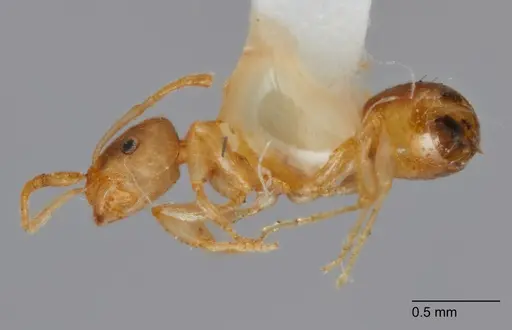
Литература
Загрузка карты распределения...Загрузка товаров...