
Temnothorax dlusskyi
- Науч. назв.
- Temnothorax dlusskyi
- Триба
- Crematogastrini
- Подсемейство
- Myrmicinae
- Автор
- Radchenko <i>et al.</i>, 2015
- Распространение
- Встречается в 0 странах
Введение
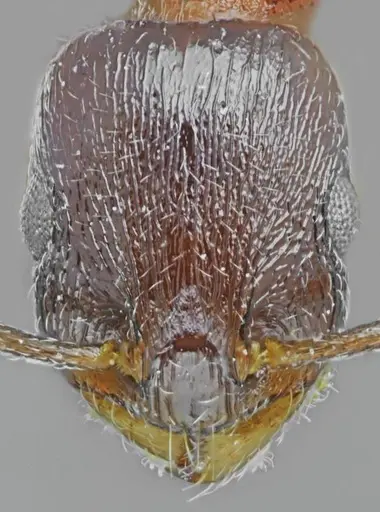
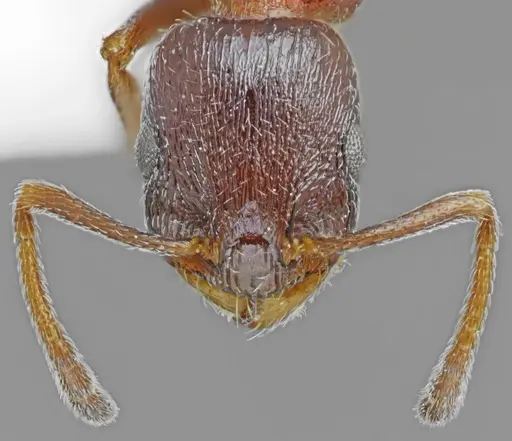
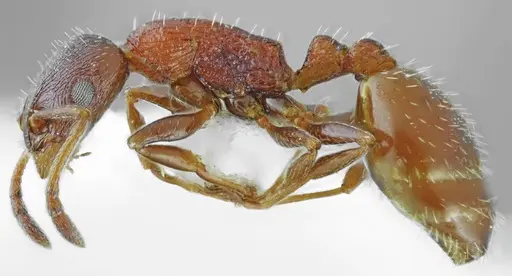
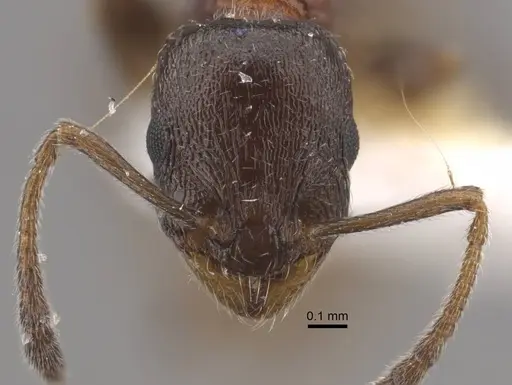
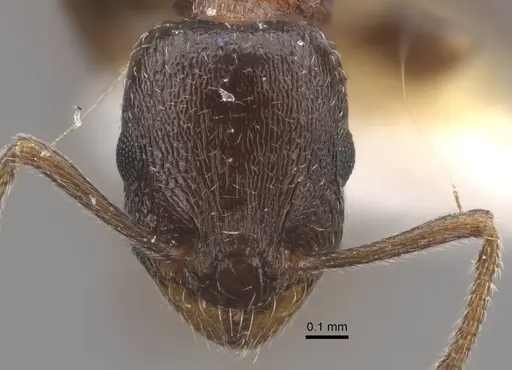
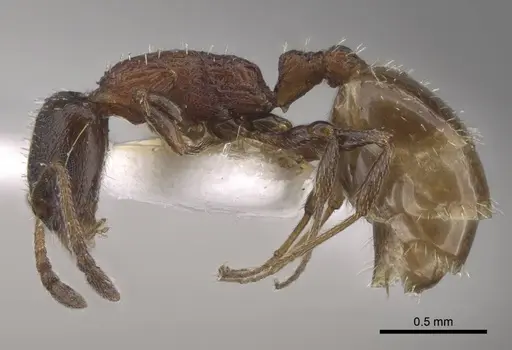
Temnothorax dlusskyi is a tiny ant species from the high alpine zones of the North Caucasus in Russia. Workers are among the smaller Temnothorax, with a distinctly elongated head and a reddish-brown body that darkens to blackish-brown on the head . The propodeum lacks spines entirely, showing only blunt angulation, which sets them apart from many related species . These ants nest in rock crevices in alpine meadows at around 2650 meters elevation . The species was described in 2015 and named after Russian myrmecologist G.M. Dlussky . Only the worker caste is known; queens and males remain undiscovered.
Quick Summary
- Difficulty: Hard
- Origin & Habitat: Native to the high alpine zone of the North Caucasus in Russia (Kabardino-Balkarian Republic, Elbrus region). Found at about 2650 meters in alpine meadows, nesting in rock crevices [1][2].
- Colony Type: Unconfirmed, queens and males have not been described [1]. Based on typical Temnothorax patterns, colonies are likely monogyne (single queen), but this is an inference.
- Size & Growth:
- Queen: Unknown, queens have not been described [1].
- Worker: Approximately 2-3mm total length (inferred from Temnothorax genus, head length is 0.68-0.76mm) [1].
- Colony: Unknown, only 32 workers from a single nest have been collected [1].
- Growth: Unknown
- Development: Unknown, no species-specific data. Based on related temperate Temnothorax, a rough estimate is 8-12 weeks under suitable conditions. (Cool alpine origin likely slows development, so expect a longer timeline.)
- Antkeeping:
- Temperature: Based on their high‑altitude alpine habitat (2650 m), they likely prefer cool conditions. Start at 18-22°C and avoid overheating. These ants evolved in cold mountains [1].
- Humidity: Moderate humidity, reflecting alpine meadow conditions. Keep nest substrate slightly moist but well‑drained, and offer a dry area within the nest.
- Diapause: Likely yes, alpine species from high elevations usually require winter dormancy. Based on similar temperate mountain species, expect 3-4 months at 5-10°C.
- Nesting: Natural nests are in rock crevices [1]. In captivity, use a small naturalistic setup with flat stones or a Y‑tong (AAC) nest with narrow chambers to suit their tiny size.
- Behavior: Behavior is undocumented, but Temnothorax ants are typically peaceful, foraging individually for honeydew and small prey. Like other Crematogastrini, they likely use a smear defense, wiping venom onto attackers rather than stinging. Their tiny size means escape prevention is critical: use fine mesh barriers and tight seals.
- Common Issues: extreme escape risk, workers are tiny and can squeeze through the smallest gaps., queens and males are undescribed, making captive founding and breeding impossible with current knowledge., likely intolerant of high temperatures, overheating quickly causes death., no species‑specific husbandry guidelines exist, all care is experimental and inferred., colonies are extremely rare and nearly impossible to obtain from the wild.
Discovery and Taxonomy
Temnothorax dlusskyi was formally described in 2015 by Radchenko, Yusupov, and Fedoseeva [1]. The holotype worker was collected in the Elbrus region of Russia's Kabardino‑Balkarian Republic, from an alpine meadow at 2649 m elevation [1]. The species name honors the memory of Professor G.M. Dlussky, a prominent Russian myrmecologist [1]. The type series comprises 32 workers from a single nest [1]. Only the worker caste has been described, queens and males remain unknown.
Identification and Distinguishing Features
Workers of Temnothorax dlusskyi have a distinctly elongated head with almost parallel sides, much narrower than related species [1]. The head dorsum bears fine longitudinal wrinkles (rugulosity) and distinct punctation [1]. The propodeum lacks spines, showing only slight angulation or blunt tubercles [1]. Body color is reddish‑brown with a darker head (dark brown to blackish‑brown), the first gastral tergite is completely brown without a lighter basal spot [1][2]. They differ from similar species like Temnothorax nadigi and Temnothorax anodontoides by their narrower head (length‑to‑width ratio ~1.27 vs. 1.14-1.15) and distinctly extended frontal lobes [1].
Natural Habitat
This species is known only from a very restricted area in the North Caucasus mountains, at altitudes above 2600 m [1][2]. The type locality is an alpine meadow where the ants nested in a rock crevice [1][2]. This high‑elevation habitat suggests adaptation to cool conditions and significant seasonal temperature variation. The limited distribution to the Kabardino‑Balkarian Republic makes T. dlusskyi a rare and geographically constrained species.
Keeping Considerations
Because T. dlusskyi was only described in 2015 and its queen and male are unknown, there are no established captive husbandry protocols [1]. If a colony ever becomes available, care must be inferred from its alpine origin: keep temperatures cool (18-22 °C), provide moderate humidity, and expect a winter diapause period. Their tiny size demands excellent escape prevention, use fine mesh and tight seals. Any successful keeping would be pioneering work. Start conservatively and adjust based on colony response.
Frequently Asked Questions
How big are Temnothorax dlusskyi workers?
Workers are very small, total length is roughly 2-3 mm (inferred from the genus). Their head length is 0.68-0.76 mm [1].
Where does Temnothorax dlusskyi live in the wild?
It is known only from the North Caucasus mountains in Russia (Kabardino‑Balkarian Republic), at about 2650 m elevation in alpine meadows, nesting in rock crevices [1][2].
What do Temnothorax dlusskyi ants look like?
They have an elongated head with parallel sides, a reddish‑brown body, and a much darker head (dark brown to blackish‑brown). The propodeum lacks spines, showing only slight angulation [1][2].
Are Temnothorax dlusskyi queens known?
No, queens and males have not been described. Only workers are known from the type series [1].
What temperature do Temnothorax dlusskyi need?
Based on their high‑altitude origin, they likely prefer cool conditions. Start around 18-22 °C and avoid overheating [1].
Do Temnothorax dlusskyi need hibernation?
Likely yes, alpine species from high elevations typically need a winter dormancy. Expect 3-4 months at 5-10 °C, based on similar mountain species.
How do I keep Temnothorax dlusskyi in captivity?
No established guidelines exist since only workers are known. If you obtain a colony, use a small nest with narrow chambers, keep it cool (18-22 °C), maintain moderate humidity, and use excellent escape prevention. All care is experimental [1].
Are Temnothorax dlusskyi good for beginners?
No, this is an expert‑level species due to unknown biology, tiny size, and specialized needs. There are no established care methods, so only experienced keepers should attempt to keep them [1].
What do Temnothorax dlusskyi eat?
Specific diet is unconfirmed, but related Temnothorax feed on honeydew and small insects. They likely accept sugar water and tiny live prey such as springtails.
How big do Temnothorax dlusskyi colonies get?
Unknown, only 32 workers from a single nest have been collected. Natural colony size has not been documented [1].
Report an Issue
The current care sheet is based fully on literature. See inconsistencies, or something that's incorrect? Please , it will be resolved after review from an admin. Contributing to the blogs tab also helps providing information, to make us be able to further improve the caresheets. Thank you for your support!
References

Эта инструкция по уходу лицензирована по CC BY-SA 4.0 .
Блоги сообщества
ANTWEB1008961
Посмотреть на AntWeb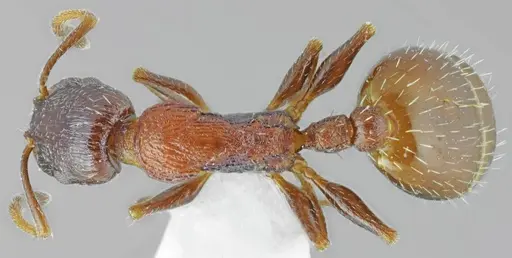
CASENT0917466
Посмотреть на AntWeb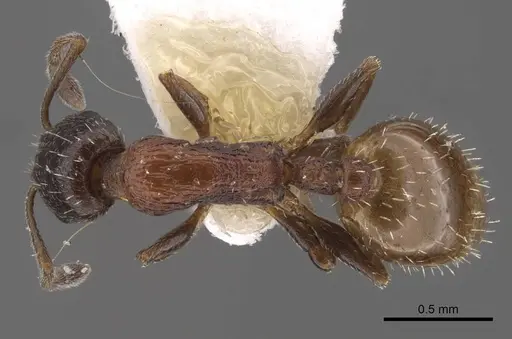
Литература
Загрузка карты распределения...Загрузка товаров...