
Temnothorax arenarius
- Науч. назв.
- Temnothorax arenarius
- Триба
- Crematogastrini
- Подсемейство
- Myrmicinae
- Автор
- Santschi, 1908
- Распространение
- Встречается в 0 странах
Введение
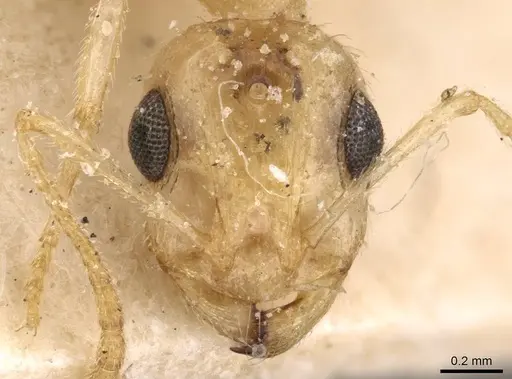
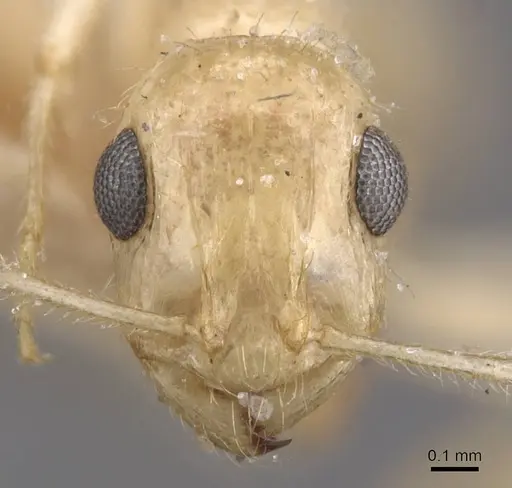
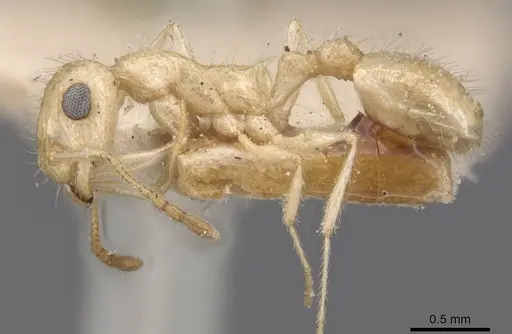
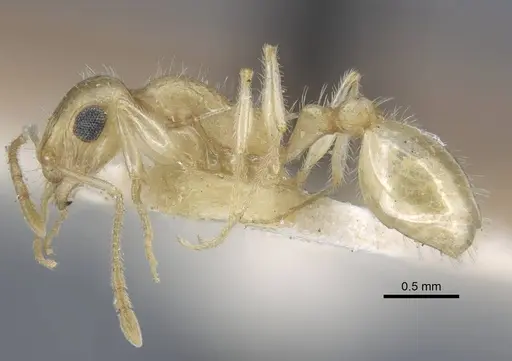
Temnothorax arenarius is a tiny, pale ant native to North Africa and the Middle East. Workers are estimated at 2-3 mm and queens at 4-5 mm based on typical Temnothorax sizes. Their bright coloration (brightness value 81.2) and enlarged eyes are adaptations for nocturnal activity in arid environments . They are found in Tunisia and the Negev desert of Israel . This ant is a desert specialist. Unlike many ants that forage during the day, Temnothorax arenarius is active at night. Its relatively large eyes help it navigate in low light . This nocturnal behavior is a key adaptation to avoid the intense heat of its desert home.
Quick Summary
- Difficulty: Hard
- Origin & Habitat: Palaearctic region: Tunisia and the Negev desert of Israel [2][3]. An eremic (desert-dwelling) species inhabiting arid, sandy areas.
- Colony Type: Unconfirmed. Likely single-queen (monogyne) based on genus patterns, but no specific data exists.
- Size & Growth:
- Queen: ~4-5 mm, inferred from the Temnothorax genus (no direct measurements available).
- Worker: ~2-3 mm, inferred from the Temnothorax genus (no direct measurements available).
- Colony: Probably under 100 workers, typical for small desert Temnothorax, but unconfirmed.
- Growth: Slow to moderate, inferred from related species.
- Development: 8-12 weeks, estimated based on other Temnothorax species at 25°C, but not confirmed for this species. (Development likely faster at higher temperatures. No species‑specific data.)
- Antkeeping:
- Temperature: No specific data. Based on desert origin, keep warm (22-28°C) with a gradient. Avoid prolonged heat above 32°C. Winter cooling may be needed if from northern Negev, but unconfirmed.
- Humidity: Keep low. Desert species are sensitive to moisture. Provide a dry nest with a small drinking water source. Avoid condensation.
- Diapause: Unknown. If from the Negev, a mild winter rest (2-3 months at 15-18°C) may be beneficial, but not proven. Monitor colony activity.
- Nesting: Dry, well‑ventilated nests such as Y‑tong (AAC) or plaster. Small chambers are preferred. Do not over‑moisten.
- Behavior: Defense mechanism: smear, uses a flattened stinger to wipe venom rather than sting. Nocturnal, calm and non‑aggressive. Their tiny size (2-3 mm) makes them excellent escape artists, use fine mesh on all openings.
- Common Issues: extremely small size, gaps that hold other ants will let these escape, use mesh under 0.5 mm or airtight seals., desert species easily killed by over‑humidity, keep nest dry and allow ventilation., nocturnal habits may make daytime observation limited., very little care data exists, keepers must experiment carefully and share observations.
Appearance and Identification
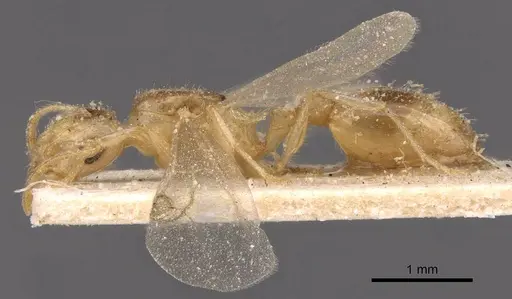
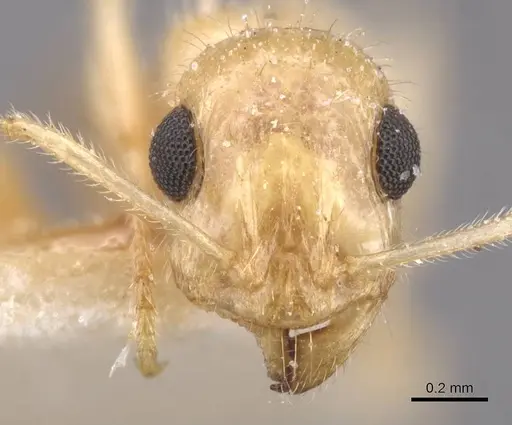
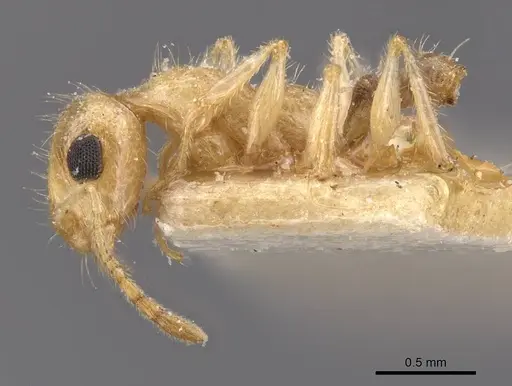
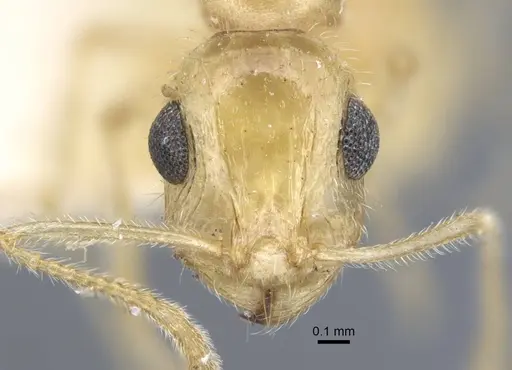
Temnothorax arenarius is a small, pale ant. Its light colour (brightness value 81.2) is unusual among ants and helps reflect heat [1]. The eyes are relatively large for its body size (relative eye size 0.0383), a trait linked to nocturnal activity [1]. Type locality: Tunisia [1]. No distinct morphological data is available, identification relies on distribution and the combination of pale colour, small size, and desert habitat.
Distribution and Habitat
This species is known from Tunisia and the Negev desert of Israel (regions 15-17: northern, southern, and central Negev) [2]. It is an eremic element of the Palaearctic fauna, meaning it is adapted to dry, sandy desert environments [2]. The 'Arava Valley is also part of its range [2].
Defense Mechanism
Temnothorax arenarius belongs to the subfamily Myrmicinae and tribe Crematogastrini. Its primary defense is to smear venom onto enemies using a modified, flattened stinger, rather than piercing their flesh. This is a trait of many Crematogastrini ants.
Care Considerations (Limited Data)
Because almost no specific care data exists for Temnothorax arenarius, any advice must be adapted from related Temnothorax species and knowledge of desert ants. Keep the nest dry and well‑ventilated. Avoid high humidity. Warm temperatures (22-28°C) with a night drop are likely suitable. Adult workers are small, so escape prevention is critical, use very fine mesh. If you obtain a colony, monitor for signs of stress and adjust carefully. Share your findings with the ant‑keeping community to build knowledge about this species.
Frequently Asked Questions
Where are Temnothorax arenarius found in the wild?
They are native to Tunisia and the Negev desert in Israel [2][3]. They live in dry, sandy desert areas.
Why is Temnothorax arenarius so pale?
Their pale colour (brightness value 81.2) is likely an adaptation to their desert habitat, possibly to reflect heat and blend into light‑colored sand [1].
Do Temnothorax arenarius sting?
They do not have a piercing sting. Instead, they use a smearing defense, wiping venom onto enemies with a modified stinger. They are harmless to humans.
Are Temnothorax arenarius active during the day?
No, they are nocturnal. Their large eyes are adapted for low‑light foraging [1]. Expect most activity in the evening and night.
Is this species invasive?
There is no evidence that Temnothorax arenarius is invasive. It is only known from its native North African and Middle Eastern range. Still, never release captive colonies into the wild.
Can I keep Temnothorax arenarius as a beginner?
This species is not recommended for beginners. Very little is known about its care, and the tiny size makes escape prevention challenging. Only experienced keepers should attempt it.
Report an Issue
The current care sheet is based fully on literature. See inconsistencies, or something that's incorrect? Please , it will be resolved after review from an admin. Contributing to the blogs tab also helps providing information, to make us be able to further improve the caresheets. Thank you for your support!
References

Эта инструкция по уходу лицензирована по CC BY-SA 4.0 .
Блоги сообщества
CASENT0907596
Посмотреть на AntWeb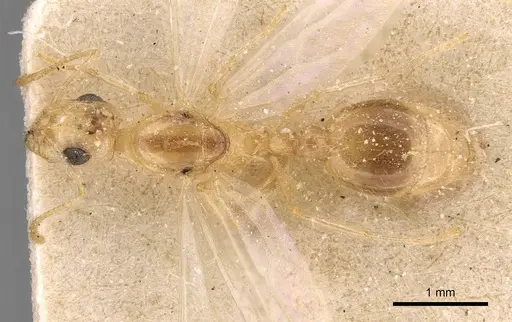
CASENT0912903
Посмотреть на AntWeb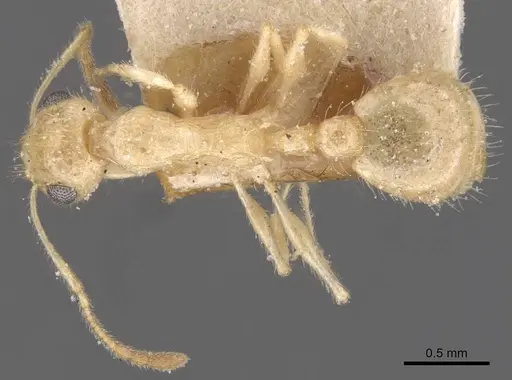
CASENT0912904
Посмотреть на AntWeb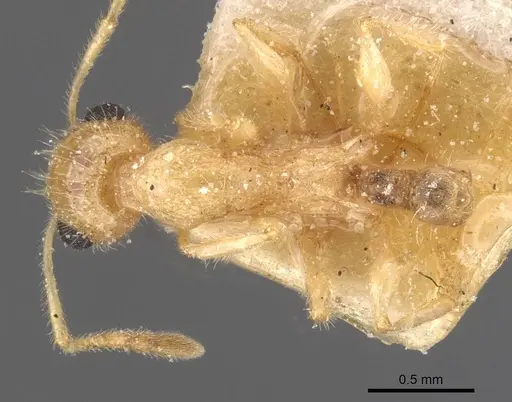
CASENT0917051
Посмотреть на AntWeb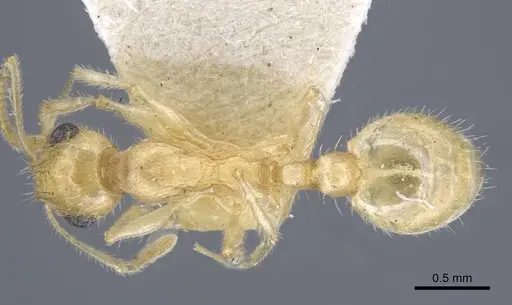
Литература
Загрузка карты распределения...Загрузка товаров...