
Tapinoma fragile
- Науч. назв.
- Tapinoma fragile
- Триба
- Tapinomini
- Подсемейство
- Dolichoderinae
- Автор
- Smith, 1876
- Распространение
- Встречается в 0 странах
Введение
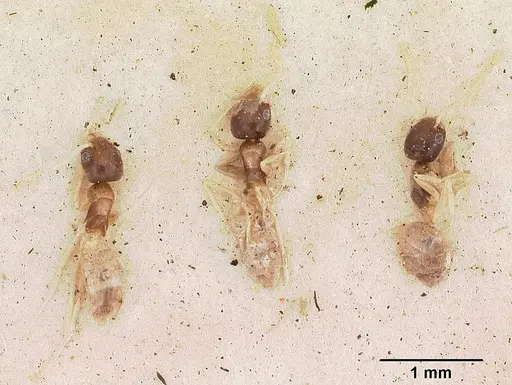
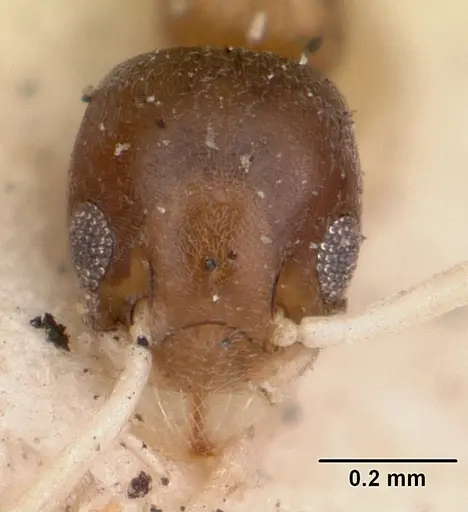
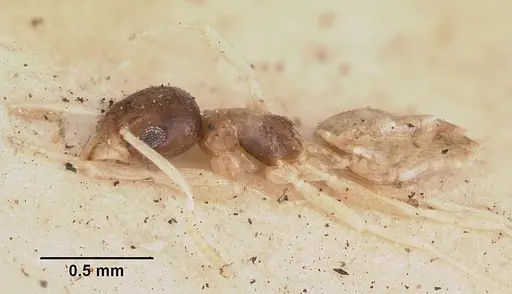
Tapinoma fragile is a small ant originally described from Mauritius (Rodrigues Island) and also reported from the Maldives . Recent research suggests this species may be a synonym of the widely distributed ghost ant, Tapinoma melanocephalum, based on morphological comparison of the type specimen . Workers are tiny, around 1.5-2mm in length (inferred from related T. melanocephalum), with a pale yellowish body and a darker abdominal tip. Like all Dolichoderinae, Tapinoma fragile lacks a functional sting and instead defends by exuding a sticky, foul-smelling substance from its anal gland.
Quick Summary
- Difficulty: Expert
- Origin & Habitat: Mauritius (Rodrigues Island) and Maldives, tropical island environments [1].
- Colony Type: Unknown, no published data on colony structure for this species.
- Size & Growth:
- Queen: Size data unavailable. Queens of related Tapinoma species are around 3-4mm, but this is unconfirmed for T. fragile.
- Worker: ~1.5-2mm (inferred from related Tapinoma melanocephalum, not from species-specific measurements).
- Colony: Unknown. Related species can form large colonies, but no data available.
- Growth: Unknown
- Development: Unknown. Related Tapinoma melanocephalum develop in 4-6 weeks at 25-30°C, but this is unconfirmed. (Development likely depends on temperature, but no specific data exists.)
- Antkeeping:
- Temperature: No species-specific data. As a tropical species, keep warm (24-30°C) based on related ghost ant. Provide a temperature gradient with a heating cable on one side.
- Humidity: Provide a moisture gradient, keep one area moist (not waterlogged) and one area dry. No precise data from literature.
- Diapause: No, tropical species likely do not require hibernation, but not confirmed by research.
- Nesting: Based on subfamily preferences, likely nest in soil or cavities. For captive care, use Y-tong (AAC), plaster, or soil nests with very small chambers due to tiny worker size. NEVER use acrylic nests, fine mesh barriers are essential.
- Behavior: Behavior unconfirmed. Based on related Tapinoma melanocephalum, likely docile but very fast and prone to escaping. Defense is via anal gland secretions (foul-smelling), not stinging. Their tiny size (1.5-2mm) makes escape prevention extremely critical, they can squeeze through gaps smaller than 0.5mm.
- Common Issues: escape risk is extreme due to tiny size, use mesh with 0.3mm openings or smaller, and seal all connections with talc or fluon., unknown founding behavior, if you collect a queen, she may not be claustral, provide a small test tube with a water plug and observe carefully., high risk of desiccation, maintain a moisture gradient so workers can choose their preferred humidity., wild-caught colonies may carry mites or nematodes that can kill the colony in captivity., fast movement makes them difficult to observe and handle without losing workers.
Housing and Nest Setup
Because Tapinoma fragile workers are tiny (around 1.5-2mm), escape prevention is your top priority. Use a Y-tong (AAC) nest with very narrow chambers or a plaster nest with small cavities. Avoid acrylic nests altogether. Connect the nest to an outworld via tubing with fine mesh (≤0.3mm openings) at every junction. Apply fluon or a thick layer of talc to the outworld walls. Provide a moisture gradient inside the nest: moisten one area with a water reservoir and leave another area dry. No specific research exists for this species, so these recommendations are based on general small-ant care and the subfamily's nesting preferences.
Feeding and Diet
No specific diet data exists for Tapinoma fragile. Based on its likely synonymy with Tapinoma melanocephalum, it is probably omnivorous with a strong preference for sugars. Offer sugar water, honey, or diluted syrup as a constant food source. Supplement with small protein items such as fruit flies, pinhead crickets, or tiny mealworm pieces 2-3 times per week. Remove uneaten food within two days to prevent mold. Commercial ant foods may also be accepted. Be prepared to adjust based on colony response.
Temperature and Seasonal Care
As a tropical species from Mauritius and the Maldives, Tapinoma fragile likely requires warm conditions year-round. Maintain a temperature gradient of 24-30°C by using a heating cable on one side of the nest. Room temperature below 22°C may slow or stop development. No diapause is needed, keep temperatures stable through winter. Avoid drafts from air conditioning or open windows. Since no species-specific data exists, observe your colony closely and adjust if they cluster or slow down.
Behavior and Temperament
Published observations are unavailable, but based on the subfamily Dolichoderinae, Tapinoma fragile likely uses a 'smear' defense: exuding a sticky, foul-smelling secretion from its anal gland when threatened. It does not sting. Workers are probably fast and non-aggressive toward humans. Their tiny size makes them fragile, avoid rough handling. If disturbed, they may scatter and escape quickly. Excellent escape prevention (fine mesh, fluon) is essential at all times.
Frequently Asked Questions
How long does it take for Tapinoma fragile to raise their first workers?
This is unknown for T. fragile. Based on the related species Tapinoma melanocephalum, a queen might produce the first workers in 4-6 weeks at 25-30°C, but this is not confirmed.
Can I keep Tapinoma fragile in a test tube setup?
Yes, a test tube setup is suitable, especially for a founding queen or small colony. Use a cotton-plugged water reservoir for humidity and seal the tube opening with fine mesh or a fluon-coated cap to prevent escapes. Their tiny size means even the smallest gap is an escape route.
What do Tapinoma fragile ants eat?
No specific data exists. Based on related Tapinoma species, they are likely omnivorous with a preference for sugars. Offer sugar water, honey, and small protein sources such as fruit flies or pinhead crickets.
Are Tapinoma fragile good for beginners?
No, they are not recommended for beginners. Too little is known about their captive care, and their tiny size makes escape prevention extremely difficult. Beginners should start with well-documented, larger species.
Do Tapinoma fragile need hibernation?
No, they are tropical ants from Mauritius and the Maldives. Keep temperatures warm and stable year-round (24-30°C). No diapause is required.
How big do Tapinoma fragile colonies get?
There is no published data on colony size. Related Tapinoma melanocephalum can form colonies of hundreds or thousands of workers, but this is speculation for T. fragile.
Why are my Tapinoma fragile escaping?
Their tiny size (around 1.5-2mm) allows them to squeeze through gaps that seem sealed to the human eye. Use fine mesh with openings ≤0.3mm, apply fluon to outworld walls, and check all connections, lids, and tubing junctions regularly. Even a hairline crack can be an exit.
When should I move my colony to a formicarium?
No specific guidance exists. A good rule is to move them to a larger nest when the test tube becomes visibly crowded (e.g.,50+ workers) and they start piling up. Choose a Y-tong or plaster nest with small chambers.
Is Tapinoma fragile the same as the ghost ant?
Recent research suggests that Tapinoma fragile is probably a synonym of Tapinoma melanocephalum, commonly known as the ghost ant [2]. They share similar appearance and likely have identical care requirements.
Report an Issue
The current care sheet is based fully on literature. See inconsistencies, or something that's incorrect? Please , it will be resolved after review from an admin. Contributing to the blogs tab also helps providing information, to make us be able to further improve the caresheets. Thank you for your support!
References

Эта инструкция по уходу лицензирована по CC BY-SA 4.0 .
Блоги сообщества
CASENT0102974
Посмотреть на AntWeb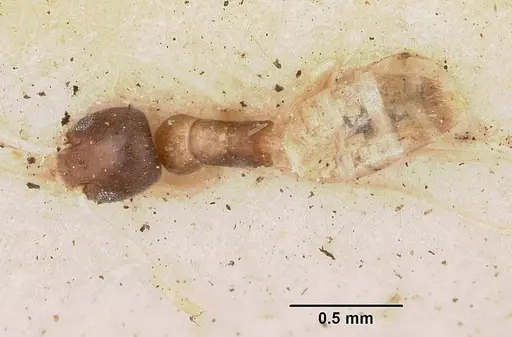
Литература
Загрузка карты распределения...Загрузка товаров...