
Strumigenys peraucta
- Науч. назв.
- Strumigenys peraucta
- Триба
- Attini
- Подсемейство
- Myrmicinae
- Автор
- Bolton, 2000
- Распространение
- Встречается в 0 странах
Введение
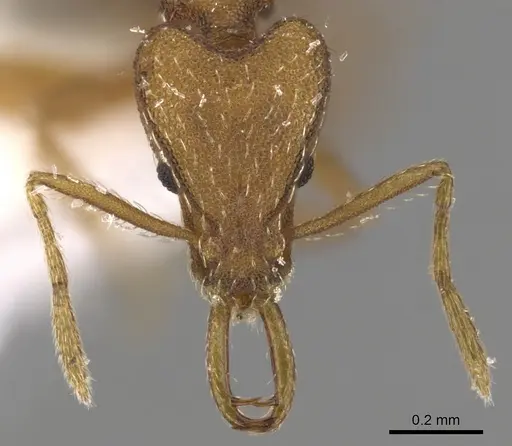
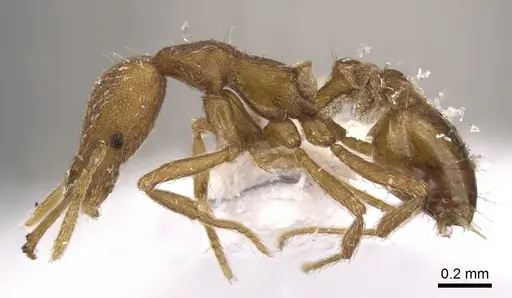
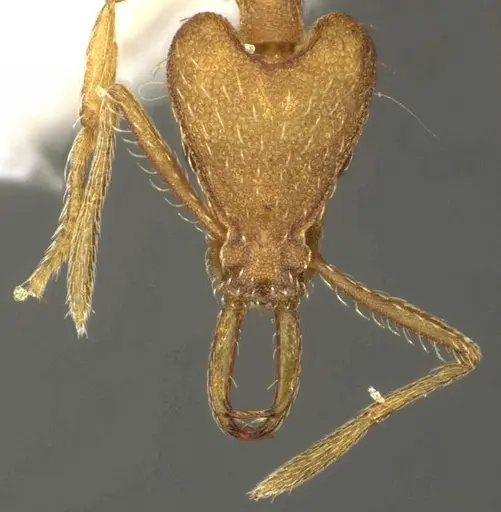
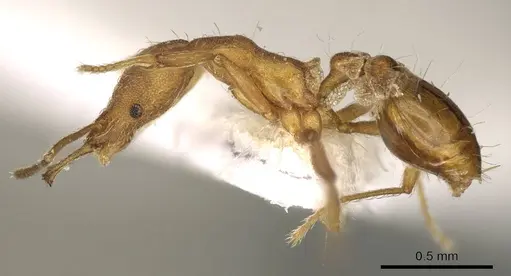
Strumigenys peraucta is a minute predatory ant measuring 2.4-2.5mm in total worker length, placing it among the smallest ants in the hobby . This species belongs to the Strumigenys godeffroyi group and is closely related to S. lewisi and S. geminata . Workers have specialized mandibles typical of the genus, and the body is covered in distinctive stiff hairs. The head bears a pair of short, stiff standing hairs near the occipital margin. The propodeum has a broad lamella with visible teeth at the dorsal apex . This species is endemic to India, specifically recorded from Goa and Karnataka states . Nothing is known about its biology in the wild - the only habitat note comes from specimen labels indicating secondary vegetation . Its exact diet, colony structure, and natural behavior remain unstudied.
Quick Summary
- Difficulty: Hard
- Origin & Habitat: Endemic to India, recorded from Goa and Karnataka states in the Indomalaya region [2]. Found in secondary vegetation habitats at elevations from 100-500m [1].
- Colony Type: Colony structure is unconfirmed. Based on typical Strumigenys patterns, colonies are likely small with a single queen (monogyne), though this has not been directly documented for this species.
- Size & Growth:
- Queen: Undescribed, the queen has not been described [1].
- Worker: 2.4-2.5mm total length [1].
- Colony: Unknown, no data available for this species.
- Growth: Unknown, no data available.
- Development: Unconfirmed, no development data exists for this species. (The entire development timeline is unstudied.)
- Antkeeping:
- Temperature: No specific data. Keep at room temperature (20-25°C) as a starting point. Observe colony behavior and adjust if needed.
- Humidity: Keep the nest substrate moist but not waterlogged. A water tube provides both drinking water and humidity. No specific humidity data exists.
- Diapause: Unknown, no seasonal data exists for this species. The native range in India has mild winters, so a true diapause may not be required, but this is unconfirmed.
- Nesting: Use a small test tube setup or Y-tong (AAC) nest with very small chambers scaled to their tiny size. Escape prevention is critical, use fine mesh and seal all gaps.
- Behavior: Strumigenys peraucta is a docile, non-aggressive ant. Workers have a functional sting (subfamily Myrmicinae) but it is not medically significant to humans. They are small and shy, fleeing when disturbed. Their tiny size makes escape prevention critical, they can squeeze through the smallest gaps. Like other Strumigenys, they have specialized mandibles for hunting small prey.
- Common Issues: escape prevention is critical, their tiny 2.5mm size means they can slip through standard barrier materials., specialized diet, they likely need live micro-prey, but exact preferences are unknown., lack of species-specific data means care is largely guesswork based on genus patterns., wild-caught colonies may have parasites that can devastate small colonies.
Housing and Nest Setup
Because of their extremely small size, housing must be scaled down. A small test tube setup with a tight cotton plug works well, as does a Y-tong (AAC) nest with narrow, snug chambers. The nest should be kept dark, cover it to reduce stress. Provide a small outworld for hunting. Escape prevention is absolutely critical: use fine mesh (at least 0.5mm or finer) on ventilation and seal all connections. Standard barriers may not contain these ants. A thin layer of fluon on the outworld rim can help, but no data confirms its effectiveness. [1]
Feeding and Diet
The natural diet of Strumigenys peraucta is unknown. Like other Strumigenys, they are thought to be specialized predators of small arthropods, but this has not been confirmed. In captivity, keepers have had success offering live springtails (Collembola), tiny isopods, booklice, and fruit fly larvae. Sugar sources (e.g., honey water) are not typically accepted. Offer small amounts of live prey every 2-3 days and remove leftovers after 24 hours to prevent mold. A constant water source is essential. Note that exact dietary requirements are not known, so success may vary. [1]
Temperature and Humidity
No specific temperature or humidity data exists for S. peraucta. As a starting point, keep the nest at room temperature (20-25°C). If a gentle heat gradient is possible, the ants can choose their preferred spot, but this is not required. Humidity should be provided by keeping the nest substrate moist (not waterlogged). A water tube attached to the test tube gives both drinking water and humidity. Mist the outworld occasionally, but avoid directly misting the nest. Observe the colony and adjust based on their activity. [2]
Colony Establishment and Growth
Founding behavior has not been documented for this species. For other Strumigenys, queens are thought to be semi-claustral (leaving the chamber to forage), but this is speculative for S. peraucta. If you obtain a founding queen, provide her with small live prey and a water source, and minimize disturbance. Colony growth is likely slow, but no timeline is known. Expect the colony to remain small for a long time. [1]
Behavior and Temperament
Strumigenys peraucta is a docile ant. Workers have a functional sting (subfamily Myrmicinae) but it is not dangerous to humans. They are shy and tend to flee rather than fight. Their hunting method involves rapid snapping of specialized mandibles to catch small prey. They are most active during dusk and night. Their main risk to the keeper is escape due to their tiny size. [1]
Frequently Asked Questions
How long does it take for Strumigenys peraucta to produce first workers?
The development timeline is unknown for this species. No direct data exists. If you attempt to keep a founding queen, do not expect quick results, the process may take many weeks, but this is speculative.
What do Strumigenys peraucta ants eat?
Their natural diet is unconfirmed. In captivity, they are often offered live springtails and other tiny arthropods, but this is based on genus patterns, not species-specific data. Sugar sources are rarely accepted.
Can I keep Strumigenys peraucta in a test tube?
Yes, a small test tube setup with a tight cotton plug is a good starting point. Ensure excellent escape prevention, use fine mesh over any holes and seal gaps. Keep the tube horizontal or slightly angled with a water reservoir.
Are Strumigenys peraucta ants dangerous?
No. They have a functional sting, but it is very small and not medically significant. They are docile and pose no threat to humans or pets.
How big do Strumigenys peraucta colonies get?
Colony size is unknown. No data exists for this species. Based on other Strumigenys, colonies are likely small (under 100 workers), but this is speculation.
Do Strumigenys peraucta need hibernation?
Diapause requirements are unknown. Their native range has mild winters, so a true hibernation may not be necessary. If the colony shows reduced activity in winter, a brief cool period (15-18°C) may be tried, but this is optional and untested.
Why are my Strumigenys peraucta dying?
Common causes likely include: escape (check for tiny gaps), starvation (lack of appropriate live prey), overly dry conditions (keep substrate moist), and stress from disturbance. Wild-caught specimens may harbor parasites. No specific mortality data exists.
Are Strumigenys peraucta good for beginners?
No. This species is recommended for experienced keepers only. Challenges include a poorly known diet, critical escape prevention needs, lack of care data, and likely slow growth.
What temperature should I keep Strumigenys peraucta at?
No specific data. Start at room temperature (20-25°C). Monitor colony activity and adjust if needed. A gentle heat gradient can be added, but is not necessary.
Where is Strumigenys peraucta found in the wild?
This species is endemic to India, specifically recorded from Goa and Karnataka states [2]. Specimens have been collected from secondary vegetation at elevations between 100-500m [1].
How do I set up a nest for tiny Strumigenys?
Use small, tight chambers scaled to their 2.5mm size. A Y-tong (AAC) nest with narrow passages or a small test tube works well. The nest material should retain moisture. Provide a small outworld for hunting. Escape prevention is the top priority, use fine mesh and seal all gaps.
Report an Issue
The current care sheet is based fully on literature. See inconsistencies, or something that's incorrect? Please , it will be resolved after review from an admin. Contributing to the blogs tab also helps providing information, to make us be able to further improve the caresheets. Thank you for your support!
References

Эта инструкция по уходу лицензирована по CC BY-SA 4.0 .
Блоги сообщества
CASENT0900812
Посмотреть на AntWeb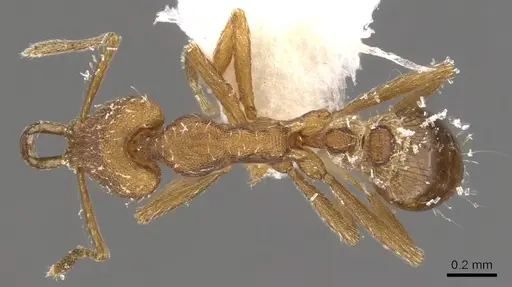
CASENT0915698
Посмотреть на AntWeb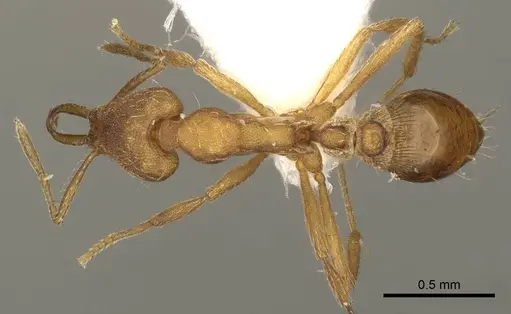
Литература
Загрузка карты распределения...Загрузка товаров...