
Strumigenys mirifica
- Науч. назв.
- Strumigenys mirifica
- Триба
- Attini
- Подсемейство
- Myrmicinae
- Автор
- Bolton, 2000
- Распространение
- Встречается в 0 странах
Введение
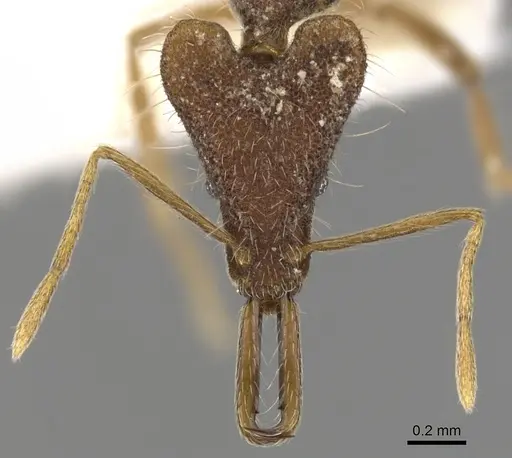
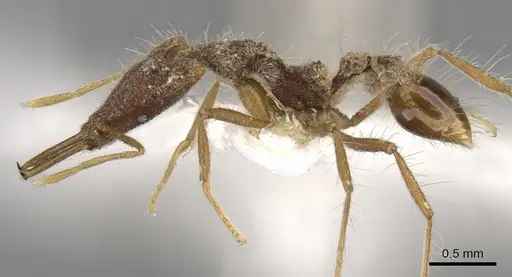
Strumigenys mirifica is a tiny predatory ant from the Philippines, known only from Mt. Makiling on Luzon Island . Workers measure about 3.4-3.7 mm in total length . They have long fine hairs on the head, a small triangular preapical tooth on the mandibles, and a long lateral spongiform lobe on the petiole . The queen has not been described. This ant is a member of the Strumigenys doriae group and lives in leaf litter on tropical forest floors. It is a specialized predator that hunts micro-arthropods like springtails. Because so little is known about its biology, almost all care advice is based on related species.
Quick Summary
- Difficulty: Medium
- Origin & Habitat: Endemic to the Philippines (Luzon Island, Mt. Makiling) [1]. Lives in leaf litter in tropical forest, forages both day and night [2].
- Colony Type: Unconfirmed, no published data on colony structure. Based on related Strumigenys species, colonies are probably small with a single queen.
- Size & Growth:
- Queen: Unknown, not described in original description [1]
- Worker: 3.4-3.7 mm [1]
- Colony: Unknown, likely under 100 workers (estimated from typical Strumigenys patterns)
- Growth: Moderate, based on genus patterns
- Development: Unknown, estimates from similar Strumigenys species suggest 6-10 weeks at 24-28 °C (No species‑specific data. Timeline is a rough estimate.)
- Antkeeping:
- Temperature: Keep at 24-28 °C, tropical ants that need stable warmth. Provide a gradient so workers can choose their spot.
- Humidity: High humidity is essential, they naturally live in damp leaf litter. Keep nest substrate consistently moist but not waterlogged. Use a moisture reservoir and good ventilation to prevent mold.
- Diapause: Unlikely, tropical species from the Philippines does not require true diapause. A slight winter temperature drop (if room cools) is fine, but avoid prolonged temperatures below 20 °C.
- Nesting: Y‑tong (AAC), plaster, or a naturalistic setup with moist substrate works well. Key points: small chambers scaled to their tiny size, high humidity, and good ventilation.
- Behavior: Slow, methodical hunters that ambush prey. Workers have a functional sting, but it is mild and rarely used against humans. Their primary defense is fleeing. Escape prevention is critical, they can slip through standard gaps due to their 3-4 mm size. Nocturnal in the wild, but may adjust activity in captivity.
- Common Issues: tiny size means escapes are likely without fine mesh and tight‑fitting lids, high humidity needs can lead to mold if ventilation is poor, specialized diet (live micro‑prey), they may reject larger insects, slow growth and small colony size may frustrate beginners expecting fast expansion, wild‑caught colonies may carry mites or parasites that can kill the colony
Natural History and Distribution
Strumigenys mirifica is known only from the Philippines, specifically Mt. Makiling on Luzon Island [1]. Very little is published about its biology. The original description (Bolton 2000) covers only worker morphology [1]. An ecological survey found workers in leaf litter during both day and night, and also in night‑set pitfall traps [2], suggesting nocturnal foraging activity. As a member of the Strumigenys doriae group, it shares the genus’s specialized mandibles for capturing small arthropods. The Philippines provides a humid, tropical rainforest environment with stable temperatures year‑round.
Housing and Nest Setup
For keeping Strumigenys mirifica, use a Y‑tong (AAC) nest, plaster nest, or a naturalistic setup with moist substrate. The key requirements are high humidity and small chambers that match the ant’s tiny size (3.4-3.7 mm). Avoid large open spaces, they prefer tight, sheltering cavities. A moisture reservoir helps maintain humidity, but ensure adequate ventilation to prevent mold. Add a thin layer of damp soil or coco fiber, and scatter some leaf litter or rotting wood pieces in the outworld for foraging enrichment. Keep the nest area dark or dimly lit.
Feeding and Diet
Strumigenys mirifica is a specialized predator. In the wild it hunts small arthropods like springtails, mites, and other micro‑invertebrates in leaf litter [2]. Their mandibles are adapted for capturing such tiny, fast prey. In captivity, offer live springtails as the main food. Other small live prey, micro‑mites, fruit fly larvae, tiny crickets, may be accepted. Unlike many ants, they are unlikely to feed on sugar water or honey, as they do not tend honeydew‑producing insects. Feed small prey every 2-3 days and remove leftovers after 24 hours.
Temperature and Seasonal Care
As a tropical species from the Philippines, Strumigenys mirifica needs warm conditions. Keep the nest at 24-28 °C, with a slight gradient so workers can choose. Room temperature is often fine, but you may need a heating cable in cooler climates. Being tropical, they almost certainly do not need a true diapause. However, if your room temperature drops in winter, a slight reduction (e.g., to 20-22 °C) is acceptable for a few months. Avoid prolonged periods below 20 °C. Maintain high humidity year‑round, never let the nest dry out.
Behavior and Colony Dynamics
Strumigenys ants are known for their slow, deliberate movements and ambush hunting. Workers wait in place and snatch prey with their specialized mandibles when it comes close, a low‑energy strategy suited to their diet. Colonies are probably small (under 100 workers) based on related species. The queen has not been described, but in other Strumigenys queens are claustral (seal themselves in to found a colony), though this is unconfirmed for S. mirifica. Workers can sting, but the sting is mild and they rarely use it against humans, their main response is to flee. They are nocturnal in the wild but may adapt to captivity.
Frequently Asked Questions
How long does it take for Strumigenys mirifica to raise first workers?
The exact development time is unknown, no studies exist for this species. Based on related Strumigenys, expect roughly 6-10 weeks from egg to worker at 24-28 °C. Growth is slow, so patience is essential.
What do Strumigenys mirifica eat?
They are specialized predators and need live micro‑prey. Offer live springtails as a staple. Other small live prey like micro‑mites, fruit fly larvae, or tiny crickets may also be accepted. They will not eat sugar water or honey.
Can I keep Strumigenys mirifica in a test tube setup?
A test tube can work temporarily if you maintain high humidity, use a small water reservoir and keep the tube in a humid enclosure. However, a Y‑tong or naturalistic nest with controlled moisture is easier to manage long‑term.
How big do Strumigenys mirifica colonies get?
Colony size is not documented, but based on related Strumigenys species, mature colonies likely contain 50-200 workers. They are not large colony formers.
Do Strumigenys mirifica need hibernation?
No, as a tropical species from the Philippines, they do not require hibernation. A slight winter temperature drop is fine but not necessary. Full diapause is not needed.
Why are my Strumigenys mirifica dying?
Common causes: humidity too low (needs damp conditions), prey too large (they need tiny micro‑prey), mold from poor ventilation, or temperatures outside their 24-28 °C range. Also check for escapes, their tiny size lets them slip through gaps.
Can I keep multiple queens together?
This is not documented for this species. Strumigenys colonies are typically founded by single queens, so combining queens is not recommended without species‑specific data.
What temperature is ideal for Strumigenys mirifica?
Keep them at 24-28 °C. Provide a slight gradient so workers can choose. Avoid temperatures below 20 °C for extended periods.
Are Strumigenys mirifica good for beginner antkeepers?
They are medium difficulty, not the hardest, but their specialized diet (live micro‑prey) and high humidity needs make them better for keepers with some experience. Beginners may struggle with prey size and moisture management.
Report an Issue
The current care sheet is based fully on literature. See inconsistencies, or something that's incorrect? Please , it will be resolved after review from an admin. Contributing to the blogs tab also helps providing information, to make us be able to further improve the caresheets. Thank you for your support!
References

Эта инструкция по уходу лицензирована по CC BY-SA 4.0 .
Блоги сообщества
CASENT0102576
Посмотреть на AntWeb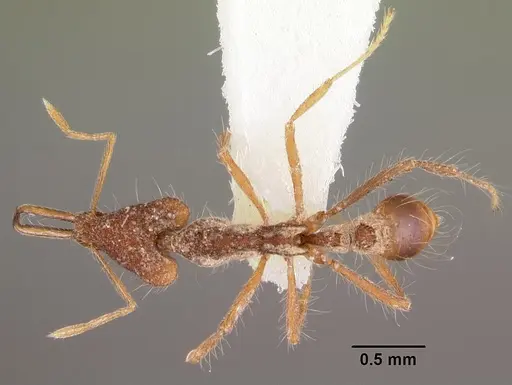
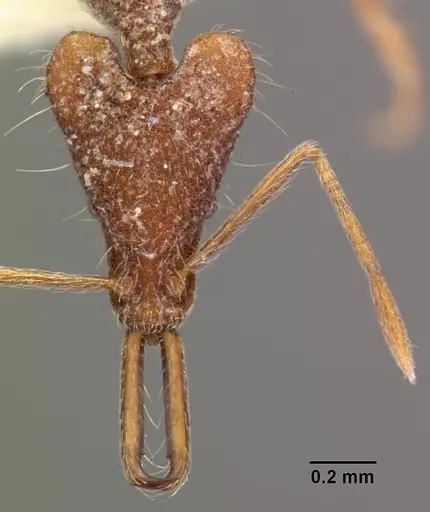
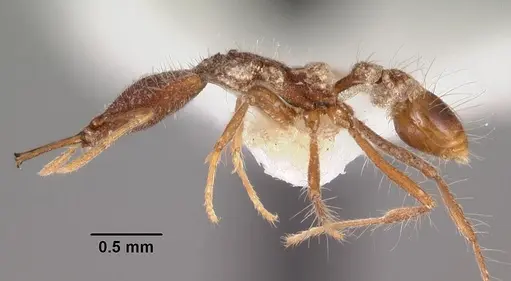
CASENT0900754
Посмотреть на AntWeb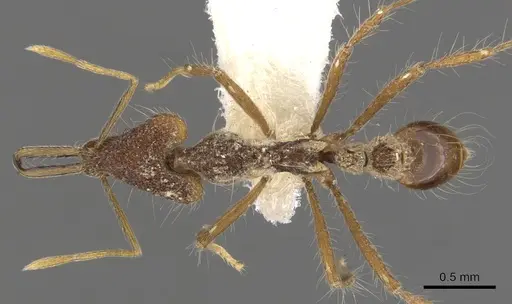
Литература
Загрузка карты распределения...Загрузка товаров...