
Strumigenys londianensis
- Науч. назв.
- Strumigenys londianensis
- Триба
- Attini
- Подсемейство
- Myrmicinae
- Автор
- Patrizi, 1946
- Распространение
- Встречается в 0 странах
Введение
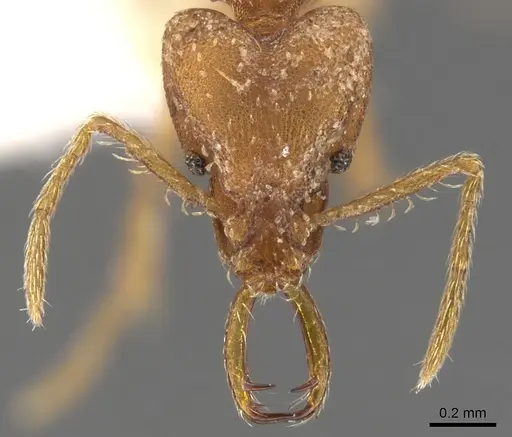
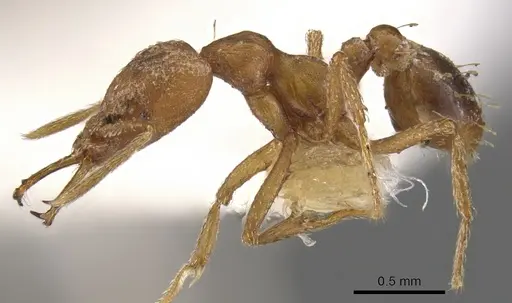
Strumigenys londianensis is a tiny predatory ant from East Africa, found in Kenya and Ethiopia. Workers are 3.5-4.2mm long . They belong to the Strumigenys rogeri group and are recognized by their distinctive mandibular teeth, deep preocular notch, and eyes that stand out from the side of the head in full-face view . The species was first described from Londiani, Kenya at around 2260 meters elevation . It's a forest-dwelling species, but little is known about its specific biology . As a close relative of the better-studied Strumigenys rogeri, it likely shares similar habits - specialized predation on tiny soil arthropods like springtails . The arrangement of hairs on the antennal scapes is a key identification feature: some curve toward the base, others toward the tip, and still others curve apically, creating a unique pattern .
Quick Summary
- Difficulty: Medium
- Origin & Habitat: Kenya and Ethiopia in the Afrotropical region. This is a forest species found at higher elevations (type locality ~2260m) [1].
- Colony Type: Not documented for this species, colony structure is unconfirmed. Based on related Strumigenys, single-queen colonies are likely.
- Size & Growth:
- Queen: Not documented in available literature [1].
- Worker: 3.5-4.2mm [1].
- Colony: Unknown, no colony size data available.
- Growth: Moderate, inferred from related species.
- Development: Estimated 6-10 weeks based on typical Strumigenys development patterns [1]. (This is a rough estimate, no species-specific data exists.)
- Antkeeping:
- Temperature: Keep at 22-26°C. This range works for tropical forest-dwelling ants like this one, but direct data is lacking, watch your colony and adjust if needed [1].
- Humidity: High humidity is essential. Keep the nest substrate consistently moist but not waterlogged, mimicking a damp forest floor. Provide a humidity gradient so ants can choose drier spots [1].
- Diapause: Unknown. This species comes from highland Kenya with moderate year-round temperatures. You may see less activity during cooler periods, but formal hibernation isn't documented [1].
- Nesting: In captivity, use naturalistic setups with tightly compacted soil or plaster nests with very small chambers. Their tiny size means you need fine mesh on all ventilation holes. Avoid acrylic nests with gaps they can squeeze through [1].
- Behavior: These are cryptic, slow-moving predators that hunt springtails and other micro-arthropods using specialized trap-jaw mandibles (based on genus-level knowledge). Workers are not aggressive toward humans and rarely sting. Escape prevention is critical, their tiny size (3.5-4.2mm) lets them fit through tiny gaps [1]. They forage alone, not recruiting nestmates.
- Common Issues: tiny size means extremely easy escape without fine mesh barriers., almost no species-specific care data is available, most advice is inferred from related species., specialized diet (live springtails) may be hard to source and maintain., high humidity requirements can lead to mold if ventilation is poor., slow colony growth can be frustrating for impatient keepers.
Housing and Nest Setup
Strumigenys londianensis needs careful housing because of its tiny size. Standard test tube setups often have gaps these ants can slip through. Use either a naturalistic setup with tightly packed moist soil or a plaster nest with very small chambers and narrow tunnels. The nest material should stay consistently damp, as these forest ants need high humidity. Avoid open water reservoirs that could drown tiny workers. Fine mesh over all ventilation holes is a must [1].
Feeding and Diet
Like other Strumigenys, this species is a specialized predator that hunts springtails and other tiny soil-dwelling arthropods. In captivity, live springtails should be the main food, they trigger the best feeding response. Other small prey like booklice (psocids), tiny mites, and fruit fly larvae may also work. They won't accept sugar water, honey, or large prey like mealworms. Feed small amounts every few days and remove leftovers to prevent mold [1].
Temperature and Seasonal Care
Keep the temperature in the 22-26°C range. This species comes from Kenyan highlands (2260m), so conditions should be warm but not hot. Room temperature is usually fine. Avoid heat above 30°C, that can stress the colony. True diapause isn't documented, but you may see less activity in cooler months, that's normal, just feed less often. Stable temperatures are best [1].
Behavior and Colony Dynamics
Strumigenys are among the most specialized predators in the ant world. Their trap-jaw mandibles can snap shut in milliseconds when triggered by prey movement, making them effective hunters of springtails despite their tiny size. Workers typically forage alone, not recruiting others to food. Colonies stay small, related species rarely have more than a few hundred workers. Colony structure is unknown for this species, so don't assume multiple queens can coexist without specific evidence [1].
Growth and Development
Colony growth is expected to be slow to moderate. First workers (nanitics) will be tiny and may take 6-10 weeks from egg at optimal temperatures. Later broods develop faster as the colony grows. Expect the colony to stay small, even mature colonies of similar species rarely exceed 100-200 workers. Patience is key, overfeeding won't speed things up and can cause mold in the humid environment [1].
Frequently Asked Questions
How long does it take for Strumigenys londianensis to produce first workers?
Based on typical Strumigenys development patterns, expect 6-10 weeks from egg to first worker at 22-26°C. This is a rough estimate since no species-specific data exists [1].
What do Strumigenys londianensis ants eat?
They are specialized predators that need live springtails as their main food. They won't accept sugar, honey, or large prey. Small live arthropods like booklice and tiny mites may also work [1].
Can I keep Strumigenys londianensis in a test tube setup?
Standard test tubes are not recommended because these ants are tiny (3.5-4.2mm) and can squeeze through gaps that larger ants can't. Use a naturalistic setup with tightly packed soil or a plaster nest with very small chambers, and cover all ventilation holes with fine mesh [1].
How big do Strumigenys londianensis colonies get?
Colony size hasn't been documented, but based on related species, colonies probably stay small, likely under 100-200 workers even when mature. These are cryptic, slow-growing ants [1].
What temperature do Strumigenys londianensis need?
Keep them at 22-26°C. This range supports normal activity and brood development. Avoid temperatures above 30°C, which can stress these forest-dwelling ants. Room temperature within this range is usually fine [1].
Do Strumigenys londianensis need hibernation?
True hibernation hasn't been documented for this species. They come from highland Kenya where temperatures are moderate year-round. You may notice reduced activity during cooler periods, but a formal diapause period isn't required [1].
Are Strumigenys londianensis good for beginners?
This species is rated medium difficulty. Their specialized diet (live springtails required), tiny size (escape risk), high humidity needs, and slow growth make them better for keepers with some experience [1].
Why are my Strumigenys londianensis dying?
Common causes: escaping through tiny gaps (use fine mesh), mold from overwatering or poor ventilation, prey that's too large, temperatures that are too high or too low, or not enough live prey. Check each factor [1].
Can I keep multiple Strumigenys londianensis queens together?
Colony structure is unconfirmed. Based on related Strumigenys, single-queen colonies are likely. Don't keep multiple unrelated queens together without evidence they can coexist [1].
What humidity level do Strumigenys londianensis need?
High humidity is essential, keep the nest substrate consistently moist but not waterlogged. These forest ants need damp conditions like a forest floor. Provide a gradient so ants can choose between wetter and slightly drier areas [1].
Report an Issue
The current care sheet is based fully on literature. See inconsistencies, or something that's incorrect? Please , it will be resolved after review from an admin. Contributing to the blogs tab also helps providing information, to make us be able to further improve the caresheets. Thank you for your support!
References

Эта инструкция по уходу лицензирована по CC BY-SA 4.0 .
Блоги сообщества
CASENT0900593
Посмотреть на AntWeb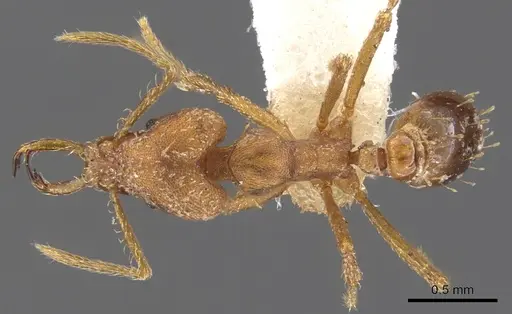
Литература
Загрузка карты распределения...Загрузка товаров...