
Strumigenys daspleta
- Науч. назв.
- Strumigenys daspleta
- Триба
- Attini
- Подсемейство
- Myrmicinae
- Автор
- Bolton, 2000
- Распространение
- Встречается в 0 странах
Введение
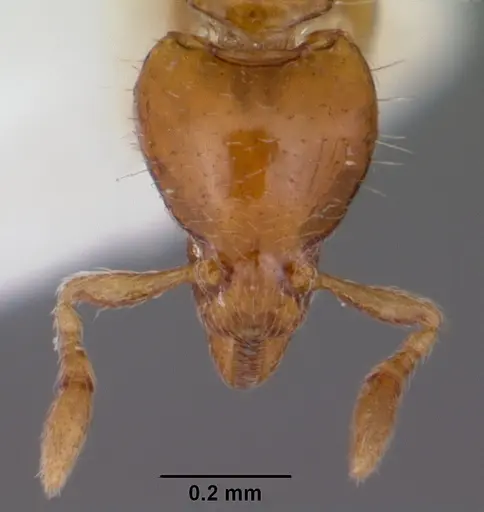
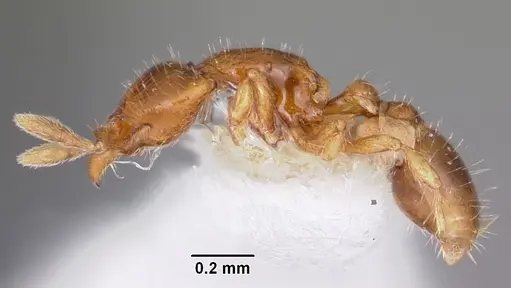
Strumigenys daspleta is an extremely rare ant known only from a single worker specimen collected in 1994 from Gunong Penrissen, Sarawak, Malaysia (Borneo) at 1000m elevation . Workers are tiny, just 1.6mm total length, with distinctive features including a blister-like patch of translucent cuticle on the back of the head and numerous standing setae along the head margins . This species belongs to the Strumigenys mnemosyne group, which contains only a handful of rare Southeast Asian species. Originally described as Pyramica daspleta in 2000,it was moved to Strumigenys in 2007 . Nothing is known about its biology, colony structure, diet, or founding behavior are all unrecorded .
Quick Summary
- Difficulty: Expert
- Origin & Habitat: Gunong Penrissen, Sarawak, Malaysia (Borneo), at approximately 1000m elevation [1]. The mnemosyne group species are typically found in humid tropical forest leaf litter and rotting wood habitats [2].
- Colony Type: Unknown, no colony data exists. Based on related Strumigenys species, likely single-queen (monogyne) colonies.
- Size & Growth:
- Queen: Unknown, no queen specimens have ever been collected [1]
- Worker: 1.6mm total length (measured from singleton holotype) [1]
- Colony: Unknown, likely small colonies, probably under a few hundred workers based on typical Strumigenys patterns
- Growth: Unknown
- Development: Unknown, estimated 6-10 weeks based on related small Myrmicinae species, but this is a rough guess (No species-specific development data exists. Timeline is inferred from similar-sized genera.)
- Antkeeping:
- Temperature: Keep at 22-26°C (72-79°F), warm, stable tropical conditions. Use a heating cable on one side if room temperature is lower.
- Humidity: High, keep nest substrate consistently moist but not waterlogged. Target 70-85% relative humidity, typical of Borneo rainforest floor.
- Diapause: Unknown, likely no true diapause given tropical origin. Keep warm year-round.
- Nesting: Use a small test tube setup with a water reservoir, or a Y-tong (autoclaved aerated concrete) nest with very narrow chambers scaled to their 1.6mm size. Provide moist substrate (soil or plaster). Avoid tall, open spaces.
- Behavior: These are tiny predatory ants with trap-jaw mandibles for capturing small prey. They are harmless to humans and unlikely to sting. Their small size makes escape a major concern, use fine mesh (≤0.5mm) on all openings. Based on related species, they are slow-moving hunters that target micro-arthropods in leaf litter.
- Common Issues: escape prevention is critical, at 1.6mm they can squeeze through gaps that seem impossibly small, no species-specific care data exists, all husbandry is guesswork from related species, feeding requires cultures of tiny live prey like springtails, which can be challenging to maintain, extreme rarity means wild colonies are unavailable, and captive breeding has never been attempted, slow growth and tiny colony size make them fragile, even small mistakes can cause colony loss
Species Background and Rarity
Strumigenys daspleta is known from a single holotype worker collected on 23 May 1994 at Gunong Penrissen, Sarawak, Malaysia (Borneo) at 1000m elevation [1]. It has never been collected again, despite over 30 years of ant surveys in the region. The species was originally described by Bolton in 2000 as Strumigenys daspleta, then transferred to Strumigenys by Baroni Urbani & De Andrade in 2007 [2]. Its diagnostic features include a blister-like translucent patch on each side of the back of the head, at least 6 freely projecting setae along the head margin in full-face view, and numerous short standing hairs on the head and thorax [1]. The extreme rarity may reflect genuinely low populations, a very localized distribution, or occupation of microhabitats (like deep leaf litter) that are rarely sampled.
Housing and Nest Setup
Because no species-specific information exists, housing recommendations are based on what works for other small Strumigenys and dacetine ants. Use a small test tube setup with a water reservoir (cotton ball) for founding colonies. As the colony grows, consider a Y-tong (autoclaved aerated concrete) nest with very narrow chambers, a plaster nest, or a soil nest. The nest material must hold humidity, keep it consistently moist but not waterlogged. Provide a small outworld area for foraging, but scale it to their tiny size. Escape prevention is absolutely critical: use fine mesh (pore size ≤0.5mm) on all openings, as these ants can squeeze through gaps that would contain larger species.
Feeding and Diet
Strumigenys ants are specialized predators of small micro-arthropods. In the wild, they likely hunt springtails, mites, and other soil-dwelling invertebrates [2]. In captivity, you should culture live prey such as springtails (e.g., Sinella curviseta), dwarf isopods, or tiny fruit flies. Offer prey no larger than the ant's head (roughly 0.3mm). Some keepers report that related Strumigenys species accept small pieces of insect (e.g., fruit flies), but live prey is preferred to trigger their trap-jaw hunting response. Sugar sources are generally not needed, though a tiny drop of diluted honey water (1:1 with water) can be offered occasionally.
Temperature and Humidity Requirements
As a tropical species from Borneo, S. daspleta needs warm, stable conditions. Keep temperature between 22-26°C (72-79°F). Use a heating cable on one side of the nest if your room is cooler. Avoid temperatures below 20°C (68°F) or above 30°C (86°F). Humidity should be high, aim to keep the nest substrate consistently moist but not waterlogged, corresponding to roughly 70-85% relative humidity. Use a water reservoir in test tube setups, and avoid excessive airflow that dries the nest. A small ventilation hole covered with fine mesh helps air exchange without humidity loss.
Behavior and Temperament
These tiny ants are not aggressive toward humans and pose no stinging threat. Their trap-jaw mandibles are adapted for catching small prey, not defense. They are likely slow, deliberate hunters that patrol the leaf litter layer. Foraging ranges are probably very small given their microhabitat. The main challenge is escape prevention, at 1.6mm, they can squeeze through nearly invisible gaps. Always use multiple barriers (fluon, fine mesh) and inspect the enclosure regularly.
Challenges and Why This Species is Expert-Only
Strumigenys daspleta should only be attempted by the most experienced antkeepers. There is zero species-specific biological data, everything is inferred from related species, and those inferences may be wrong. The extreme rarity (single specimen) means no wild colonies are available, and captive breeding has never been attempted. Their tiny 1.6mm size makes them fragile and requires specialized prey cultures (springtails). Growth is likely slow, requiring months or years of consistent care. For those interested in Strumigenys, start with better-documented species like Strumigenys membranifera or Strumigenys silvestrii before attempting this near-mythical species. [1]
Frequently Asked Questions
How long does it take for Strumigenys daspleta to develop from egg to worker?
The development timeline is completely unknown, no colonies have ever been observed. Based on related small Myrmicinae, a rough estimate is 6-10 weeks at 24-26°C. This is a guess.
What do Strumigenys daspleta ants eat?
No species-specific data exists, but Strumigenys ants are predatory. They likely hunt springtails, mites, and other tiny soil invertebrates. In captivity, culture live prey such as springtails, dwarf isopods, or tiny fruit flies. Offer prey no larger than the ant's head (about 0.3mm).
Can I keep Strumigenys daspleta in a test tube setup?
Yes, a small test tube with a water reservoir (cotton ball) is suitable. Keep the tube horizontal or slightly angled. Because ants are only 1.6mm, pack the cotton tightly to prevent escapes through gaps.
Are Strumigenys daspleta good for beginners?
Absolutely not. This is one of the rarest ant species in the world with zero captive care information. Even experts would struggle. Start with more common and documented Strumigenys species if you want to keep this genus.
What temperature should I keep Strumigenys daspleta at?
Keep at 22-26°C (72-79°F), typical tropical floor conditions. Use a heating cable if your room is cooler. Avoid temperatures below 20°C (68°F) or above 30°C (86°F). Stable conditions are important.
How big do Strumigenys daspleta colonies get?
Unknown, no colony has ever been documented. Based on typical Strumigenys, likely only a few dozen to a few hundred workers. This is a slow-growing, small-colony species.
Do Strumigenys daspleta need hibernation?
No, as a tropical species from Borneo, it does not experience cold winters. Keep warm year-round. Reduced activity in cooler periods is possible but not a true diapause.
Why is Strumigenys daspleta so rare?
It is known from only a single specimen collected in 1994. Despite extensive surveys in Borneo, it has never been found again. This may reflect truly low populations, a very restricted range, or occupation of poorly sampled microhabitats.
Where can I get Strumigenys daspleta ants?
You cannot obtain this species. It is known only from one museum specimen and has never been collected again. No captive colonies exist. If you want to keep Strumigenys, look for available species like Strumigenys membranifera.
Report an Issue
The current care sheet is based fully on literature. See inconsistencies, or something that's incorrect? Please , it will be resolved after review from an admin. Contributing to the blogs tab also helps providing information, to make us be able to further improve the caresheets. Thank you for your support!
References

Эта инструкция по уходу лицензирована по CC BY-SA 4.0 .
Блоги сообщества
CASENT0102600
Посмотреть на AntWeb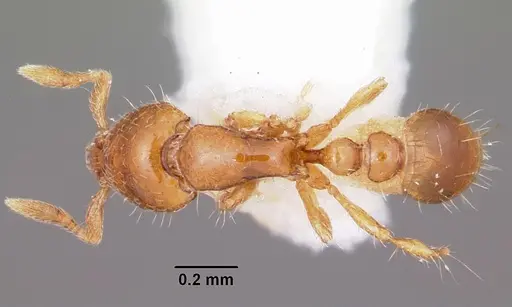
Литература
Загрузка карты распределения...Загрузка товаров...