
Simopone latiscapa
- Науч. назв.
- Simopone latiscapa
- Подсемейство
- Dorylinae
- Автор
- Bolton & Fisher, 2012
- Распространение
- Встречается в 0 странах
Введение
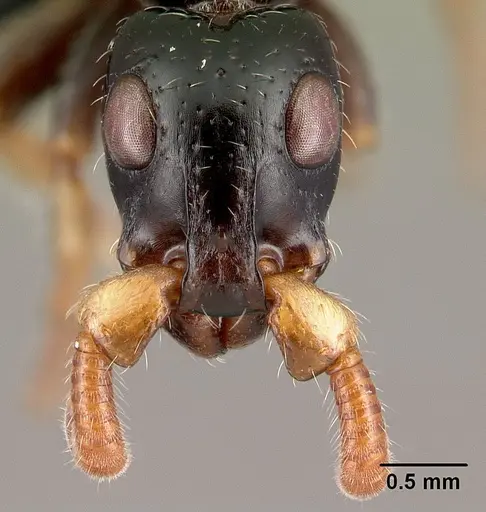
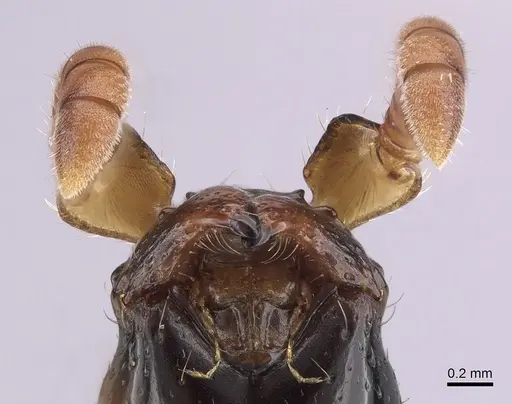
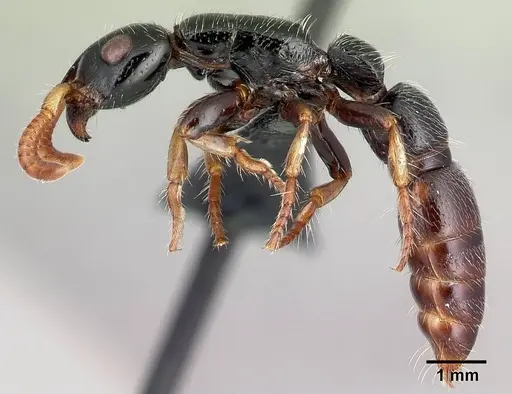
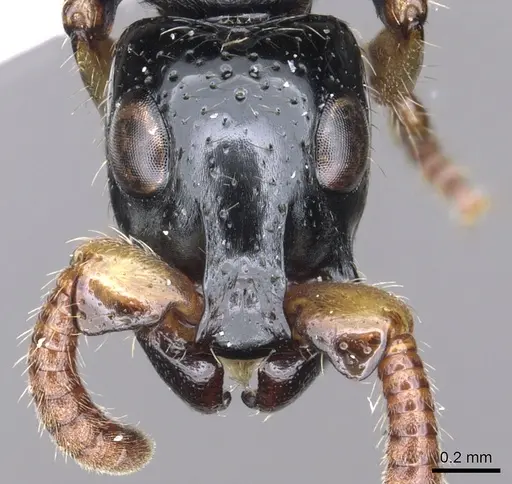
Simopone latiscapa is a rare predatory ant from the Dorylinae subfamily, making it a relative of army ants. Exact body size data is unavailable, but they are small ants with a jet-black body and very broad, flattened antennal scapes that stand out . This species is known from only three workers and two queens collected across Gabon, Ghana, and Sierra Leone in West Africa . The genus Simopone is largely arboreal and rarely collected, with all species forming a monophyletic group within the Dorylinae . As predators related to army ants, they likely hunt small invertebrates, though their exact behavior and colony structure remain unknown.
Quick Summary
- Difficulty: Expert
- Origin & Habitat: West Africa (Gabon, Ghana, Sierra Leone) in tropical forests. The genus Simopone is largely arboreal, rarely collected, and poorly known in both taxonomy and natural history [2][3].
- Colony Type: Unknown, only three workers and two queens have ever been collected. The colony structure (single-queen or multi-queen) has not been documented.
- Size & Growth:
- Queen: size data unavailable
- Worker: size data unavailable
- Colony: Unknown, only known from a handful of specimens
- Growth: Unknown
- Development: Unknown, no development data exists for this species (Development timeline is unconfirmed. This is one of the least-known ant species in captivity, with essentially no biological data available.)
- Antkeeping:
- Temperature: Unconfirmed, no specific data exists. Based on their West African origin and arboreal habits, they likely prefer warm, stable conditions around 24-28°C. Estimated from similar tropical ants.
- Humidity: Unconfirmed, no specific data exists. As arboreal forest ants from humid tropical regions, they likely need moderate to high humidity (60-80%). Estimated from similar tropical ants.
- Diapause: Unknown, no seasonal data exists. West African tropical ants may not require a true diapause, but a slight cooling period during winter months is speculative.
- Nesting: Unconfirmed, no nesting observations exist. As an arboreal genus, they likely prefer elevated nest sites. In captivity, a naturalistic setup with vertical surfaces or a Y-tong/plaster nest with appropriate-sized chambers would be suitable starting points.
- Behavior: Unconfirmed, no behavioral observations have been documented. As Dorylinae (army ant relatives), they are likely predatory on small invertebrates and may hunt in groups. Escape prevention is critical due to their small size. Their sting capability is unknown.
- Common Issues: extreme rarity makes the species unavailable to keepers, only a few specimens have ever been collected., no captive husbandry data exists, all care recommendations are speculative., very small size means escape prevention is critical., predatory diet requirements may be challenging to meet., nothing is known about founding behavior, colony structure, or reproductive biology.
Species Overview and Rarity
Simopone latiscapa is one of the rarest ants in the world, known only from three workers and two queens collected over several decades in West Africa [1]. Its most distinctive feature is the enormously flattened antennal scapes, which appear disproportionately massive compared to the jet-black body [1]. This species belongs to the emeryi species group within the genus Simopone, a poorly studied group of predatory ants related to army ants (Dorylinae). The genus Simopone is largely arboreal and rarely collected, making any biological information extremely scarce [3]. For antkeepers, this species represents a true challenge, not because of difficult care requirements, but because specimens are essentially unavailable and no captive husbandry information exists to guide care.
Distribution and Habitat
Simopone latiscapa is known from three West African countries: Ghana, Sierra Leone, and Gabon [1]. The type locality is Tafo in Ghana's Eastern Region, where the holotype worker was collected in 1974. One queen was captured after flying into a house in Sierra Leone. The species has never been collected in large numbers or observed in its natural nest, leaving habitat preferences unknown. Based on the arboreal nature of the genus Simopone and the humid tropical climate of West Africa, these ants likely inhabit forest canopies or edge environments with high humidity [1].
Physical Characteristics
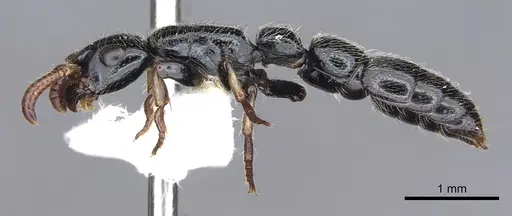
Exact total body length has not been recorded for this species. Workers are small ants with a jet-black body and extremely broad, flattened antennal scapes that are wider relative to their length [1]. The scapes have a width-to-length ratio of about 0.79-0.81,making them appear massive in front view. The eyes are positioned well behind the head's midpoint, and the clypeus is strongly curved back. The pygidial fork (the terminal abdominal structure) is short and stout with 9-10 small teeth on each side [1]. Queens are similar but slightly smaller and were found dealate (wingless after mating) [1].
Taxonomic Relationships
Simopone belongs to the subfamily Dorylinae, which includes army ants and their specialized predatory relatives. All Simopone species form a monophyletic group, meaning they share a common ancestor distinct from other Dorylinae [2]. The genus is distinguished from related genera by specific morphological features, including the strongly reflexed clypeus and enlarged antennal scapes in some species. Simopone latiscapa belongs to the emeryi species group, characterized by these spectacularly enlarged scapes. The species was formally described in 2012 by Bolton and Fisher [1].
Care Recommendations (Speculative)
Since Simopone latiscapa has never been kept in captivity and no biological data exists, all care recommendations are speculative estimates based on related Dorylinae and the species' likely West African forest origin. Aim for 24-28°C, consistent with tropical arboreal ants. Maintain humidity at 60-80% by keeping the nest substrate moist but not waterlogged. Given the arboreal genus, a naturalistic setup with vertical surfaces or a Y-tong/plaster nest with appropriately scaled chambers would be suitable starting points. Offer small live prey such as springtails, fruit flies, or other microarthropods based on predator habits. Escape prevention is critical given their small size. These recommendations are estimates, actual care requirements remain unconfirmed.
Frequently Asked Questions
Can I keep Simopone latiscapa as a pet ant?
No, this species is essentially unavailable. Only three workers and two queens have ever been collected, all from scientific collections. There is no captive breeding stock, and the species has never been documented in the antkeeping hobby [1].
What does Simopone latiscapa eat?
Unconfirmed, no feeding observations exist. As a member of Dorylinae (army ant relatives), it is likely predatory on small invertebrates [3]. Based on related species, it probably accepts small live prey such as springtails and fruit flies. Sugar acceptance is unknown.
How big do Simopone latiscapa colonies get?
Unknown, colony size has never been documented [1]. Only three workers and two queens have ever been collected as isolated specimens. Related Dorylinae army ants can form massive colonies, but Simopone appears much rarer and likely exists in smaller colonies [3].
What temperature do Simopone latiscapa need?
Unconfirmed, no temperature data exists for this species [3]. Based on their West African origin and likely arboreal habits, they probably prefer warm conditions around 24-28°C. This is an estimate.
Is Simopone latiscapa a good beginner ant?
No, this species is not suitable for any level of antkeeping. It is one of the rarest ants in the world with essentially no biological data available [1]. No specimens exist in captivity, and even if they did, the complete lack of husbandry information would make successful keeping impossible.
Do Simopone latiscapa need hibernation?
Unknown, no seasonal data exists [3]. As West African tropical ants, they likely do not require a true diapause. Any cooling period would be speculative.
How long does it take for Simopone latiscapa to develop from egg to worker?
Unknown, no development data exists for this species [3]. Based on related Dorylinae, development might take 4-8 weeks at warm temperatures, but this is a rough estimate.
Report an Issue
The current care sheet is based fully on literature. See inconsistencies, or something that's incorrect? Please , it will be resolved after review from an admin. Contributing to the blogs tab also helps providing information, to make us be able to further improve the caresheets. Thank you for your support!
References

Эта инструкция по уходу лицензирована по CC BY-SA 4.0 .
Блоги сообщества
CASENT0004517
Посмотреть на AntWeb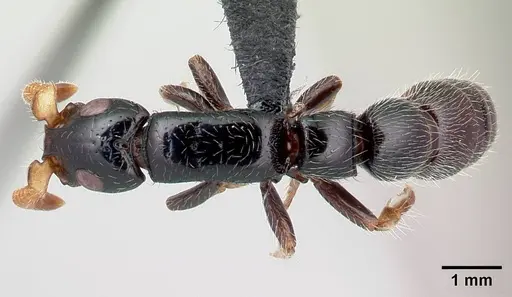
CASENT0902703
Посмотреть на AntWeb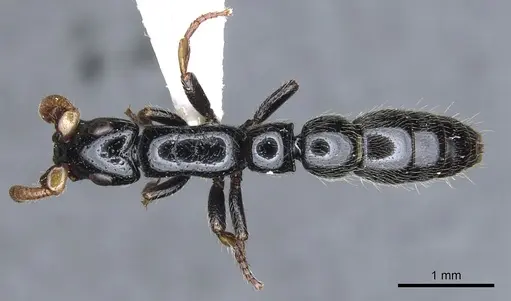
Литература
Загрузка карты распределения...Загрузка товаров...