
Simopone grandis
- Науч. назв.
- Simopone grandis
- Подсемейство
- Dorylinae
- Автор
- Santschi, 1923
- Распространение
- Встречается в 0 странах
Введение
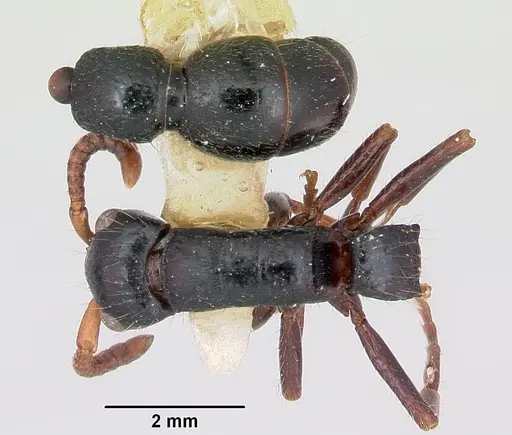
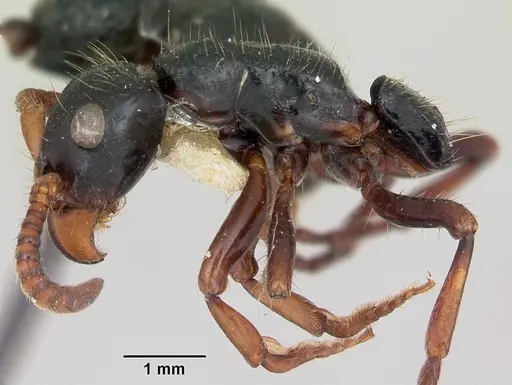
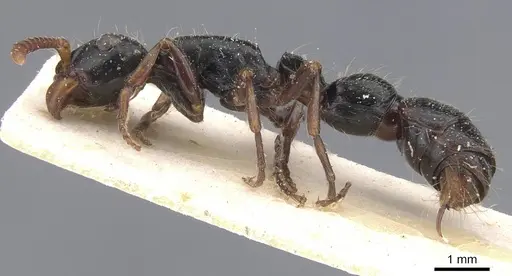
Simopone grandis is a large, robust ant species from the Afrotropical region, recorded in Cameroon, the Democratic Republic of Congo, and Kenya . Workers are among the largest in the genus, with an estimated total body length of about 8-10mm (inferred from head and mesosoma measurements ). The entire body is black, and the dorsal surfaces are covered with numerous long standing setae. Distinctive features include a recurved hook on the underside of the petiole and small triangular teeth at the posterior corners of the petiole . The only ecological data comes from one worker collected from a palm in a swampy forest . This species is extremely rare in scientific collections - only three specimens have ever been documented. As a member of the subfamily Dorylinae, it is related to army ants but belongs to the specialized predatory cerapachyine lineage. The extreme rarity and lack of captive records make this an expert-level species requiring experimental husbandry.
Quick Summary
- Difficulty: Expert
- Origin & Habitat: Afrotropical region, Cameroon, Democratic Republic of Congo, Kenya. The only known habitat data is from a palm in a swampy forest, suggesting humid tropical forest [1].
- Colony Type: Unconfirmed, colony structure has not been documented. No data available on queen number.
- Size & Growth:
- Queen: Undescribed, queen morphology has not been documented.
- Worker: Total length data unavailable. Head length ~1.74-1.86mm [3], estimated total body size ~8-10mm inferred from large Simopone species.
- Colony: Unknown, only three specimens have ever been collected.
- Growth: Unknown
- Development: Unknown, no direct observations. Related Dorylinae typically develop in 6-10 weeks at optimal temperatures, but unconfirmed for this species. (No data on founding or development exists.)
- Antkeeping:
- Temperature: Likely 24-28°C based on tropical forest habitat inference. Provide a warm area around 26°C with a gradient [1].
- Humidity: High humidity likely required, swampy forest collection data suggests keeping substrate consistently moist but not waterlogged. Provide a moisture gradient [1].
- Diapause: Unlikely, as a tropical species, probably does not require hibernation. May have seasonal activity reductions during dry periods.
- Nesting: Natural nesting behavior unconfirmed. Based on habitat, likely nests in soil or rotting wood in humid forest floor environments. Y-tong or plaster nests with moisture reservoirs are recommended.
- Behavior: Behavior is unstudied. Based on Dorylinae phylogeny, this is likely a predatory species that hunts small invertebrates. Workers are large and robust, suggesting moderate to aggressive defensive capabilities. Escape risk moderate, standard barrier methods should suffice. No stinging capability (Dorylinae lack functional stingers).
- Common Issues: extreme rarity means no established care protocols, all husbandry must be experimental., no documented diet acceptance, you must experiment with live prey acceptance., colony structure unknown, cannot confirm queen number or social organization., humidity requirements are inferred from one habitat data point, not confirmed., founding behavior unknown, queens may require specific conditions for successful colony establishment.
Identification and Distinguishing Features
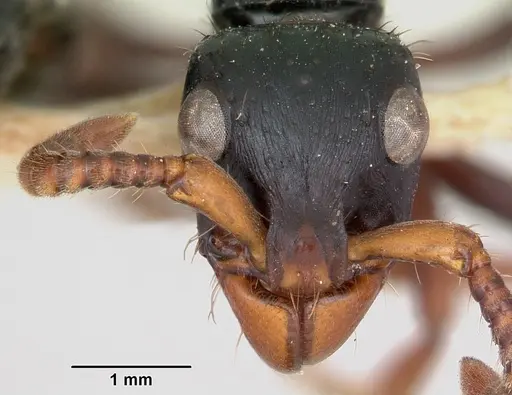
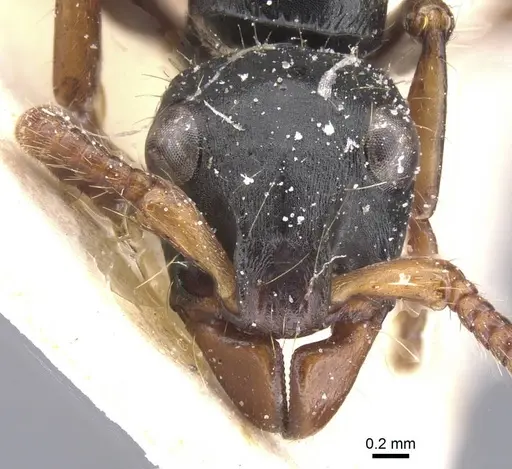
Simopone grandis is one of the largest species in the genus and stands out as the most conspicuous Simopone in the Afrotropical region. Workers are large, with an estimated total body length of about 8-10mm. The entire body is black, and the dorsal surfaces bear numerous long standing setae. Distinctive features include the recurved hook on the underside of the petiole (AII) and small triangular teeth at the posterior corners of the petiole [3]. The eyes are positioned well behind the midpoint of the head, and the frontal carinae are relatively weak [3]. These features distinguish Simopone grandis from other Simopone species.
Distribution and Habitat
Simopone grandis is known from only three specimens collected across three countries in tropical Africa: Cameroon, the Democratic Republic of Congo, and Kenya [1][2]. The type locality is Kunungu in the DRC, where two syntype workers were collected in April 1921 [1]. One specimen was collected from a palm in a swampy forest, providing the only ecological data available for this species [1]. This habitat association strongly suggests that Simopone grandis prefers humid, shaded tropical forest environments, likely in lowland areas. The species appears to be genuinely rare rather than simply overlooked, as its large size would make it conspicuous to collectors.
Taxonomy and Relationships
Simopone grandis belongs to the emeryi species group within the genus Simopone, which is part of the subfamily Dorylinae (army ant relatives) [3]. The genus Simopone was recently revised by Bolton and Fisher in 2012,who provided the detailed worker description used here. Within Dorylinae, Simopone belongs to the cerapachyine lineage, a group of specialized predators that are distinct from the more famous nomadic army ants (Dorylus). The emeryi group contains several large, robust species generally found in forested habitats across sub-Saharan Africa. Despite being described in 1923,Simopone grandis remains one of the least-known ant species in Africa due to its extreme rarity in collections.
Housing and Nesting
Since no captive husbandry records exist for Simopone grandis, housing recommendations must be inferred from related species and the limited habitat data. The swampy forest collection suggests high humidity requirements, so a naturalistic setup with consistently moist substrate would be appropriate. A Y-tong (AAC) nest or a plaster nest with a water reservoir could maintain the necessary humidity levels. Given the large worker size (approximately 8-10mm), a proper formicarium with appropriately sized chambers is essential. Provide a foraging area with a moisture gradient so ants can self-regulate their humidity preferences. Ensure excellent escape prevention, as large ants can exploit even moderately sized gaps. [1]
Feeding and Diet
No direct feeding observations exist for Simopone grandis. Based on Dorylinae phylogeny, this species is almost certainly predatory, feeding primarily on small invertebrates such as springtails, mites, and other micro-arthropods. Related cerapachyine ants are active hunters that subdue prey with their mandibles. In captivity, offer a variety of small live prey items including springtails, fruit flies, small crickets, and other appropriately sized invertebrates. Start with live springtails as a baseline and experiment with other small prey. Sugar sources are unlikely to be accepted, Dorylinae are primarily carnivorous. Feed every 2-3 days, removing uneaten prey after 24 hours to prevent mold.
Temperature and Environmental Requirements
Based on its tropical African distribution and swampy forest habitat, Simopone grandis almost certainly requires warm, humid conditions. Aim for temperatures in the range of 24-28°C, with a slight gradient allowing the colony to self-regulate. A heating cable on one side of the nest can create this gradient, place it on top of the nest rather than underneath to avoid excessive drying. Humidity should be kept high, with the substrate consistently moist but never waterlogged. As a tropical species, no hibernation or diapause is required. Avoid temperature fluctuations and dry conditions, which could stress or kill the colony. [1]
Behavior and Temperament
No behavioral observations exist for Simopone grandis in captivity or in the wild. However, Dorylinae ants are generally predatory and can be defensive when their nest is disturbed. Workers are large and robust, equipped with powerful mandibles capable of delivering a painful bite. Unlike many ants, Dorylinae do not have functional stingers but may spray formic acid or other defensive chemicals when threatened. Based on related species, expect moderate activity levels, Simopone may be ambush predators rather than constant foragers. Colony size is unknown but is likely smaller than typical army ant colonies.
Frequently Asked Questions
How difficult is Simopone grandis to keep?
This species is rated Expert difficulty because virtually no captive husbandry information exists. Only three specimens have ever been collected in the wild, so there are no established care protocols. You will be essentially pioneering captive husbandry for this species, which requires extensive experience with exotic ant species.
What do Simopone grandis ants eat?
Based on Dorylinae phylogeny, they are almost certainly predatory on small invertebrates. Offer live springtails, fruit flies, small crickets, and other appropriately sized live prey. Sugar sources are unlikely to be accepted. Start with springtails as a baseline and experiment with acceptance.
What temperature should I keep Simopone grandis at?
Based on tropical forest habitat inference, keep them at 24-28°C. Provide a temperature gradient so the colony can self-regulate. A heating cable on one side of the nest can achieve this. Avoid temperatures below 22°C or above 30°C.
How big do Simopone grandis colonies get?
Unknown. Only three specimens have ever been collected. Based on related species, colonies likely reach dozens to a few hundred workers, but this is purely speculative.
Do Simopone grandis need hibernation?
Unlikely. As a tropical species from the Afrotropical region, they probably do not require hibernation. They may have reduced activity during dry seasons in the wild, but no diapause is expected in captivity.
Can I keep multiple Simopone grandis queens together?
Unknown. Colony structure has not been documented for this species. Without data on whether they are monogyne (single queen) or polygyne (multiple queens), combining unrelated queens is not recommended.
What humidity do Simopone grandis require?
High humidity is likely required based on the swampy forest collection data. Keep the substrate consistently moist but not waterlogged. Provide a moisture gradient so the colony can self-regulate.
How long does it take for Simopone grandis to develop from egg to worker?
Unknown. No development data exists for this species. Based on related Dorylinae, expect approximately 6-10 weeks at optimal temperatures (around 26°C), but this is a rough estimate.
Are Simopone grandis good for beginners?
No. This species is not suitable for beginners. It is extremely rare in the wild with no established captive protocols, and all aspects of husbandry must be inferred or experimentally determined. This is an expert-level species for experienced antkeepers interested in pioneering captive breeding of poorly studied species.
Report an Issue
The current care sheet is based fully on literature. See inconsistencies, or something that's incorrect? Please , it will be resolved after review from an admin. Contributing to the blogs tab also helps providing information, to make us be able to further improve the caresheets. Thank you for your support!
References

Эта инструкция по уходу лицензирована по CC BY-SA 4.0 .
Блоги сообщества
CASENT0173047
Посмотреть на AntWeb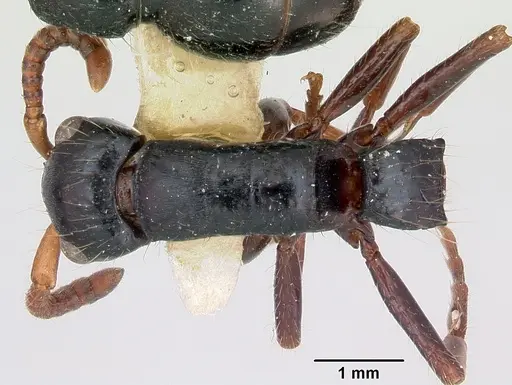
CASENT0911267
Посмотреть на AntWeb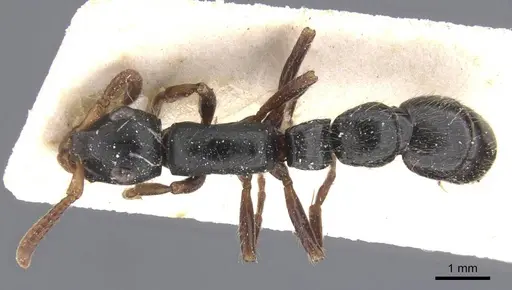
Литература
Загрузка карты распределения...Загрузка товаров...