
Simopelta transversa
- Науч. назв.
- Simopelta transversa
- Триба
- Ponerini
- Подсемейство
- Ponerinae
- Автор
- Mackay & Mackay, 2008
- Распространение
- Встречается в 0 странах
Введение
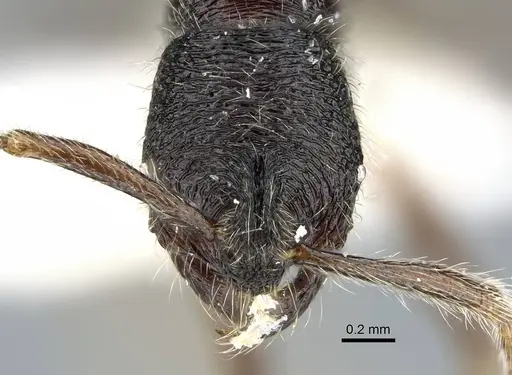
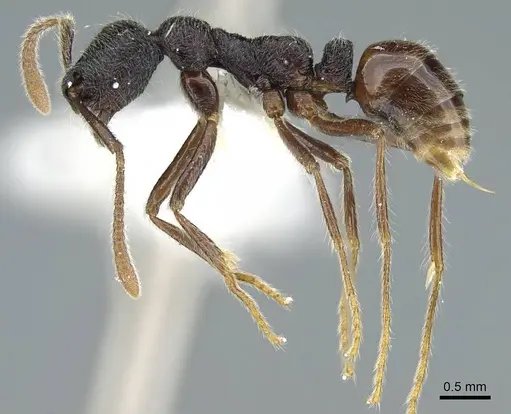
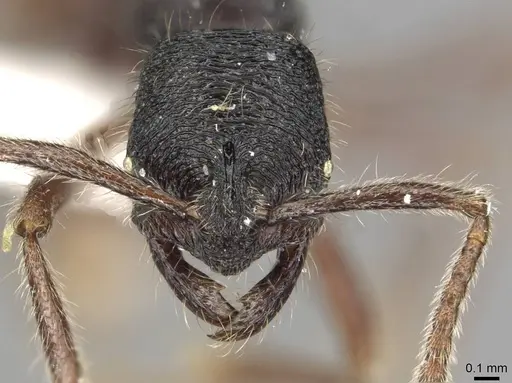
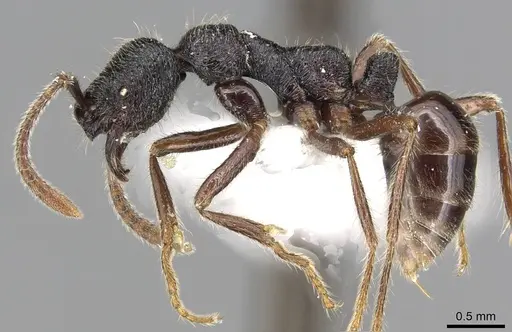
Simopelta transversa is a medium-sized Ponerine ant found only in wet mountain rainforests of Valle del Cauca, Colombia. Workers are about 4.5mm long, dark reddish-brown with lighter brown legs and gaster (abdomen). They have coarse transverse wrinkles across the top of the head, unusually long upright hairs on the outer surface of the hind legs, and a petiolar node that is much broader than long when viewed from above. Queens are slightly larger at 6mm with an enlarged abdomen . This species is a specialized predator that targets colonies of Pheidole ants. A wild colony was observed raiding a Pheidole nest: workers ran rapidly downhill through leaf litter, almost all carrying white pupae, and formed a temporary bivouac under a leaf. An estimated 1000+ ants were in the column. This organized raiding behavior makes Simopelta transversa one of the more behaviorally unusual Ponerines .
Quick Summary
- Difficulty: Expert
- Origin & Habitat: Endemic to Pance, Valle del Cauca, Colombia, at about 1700m elevation in wet mountain rainforest (cloud forest) [1][3].
- Colony Type: Colony structure has not been formally documented. The single known observation involved one queen and a large raiding column, hinting at monogyny, but this is not confirmed.
- Size & Growth:
- Antkeeping:
- Temperature: Inferred from high-elevation cloud forest habitat: 20-24°C. Monitor colony activity and adjust if needed.
- Humidity: High humidity, aim for consistently moist (not waterlogged) nest substrate, similar to a damp forest floor.
- Diapause: Unknown, no data on seasonal requirements. Their habitat may experience cooler periods, but diapause needs are unstudied.
- Nesting: Inferred from observed bivouac behavior: they use temporary leaf nests during raids. A naturalistic setup with moist substrate and multiple chambers likely works, with space for maintaining prey colonies.
- Behavior: Aggressive specialized predator with a functional stinger. Fast-moving workers form organized raiding columns to attack Pheidole colonies. Highly active foragers. Moderate size and speed require good escape prevention. Stings are painful, handle with caution [2][1].
- Common Issues: extreme rarity, known only from one location in Colombia, almost certainly unavailable in the hobby, specialized diet, requires live Pheidole or similar small ants as prey, making feeding very difficult, no captive breeding data, all care advice is inferred from habitat, high humidity needs from cloud forest may be challenging to maintain, aggressive nature and painful sting make this unsuitable for beginners
Identification and Appearance
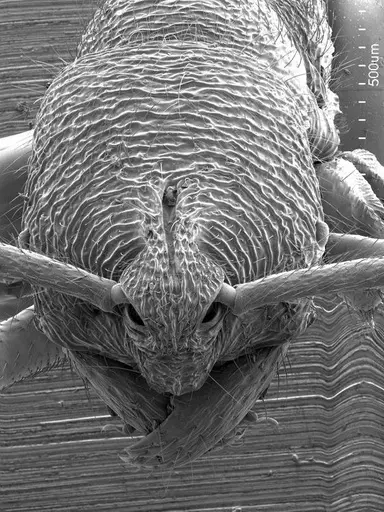
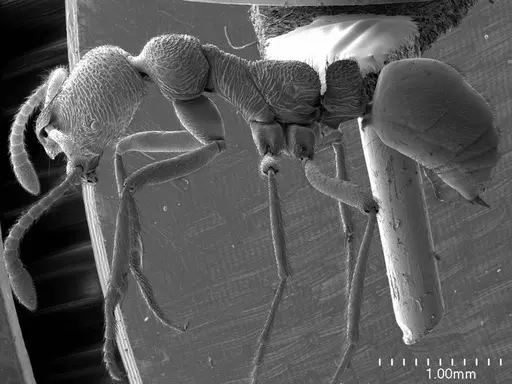
Simopelta transversa workers are moderately large (total length about 4.5mm), dark reddish-brown with lighter brown legs and gaster. The top of the head is covered with coarse transverse wrinkles (striae), the species name means "crosswise" in Latin, referring to these. Workers have unusually long, upright hairs on the outer surface of the hind tibiae, some as long as the leg's diameter. The petiolar node, viewed from above, is much broader than long, a rare shape in the genus. Mandibles have three teeth of about equal size [1][4].
Queens are larger (total length 6mm) with an enlarged gaster. Their mandibles are sickle-shaped without teeth, and the head is nearly round. The eyes are small, containing about ten poorly defined ommatidia, suggesting limited vision [1].
Distribution and Habitat
Known only from the type locality: Pance, municipality of Cali, Valle del Cauca, Colombia, at about 1700m elevation. The habitat is wet mountain rainforest (cloud forest) with high humidity, frequent mist, and moderate temperatures. The type colony was found on a steep slope along a large stream, among abundant leaf litter [1][3][5].
Feeding and Predatory Behavior
Simopelta transversa is a specialist predator that exclusively targets Pheidole ants [2]. In the wild, a colony was observed raiding a Pheidole nest: workers ran rapidly downhill through leaf litter, almost all carrying white pupae (and possibly a few larvae). They formed a bivouac, a temporary nest made from one leaf cupped beneath another, containing a mass of workers, brood, and prey. This coordinated raiding shows they can overwhelm larger prey through group attacks [1].
In captivity, you would need to maintain live Pheidole colonies for food. They are unlikely to accept standard ant foods, sugar water, or other non-ant protein sources.
Colony Structure and Size
The only documented wild colony was estimated at 1000 or more adult workers. The queen is known (6mm, enlarged gaster), but details about colony structure (monogyne vs polygyne) and whether replacement queens (ergatoids) exist have not been studied. Based on typical Ponerinae patterns, single-queen colonies seem likely, but this is unconfirmed [1].
Temperature and Care Requirements
From their cloud forest habitat at 1700m, Simopelta transversa needs cooler, more humid conditions than many tropical ants. Keep temperature around 20-24°C. Humidity should be high, nest substrate consistently moist but not waterlogged, with good ventilation to prevent mold.
No captive data exists, so all recommendations are inferred. Diapause needs are unknown. They have a functional Ponerine stinger and can deliver painful stings, handle with caution. [1]
Availability and Legal Considerations
Simopelta transversa is extremely rare, known only from one site in Colombia. There is no evidence of captive breeding or legal trade. It may be protected under Colombian law as an endemic species with a very restricted range. Interested keepers should instead consider more common specialist Ponerines like Odontomachus or Harpegnathos, which have established captive populations [1][3][5].
Frequently Asked Questions
Is Simopelta transversa available for purchase?
No. It is known only from one location in Colombia, extremely rare in collections, and not present in the antkeeping trade. No captive population exists [1][3].
What do Simopelta transversa ants eat?
They are specialist predators of Pheidole ants. In captivity they would require live Pheidole colonies, standard ant foods are unlikely to be accepted [2][1].
How big do Simopelta transversa colonies get?
At least 1000 workers in wild raiding columns. Mature colonies may be larger [1].
Do Simopelta transversa sting?
Yes, as a Ponerine they have a functional stinger that can deliver a painful sting. Handle with care.
What temperature and humidity do they need?
Based on cloud forest habitat at 1700m: temperatures around 20-24°C and high humidity with consistently moist substrate [1].
Where is Simopelta transversa found?
Only at Pance, Valle del Cauca, Colombia, at about 1700m elevation in wet mountain rainforest [1][3][5].
Are they good for beginners?
No. This species is rated Expert due to extreme rarity, specialized diet (live ant prey only), lack of captive data, and an aggressive nature with a painful sting [1][2].
How do they hunt?
They form organized raiding columns and attack Pheidole colonies, carrying captured pupae back to temporary leaf bivouacs [1].
Do they need hibernation or diapause?
Unknown. Their high-elevation Colombian habitat might have seasonal temperature changes, but there is no data on captive diapause [1].
Can I keep multiple queens together?
Unknown. Colony structure has not been documented, typical Ponerinae are monogyne, but this is unconfirmed. Do not attempt [1].
Report an Issue
The current care sheet is based fully on literature. See inconsistencies, or something that's incorrect? Please , it will be resolved after review from an admin. Contributing to the blogs tab also helps providing information, to make us be able to further improve the caresheets. Thank you for your support!
References

Эта инструкция по уходу лицензирована по CC BY-SA 4.0 .
Блоги сообщества
ANTWEB1008589
Посмотреть на AntWeb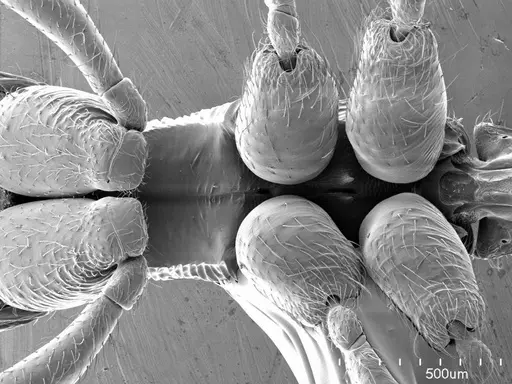
CASENT0914499
Посмотреть на AntWeb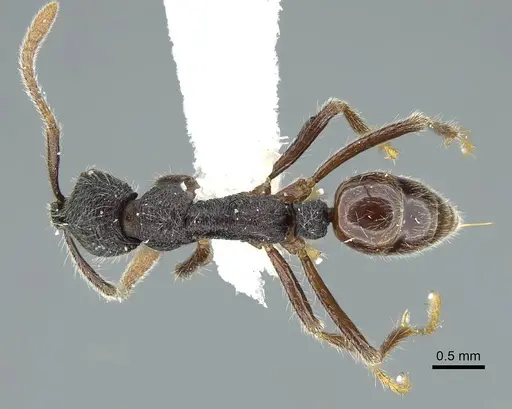
CASENT0915306
Посмотреть на AntWeb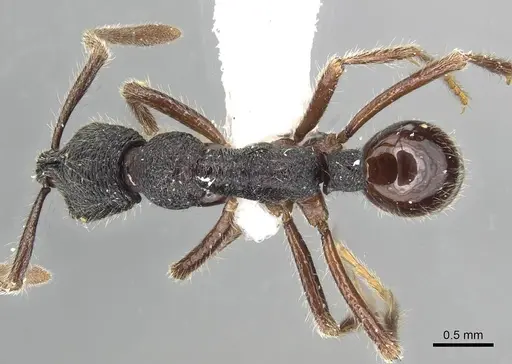
Литература
Загрузка карты распределения...Загрузка товаров...