
Rhopalomastix umbracapita
- Науч. назв.
- Rhopalomastix umbracapita
- Триба
- Crematogastrini
- Подсемейство
- Myrmicinae
- Автор
- Xu, 1999
- Распространение
- Встречается в 0 странах
Введение
Rhopalomastix umbracapita is a species of ant in the subfamily Myrmicinae, tribe Crematogastrini, described from Yunnan Province, China . It is known only from secondary forest habitats in the Xishuangbanna region, where it was not found in primary forest or rubber plantations . Beyond these basic facts, almost nothing is documented about its biology, morphology, or behavior. This is a poorly known ant with no published information on queen or worker size, colony structure, diet, nesting habits, or life cycle. Antkeepers should treat it as a completely uncharted species.
Quick Summary
- Difficulty: Expert
- Origin & Habitat: Endemic to Yunnan Province, China, specifically the Xishuangbanna region [1]. It appears to be a habitat specialist restricted to secondary forest environments, it was recorded in secondary forest but not in primary forest or rubber plantations [2]. The region has a subtropical climate with distinct wet and dry seasons, but detailed microhabitat preferences are unknown.
- Colony Type: Colony structure is unknown. No data exists on queen number (monogyne/polygyne) or social organization for this species.
- Size & Growth:
- Queen: Size data unavailable. No specimens have been measured in the available literature.
- Worker: Size data unavailable. No specimens have been measured in the available literature.
- Colony: Unknown. No data on mature colony size exists.
- Growth: Unknown
- Development: Unknown. No documented timeline exists. (Development is completely unstudied. Any estimates would be pure speculation.)
- Antkeeping:
- Temperature: Unknown. No specific temperature data is available. Given its subtropical secondary forest origin, room temperatures (20-26°C) are a starting point, but this is pure guesswork.
- Humidity: Unknown. No specific humidity data is available. Secondary forest leaf litter might be moderately moist, but this is not confirmed.
- Diapause: Unknown. The need for a cooling period has not been studied. Yunnan winters are mild, but formal diapause requirements cannot be assumed.
- Nesting: Unknown. Nothing is known about natural nesting sites. Wood, soil, cavities under bark, or leaf litter are all possible based on related genera, but none are confirmed for this species.
- Behavior: Behavior is unknown. As a Myrmicinae of the tribe Crematogastrini, it likely possesses a modified, flattened stinger used to smear venom rather than pierce, this is a general characteristic of the tribe, not specifically confirmed for this species. Without any behavioral observations, temperament and escape risk cannot be assessed. Caution is warranted due to its tiny size (if indeed small) and the complete lack of care data.
- Common Issues: complete lack of published care information, every aspect of husbandry is experimental., habitat specialist restricted to secondary forest, replicating these conditions is guesswork., worker size is unknown, but if small, escape prevention may be critical, use fine mesh or fluon., any colony loss could be total because no established knowledge exists to troubleshoot problems., document all observations and share with the antkeeping community, this species has never been kept in captivity.
Origin and Natural Habitat
Rhopalomastix umbracapita is known only from Yunnan Province, China, in the Xishuangbanna region [1]. Published records show it occupies secondary forest habitats, it was found in two secondary forest regions but not in primary forest or nearby rubber plantations [2]. Secondary forest differs from primary forest in having a more open canopy, greater light penetration, and often thicker leaf litter accumulations. However, the specific microhabitat (e.g., under bark, in soil, leaf litter) of this species has never been described. The climate of Xishuangbanna is subtropical, with average temperatures around 15°C in winter and 30°C in summer, and a pronounced wet season from May to October. How the ant responds to these conditions is unknown.
Housing and Nest Setup
Because nothing is known about the natural nesting habits of Rhopalomastix umbracapita, any housing recommendations are entirely experimental. If workers are as tiny as typical Rhopalomastix (though no measurements exist), they could escape through standard gaps, so use fine stainless steel mesh (0.3mm or smaller) on ventilation holes and fluon barriers on tubing. A test tube setup with a water reservoir is a neutral starting point. Provide dark cover and a small outworld. Avoid large open spaces if workers prove to be extremely small. Observe any signs of stress and adjust accordingly. Be prepared to try different nest types (e.g., soil, wood, cavities) if initial attempts fail.
Feeding and Diet
The diet of Rhopalomastix umbracapita has never been studied. As a Myrmicinae, it may be omnivorous, accepting both small arthropod prey and sugary liquids, but this is not confirmed. For captive colonies, offer a variety of small foods: fruit flies (Drosophila), springtails, small cricket parts, and diluted honey or sugar water. Because the worker size is unknown, provide prey items no larger than 1-2mm initially. Remove uneaten food promptly to prevent mold. Record what the ants accept and share findings, this will be valuable first-hand information.
Temperature and Seasonal Care
No temperature requirements have been documented for this species. The subtropical origin suggests moderate, stable temperatures are likely, but precise preferences are unknown. A reasonable starting range is 22-26°C, with a gentle gradient. Avoid sudden fluctuations or extremes. The need for a cool winter rest (diapause) is completely unknown. If the colony slows down in winter, a slight cooling to around 16-18°C might mimic natural conditions, but this is speculative. Monitor colony activity closely and adjust based on observed health.
Colony Establishment and Growth
There are no published observations of colony founding or growth for Rhopalomastix umbracapita. Whether queens are claustral or semi-claustral is unknown. How long it takes from egg to worker is unknown. Mature colony size is unknown. If you succeed in founding a colony, every stage will be a new discovery. Document everything: number of eggs, development times, worker sizes, food preferences, nest construction, and any problems. Share your data with myrmecologists and online communities. This species has never been kept, so any successful husbandry notes would be pioneering.
Frequently Asked Questions
How long does it take for Rhopalomastix umbracapita to produce first workers?
This is unknown. The egg-to-worker timeline has not been studied. Myrmicinae typically take 4-10 weeks depending on temperature, but this is pure speculation for this species. Document your own colony if you have one.
What do Rhopalomastix umbracapita ants eat?
The natural diet is unknown. As a Myrmicinae, it likely eats small insects and honeydew, but this is not confirmed. Offer a variety of tiny prey (e.g., fruit flies, springtails) and sugar water, and observe what they accept.
Can I keep Rhopalomastix umbracapita in a test tube colony?
A test tube setup is a sensible starting point for any unknown species. Use a water reservoir and cotton plug, keep it dark, and provide a small outworld. Since nothing is known about their nesting preferences, be ready to try other nest types if the ants seem stressed.
Do Rhopalomastix umbracapita ants sting?
As a Myrmicinae in the tribe Crematogastrini, they likely have a modified stinger used to smear venom rather than inject it, this is the typical defense of the tribe. Whether this applies specifically to this species is not documented. In any case, their tiny size (if small) would make any sting negligible to humans.
How big do Rhopalomastix umbracapita colonies get?
Colony size is completely unknown. No estimates exist in the scientific literature. Compared to other Rhopalomastix species, colonies might be modest (tens to a few hundred workers), but this is pure guesswork.
Are Rhopalomastix umbracapita good for beginners?
No. This species is for expert antkeepers only, because nothing is known about its care requirements. Beginners should start with well-documented species like Lasius niger, Tetramorium caespitum, or Camponotus species.
Do Rhopalomastix umbracapita need hibernation?
This is unknown. The subtropical origin suggests mild winters, but whether the species requires a cooling period or can remain active year-round has not been studied. If the colony slows down in winter, a mild drop to 16-18°C for 2-3 months may be safe, but this is speculation.
Why are my Rhopalomastix umbracapita escaping?
If workers are very small (typical for Rhopalomastix, though unconfirmed for this species), they can escape through tiny gaps. Use fine mesh (0.3mm or smaller), apply fluon to tubing, and seal all joints. Check for cracks in formicaria.
What temperature is best for Rhopalomastix umbracapita?
No specific temperature data exists. A reasonable starting point is 22-26°C, similar to many subtropical ants. Avoid extremes above 30°C or below 15°C. Provide a slight gradient so the colony can self-regulate.
Where is Rhopalomastix umbracapita found in the wild?
It is known only from secondary forests in Yunnan Province, China, specifically the Xishuangbanna region [1][2]. It has not been recorded in primary forest or rubber plantations [2].
Report an Issue
The current care sheet is based fully on literature. See inconsistencies, or something that's incorrect? Please , it will be resolved after review from an admin. Contributing to the blogs tab also helps providing information, to make us be able to further improve the caresheets. Thank you for your support!
References

Эта инструкция по уходу лицензирована по CC BY-SA 4.0 .
Блоги сообщества
ANTWEB1060574
Посмотреть на AntWeb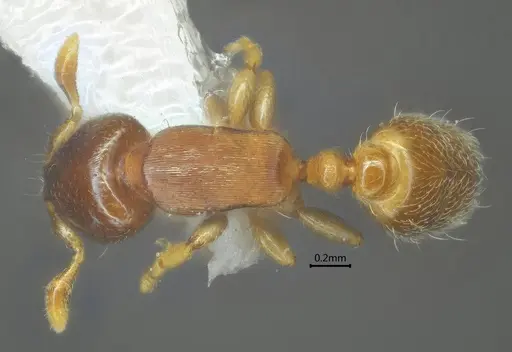
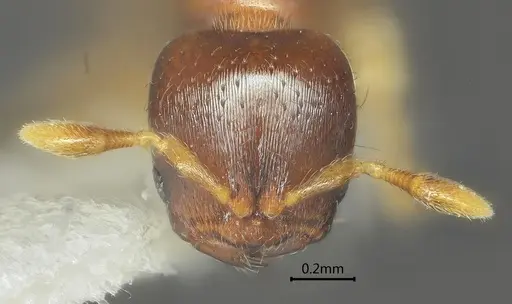
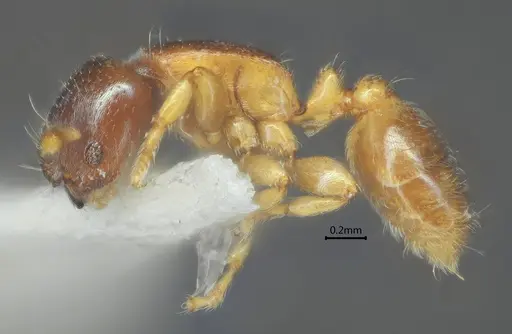
Литература
Загрузка карты распределения...Загрузка товаров...