
Pristomyrmex leleji
- Науч. назв.
- Pristomyrmex leleji
- Триба
- Crematogastrini
- Подсемейство
- Myrmicinae
- Автор
- Yamane & Sryani Dias, 2016
- Распространение
- Встречается в 0 странах
Введение
Pristomyrmex leleji is a tiny ant species from Thailand, first described in 2016. Workers measure 1.5-2.5 mm in length, with a yellow to light yellowish-brown body and a slightly darker gaster . The species was discovered in dry evergreen forest habitats at elevations of 600-650 m in central and eastern Thailand, with a possible range extension to northern Vietnam . This species is closely related to Pristomyrmex profundus from Borneo .
Quick Summary
- Difficulty: Medium
- Origin & Habitat: Thailand (Khao Yai NP, Sakaerat ERS, Cha-Kid Chakud NP) and possibly northern Vietnam. Found in dry evergreen forest at 600-650 m elevation [1].
- Colony Type: Unknown, queen and male remain undescribed. Colony structure has not been documented in scientific literature [1].
- Size & Growth:
- Queen: Unknown, queen has not been described [1]
- Worker: Workers range from 1.5 to 2.5 mm in length [1]
- Colony: Unknown, no colony size data available
- Growth: Unknown, no development data exists for this species
- Development: Unknown, no direct measurements available. Based on related Pristomyrmex species, approximately 4-8 weeks at tropical temperatures (Development timeline is estimated from related species, actual time may vary with temperature and conditions.)
- Antkeeping:
- Temperature: Based on Thai dry evergreen forest habitat [1], aim for warm conditions around 24-28°C. Avoid temperatures below 20°C. Provide a gentle temperature gradient so ants can self-regulate.
- Humidity: Dry evergreen forest suggests moderate humidity needs [1]. Keep nest substrate lightly moist but allow some drying between waterings. Avoid waterlogged conditions.
- Diapause: Unknown, no research on seasonal dormancy. Given tropical origin, diapause is likely not required.
- Nesting: Natural nesting sites are undocumented. Based on genus patterns, they likely nest in soil, rotting wood, or under stones in forest floor habitats. In captivity, a Y-tong (AAC) nest or plaster nest with small chambers works well for their tiny size. Provide a small outworld for foraging.
- Behavior: Pristomyrmex ants are typically predatory with a functional stinger, using a smear defense mechanism common to Myrmicinae. This species likely preys on small arthropods. Workers are small (1.5-2.5 mm) so escape prevention is important, they can squeeze through tiny gaps. The genus is known for being somewhat aggressive when threatened. Activity level is likely moderate to high. Foraging style is probably opportunistic hunting.
- Common Issues: tiny worker size means escape prevention must be excellent, use fine mesh barriers, no colony data means founding success rate is unknown, expect some trial and error, predatory diet may be difficult to meet, requires small live prey like springtails or fruit flies, queen unknown means you cannot obtain a founding queen, only colony fragments or workers may be available, limited species-specific care data means keepers should monitor colony response closely and adjust conditions as needed
Appearance and Identification
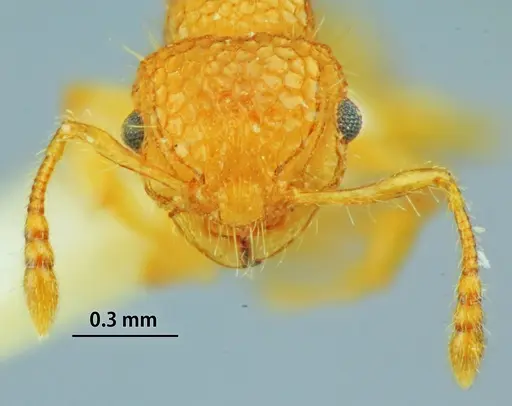
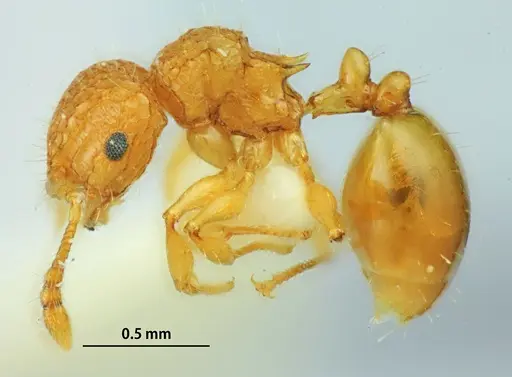
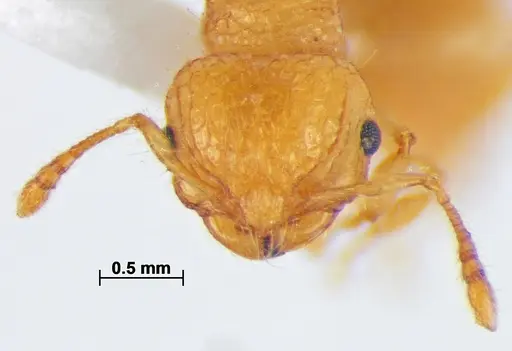
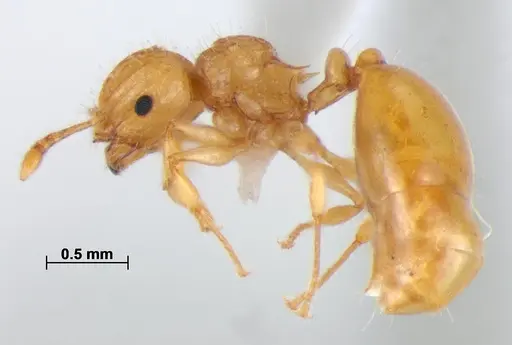
Pristomyrmex leleji workers are among the smallest ants, measuring 1.5-2.5 mm depending on whether they are minor or major workers [1]. Their body is uniform yellow to light yellowish-brown, with the gaster slightly darker than the head and mesosoma. The mandible teeth are dark reddish-brown. They have relatively large eyes with 9-11 ommatidia [1]. The propodeal spines are relatively long and backward-directed, almost as long as the eye [1]. The entire body is rather shiny due to smooth sculpturing. These ants are closely related to Pristomyrmex profundus from Borneo, and distinguishing them requires examining hair characteristics and eye shape [1].
Distribution and Habitat
This species is known from central and eastern Thailand, with the type locality in Khao Yai National Park at 600-650 m elevation in dry evergreen forest [1]. Paratypes have been collected from Sakaerat Environmental Research Station and Cha-Kid Chakud National Park [1][2]. A possible record from northern Vietnam suggests a wider distribution [1]. The habitat indicates preference for forested areas with moderate moisture.
Feeding and Diet
Pristomyrmex ants are typically predatory, using their functional stinger to subdue prey. In captivity, offer small live prey such as fruit flies, springtails, and other tiny arthropods 2-3 times per week. Prey must be appropriately sized for these tiny workers. Remove uneaten items within 24 hours to prevent mold. Sugar sources are not primary food, but diluted honey or sugar water can be tested occasionally. Always provide a shallow water source.
Temperature and Care
Based on the Thai dry evergreen forest habitat [1], maintain nest temperatures around 24-28°C with a slight gradient. Avoid temperatures below 20°C for extended periods. Use a heating cable or mat on the outside of the nest to prevent drying. Room temperature within this range is often sufficient. Monitor colony activity for signs of temperature stress.
Nesting and Setup
Natural nesting behavior is undocumented, but Pristomyrmex species typically nest in soil, under stones, or in rotting wood. For captivity, use a Y-tong (AAC) nest or plaster nest with small chambers. Provide a test tube setup for founding colonies connected to a small outworld. Use a thin layer of moist substrate in the foraging area. Escape prevention is critical due to their minute size, use fluon on edges and fine mesh for ventilation.
Behavior and Temperament
Like other Pristomyrmex species, this ant has a functional stinger and may use it when threatened, with a smear defense mechanism common to Myrmicinae. Workers are active foragers, hunting individually or in small groups. The relatively large eyes suggest vision use. Colonies are likely modest in size. Avoid frequent nest disturbance to prevent stress.
Frequently Asked Questions
How long does it take for Pristomyrmex leleji to produce first workers?
The egg-to-worker timeline is unknown, no direct data exists. Based on related Pristomyrmex species in tropical conditions, expect approximately 4-8 weeks.
What do Pristomyrmex leleji ants eat?
They are predatory and need small live prey like fruit flies or springtails 2-3 times per week. Sugar sources can be tested but are not primary food.
Do Pristomyrmex leleji ants sting?
Yes, Pristomyrmex has a functional stinger with a smear defense mechanism common to Myrmicinae. Due to their small size, the sting is typically mild.
What temperature do Pristomyrmex leleji need?
Keep them warm at 24-28°C based on their Thai forest habitat [1]. A temperature gradient is ideal.
Are Pristomyrmex leleji good for beginners?
This species is not ideal for beginners due to limited care information, tiny size requiring excellent escape prevention, and specific predatory diet needs.
How big do Pristomyrmex leleji colonies get?
Colony size is unknown, no data exists on maximum size.
Can I keep multiple Pristomyrmex leleji queens together?
Colony structure is unknown, the queen has not been described. Combining unrelated queens is not recommended.
Do Pristomyrmex leleji need hibernation or diapause?
Diapause requirements are unknown. Given tropical origin, it is likely not required.
Why are my Pristomyrmex leleji escaping?
These are tiny ants (1.5-2.5 mm) that can squeeze through small gaps. Ensure excellent escape prevention with fluon and fine mesh.
Where can I get Pristomyrmex leleji?
This is a recently described species with limited distribution in Thailand. Queens have not been described, so they are unlikely to be available through typical sources.
Report an Issue
The current care sheet is based fully on literature. See inconsistencies, or something that's incorrect? Please , it will be resolved after review from an admin. Contributing to the blogs tab also helps providing information, to make us be able to further improve the caresheets. Thank you for your support!
References

Эта инструкция по уходу лицензирована по CC BY-SA 4.0 .
Блоги сообщества
ANTWEB1041158
Посмотреть на AntWeb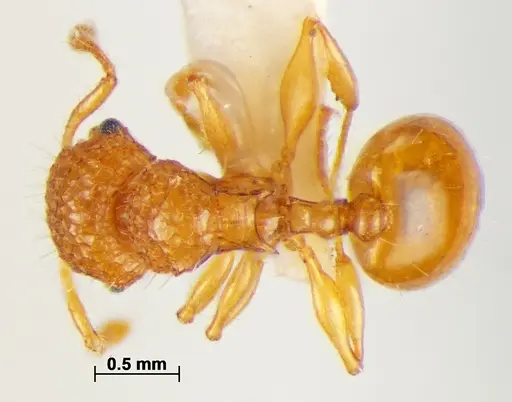
ANTWEB1041159
Посмотреть на AntWeb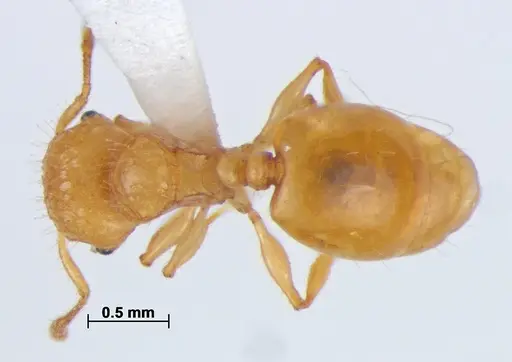
Литература
Загрузка карты распределения...Загрузка товаров...