
Prenolepis jacobsoni
- Науч. назв.
- Prenolepis jacobsoni
- Триба
- Lasiini
- Подсемейство
- Formicinae
- Автор
- Crawley, 1923
- Распространение
- Встречается в 0 странах
Введение
Prenolepis jacobsoni is a small ant species native to Southeast Asia, found in Indonesia and Thailand . Workers measure 2.42-2.64 mm in total length , with light to medium brown coloration and smooth, shiny cuticle on the head and gaster . They have a narrow, elongate petiole with a prominent downward-pointing process and an obtusely angled propodeum . This species belongs to the Formicinae subfamily and is part of the Prenolepis genus, which includes lowland tropical species often found near coastlines and islands .
Quick Summary
- Difficulty: Unknown, species has no documented captive care history
- Origin & Habitat: Southeast Asia, found in Indonesia (Sumatra) and Thailand (Chachoengsao and Narathiwat provinces). This is a lowland tropical species typically found near coastlines and on islands [1][4][5].
- Colony Type: Colony structure is unconfirmed, no research exists on whether they are single-queen (monogyne) or multi-queen (polygyne)
- Size & Growth:
- Queen: Size data unavailable, no documented queen measurements exist for this species [3]
- Worker: 2.42-2.64 mm total length [2]
- Colony: Unknown, no colony size data exists in scientific literature [3]
- Growth: Unknown, no development data exists for this species
- Development: Unknown, no development timeline has been documented. Based on related lowland tropical Prenolepis species, estimate 4-8 weeks at warm temperatures, but this is unconfirmed. (No direct studies on Prenolepis jacobsoni development exist. Development is likely temperature-dependent.)
- Antkeeping:
- Temperature: Likely needs warm conditions. As a lowland tropical species, aim for 24-28°C, inferred from habitat data [4][5]. Treat this as a starting point and adjust based on colony behavior.
- Humidity: Keep nest substrate consistently moist but not waterlogged, inferred from coastal tropical habitat [4][5].
- Diapause: Unknown, no research on overwintering behavior exists. As a tropical species, they likely do not require hibernation.
- Nesting: Natural nesting behavior is unconfirmed. Related Prenolepis species often nest in soil or rotting wood. For captivity, use small test tube setups or Y-tong nests with tight chambers, scaled to their tiny size.
- Behavior: Behavior is unstudied in captivity. Based on Prenolepis genus patterns, they are likely relatively docile. Their tiny size means minimal sting risk, but escape prevention is critical, they can squeeze through very small gaps. Use fine mesh barriers on all openings.
- Common Issues: no documented care history means all advice is speculative, start with standard Prenolepis care and adjust based on colony response., tiny size makes escape prevention critical, even standard test tube setups may need fine mesh barriers on air holes., unknown colony structure means you may not know if your colony is queenright or how many queens are present., no known food preferences documented, begin with sugar water and small live prey like fruit flies or springtails., humidity and temperature requirements are inferred, not confirmed, monitor colony health and adjust conditions gradually.
Species Identification and Appearance
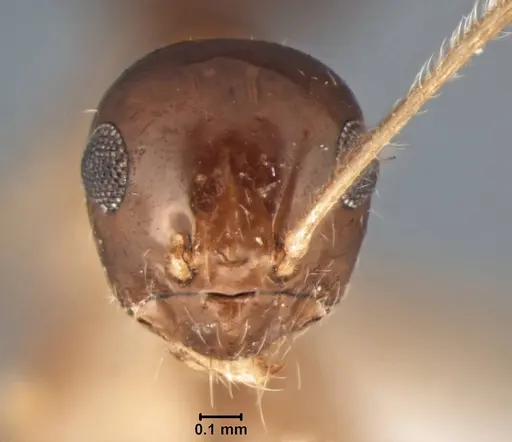
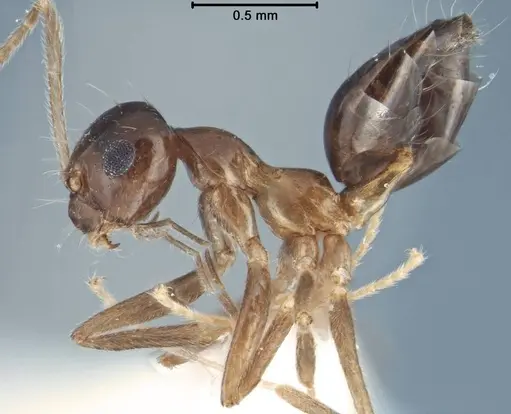
Prenolepis jacobsoni workers are small, measuring 2.42-2.64 mm in total length [2]. They are light to medium brown with smooth, shiny cuticle on the head, pronotum, mesopleuron, and gaster [2]. Key features include very long erect hairs on the head and gaster, a narrow and elongate petiole with a prominent anteroventral process, and an obtusely angled propodeum in side view [2]. The species was first described from Sumatra, Indonesia, and is also recorded in Thailand [1].
Natural Habitat and Distribution
This species is found in the Indomalaya region, specifically Indonesia (Sumatra) and Thailand [1]. Records show presence in southeastern Thailand (Chachoengsao province) and peninsular Thailand (Narathiwat province) [1]. It is a lowland tropical species typically near coastlines and islands, with longer legs and antennae compared to highland relatives [4][5]. No specific microhabitat details are documented.
Current State of Knowledge
Prenolepis jacobsoni is poorly studied, with no biological data available. The original type specimen was lost, and a neotype was designated in 2016 for stability [3]. The 2016 revision provided morphological details but no care information [2]. AntWiki states nothing is known about its biology, so all captive care must be inferred from related species [3].
Housing and Setup Recommendations
Given their tiny size of 2.4-2.6 mm, housing requires careful scaling. Test tube setups work for founding colonies, but air holes must be covered with fine mesh to prevent escape [2]. Nest chambers should be tight and narrow, avoid large open spaces. Y-tong nests with small chambers or plaster nests are suitable alternatives. Provide a humidity gradient with mostly moist substrate, as they are from tropical habitats [4][5].
Feeding and Diet
No specific dietary studies exist. Based on Prenolepis genus patterns, they likely consume honeydew and small insects. For captivity, offer sugar water or honey water constantly, and protein sources like fruit flies or springtails 2-3 times per week. Remove uneaten prey after 24-48 hours and observe colony response.
Temperature and Seasonal Care
As a lowland tropical species, they likely need warm temperatures around 24-28°C, inferred from habitat data [4][5]. Use a heating cable on one side to create a gradient, placed on top to avoid drying substrate. No diapause research exists, so assume no hibernation is needed, but activity may reduce in cooler months.
Challenges and Considerations for Keepers
Keeping this species is challenging due to no documented care information. Start with tropical ant conditions and adjust based on observation. Document findings to contribute to the community. Be patient with growth, as small species may develop slowly. Wild-caught colonies may have unknown parasites.
Frequently Asked Questions
How long does it take for Prenolepis jacobsoni to produce first workers?
Unknown, no development timeline exists. Based on related species, estimate 4-8 weeks at warm temperatures, but this is unconfirmed.
What do Prenolepis jacobsoni ants eat?
No specific studies exist. Based on genus patterns, they likely accept sugar sources and small live prey like fruit flies or springtails.
Are Prenolepis jacobsoni good for beginners?
No, this species cannot be recommended for beginners due to no documented care history. Only experienced keepers should attempt it.
What temperature do Prenolepis jacobsoni need?
Likely 24-28°C, inferred from their lowland tropical habitat [4][5]. Adjust based on colony activity.
Do Prenolepis jacobsoni need hibernation?
Unknown, no research exists. As a tropical species, they likely do not require hibernation.
How big do Prenolepis jacobsoni colonies get?
Unknown, no colony size data exists in scientific literature [3].
Can I keep multiple Prenolepis jacobsoni queens together?
Unknown, colony structure is unconfirmed. Combining unrelated queens is not recommended without research.
How do I house Prenolepis jacobsoni?
Use small-scale setups like test tubes with fine mesh barriers, or Y-tong nests with tiny chambers. Maintain moist substrate [2][4][5].
Where is Prenolepis jacobsoni found?
Native to Southeast Asia, specifically Indonesia (Sumatra) and Thailand [1].
Why are my Prenolepis jacobsoni dying?
Without care data, diagnose carefully. Common issues include improper temperature, humidity, or stress from oversized housing. Document conditions and adjust gradually.
Is Prenolepis jacobsoni invasive?
No, it is not documented as invasive and is limited to Indonesia and Thailand [1].
Report an Issue
The current care sheet is based fully on literature. See inconsistencies, or something that's incorrect? Please , it will be resolved after review from an admin. Contributing to the blogs tab also helps providing information, to make us be able to further improve the caresheets. Thank you for your support!
References

Эта инструкция по уходу лицензирована по CC BY-SA 4.0 .
Блоги сообщества
USNMENT00755101
Посмотреть на AntWeb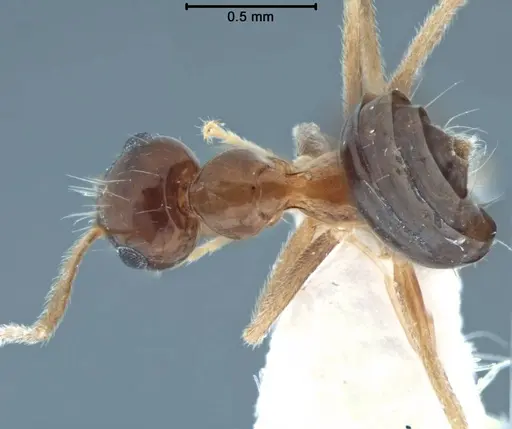
Литература
Загрузка карты распределения...Загрузка товаров...