
Polyrhachis wallacei
- Науч. назв.
- Polyrhachis wallacei
- Подрод
- Myrmatopa
- Триба
- Camponotini
- Подсемейство
- Formicinae
- Автор
- Emery, 1887
- Распространение
- Встречается в 0 странах
Введение
Polyrhachis wallacei is a member of the Formicinae subfamily, found across the Indomalayan region including India, Indonesia, and Sulawesi . Specimens have been collected at elevations between 820 and 1020 meters in agroforest environments . Body size data is unavailable, but workers are likely around 8-12mm based on Polyrhachis genus patterns. Founding behavior and nesting habits are unconfirmed. This species belongs to the Polyrhachis wallacei species-group and was originally described by Emery in 1887 . Keepers should expect moderate growth rates and focus on maintaining stable, warm conditions. Since exact care requirements are unconfirmed, you should monitor your colony closely and adjust humidity and temperature based on observed activity.
Quick Summary
- Difficulty: Medium
- Origin & Habitat: Tropical forests in the Indomalayan region, specifically recorded from India (Andaman and Nicobar Islands), Indonesia (Sulawesi), and Vaigiu Island [2][3]. Collections come from elevations of 820-1020 meters in agroforest settings [1].
- Colony Type: Single-queen colonies (monogyne) are typical for the genus, but this remains unconfirmed for Polyrhachis wallacei.
- Size & Growth:
- Queen: size data unavailable, inferred from Polyrhachis genus (~8-12mm)
- Worker: size data unavailable, inferred from Polyrhachis genus (~6-10mm)
- Colony: size data unavailable
- Growth: Moderate
- Development: unknown, inferred from related Polyrhachis species (~6-8 weeks at warm temperatures) (Development speed depends on temperature and food availability.)
- Antkeeping:
- Temperature: Keep warm and stable, roughly low-to-mid 20s°C. Exact thermal needs are unconfirmed.
- Humidity: Keep the nest substrate consistently moist but not waterlogged.
- Diapause: Unknown, likely unnecessary given the tropical range, but unconfirmed.
- Nesting: Nesting preferences are unconfirmed. Based on Polyrhachis patterns, they likely nest in vegetation or wood. Provide a naturalistic setup with branches or a Y-tong/plaster nest.
- Behavior: Workers are active foragers. As Formicinae ants, they lack a functional sting and instead spray formic acid from an acidopore as a defense mechanism. They are generally docile but will defend their nest if disturbed. Escape prevention is important since they are good climbers.
- Common Issues: temperatures below 20°C can slow metabolism and harm the colony, uncertain founding behavior requires careful monitoring during the initial phase, escape risk is moderate due to climbing ability, wild-caught colonies may carry parasites that reduce captive survival
Housing and Nest Setup
Nesting preferences are unconfirmed for Polyrhachis wallacei. Based on Polyrhachis patterns, they likely nest in vegetation or wood. You should provide a naturalistic setup with branches or a Y-tong/plaster nest. Avoid acrylic nests entirely. Use only Y-tong, plaster, soil, or 3D-printed nests. Give them vertical space and climbing surfaces to match their likely arboreal habits. Keep the environment quiet during the founding phase to reduce stress. [1]
Feeding and Diet
Dietary habits are unconfirmed for this species. Based on Polyrhachis patterns, they likely hunt small insects and tend honeydew-producing insects. You can offer a varied diet of small live insects like fruit flies, pinhead crickets, and chopped mealworms. Provide sugar sources like honey water or sugar water for energy. Feed protein-rich prey two to three times per week and keep sugar water available. Remove uneaten prey after twenty-four hours to prevent mold.
Temperature and Humidity
Exact thermal needs are unconfirmed. Keep the nest warm and stable, roughly low-to-mid 20s°C. Temperatures below 20°C can slow their metabolism. Use a heating cable on one side of the nest to create a gradient. Keep the nest substrate consistently moist but not waterlogged. Good ventilation prevents mold while maintaining moisture. Do not expose them to cold temperatures year-round. [1]
Behavior and Defense
Workers are active foragers that patrol their territory. As Formicinae ants, they lack a functional sting. Instead, they bite the target and spray a stream of concentrated formic acid from an acidopore as a defense mechanism. This spray can irritate skin but is not dangerous. They are generally docile but will defend their nest if disturbed. Escape prevention is important since they are good climbers. Always use smooth barriers to keep them contained.
Frequently Asked Questions
How big do Polyrhachis wallacei colonies get?
Colony size data is unavailable. Growth rate is likely moderate based on related species. Expect several months to build a small workforce.
Can I keep Polyrhachis wallacei in a test tube?
Test tubes work for founding colonies, but you should move them to a larger setup once workers appear. Use a Y-tong or plaster nest with vertical orientation. Avoid acrylic nests entirely.
What temperature do Polyrhachis wallacei need?
Keep them warm and stable, roughly low-to-mid 20s°C. Exact thermal needs are unconfirmed. Temperatures below 20°C can harm the colony. Use a heating cable on one side to maintain warmth.
Do Polyrhachis wallacei need hibernation?
Diapause requirements are unknown. They likely do not need hibernation given the tropical range, but this is unconfirmed. Maintain warm temperatures year-round to be safe.
What do Polyrhachis wallacei eat?
Dietary habits are unconfirmed. They likely hunt small insects and tend honeydew-producing insects. Offer small live insects and sugar sources like honey water. Remove uneaten prey after twenty-four hours.
Report an Issue
The current care sheet is based fully on literature. See inconsistencies, or something that's incorrect? Please , it will be resolved after review from an admin. Contributing to the blogs tab also helps providing information, to make us be able to further improve the caresheets. Thank you for your support!
References

Эта инструкция по уходу лицензирована по CC BY-SA 4.0 .
Блоги сообщества
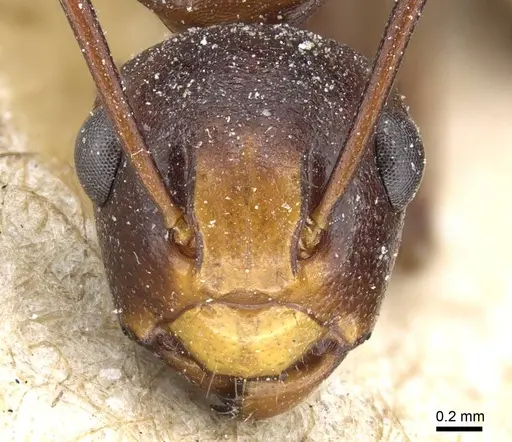
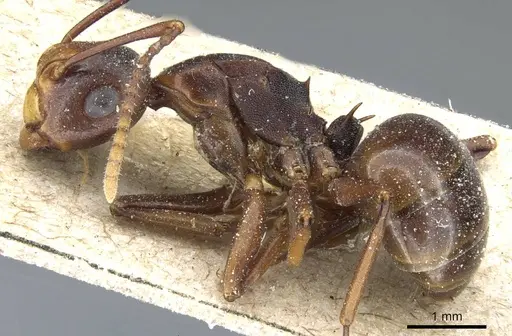
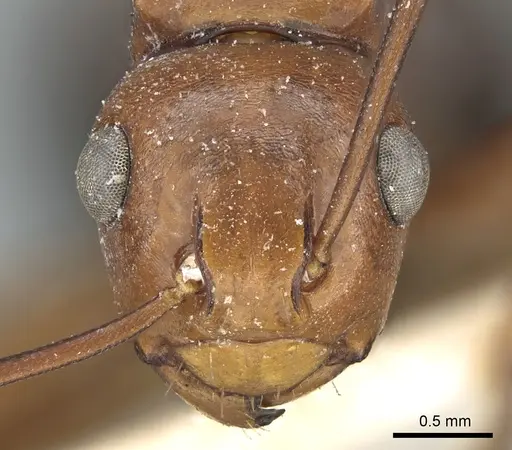
CASENT0905554
Посмотреть на AntWeb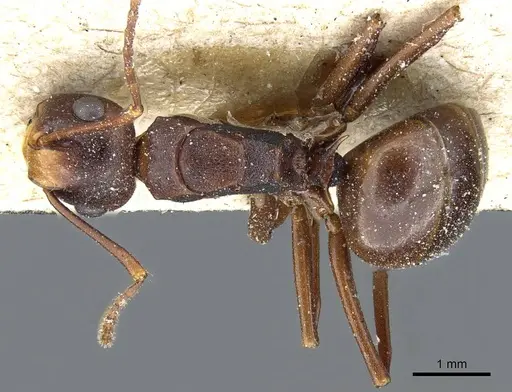
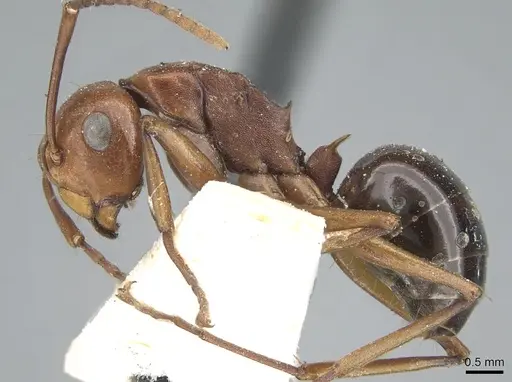
CASENT0906572
Посмотреть на AntWeb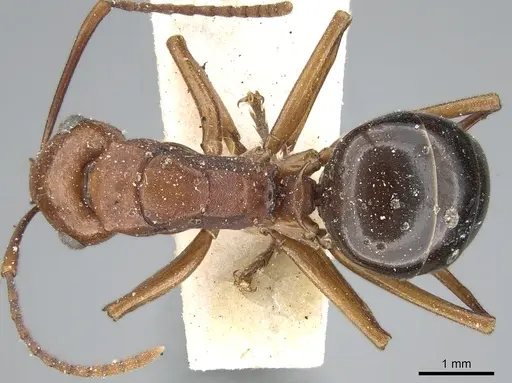
Литература
Загрузка карты распределения...Загрузка товаров...