
Polyrhachis sericeopubescens
- Науч. назв.
- Polyrhachis sericeopubescens
- Подрод
- Myrma
- Триба
- Camponotini
- Подсемейство
- Formicinae
- Автор
- Donisthorpe, 1941
- Распространение
- Встречается в 0 странах
Введение
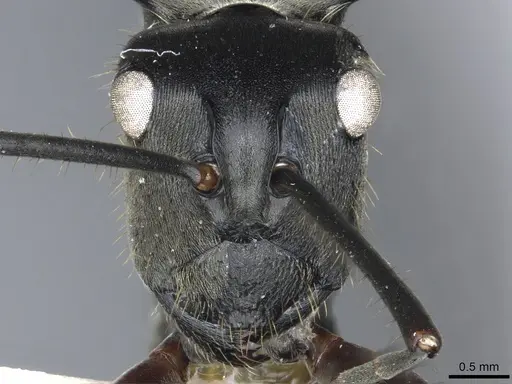
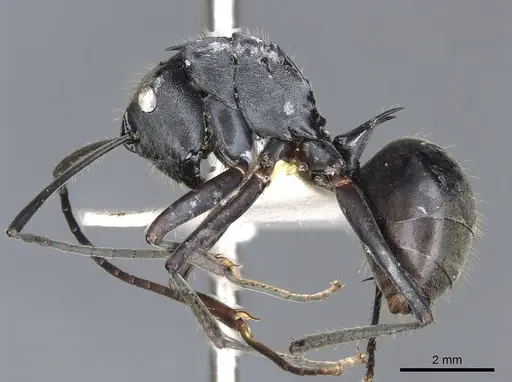
Polyrhachis sericeopubescens is a medium-sized ant species native to New Guinea. Workers have a total length of approximately 10.73 mm, and queens reach about 13.36 mm . The species belongs to the Polyrhachis continua species-group and can be distinguished from similar species like Polyrhachis spinifera by its smaller size and narrower pronotal dorsum . This ant features elongated petiolar spines and a striated mesosoma, characteristic of the subgenus Myrma . It is found in lowland to mid-elevation areas of New Guinea, including Japen Island and Papua New Guinea, often in humid forest environments .
Quick Summary
- Difficulty: Medium
- Origin & Habitat: Native to New Guinea, including Japen Island and Papua New Guinea, found in lowland areas below 50m [1]. Habitat is humid forest environments [2].
- Colony Type: Colony structure is unconfirmed. Based on typical Polyrhachis patterns, likely monogyne (single queen).
- Size & Growth:
- Queen: ~13.36 mm [1]
- Worker: ~10.73 mm [1]
- Colony: Size data unavailable, no specific colony size information in research context.
- Growth: Moderate, inferred from genus patterns [2].
- Development: Estimated 6-10 weeks at tropical temperatures based on related species. (Development time is inferred from genus-level data, as species-specific studies are unavailable.)
- Antkeeping:
- Temperature: Temperature needs are unclear, start around 24-28°C and observe, as this is a tropical species [2].
- Humidity: Keep nest substrate consistently moist but not waterlogged, as this species is from humid environments [2].
- Diapause: No, tropical species do not require hibernation.
- Nesting: Based on genus patterns, prefer rotting wood or soil nests, in captivity, Y-tong, plaster, or naturalistic nests work well [2].
- Behavior: Generally calm and not aggressive toward keepers, moderate escape risk due to size. Workers are active foragers and may travel moderate distances.
- Common Issues: cold temperatures can slow or stop brood development for tropical species, high humidity needs mean mold can be an issue if ventilation is poor, wild-caught colonies may have parasites that cause problems in captivity, slow initial colony growth can lead to overfeeding by impatient keepers, escape prevention is important though not as critical as for tiny species
Housing and Nest Setup
Polyrhachis sericeopubescens does well in a variety of nest types. A Y-tong nest with narrow chambers works well for their size [2]. Plaster nests or naturalistic setups with moist substrate are also suitable [2]. The nest should be kept dark, these ants prefer dim conditions [2]. Provide a water test tube as a hydration source and mist the outworld occasionally to maintain humidity [2].
Feeding and Diet
Like most Polyrhachis species, these ants are primarily predatory. Offer small live prey such as fruit flies, small crickets, mealworms, and other small insects [2]. They will also accept protein-based foods like boiled egg or chicken [2]. Sugar sources like honey or sugar water are typically accepted [2]. Feed protein prey 2-3 times per week and keep sugar water available at all times [2].
Temperature and Humidity
As a species from tropical New Guinea, temperature needs are unclear, start around 24-28°C and observe [2]. Room temperature may be sufficient if your home stays in this range, otherwise use a heating cable on one side of the nest to create a gentle gradient [2]. High humidity is important, keep the nest substrate consistently moist but not waterlogged [2].
Colony Development
Colony growth is typically moderate. The queen will lay eggs after founding, and first workers should emerge within 6-10 weeks at optimal temperatures. Initial colony growth can be slow, which is normal, resist the urge to overfeed or disturb the nest [2]. Once the first workers arrive, the colony will begin expanding.
Behavior and Temperament
Polyrhachis ants are generally calm and not particularly aggressive toward keepers [2]. They will defend their nest if threatened but are not known for painful stings [2]. Workers are active foragers that search for prey and sugar sources [2]. They are not escape artists due to their moderate size, but standard barrier methods like Fluon on the rim of the outworld should still be used [2].
Frequently Asked Questions
How long does it take for Polyrhachis sericeopubescens to produce first workers?
Based on related Polyrhachis species, expect 6-10 weeks from egg to worker at optimal temperatures (24-28°C). Initial colony growth is slow, which is normal.
What do Polyrhachis sericeopubescens ants eat?
They are primarily predatory. Feed small live insects like fruit flies, small crickets, and mealworms [2]. They also accept sugar sources like honey or sugar water [2]. Offer protein 2-3 times per week with sugar water always available [2].
Do Polyrhachis sericeopubescens ants need hibernation?
No. As a tropical species from New Guinea, they do not require hibernation. Keep them warm year-round.
What temperature is ideal for Polyrhachis sericeopubescens?
Keep them at 24-28°C, as this is a tropical species [2]. A heating cable on one side of the nest can help maintain these temperatures.
Are Polyrhachis sericeopubescens good for beginners?
They are intermediate in difficulty. While not as challenging as some species, their tropical requirements (warmth and humidity) require more attention than temperate species [2].
How big do Polyrhachis sericeopubescens colonies get?
Colony size is not well documented, but related Polyrhachis species can be large. No specific data for this species.
Can I keep multiple queens together?
Colony structure is unconfirmed for this species. Most Polyrhachis species are monogyne (single queen), so keeping multiple unrelated queens together is not recommended.
What humidity level do they need?
Keep the nest substrate consistently moist but not waterlogged [2]. Mist the outworld regularly and provide a water test tube.
When should I move them to a formicarium?
Wait until the colony has at least 20-30 workers before moving to a formicarium [2]. A test tube setup works well for founding colonies. Move them when the test tube becomes crowded or the water reservoir is depleted.
Report an Issue
The current care sheet is based fully on literature. See inconsistencies, or something that's incorrect? Please , it will be resolved after review from an admin. Contributing to the blogs tab also helps providing information, to make us be able to further improve the caresheets. Thank you for your support!
References

Эта инструкция по уходу лицензирована по CC BY-SA 4.0 .
Блоги сообщества
CASENT0903439
Посмотреть на AntWeb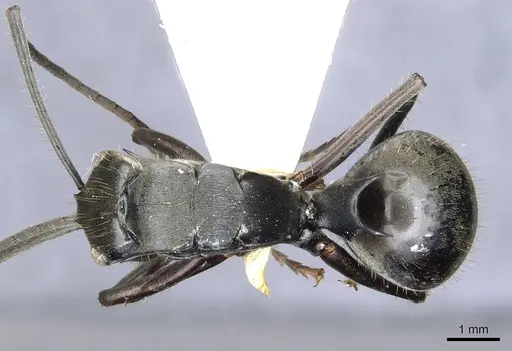
Литература
Загрузка карты распределения...Загрузка товаров...