
Polyrhachis flavicornis
- Науч. назв.
- Polyrhachis flavicornis
- Подрод
- Myrmatopa
- Триба
- Camponotini
- Подсемейство
- Formicinae
- Автор
- Smith, 1857
- Распространение
- Встречается в 0 странах
Введение
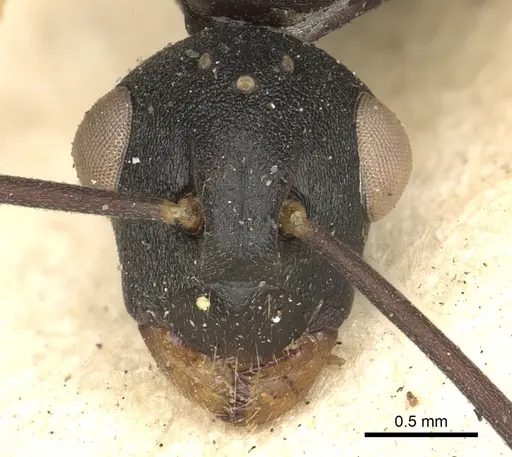
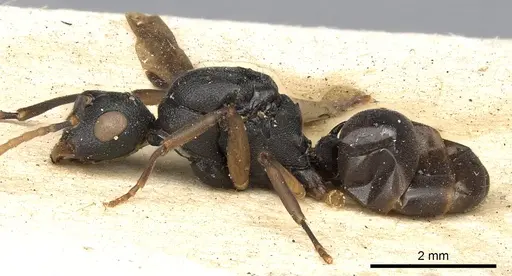
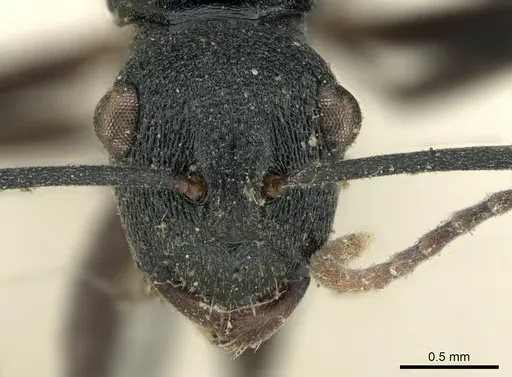
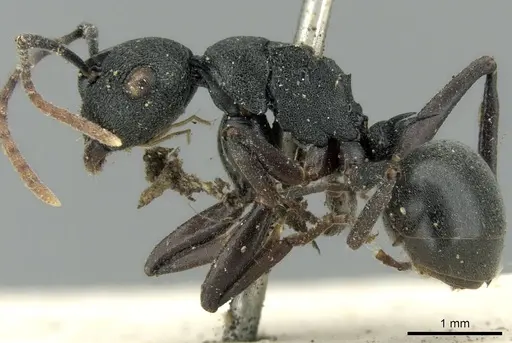
Polyrhachis flavicornis is an arboreal ant native to Southeast Asia, found in Singapore, Malaysia, Indonesia, Laos, and Thailand . Workers are 3.20-3.35 mm long, and queens are 4.30-4.35 mm . This species belongs to the subgenus Myrmatopa and builds carton nests by weaving larval silk to bind leaves, typically on the underside of leaves in lowland and dry evergreen forests . A notable characteristic is its arboreal nesting behavior, where colonies construct silk-woven carton nests in forest canopies .
Quick Summary
- Difficulty: Medium
- Origin & Habitat: Southeast Asia (Singapore, Malaysia, Borneo, Laos, Thailand) in lowland evergreen and dry evergreen forests. Nests arboreally in carton structures on leaves [1][2][4].
- Colony Type: Monogynous (single queen) and monodomous (single nest). Workers are monomorphic [5].
- Size & Growth:
- Queen: 4.30-4.35 mm [3]
- Worker: 3.20-3.35 mm [3]
- Colony: Unknown maximum, no specific data available, but inferred to be moderate based on Polyrhachis genus patterns [3].
- Growth: Moderate, inferred from typical Polyrhachis development.
- Development: Estimated 6-10 weeks at optimal temperature (24-28°C). (Development time is inferred, no species-specific data available.)
- Antkeeping:
- Temperature: Keep at 24-28°C. As a tropical species, they prefer warm, stable conditions [3].
- Humidity: Keep the nest substrate consistently moist but not waterlogged, with some drier areas for the ants to regulate [3].
- Diapause: No, tropical species, no hibernation needed [3].
- Nesting: Arboreal nesters that build carton nests. In captivity, use Y-tong nests with added plant material or naturalistic setups with live plants. Provide twigs, leaves, or artificial materials they can weave [4].
- Behavior: Generally peaceful and not aggressive. Workers have two short petiolar spines for defense [5]. Escape risk is moderate, use standard barriers like Fluon or fine mesh.
- Common Issues: Mold can develop if humidity is too high and ventilation is poor., Colonies may reject nests without plant material for weaving., Growth is slower compared to ground-nesting species., Wild-caught colonies may have health issues that are hard to treat.
Nest Preferences and Housing
Polyrhachis flavicornis is an arboreal species that builds carton nests using larval silk and plant material [4]. In captivity, use Y-tong nests with added cotton, moss, or leaves, or naturalistic setups with live plants. Keep the nest humid but ensure ventilation to prevent mold [3].
Feeding and Diet
This species is a generalist forager. Offer sugar water or honey constantly for energy, and protein sources like small crickets or mealworms 2-3 times per week [3].
Temperature and Seasonal Care
Keep temperatures at 24-28°C year-round. No diapause is needed as this is a tropical species [3].
Behavior and Colony Dynamics
Colonies are monogynous and monodomous [5]. Workers are monomorphic and have two short petiolar spines for defense [5].
Frequently Asked Questions
Can I keep Polyrhachis flavicornis in a test tube?
Test tubes are not ideal. As arboreal nesters, they prefer Y-tong nests with added plant material or naturalistic setups [4][3].
How long until first workers in Polyrhachis flavicornis?
Specific data is unknown, but estimated 6-10 weeks from egg to worker at optimal temperature based on Polyrhachis genus patterns.
Are Polyrhachis flavicornis good for beginners?
This species is rated medium difficulty due to arboreal nesting and humidity needs [3].
What do Polyrhachis flavicornis eat?
They are generalists, offer sugar water constantly and protein 2-3 times per week [3].
Do Polyrhachis flavicornis need hibernation?
No, as a tropical species, they do not require diapause [3].
How big do Polyrhachis flavicornis colonies get?
Colony size is unknown, but inferred to be moderate based on Polyrhachis genus patterns [3].
Can I keep multiple queens together?
No, this species is monogynous, multiple queens will fight [5].
When should I move them to a formicarium?
Wait until the colony has several workers and the queen is active. Use Y-tong or naturalistic nests [3].
Why is my Polyrhachis flavicornis colony dying?
Common causes include poor humidity, wrong temperature, mold, or stress. Ensure warm, humid conditions with good airflow [3].
Report an Issue
The current care sheet is based fully on literature. See inconsistencies, or something that's incorrect? Please , it will be resolved after review from an admin. Contributing to the blogs tab also helps providing information, to make us be able to further improve the caresheets. Thank you for your support!
References

Эта инструкция по уходу лицензирована по CC BY-SA 4.0 .
Блоги сообщества
CASENT0901857
Посмотреть на AntWeb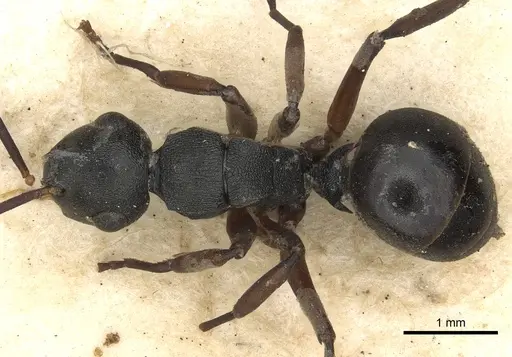
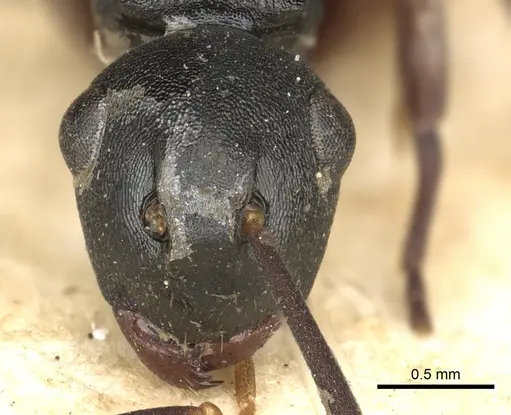
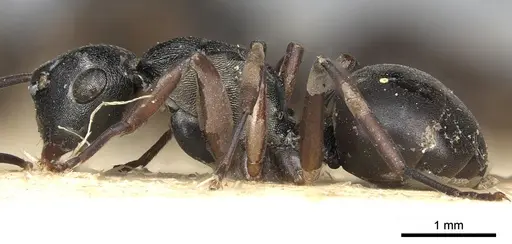
CASENT0901877
Посмотреть на AntWeb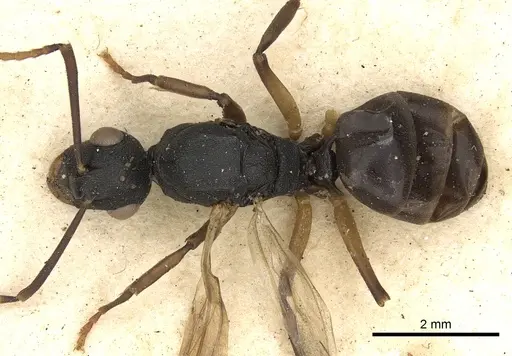
CASENT0906570
Посмотреть на AntWeb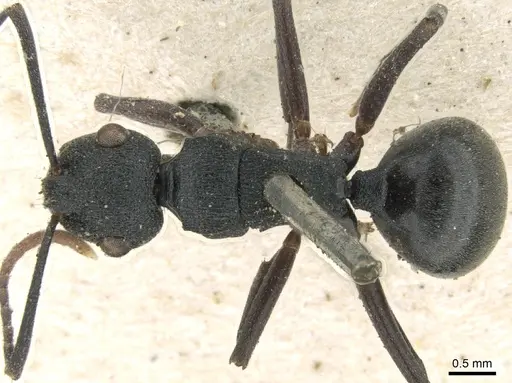
Литература
Загрузка карты распределения...Загрузка товаров...