
Polyrhachis baca
- Науч. назв.
- Polyrhachis baca
- Подрод
- Myrma
- Триба
- Camponotini
- Подсемейство
- Formicinae
- Автор
- Sorger & Zettel, 2010
- Распространение
- Встречается в 0 странах
Введение
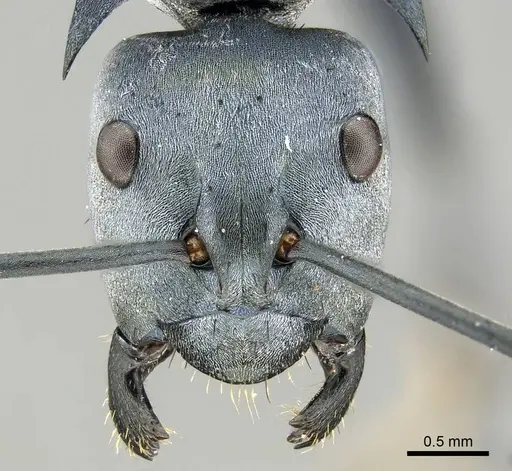
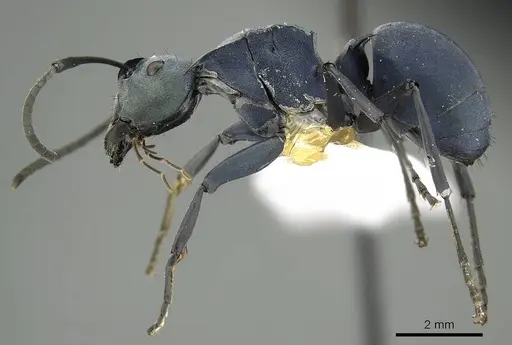
Polyrhachis baca is a small ant species native to the Philippines, specifically known only from Luzon Island. Workers have a total length of approximately 8.6 mm and display a metallic appearance with greenish-blue shimmer on the head, legs, and antennae, and darker blue on the mesosoma and gaster . It belongs to the Polyrhachis cyaniventris group and was discovered in a degraded dipterocarp forest at about 650 m elevation . This species is exceptionally rare, with only a single specimen ever collected in 1999,making it one of the rarest ants and a candidate for experimental keeping by advanced antkeepers.
Quick Summary
- Difficulty: Expert
- Origin & Habitat: Philippines, Luzon Island, Mount Makiling area in degraded dipterocarp forest at ~650 m elevation [1]
- Colony Type: Unconfirmed, no colony data available
- Size & Growth:
- Antkeeping:
- Temperature: Unknown, no specific data, but based on tropical Philippine origin, likely warm temperatures around 24-28°C are suitable
- Humidity: Unknown, no specific data, but based on forest habitat, likely requires moderate to high humidity
- Diapause: No, tropical species do not require hibernation
- Nesting: Unknown, based on genus patterns, Polyrhachis species are often arboreal, but no specific data for P. baca
- Behavior: Behavior is unstudied. Based on genus patterns, Polyrhachis ants are typically active foragers with moderate aggression. Escape risk is moderate due to worker size of 8.6 mm [1].
- Common Issues: this species has never been kept in captivity so all care is speculative., only one wild specimen has ever been collected, captive colonies may not exist., temperature and humidity requirements are inferred, not confirmed., diet preferences are unknown for this species., founding behavior is unconfirmed.
Rarity and Collection History
Polyrhachis baca is known from only a single specimen collected in 1999 on the northern slopes of Mount Makiling in Laguna Province, Philippines. The ant was found at approximately 650 m elevation in a degraded dipterocarp forest [1]. The species was formally described in 2010 by Sorger and Zettel, who named it 'baca', the Latin word for pearl, referencing its metallic shimmer and the unexpected discovery in Vienna's Natural History Museum [1]. This means no captive colonies currently exist, and any ants available would represent the first captive breeding efforts.
Appearance and Identification
Workers are small with a total length of about 8.6 mm [1]. The body has a metallic blue-green shimmer: the head, legs, and antennae show greenish-blue iridescence, while the mesosoma, petiole, and gaster have a darker blue sheen [1]. This species has gracile pronotal spines that are flat in cross-section, and the propodeum has a nearly straight ridge separating dorsal and posterior faces [1]. It belongs to the Polyrhachis cyaniventris species group and differs from related species in spine shape and setae patterns [1].
Natural Habitat and Distribution
This species is only known from central Luzon Island in the Philippines, specifically the Mount Makiling area near Los Baños. The type locality is at about 650 m elevation in a degraded dipterocarp forest on a mountain slope [1]. The Philippines has a tropical climate with year-round warmth and high humidity. No other specimens have been found despite surveys, making this one of the rarest Philippine ants [1].
Defense Mechanism
Polyrhachis baca belongs to the Formicinae subfamily and Camponotini tribe, which lack a functional sting. Instead, they bite and spray formic acid from an acidopore, a typical defense for this group.
Housing and Nesting
Since this species has never been kept in captivity, housing recommendations are speculative. Based on genus patterns, Polyrhachis ants are often arboreal, nesting in vegetation or under bark. You might use a naturalistic setup with wood or plant material, or a Y-tong or plaster nest with vertical orientation. Maintain warm temperatures and moderate humidity, but specific requirements are unknown.
Feeding and Diet
Diet preferences are unconfirmed. Based on related Polyrhachis species, you should offer sugar sources like honey water and protein like small insects. Start with small amounts and observe consumption, removing uneaten food after 24-48 hours.
Temperature and Seasonal Care
Being from the tropical Philippines, this species likely does not require diapause. Maintain warm temperatures, but specific needs are unknown. You can provide a temperature gradient using a heating cable, and monitor colony activity for adjustments.
Frequently Asked Questions
Can I keep Polyrhachis baca in captivity?
This species has never been kept in captivity. Only a single worker has ever been collected, and no captive colonies exist. Any ants marketed as P. baca would be wild specimens or the first breeding attempts, making them experimental for advanced keepers [1].
How do I house Polyrhachis baca?
Housing recommendations are speculative since the species has never been kept. Based on genus patterns, a naturalistic setup with wood or plant material may work. Keep the nest warm and humid, but specific requirements are unknown.
What do Polyrhachis baca ants eat?
Diet is unconfirmed. Based on related species, offer sugar sources and protein like small insects. Start with small amounts and observe what gets consumed.
How big do Polyrhachis baca colonies get?
Colony size is unknown, no colonies have been studied. The single known worker measures 8.6 mm total length [1].
What temperature do Polyrhachis baca ants need?
Temperature requirements are unconfirmed but likely warm based on tropical origin. You can provide a gradient around 24-28°C and monitor colony behavior.
How long does it take for Polyrhachis baca to develop from egg to worker?
Development timeline has never been studied. Based on related Polyrhachis species, it might take 6-10 weeks at tropical temperatures, but this is speculative.
Is Polyrhachis baca a good species for beginners?
No. This species is not recommended for beginners because it has never been kept, all care is speculative, and no captive breeding exists. Only experienced keepers should attempt this.
Where does Polyrhachis baca live in the wild?
This species is known only from Mount Makiling on Luzon Island, Philippines, at about 650 m elevation in a degraded dipterocarp forest [1].
Can I breed Polyrhachis baca in captivity?
Breeding has never been attempted. Founding behavior is unconfirmed. If you obtain a queen, she would need a claustral setup with stable humidity and warmth until workers emerge.
Report an Issue
The current care sheet is based fully on literature. See inconsistencies, or something that's incorrect? Please , it will be resolved after review from an admin. Contributing to the blogs tab also helps providing information, to make us be able to further improve the caresheets. Thank you for your support!
References

Эта инструкция по уходу лицензирована по CC BY-SA 4.0 .
Блоги сообщества
CASENT0915816
Посмотреть на AntWeb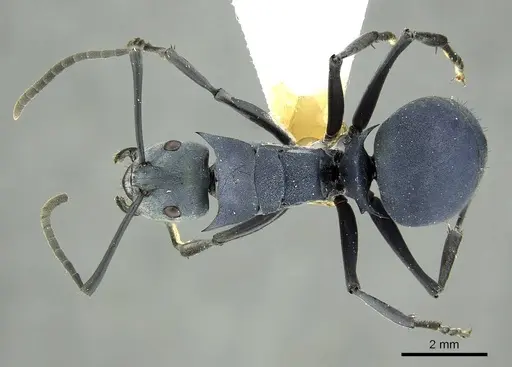
Литература
Загрузка карты распределения...Загрузка товаров...