
Pogonomyrmex theresiae
- Науч. назв.
- Pogonomyrmex theresiae
- Триба
- Pogonomyrmecini
- Подсемейство
- Myrmicinae
- Автор
- Forel, 1899
- Распространение
- Встречается в 0 странах
Введение
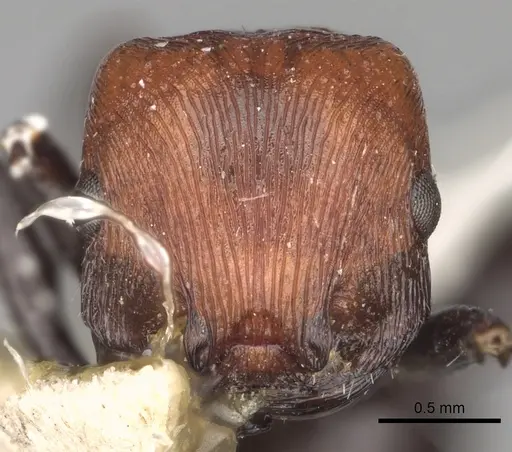
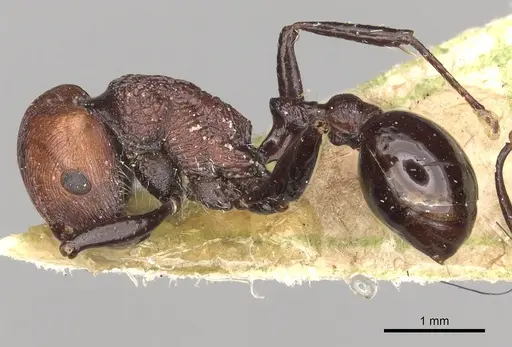
You are looking at one of the rarest ants on Earth. Only a single worker exists, collected over a century ago near Guayaquil, Ecuador . We cannot give you a full body size because only head measurements were recorded for that specimen . The ant features a quadrate head, strong longitudinal ridges on top, and a well-developed psammophore, which is a cluster of longer hairs near the mouth that helps carry sand or soil . It lacks prominent propodeal spines, which are reduced to small bumps, and has transverse ridges on the postpetiole . The original collection site was once mangrove and arid coastal forest, but Guayaquil's expansion has likely destroyed it . You should know that virtually nothing is known about how this ant builds colonies, starts new ones, or eats in captivity.
Quick Summary
- Difficulty: Expert
- Origin & Habitat: Western Ecuador Moist Forests ecoregion, specifically the Estero Salado area near Guayaquil [1]. The region has a tropical savanna climate and was historically mangrove and arid coastal forest [1].
- Colony Type: Unknown. We have only ever found one worker, so no queen or colony structure has been documented [1].
- Size & Growth:
- Queen: size data unavailable
- Worker: size data unavailable, only head measurements exist for the single known worker [1]
- Colony: Unknown
- Growth: Unknown
- Development: Unknown (No development data exists for this species.)
- Antkeeping:
- Temperature: Unknown. Guayaquil averages 26-27°C year-round [1]. Related Pogonomyrmex species prefer warm conditions, but you should start around 24-28°C and observe closely.
- Humidity: Unknown. The region has distinct wet and dry seasons [1]. Provide a humidity gradient with a mostly dry nest and one small moist area.
- Diapause: Unknown. Tropical species from this latitude likely do not require winter diapause, but this is unconfirmed [1].
- Nesting: Unknown. Related Pogonomyrmex typically nest in soil or under stones in disturbed areas [2]. Start with a simple plaster or soil nest and adjust based on how they dig.
- Behavior: Unknown. The psammophore suggests it digs or moves soil [1]. Related species are seed-harvesters with defensive stingers, but you cannot assume this applies here [2]. Escape risk is high if you ever find a queen, as small ants easily slip through barriers.
- Common Issues: this species has never been kept in captivity, so no care protocol exists, the type locality is likely destroyed by urban development, making wild collection nearly impossible, no queen has ever been found, so captive breeding from wild colonies cannot happen, any care advice would be pure speculation without supporting data, related species may have different requirements that do not apply to this Ecuadorian ant
Why This Species Is Extremely Difficult to Keep
You will struggle to keep this ant because it has never been successfully located in the wild since its original collection over a century ago [1]. The type locality at Estero Salado near Guayaquil was once mangrove and arid coastal forest, but urban development has likely destroyed it [1]. Researchers suggest checking roadsides in agricultural areas around Guayaquil to find more specimens [1]. You cannot keep this ant without a live queen or colony. Even if you find one, you will have zero established knowledge about how to care for it. Success would require years of trial and error.
What We Know From the Single Known Specimen
The holotype worker gives us our only look at this ant's physical traits [1]. We cannot give you a full body size because only head measurements were recorded for that specimen [1]. It has a distinctive psammophore, which is a cluster of longer hairs near the mouth used for carrying sand or soil [1]. The lack of prominent propodeal spines and transverse ridges on the postpetiole set it apart from other South American Pogonomyrmex [1]. The head and mesosoma are ferruginous orange, while the gaster and legs are blackish-orange [1]. The scapes are missing from the specimen, so we do not know their length. Forel named this ant after Princess Therese of Bavaria, who collected it [1].
Inferred Biology From Related Species
Direct data does not exist, so you must rely on limited inferences from the genus Pogonomyrmex and other South American species. Most North American Pogonomyrmex harvest seeds, nest in soil, and start colonies with a single queen who seals herself inside [2]. South American species may behave differently. Pogonomyrmex striatinodus is the only other congener in Ecuador, but it lives in moist forests and lacks a psammophore [2]. The suggestion to search agricultural roadsides and areas with a tropical savanna climate reflects that many Pogonomyrmex thrive in disturbed habitats [1]. If you ever attempt to keep this species, you will be pioneering entirely new husbandry methods.
Legal and Ethical Considerations
Any attempt to locate this ant in the wild requires proper collecting permits for Ecuador. You should focus on non-destructive survey methods. The original type locality is likely destroyed, so you would need to search remaining natural areas in Guayas and Manabí provinces that match the tropical savanna climate [1]. Exporting specimens from Ecuador likely requires specific permits. Given the extreme rarity and scientific value of this ant, you should consider whether keeping it is appropriate when husbandry knowledge is completely absent.
Frequently Asked Questions
Can I keep Pogonomyrmex theresiae in captivity?
No. This species has never been kept in captivity because no live colony has ever been found. Only a single worker was collected over a century ago, and the type locality is likely destroyed by urban development. There is no established care protocol for you to follow [1].
Where can I find Pogonomyrmex theresiae?
The only known specimen came from Estero Salado near Guayaquil, Ecuador, but that area is now heavily urbanized. Researchers suggest checking roadsides in agricultural areas in western Guayas and Manabí provinces, and areas with a tropical savanna climate. No specimens have been collected since the original discovery over a century ago [1].
What does Pogonomyrmex theresiae eat?
Unknown. No feeding observations exist. Most Pogonomyrmex harvest seeds, but you cannot assume this species eats the same way. Any guess about diet would be pure speculation based on genus patterns [2].
How big do Pogonomyrmex theresiae colonies get?
Unknown. No colony has ever been documented. Related Pogonomyrmex species can have colonies ranging from hundreds to thousands of workers, but you have no data for this species [2].
What temperature and humidity do Pogonomyrmex theresiae need?
Unknown. No environmental data exists for this ant. The type locality in Guayaquil has a tropical savanna climate averaging 26-27°C with wet and dry seasons. Any temperature or humidity recommendations would be pure speculation [1].
Is Pogonomyrmex theresiae a good species for beginners?
No. This species is entirely unsuitable for any antkeeper because no live specimen has ever been found in over a century. There is no established care protocol, no available queens, and no way to obtain this ant [1].
How long does it take for Pogonomyrmex theresiae to develop from egg to worker?
Unknown. No brood has ever been documented for this species. Development times are entirely unstudied and cannot be estimated with any confidence [1].
Do Pogonomyrmex theresiae need hibernation?
Unknown. No seasonal data exists. As a tropical species from Guayaquil, Ecuador, true hibernation is unlikely, but this remains unconfirmed [1].
Can I keep multiple Pogonomyrmex theresiae queens together?
Unknown. No colony structure has ever been documented. Most Pogonomyrmex are single-queen species, but you cannot assume this applies here [2].
What is the best nest type for Pogonomyrmex theresiae?
Unknown. No natural nesting observations exist. Related Pogonomyrmex typically nest in soil or under stones, but you cannot make a nest recommendation without data on this species [2].
Is Pogonomyrmex theresiae endangered?
Unknown. The conservation status has never been assessed. The type locality is likely destroyed by urban development, and no specimens have been found in over a century. The species may be extinct, but thorough surveys are needed to confirm [1].
Report an Issue
The current care sheet is based fully on literature. See inconsistencies, or something that's incorrect? Please , it will be resolved after review from an admin. Contributing to the blogs tab also helps providing information, to make us be able to further improve the caresheets. Thank you for your support!
References

Эта инструкция по уходу лицензирована по CC BY-SA 4.0 .
Блоги сообщества
CASENT0281108
Посмотреть на AntWeb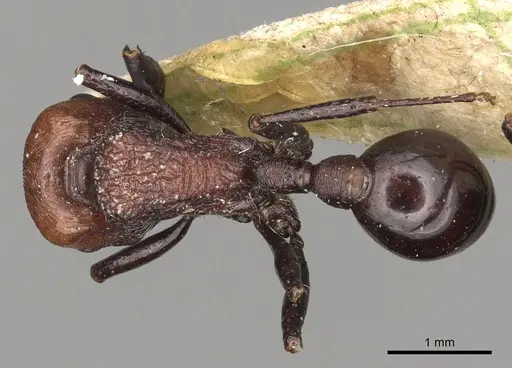
Литература
Загрузка карты распределения...Загрузка товаров...