
Pheidole tisiphone
- Науч. назв.
- Pheidole tisiphone
- Триба
- Attini
- Подсемейство
- Myrmicinae
- Автор
- Wheeler, 1911
- Распространение
- Встречается в 1 странах
Введение
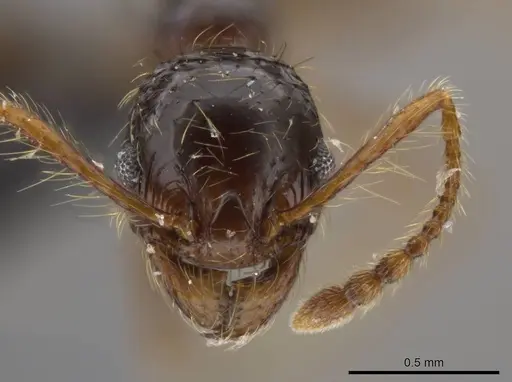
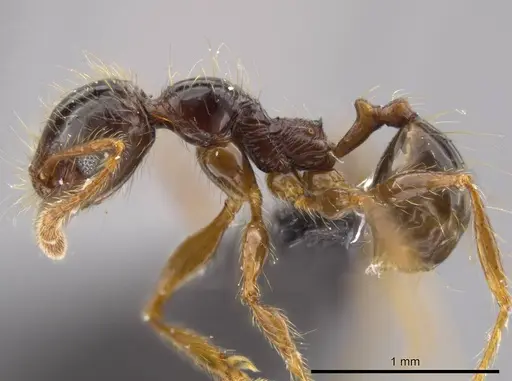
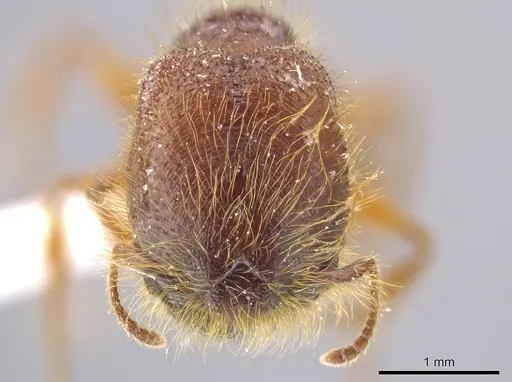
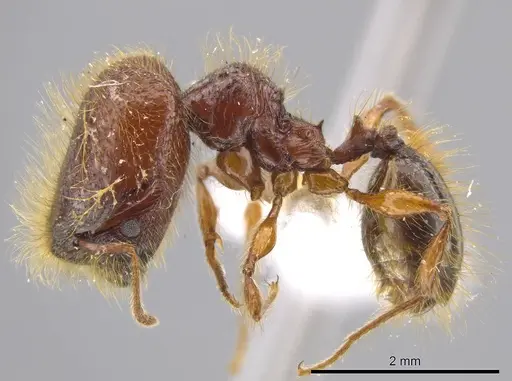
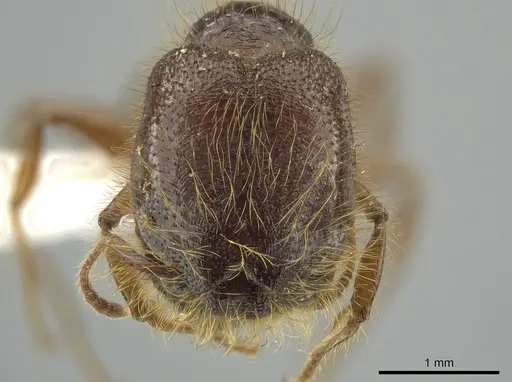
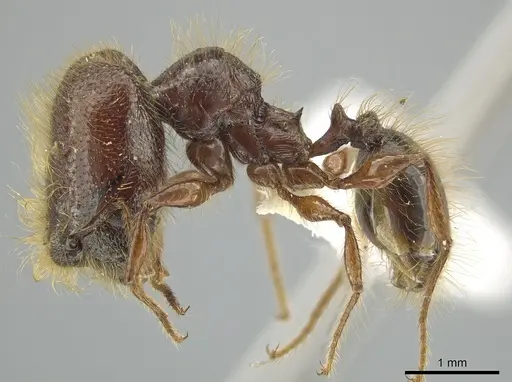
Pheidole tisiphone is a dimorphic ant species with major and minor workers, native to the Neotropical region and known only from a few specimens in Oaxaca, Mexico, and Guatemala . Majors have a distinctive shield-shaped head with dense long hairs and deep antennal scrobes, while workers are light reddish brown with lighter appendages . No total body length measurements are available, and the species is extremely rare with no documented biological observations in the wild .
Quick Summary
- Difficulty: Hard
- Origin & Habitat: Oaxaca, Mexico and Guatemala, in tropical and subtropical regions [1][2].
- Colony Type: Unconfirmed, no data on queen number or social structure.
- Size & Growth:
- Queen: Size data unavailable, inferred from Pheidole genus as ~6-8 mm
- Worker: Size data unavailable, inferred from Pheidole genus as ~2-4 mm
- Colony: Up to several hundred workers, estimated from genus patterns
- Growth: Unknown
- Development: Unknown, estimated 6-8 weeks based on typical Pheidole development (No species-specific data, estimates based on genus patterns and Neotropical climate.)
- Antkeeping:
- Temperature: Estimated 22-27°C based on Neotropical origin and genus patterns, provide a gradient for self-regulation [2].
- Humidity: Keep substrate moderately moist but not waterlogged, based on tropical habitat inference [2].
- Diapause: Unknown, Neotropical species may not require hibernation, but monitor for seasonal slowdowns.
- Nesting: Based on genus, likely prefers soil nests or test tube setups, no species-specific data [2].
- Behavior: No documented behavior for this species. Based on genus patterns, Pheidole ants are generally non-aggressive but defend their nest, majors may serve as soldiers. Escape prevention is important due to small size [2].
- Common Issues: no species-specific biological data exists, all care is estimated from genus patterns, extremely rare in collections, likely difficult to acquire, growth rate and development timeline are unconfirmed estimates, colony structure is unknown, diapause requirements are unconfirmed for this neotropical species
Species Status and Availability
Pheidole tisiphone is one of the most poorly documented ant species. The entire scientific knowledge consists of just four specimens, two workers and one soldier from Mexico, and one soldier from Guatemala [1][2]. This species has never been kept in captivity, so any colony would be pioneering work. Expect a steep learning curve and document observations carefully. Due to extreme rarity, this species is unlikely to be available through typical vendors [2].
Physical Characteristics and Identification
Majors have a shield-shaped head with dense long hairs and deep antennal scrobes, making them easily identifiable [2]. The mesonotum varies between specimens, and body color is light reddish brown with lighter appendages [2]. The species name refers to Tisiphone, a Fury from Greek mythology [2].
Estimated Care Requirements
No biological data exists, so care is derived from typical Pheidole genus behavior and Neotropical climate. Maintain temperatures around 22-27°C with a gradient, and keep substrate moderately moist [2]. Use a test tube setup for founding, as queens may seal themselves in, but founding behavior is unconfirmed. Feed protein like small insects and sugar sources like honey [2].
Colony Development Expectations
Expect a slow start, first workers may take 6-8 weeks at warm temperatures, but this is unconfirmed [2]. Nanitics will be smaller, and majors should develop as the colony grows. Colony size is unknown but likely reaches several hundred workers based on genus patterns [2]. Monitor and document growth for scientific value [2].
Legal and Ethical Considerations
Verify legal status in your jurisdiction, as this species is native to Mexico and Guatemala and may be regulated [2]. Ensure any colony is legally acquired from a reputable source. Never release this species into non-native environments, it is illegal and ecologically harmful [2].
Frequently Asked Questions
How do I care for Pheidole tisiphone ants?
No established care protocol exists. Based on genus patterns, estimate temperature at 22-27°C, humidity with moist substrate, and use a test tube setup for founding [2]. This is pioneering antkeeping.
What do Pheidole tisiphone eat?
No dietary observations exist. Offer protein like small insects and sugar sources like honey, based on genus typical behavior [2].
How long does it take for Pheidole tisiphone to produce first workers?
Unknown, no species-specific data. Estimate 6-8 weeks from egg to worker at warm temperatures, based on genus patterns [2].
Are Pheidole tisiphone ants aggressive?
No documented behavior exists. Based on genus patterns, they are generally non-aggressive but defend their nest [2].
How big do Pheidole tisiphone colonies get?
Unknown, no colony size data. Based on genus patterns, colonies likely reach up to several hundred workers [2].
Can I keep multiple Pheidole tisiphone queens together?
Unknown, colony structure has never been documented. Most Pheidole species are monogyne, but do not combine queens without evidence [2].
Does Pheidole tisiphone need hibernation?
Unknown, as a Neotropical species, true hibernation is unlikely, but monitor for reduced activity periods [2].
Where can I get Pheidole tisiphone ants?
This is one of the rarest species in the hobby, known from only four museum specimens. Source from specialized dealers or collect in native range with proper permits [1][2].
Is Pheidole tisiphone a good species for beginners?
No, due to complete lack of documented care information, it is not recommended for beginners or experienced keepers [2].
Report an Issue
The current care sheet is based fully on literature. See inconsistencies, or something that's incorrect? Please , it will be resolved after review from an admin. Contributing to the blogs tab also helps providing information, to make us be able to further improve the caresheets. Thank you for your support!
References

Эта инструкция по уходу лицензирована по CC BY-SA 4.0 .
Блоги сообщества
CASENT0611632
Посмотреть на AntWeb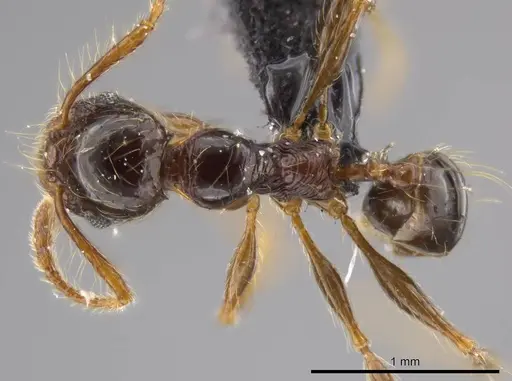
CASENT0611633
Посмотреть на AntWeb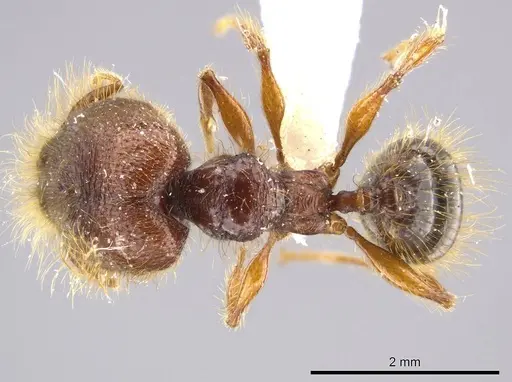
CASENT0643808
Посмотреть на AntWeb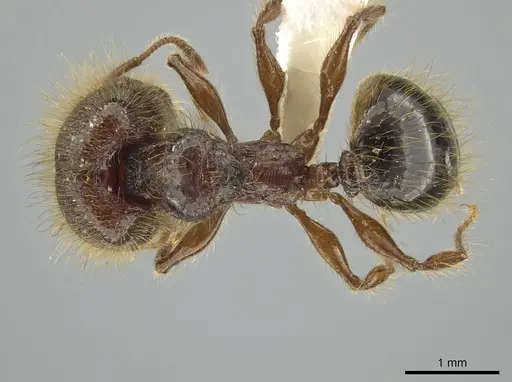
Литература
Загрузка карты распределения...Загрузка товаров...