
Pheidole nimba
- Науч. назв.
- Pheidole nimba
- Триба
- Attini
- Подсемейство
- Myrmicinae
- Автор
- Bernard, 1953
- Распространение
- Встречается в 0 странах
Введение
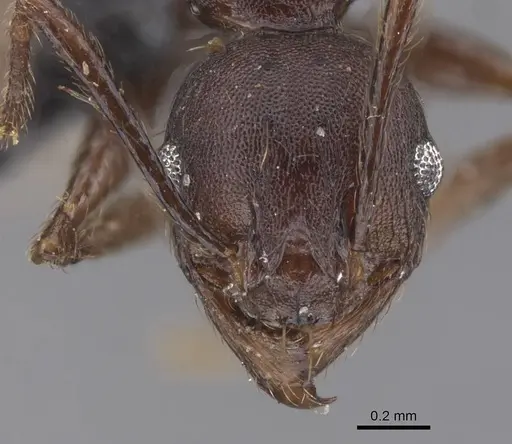
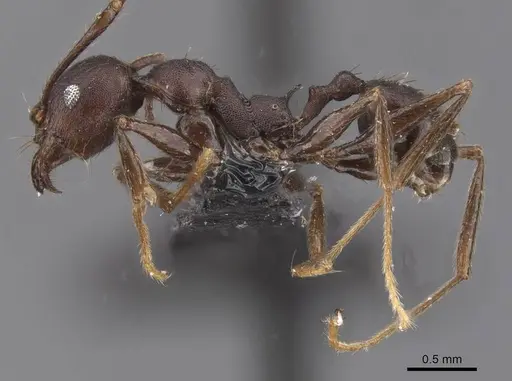
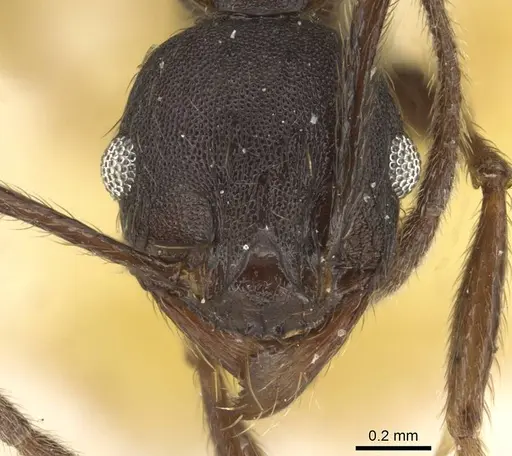
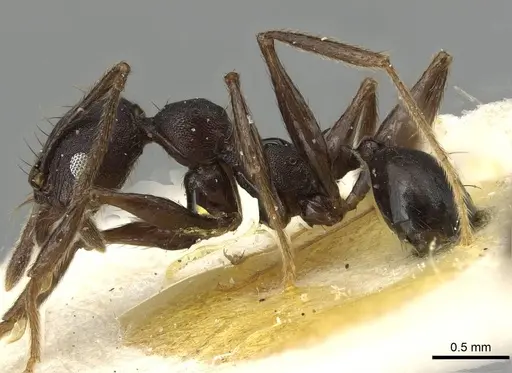
Pheidole nimba is an ant species described from the Mount Nimba Nature Reserve in Guinea, West Africa, at an altitude of 1300 meters . It belongs to the pulchella group, and minor workers are uniformly brown with coarsely punctate sculpture and moderately long, stiff standing hairs . Major workers have never been documented for this species, making it unusual within the genus Pheidole . The species was first described in 1953 based on four minor worker specimens .
Quick Summary
- Difficulty: Medium
- Origin & Habitat: Mount Nimba Nature Reserve in Guinea, West Africa, at 1300m altitude in highland forest environments [1][2].
- Colony Type: Colony structure is unconfirmed. No specific data on queen number or social structure for this species [1].
- Size & Growth:
- Queen: Size data unavailable, no total length measurements documented [1].
- Worker: Size data unavailable, minor workers are described with head dimensions, but full body size is not known [1].
- Colony: Unknown, no data on colony size for this species.
- Growth: Unknown, no species-specific data on growth rate.
- Development: Unknown, no data on development time for this species. (Development time is not documented, estimates from related Pheidole species may apply.)
- Antkeeping:
- Temperature: Keep at 24-28°C as an estimate, based on typical Pheidole patterns and habitat at 1300m altitude.
- Humidity: Maintain moderate to high humidity, keep nest substrate consistently moist but not waterlogged, based on the humid West African highland habitat.
- Diapause: No, as a tropical species from Guinea, diapause is likely not required.
- Nesting: Standard test tube setups work for founding colonies. For established colonies, Y-tong or plaster nests are suitable, based on typical Pheidole preferences.
- Behavior: Pheidole species are typically active foragers. Escape prevention is critical due to their small size [2]. They are not aggressive, but their small size makes them difficult to handle if they escape.
- Common Issues: small size makes escape prevention critical, use fine mesh barriers [2]., major workers are unknown, so colony structure in captivity is uncertain [1]., limited documentation means care is based on estimates rather than species-specific research [1]., high humidity requirements can lead to mold if ventilation is inadequate., tropical species may not tolerate cool temperatures, keep above 20°C.
Nest Preferences and Setup
Pheidole nimba is a ground-dwelling ant from the humid West African highlands. Start with a standard test tube setup for founding queens, fill one-third with water trapped by a cotton ball for humidity [2]. Once the colony reaches a small size, transition to a Y-tong or plaster nest with small chambers. Keep the nest area humid while providing a dry outworld for foraging. Due to their small size, use tight-fitting connections and fine mesh on ventilation holes [2].
Feeding and Diet
Pheidole species are omnivorous. Offer protein sources like small insects and sugar sources like honey or sugar water [2]. Feed small amounts every 2-3 days, removing uneaten food to prevent mold. Since major workers are unknown, minor workers handle all foraging [1].
Temperature and Heating
As a species from highland Guinea, keep temperatures at 24-28°C. Use a heating cable on one side of the nest to create a gradient if room temperature is cooler. Avoid temperatures below 20°C for extended periods.
Colony Structure and Development
Pheidole nimba is unusual because major workers have never been documented [1]. Colony structure is unconfirmed, but typical Pheidole colonies are single-queen. Development time from egg to worker is unknown for this species [1].
Handling and Escape Prevention
Due to their very small size, excellent escape prevention is essential. Use test tubes with tight-fitting cotton plugs and fine mesh (0.5mm or smaller) for ventilation [2]. Inspect equipment regularly for gaps.
Frequently Asked Questions
How long does it take for Pheidole nimba to produce first workers?
Development time is unknown for this species. Based on typical Pheidole patterns, it may take 6-8 weeks at optimal temperatures, but this is an estimate.
What do Pheidole nimba ants eat?
They are omnivorous. Offer small protein sources like fruit flies and sugar sources like honey [2].
Do Pheidole nimba ants have major workers (soldiers)?
Major workers have never been documented for this species [1]. Your colony will likely consist entirely of minor workers.
What temperature do Pheidole nimba ants need?
Keep them at 24-28°C as an estimate, based on their highland habitat.
Do Pheidole nimba ants need hibernation?
No, as a tropical species from Guinea, diapause is likely not required.
Are Pheidole nimba ants good for beginners?
They are rated as medium difficulty due to small size and limited documentation [2]. Experienced antkeepers may have more success.
How big do Pheidole nimba colonies get?
Colony size is unknown for this species [1].
Can I keep multiple Pheidole nimba queens together?
This has not been documented. Based on typical Pheidole behavior, single-queen colonies are common, but species-specific data is lacking [1].
What humidity level do Pheidole nimba ants need?
Maintain moderate to high humidity, keeping the nest substrate moist but not waterlogged.
When should I move Pheidole nimba to a formicarium?
Move them once the test tube setup becomes cramped, typically with a small colony size. Use Y-tong or plaster nests [2].
Where is Pheidole nimba found in the wild?
They are found in the Mount Nimba Nature Reserve in Guinea, at about 1300 meters altitude [1][2].
Report an Issue
The current care sheet is based fully on literature. See inconsistencies, or something that's incorrect? Please , it will be resolved after review from an admin. Contributing to the blogs tab also helps providing information, to make us be able to further improve the caresheets. Thank you for your support!
References

Эта инструкция по уходу лицензирована по CC BY-SA 4.0 .
Блоги сообщества
CASENT0913738
Посмотреть на AntWeb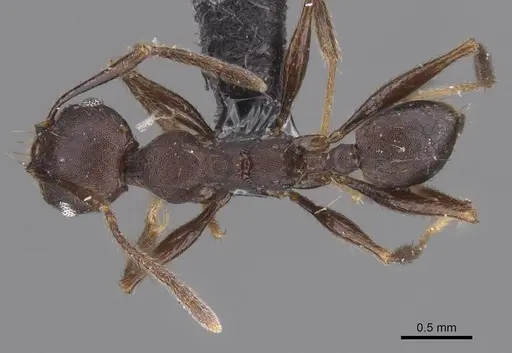
CASENT0915443
Посмотреть на AntWeb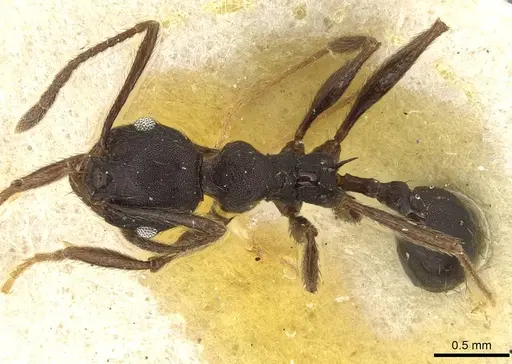
Литература
Загрузка карты распределения...Загрузка товаров...