
Parasyscia piochardi
- Науч. назв.
- Parasyscia piochardi
- Подсемейство
- Dorylinae
- Автор
- Emery, 1882
- Распространение
- Встречается в 0 странах
Введение
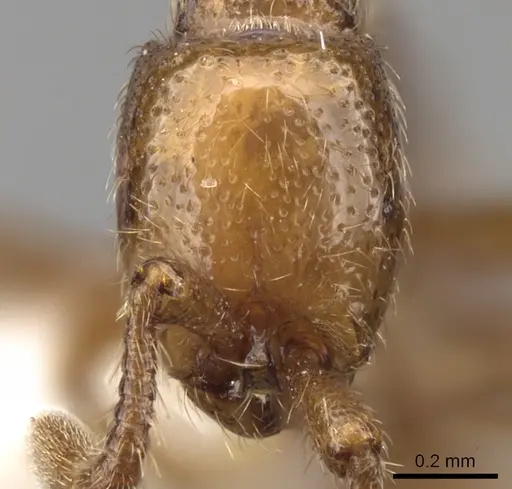
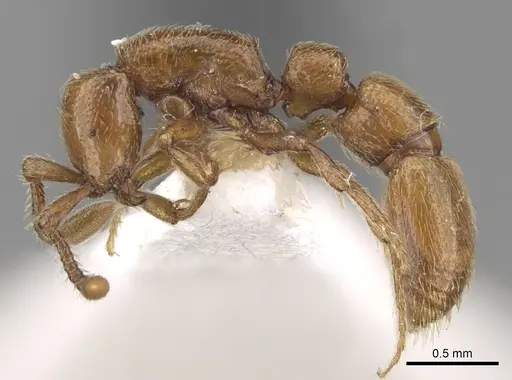
Parasyscia piochardi is a small ant in the Dorylinae subfamily, related to army ants. Its exact size is unknown, but it is likely small given its genus. The species was described from Syria in 1882 and is the type species for the Parasyscia genus . It is found in Israel, Lebanon, Syria, and Turkey, primarily in arid to semi-arid regions . This ant is rare in both the wild and captivity, with very limited biological data available. As a Dorylinae, it is likely predatory, but specific care requirements are largely unstudied, making it a challenging species for antkeepers.
Quick Summary
- Difficulty: Expert
- Origin & Habitat: Eastern Mediterranean region including Israel, Lebanon, Syria, and Turkey, in arid to semi-arid habitats [3][4][5][6].
- Colony Type: Unconfirmed, no data on queen number or colony structure.
- Size & Growth:
- Queen: size data unavailable
- Worker: size data unavailable
- Colony: Unknown
- Growth: Unknown
- Development: Unknown (No specific data on development timeline.)
- Antkeeping:
- Temperature: Temperature needs are unclear, start around 24-28°C and observe, based on arid adaptation [4].
- Humidity: Keep substrate moderately dry with a small moist area, based on arid adaptation [4].
- Diapause: Unknown, based on Mediterranean distribution, diapause may be required, but no confirmation [3][4].
- Nesting: Natural nesting undocumented, in captivity, use test tube or small formicarium with sandy substrate. Provide a humidity gradient.
- Behavior: Temperament unknown, as Dorylinae, likely predatory, but no specific observations. Escape risk is high due to likely small size, but size data unavailable.
- Common Issues: very limited documented care information means trial-and-error is required., escape prevention is critical due to likely small size., predatory diet may be difficult to meet in captivity., arid requirements may conflict with standard antkeeping humidity levels., diapause requirements are unconfirmed but may be necessary.
Distribution and Natural Habitat
Parasyscia piochardi is native to the eastern Mediterranean, including Israel, Lebanon, Syria, and Turkey [3][4][5][6]. In Israel, it is found in northern regions like Upper Galilee, Carmel Ridge, and Golan Heights [5]. Its zoogeographical affinity is Eremic, meaning it is adapted to arid environments [4]. In Turkey, it has been recorded in the Bolkar Mountains [6].
Housing and Nest Setup
Since this species is rarely kept, there is no established captive care protocol. Based on its arid adaptation, provide a nest with moderately dry substrate and a small moist area for brood [4]. Use a test tube setup or small formicarium. Escape prevention is critical due to likely small size.
Feeding and Diet
As a Dorylinae ant, it is likely predatory, feeding on small arthropods. In captivity, offer small live prey like fruit flies or pinhead crickets. No specific dietary data is available.
Temperature and Seasonal Care
Based on Eremic affinity, keep temperatures warm around 24-28°C with a gradient [4]. Diapause may be required in winter, but no confirmation.
Colony Development and Growth
No specific data on colony development. Colonies are likely small, but size unknown.
Frequently Asked Questions
How long does it take for Parasyscia piochardi to produce first workers?
Unknown, no specific data on development timeline.
What do Parasyscia piochardi ants eat?
Likely small live prey as predatory Dorylinae, but no specific data.
Are Parasyscia piochardi good for beginners?
No, this is an expert-level species due to very limited documented care information and specific needs.
What temperature do Parasyscia piochardi need?
Keep them warm at 24-28°C with a gradient, based on arid adaptation [4].
Do Parasyscia piochardi need hibernation?
Unknown, diapause may be required based on Mediterranean distribution, but no confirmation [3][4].
How big do Parasyscia piochardi colonies get?
Colony size is unknown, no data available.
Can I keep multiple Parasyscia piochardi queens together?
This has not been documented, colony structure is unconfirmed.
What humidity level do Parasyscia piochardi need?
Keep substrate moderately dry with a small moist area, based on arid adaptation [4].
Why is Parasyscia piochardi so rarely kept?
This species has an extremely limited distribution and almost no biological data available, making captive husbandry challenging [3][1].
Report an Issue
The current care sheet is based fully on literature. See inconsistencies, or something that's incorrect? Please , it will be resolved after review from an admin. Contributing to the blogs tab also helps providing information, to make us be able to further improve the caresheets. Thank you for your support!
References

Эта инструкция по уходу лицензирована по CC BY-SA 4.0 .
Блоги сообщества
CASENT0281973
Посмотреть на AntWeb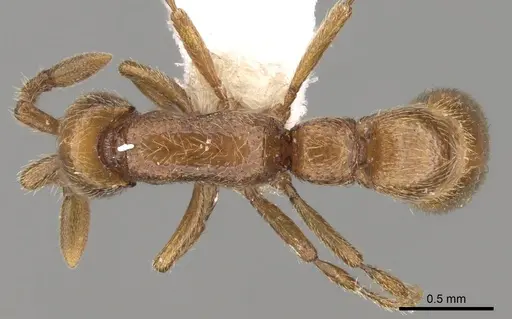
Литература
Загрузка карты распределения...Загрузка товаров...