
Neoponera agilis
- Науч. назв.
- Neoponera agilis
- Триба
- Ponerini
- Подсемейство
- Ponerinae
- Автор
- Forel, 1901
- Распространение
- Встречается в 0 странах
Введение
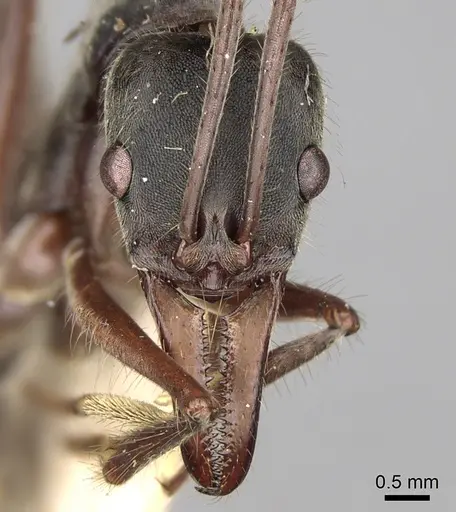
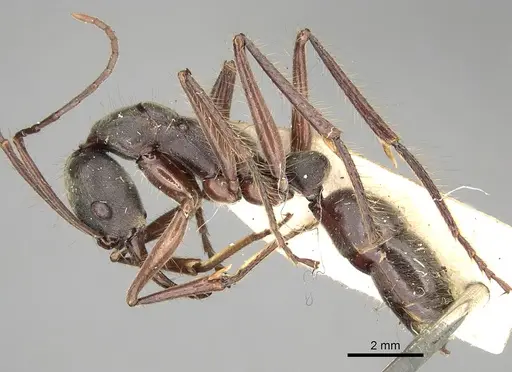
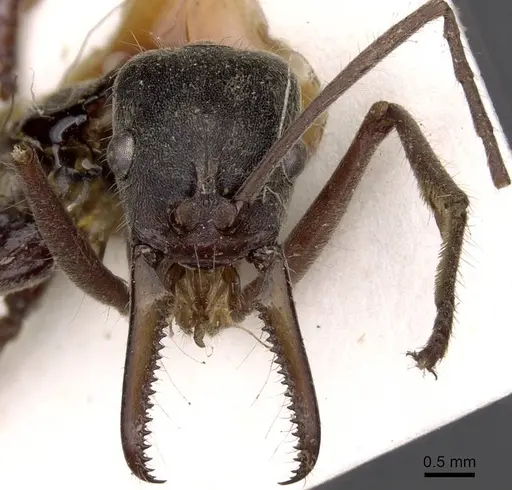
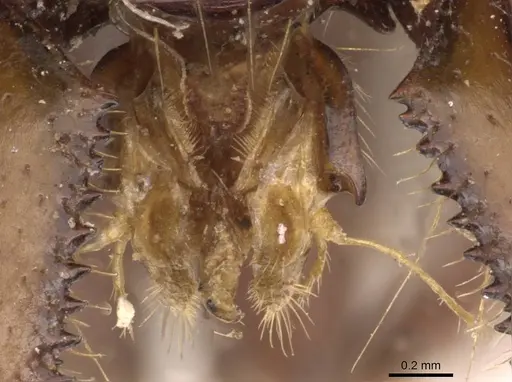
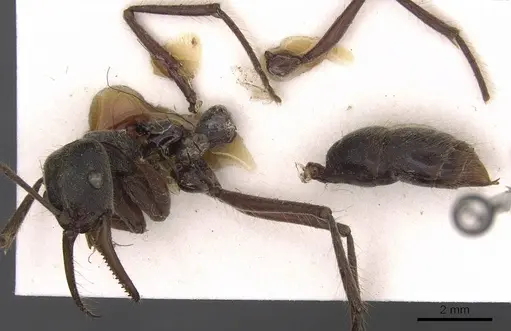
Neoponera agilis is a large, rarely collected ponerine ant native to South America, found in Brazil, Paraguay, and Argentina. Workers are distinctive for their extremely elongated mandibles measuring 2.3mm, equipped with 18 alternating large and small teeth. The body is dark with reddish-brown coloration on the mesosoma, gaster, antennae, clypeus, and legs. A fine yellowish pubescence covers the entire body, giving them a slightly fuzzy appearance. This species is one of only two Neoponera species with such elongated mandibles, distinguished from Neoponera rostrata by lacking a pronotal carina. The name 'agilis' comes from Latin meaning 'nimble, ' likely referring to their active nature.
Quick Summary
- Difficulty: Hard
- Origin & Habitat: South America (Brazil, Paraguay, Argentina). Found in cerrado dense scrub vegetation and tropical rainforest [1].
- Colony Type: Colony structure unconfirmed, queen number unknown. Only an ergatoid (wingless, worker-like reproductive female) has been documented [1].
- Size & Growth:
- Queen: Unknown, queen has not been described [1]
- Worker: Size data unavailable, the only measurements given are for body parts (mesosoma and gaster combined 10.5mm, head with mandibles 4.8mm, mandibles 2.3mm) rather than total body length [1]
- Colony: Unknown, rarely collected species [1]
- Growth: Unknown
- Development: Unknown, no development data available (Development timeline has not been studied for this species)
- Antkeeping:
- Temperature: Based on tropical rainforest and cerrado habitat, likely needs warm conditions in the low-to-mid 20s°C range. Provide a temperature gradient allowing the colony to choose their preferred zone.
- Humidity: Based on tropical habitat, likely requires moderate to high humidity. Keep substrate consistently moist but not waterlogged.
- Diapause: Unknown, subtropical species may have reduced activity during cooler months but likely does not require true hibernation
- Nesting: Natural nesting habits unconfirmed. As a ground-dwelling ponerine, likely nests in soil or rotting wood. In captivity, a naturalistic setup with moist substrate or a Y-tong/plaster nest works well.
- Behavior: Temperament unconfirmed, but as a Ponerine species, they have a functional stinger and are likely predatory with painful venom. Their elongated mandibles may be used for prey capture. Escape risk is moderate due to large worker size, standard barrier methods should suffice. Activity level is reportedly high (nimble), so they likely need space to forage.
- Common Issues: rare species with limited availability, wild colonies are rarely found, no established captive breeding protocols exist, queen has not been described, making colony founding uncertain, lack of data on proper care requirements makes successful keeping challenging, tropical humidity requirements may be difficult to maintain consistently
Identification and Distinction
Neoponera agilis is one of only two Neoponera species with greatly elongated mandibles, the other being Neoponera rostrata. The key distinguishing feature is the lack of a pronotal carina (a ridge on the pronotum) in N. agilis. Workers have mandibles measuring 2.3mm with 18 alternating large and small teeth. The body is covered in a distinctive fine yellowish pubescence, and the coloration is primarily dark with reddish-brown highlights on the mesosoma, gaster, antennae, clypeus, and legs. The species was previously classified as Neoponera agilis and has two junior synonyms: Neoponera agilis and Neoponera agilis [1].
Distribution and Habitat
This species is known from Brazil, Paraguay, and Argentina, with some uncertainty about Colombia due to a possible labeling error on the original type specimen. The type locality was originally listed as California, but this is considered an error, it likely was meant to be Colombia, which would place the species closer to its known range. In Brazil, they occur in cerrado habitat (dense scrub vegetation), and specimens have also been collected along paths in tropical rainforest. The species is considered rarely collected, with few specimens in museum collections [1][2].
Biology and Known Castes
The biology of Neoponera agilis remains poorly studied. The worker caste is well-described, but the queen has not been definitively documented, only an ergatoid (a wingless, worker-like reproductive female) has been collected, deposited in the Instituto Miguel Lillo. Males are completely unknown. The species name 'agilis' comes from the Latin word for 'nimble, ' suggesting these ants are particularly active. As a member of the subfamily Ponerinae, they have a functional stinger and are predatory, though specific prey preferences are unrecorded [1].
Keeping Considerations
Because this is a rarely collected species with minimal scientific data, there are no established care protocols in the antkeeping hobby. Based on related Neoponera species and their tropical/subtropical habitat, they likely require warm temperatures (low-to-mid 20s°C), moderate to high humidity, and a protein-rich diet consisting of live prey. As large ponerines, they have functional stingers and should be handled with caution. The lack of described queens means colony acquisition would likely depend on finding wild colonies. This species represents a challenge for advanced antkeepers interested in working with poorly documented species.
Frequently Asked Questions
Is Neoponera agilis available in the antkeeping hobby?
No, this species is rarely collected and has no established presence in the antkeeping hobby. It is one of the more obscure Neoponera species with limited scientific documentation.
What do Neoponera agilis ants eat?
Their exact diet is unstudied, but as a Ponerine ant, they are likely predatory, feeding on small invertebrates. Related species typically accept live insects like fruit flies, small crickets, and other arthropods.
How big do Neoponera agilis colonies get?
The maximum colony size is unknown. As a rarely collected species, there is no data on typical colony populations.
What temperature do Neoponera agilis ants need?
Exact requirements are unknown, but based on their tropical rainforest and cerrado habitat in South America, they likely need warm conditions in the low-to-mid 20s°C range. A temperature gradient is recommended.
Are Neoponera agilis good for beginners?
No. This species is not recommended for beginners due to lack of available colonies, absence of documented care protocols, and the general difficulty of keeping rarely-studied tropical species. The queen has never been described, making captive breeding uncertain.
Where does Neoponera agilis live?
They are found in South America, specifically Brazil, Paraguay, and Argentina. Their habitat includes cerrado dense scrub vegetation and tropical rainforest areas [1].
How do I identify Neoponera agilis?
Look for large workers with extremely elongated mandibles (2.3mm) bearing 18 alternating teeth. They have a dark body with reddish-brown highlights and are covered in fine yellowish pubescence. The key diagnostic is the lack of a pronotal carina, distinguishing them from the similar N. rostrata [1].
Do Neoponera agilis queens have wings?
Unknown. The queen caste has not been definitively described. An alate (winged) female was listed by Kempf (1978) from Brazil, but the queen morphology has never been documented. An ergatoid (wingless reproductive) has been collected [1].
Can I keep multiple Neoponera agilis queens together?
This is unknown. The colony structure (monogyne vs polygyne) has not been documented for this species. Without data on their social structure, combining queens is not recommended.
Report an Issue
The current care sheet is based fully on literature. See inconsistencies, or something that's incorrect? Please , it will be resolved after review from an admin. Contributing to the blogs tab also helps providing information, to make us be able to further improve the caresheets. Thank you for your support!
References

Эта инструкция по уходу лицензирована по CC BY-SA 4.0 .
Блоги сообщества
CASENT0281904
Посмотреть на AntWeb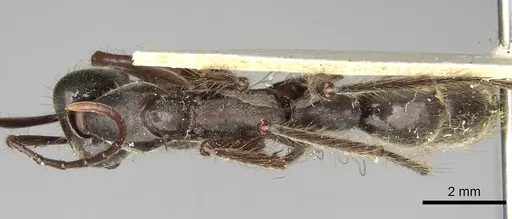
CASENT0907235
Посмотреть на AntWeb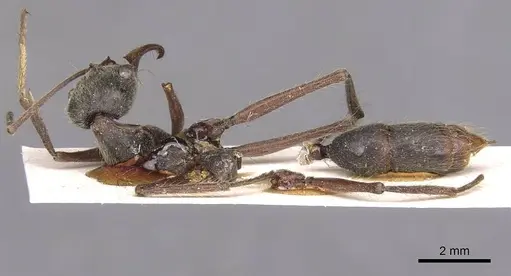
Литература
Загрузка карты распределения...Загрузка товаров...