
Neivamyrmex detectus
- Науч. назв.
- Neivamyrmex detectus
- Подсемейство
- Dorylinae
- Автор
- Borgmeier, 1953
- Распространение
- Встречается в 0 странах
Введение
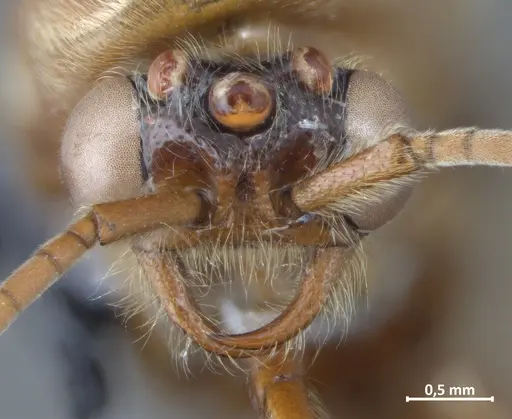
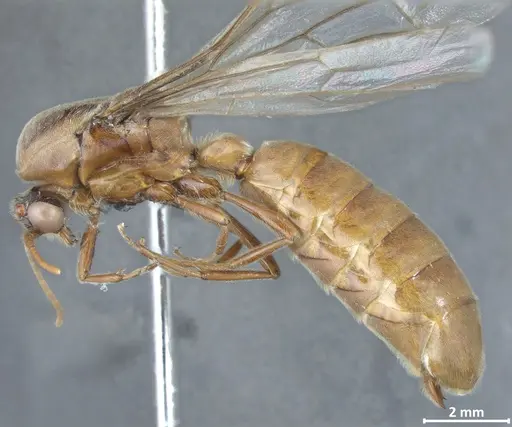
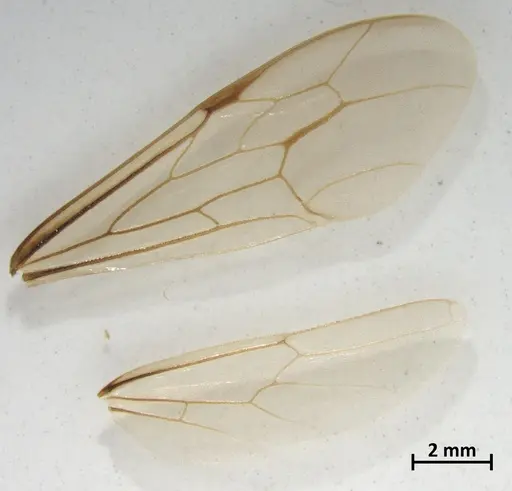
Neivamyrmex detectus is a poorly known army ant species from the Dorylinae subfamily, found only in Brazil. Only male specimens have been described in scientific literature - the worker caste remains undescribed . This species has been collected in the states of Rio de Janeiro, São Paulo, and Bahia, primarily between October and December, with collection dates ranging from 1896 to 2004 . As with all army ants, they are predatory and likely form large colonies that raid in columns, but because the worker caste has never been described, very little is known about its specific biology or behavior. This is an extremely advanced species that is not suitable for captive keeping - there are no established care protocols, and the complete absence of described workers makes identification of any collected colony impossible .
Quick Summary
- Difficulty: Expert
- Origin & Habitat: Tropical Brazil, collected in Atlantic Forest regions of Rio de Janeiro (Itatiaia, Petrópolis, Angra dos Reis) and São Paulo (Eugênio Lefevre, Ipiranga, Alto da Serra, Cantareira), with additional records from Bahia (Ilhéus). The few known specimens come from lowland to mid-elevation forest areas [1][3][2].
- Colony Type: Unknown, only male specimens have been described. The colony structure, including whether this species is monogyne or polygyne, is completely unstudied. Army ants typically form large colonies with single queens, but this cannot be confirmed for Neivamyrmex detectus [1][2].
- Size & Growth:
- Queen: Unknown, no queens have been described or collected [1]
- Worker: Unknown, workers have never been described [1]
- Colony: Unknown, no colony data exists [1]
- Growth: Unknown
- Development: Unknown, no development data exists for this species [1] (No brood has ever been documented for this species [1])
- Antkeeping:
- Temperature: Unknown, no captive data exists. Based on general Neivamyrmex patterns from Brazil, likely requires warm tropical conditions (24-28°C), but this is purely speculative [2].
- Humidity: Unknown, no data on natural humidity preferences. Likely requires high humidity similar to other Brazilian army ants [2].
- Diapause: Unknown, likely no true diapause given tropical distribution, but this has not been studied [2].
- Nesting: Unknown, army ants are nomadic and form temporary bivouacs, but specific nesting preferences for Neivamyrmex detectus are unstudied. No worker specimens exist to indicate natural nesting behavior [1][2].
- Behavior: Unknown, the worker caste has never been described, so no behavioral observations exist. General Neivamyrmex behavior includes predatory raids in columns, but specific traits for Neivamyrmex detectus cannot be confirmed. Escape risk cannot be assessed without workers. Aggression levels are unknown [1][2].
- Common Issues: not suitable for captive keeping, workers have never been scientifically described, making proper identification impossible [1], no established care protocols exist for this species [1], only males have been collected, suggesting this species may have unusual biology or is rarely encountered [1], the complete lack of biological data means any attempt at keeping would be purely experimental with no guidance available [1], army ants require very specific conditions (large space, constant raiding, massive colony sizes) that are extremely difficult to provide in captivity [2]
Species Status and Scientific Knowledge
Neivamyrmex detectus represents one of the most poorly known army ant species in the world. The species was originally described by Borgmeier in 1953 based solely on male specimens collected in Brazil [1][2]. Since then, no workers or queens have ever been scientifically described or collected [1]. This is extremely unusual, while some army ant species are known only from males (which are produced by colonies and can be collected at light traps), the complete absence of workers makes this species essentially unstudied [1]. The type series consists of a holotype male and 19 paratype males collected from multiple locations in Rio de Janeiro (Itatiaia, Petrópolis, Angra dos Reis) and São Paulo (Eugênio Lefevre, Ipiranga, Alto da Serra, Cantareira) states between 1896 and 1949 [2][1]. Additional specimens have been collected more recently in Bahia (Ilhéus,2004), expanding the known range, but workers remain unknown [3]. This species should be considered a taxonomic mystery, until workers are discovered and described, proper biological study is impossible [1].
Why This Species Is Not Recommended for Antkeeping
There are several critical reasons why Neivamyrmex detectus should not be attempted in captivity. First, workers have never been scientifically described, meaning there is no way to positively identify this species if you were to find a colony [1]. Second, no biological or ecological data exists, we don't know what they eat, how they nest, what temperature they need, or anything about their colony structure [1][2]. Third, army ants in general are among the most difficult ants to keep, requiring massive colony sizes, constant space for raiding, and specialized conditions that most antkeepers cannot provide [2]. Finally, this species appears to be extremely rare in the wild, the few specimens known have been collected over 80 years with most from a single collector's work (J.F. Zikán) [1][2]. If you are interested in army ants, consider better-documented Neivamyrmex species or the more commonly kept Eciton species that have established captive protocols [2].
What We Would Need to Know to Keep This Species
If future research were to discover workers and make captive keeping feasible, several key pieces of information would be essential. Colony structure would need to be determined, whether they form single-queen or multi-queen colonies, and typical colony sizes. Foraging behavior would need study, whether they raid in columns like other army ants, and what prey they target. Nesting preferences would be critical, whether they form temporary bivouacs in rotting logs, underground chambers, or other sites. Temperature and humidity requirements would need establishment through trial and error or controlled studies. Development time from egg to worker would be essential for successful captive breeding. Until workers are discovered and described by myrmecologists, this species remains in the realm of scientific curiosity rather than potential antkeeping [1][2].
Similar Species That Are Keepable
If you are interested in keeping army ants, several better-documented species exist. Neivamyrmex nigrescens and Neivamyrmex pilosus are more commonly studied and occasionally available. Eciton species (particularly Eciton burchellii and Eciton hamatum) have more established captive histories, though they remain advanced-level species. These species have described workers, known colony structures, and some captive success records. The key lesson from Neivamyrmex detectus is that proper scientific description of all castes is essential before a species can be considered for antkeeping, without workers, we cannot provide appropriate care [2].
Frequently Asked Questions
Can I keep Neivamyrmex detectus in captivity?
No. This species is not suitable for captive keeping. Workers have never been scientifically described [1], meaning there are no established care protocols and no way to properly identify a colony. This is one of the least-known army ant species in the world [1][2].
Why are only males known for this species?
In army ants, males are produced by established colonies and are typically collected at light traps or near colonies. The absence of workers suggests either this species is extremely rare, has unusual behavior that makes worker collection difficult, or has not been thoroughly surveyed. The original specimens were collected by a single researcher (J.F. Zikán) working in the 1920s-1940s [1], and no subsequent researcher has located a colony [1].
What do Neivamyrmex detectus workers look like?
We don't know. Workers have never been described or collected [1]. This is one of the fundamental gaps in knowledge about this species [1].
Where does Neivamyrmex detectus live?
The species is known from eastern Brazil, specifically the Atlantic Forest regions of Rio de Janeiro (Itatiaia, Petrópolis, Angra dos Reis) and São Paulo (Eugênio Lefevre, Ipiranga, Alto da Serra, Cantareira) states, with additional records from Bahia (Ilhéus) [1][3]. The type specimens came from Itatiaia in Rio de Janeiro, with other collections from Petrópolis, Angra dos Reis, and various São Paulo locations [1][2].
Are there similar army ant species that can be kept?
Yes. Other Neivamyrmex species like Neivamyrmex nigrescens and Neivamyrmex pilosus are better documented. Eciton species (Eciton burchellii and Eciton hamatum) have more established captive histories. However, all army ants are advanced-level species requiring large space, massive colonies, and specialized care [2].
How big do Neivamyrmex detectus colonies get?
Unknown. No colony data exists for this species [1]. General army ant colonies can reach hundreds of thousands of individuals, but we cannot confirm this for Neivamyrmex detectus [1].
What temperature do Neivamyrmex detectus ants need?
Unknown. No captive data exists. Based on general Neivamyrmex patterns from Brazil, they would likely require warm tropical conditions (24-28°C), but this is purely speculative [2].
When do Neivamyrmex detectus males fly?
Based on collection data, males have been collected primarily in November, with some in October, April, and June. This suggests nuptial flights may occur around October-December, but this is inferred from collection dates, not direct observation of flights [1].
Is Neivamyrmex detectus endangered?
We don't know. Population status has never been assessed. The species is known from very few specimens, suggesting it may be rare, but comprehensive surveys have not been conducted [1].
Report an Issue
The current care sheet is based fully on literature. See inconsistencies, or something that's incorrect? Please , it will be resolved after review from an admin. Contributing to the blogs tab also helps providing information, to make us be able to further improve the caresheets. Thank you for your support!
References

Эта инструкция по уходу лицензирована по CC BY-SA 4.0 .
Блоги сообщества
DZUP549840
Посмотреть на AntWeb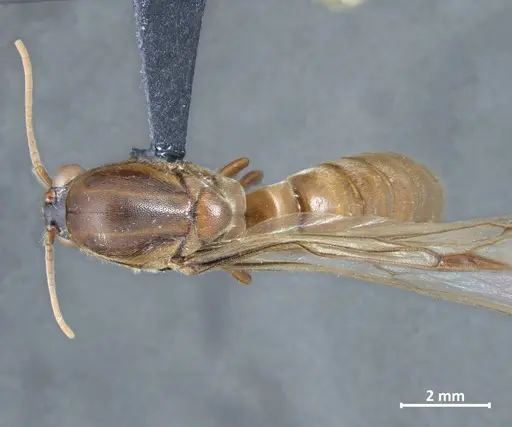
Литература
Загрузка карты распределения...Загрузка товаров...