
Myrmoteras williamsi
- Науч. назв.
- Myrmoteras williamsi
- Подрод
- Myagroteras
- Триба
- Myrmoteratini
- Подсемейство
- Formicinae
- Автор
- Wheeler, 1919
- Распространение
- Встречается в 0 странах
Введение
Myrmoteras williamsi is a rare ant species endemic to the Philippines, found on Luzon, Negros, and Mindanao islands . Workers have a total length of approximately 5 mm , with a distinctive hunched appearance due to high pronotum and propodeum . Queens measure 4.4-5.0 mm . The species nests in soil and is described as slow and clumsy in movement . This species is one of the rarest in the ant-keeping hobby, with almost no captive husbandry information available. What we know comes from limited field observations - they nest in soil and are slow-moving . Their care requirements remain largely speculative due to lack of data.
Quick Summary
- Difficulty: Expert
- Origin & Habitat: Philippines (Luzon, Negros, Mindanao islands), tropical forest environment, nesting in soil [2][1]
- Colony Type: Unconfirmed, colony structure has not been documented in scientific literature
- Size & Growth:
- Antkeeping:
- Temperature: Unknown, based on tropical origin, likely 24-28°C [2]. Start in this range and observe colony activity.
- Humidity: Unknown, based on soil-nesting in humid Philippines, likely moderate to high humidity. Keep substrate consistently moist but not waterlogged [2].
- Diapause: Unknown, tropical species, likely no diapause required [2].
- Nesting: Soil-nesting species, naturalistic setups with moist substrate work best. Y-tong or plaster nests with a soil chamber would likely suit them [2].
- Behavior: These ants are described as slow and clumsy in movement [2], which is unusual among ants. They are not aggressive and likely have minimal escape prevention needs given their sluggish nature, though their small size (5mm) still warrants standard precautions.
- Common Issues: no captive husbandry information exists, all care is speculative, extremely rare in the hobby with no established protocols, wild-caught colonies may have parasites or disease with no documented treatment, slow growth means long wait times with no species-specific timeline, tropical humidity requirements may be challenging to maintain consistently
Rarity and Availability
Myrmoteras williamsi is one of the rarest ant species in the hobby, if it appears at all. This species has been documented only from a handful of locations in the Philippines, primarily Luzon and Negros islands, with a recent record from Mindanao [1]. Scientific specimens are extremely limited, workers are known only from Negros, while queens and males were described from Luzon [2]. You are unlikely to find this species available from commercial ant suppliers. If you do acquire a colony, it will almost certainly be wild-caught from the Philippines, which carries significant ethical and legal considerations.
Appearance and Identification
Workers reach approximately 5 mm in total length, with a distinctive body profile that sets them apart from most other Formicinae. The pronotum and propodeum are notably high and strongly convex, giving the thorax a hunched appearance. The head and trunk are reddish-orange, while the gaster ranges from brownish to yellowish-orange. Mandibles possess 11-13 teeth with small apical denticles. The frontal sulcus is very narrow but clearly defined. Queens are slightly smaller at 4.4-5.0 mm [2]. This species can be distinguished from similar species like Myrmoteras mcarthuri by the mandible index, the smooth posterior face of the temples, and the stouter funiculus segments [2].
Natural History
What we know about this species in the wild is limited to a few observations. They nest in soil according to field reports, and their movement has been described as slow and clumsy [2]. The species has been recorded from Luzon, Negros, and recently Mindanao islands in the Philippines [1]. The original description was based on sexual specimens collected at Los Baños, Laguna on Luzon Island [2]. No information exists on their diet, foraging behavior, colony size, or reproductive biology in the wild.
Housing and Nesting
Since no captive husbandry information exists for this species, housing recommendations are speculative but based on what we know of their natural history. They are soil-nesting ants from a tropical environment, so a naturalistic setup with moist substrate would be most appropriate. A Y-tong or plaster nest with an attached soil chamber would allow them to exhibit natural tunneling behavior. The nest area should remain consistently humid but never waterlogged. Given their Philippines origin, room temperature in the low-to-mid 20s Celsius should be acceptable, though precise requirements are unknown. [2]
Feeding and Diet
The diet of Myrmoteras williamsi in the wild is completely unstudied. As a member of the subfamily Formicinae, they likely have a typical ant diet including nectar/sugar sources and protein from small invertebrates, but this is speculative. In captivity, offer a variety of foods including sugar water or honey as an energy source, and protein sources such as small insects. Start with small portions and observe acceptance. Given their slow movement, they may be less effective at competing for food than faster ant species.
Temperament and Handling
No aggression data exists for this species, but the field observation that they are slow and clumsy in movement suggests a non-aggressive temperament [2]. They are unlikely to bite or sting effectively given their small size and sluggish nature. However, as with any ant species, queens will defend their brood if threatened. When handling, use gentle movements and avoid disturbing the nest area.
Frequently Asked Questions
How long does it take for Myrmoteras williamsi to produce first workers?
This is completely unknown, no captive development data exists for this species [2].
Can I keep Myrmoteras williamsi in a test tube?
Test tubes can work for founding colonies, but given their soil-nesting nature, they will likely need access to a soil chamber once the colony grows [2].
Are Myrmoteras williamsi good for beginners?
No. This species is not recommended for beginners. It is extremely rare in the hobby, has no established care protocols, and all husbandry information is speculative [2][1].
What temperature do Myrmoteras williamsi need?
Precise temperature requirements are unknown. As a tropical species from the Philippines, aim for 24-28°C and observe colony behavior [2].
Do Myrmoteras williamsi need hibernation?
Diapause requirements are unconfirmed. As a tropical species, hibernation is likely not required [2].
How big do Myrmoteras williamsi colonies get?
Maximum colony size is unknown. No scientific data exists on wild colony sizes for this species [2].
Can I keep multiple Myrmoteras williamsi queens together?
Colony structure is unconfirmed for this species. No data exists on whether they are single-queen or multi-queen colonies [2].
Where can I find Myrmoteras williamsi for sale?
This species is extremely rare in the ant-keeping hobby and is unlikely to be available from commercial suppliers. If it appears for sale, it would almost certainly be wild-caught from the Philippines [2][1].
Why are Myrmoteras williamsi so rare in the hobby?
This species has a very limited distribution in the Philippines and has rarely been collected for scientific study. The combination of limited range, soil-nesting habits, and minimal scientific attention makes them exceptionally rare [2][1].
Report an Issue
The current care sheet is based fully on literature. See inconsistencies, or something that's incorrect? Please , it will be resolved after review from an admin. Contributing to the blogs tab also helps providing information, to make us be able to further improve the caresheets. Thank you for your support!
References

Эта инструкция по уходу лицензирована по CC BY-SA 4.0 .
Блоги сообщества
CASENT0906287
Посмотреть на AntWeb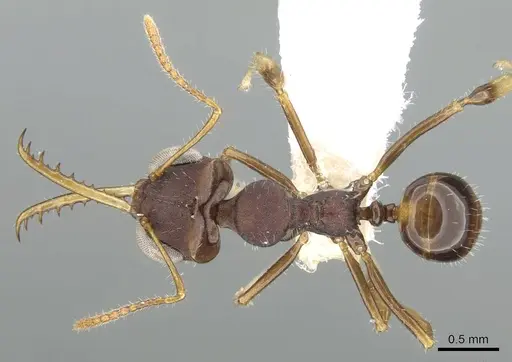
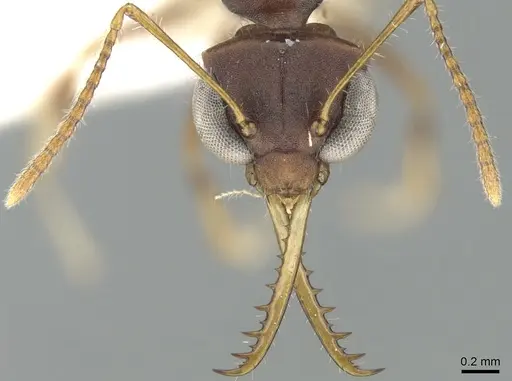
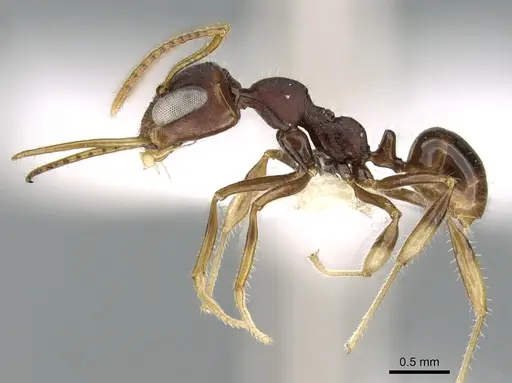
Литература
Загрузка карты распределения...Загрузка товаров...