
Myrmica pseudorugosa
- Науч. назв.
- Myrmica pseudorugosa
- Триба
- Myrmicini
- Подсемейство
- Myrmicinae
- Автор
- Bharti, 2012
- Распространение
- Встречается в 0 странах
Введение
Myrmica pseudorugosa is a small reddish-brown ant belonging to the rugosa species group, native to the high altitudes of the Pakistani Himalaya. Workers are relatively small and have a distinctive appearance with a longer-than-broad head, short propodeal spines, and notably long hairs on the scape and legs. The body is brown with golden-brown mandibles, antennae, and legs. This species was only recently described in 2012 and is endemic to the Kaghan valley in Pakistan, where it lives at extreme altitudes of 3600 meters in the trans-Himalayan alpine zone, a dry desert above the timber line . Only the worker caste has been documented, making this a relatively unknown species in captivity.
Quick Summary
- Difficulty: Hard
- Origin & Habitat: Endemic to the trans-Himalayan alpine zone of Pakistan, specifically the Kaghan valley at 3600 meters elevation. This is a dry desert environment above the timber line, characterized by extreme cold, low humidity, and sparse vegetation [1][2].
- Colony Type: Colony structure is unconfirmed, as only the worker caste has been documented [1].
- Size & Growth:
- Queen: Unknown, only the worker caste has been described [1]
- Worker: Unknown, no total length measurement available. Workers are relatively small, typical of the genus Myrmica [1]
- Colony: Unknown, no colony size data available
- Growth: Unknown, estimated moderate based on high-altitude species
- Development: Estimated 6-10 weeks based on related Myrmica species in cool conditions (Development likely slower than lowland species due to high-altitude cold habitat. Temperature-dependent, cooler temperatures will extend development time.)
- Antkeeping:
- Temperature: Keep cool, likely 15-20°C, mimicking the cold alpine habitat [2]. Avoid temperatures above 25°C.
- Humidity: Low humidity. Their natural habitat is a high-altitude dry desert above timberline [2]. Keep the nest substrate dry to slightly moist, avoid over-wetting.
- Diapause: Almost certainly required, based on the cold winter conditions at 3600m altitude [2]. Provide 3-4 months at 5-10°C.
- Nesting: Likely under stones or in soil in alpine terrain. In captivity, test tube setups or Y-tong nests with controlled humidity work well. Provide a shallow water tube and keep nesting area cool and dry.
- Behavior: Temperament: Like other Myrmica, moderately aggressive when disturbed and will sting. Workers are active foragers. Escape risk: moderate, use standard barrier methods. They are adapted to harsh conditions and are likely resilient but slow-moving. Their small size requires attention to gaps.
- Common Issues: heat stress above 25°C may be fatal, this species is adapted to cold alpine conditions, high humidity causes mold and health problems, keep the nest relatively dry, only the worker caste is known, making queen acquisition extremely difficult, hibernation is essential, failure to provide proper cold dormancy will likely kill the colony
Origin and Natural Habitat
Myrmica pseudorugosa is one of the highest-altitude Myrmica species known, collected at exactly 3600 meters in the Kaghan valley of Pakistan [1]. This location represents the trans-Himalayan alpine zone, which is essentially a dry desert environment above the tree line [2]. The habitat is characterized by extreme temperatures, very low humidity, sparse vegetation, and harsh seasonal variation. The species was discovered in 2005 and formally described in 2012 by Himender Bharti, making it a relatively new addition to scientific knowledge [1]. It is endemic to this specific region, you won't find this ant anywhere else in the world [3]. The type locality at Gittidas (35.1167°N–73.9833°E) provides the only known specimens [1].
Identification and Distinguishing Features
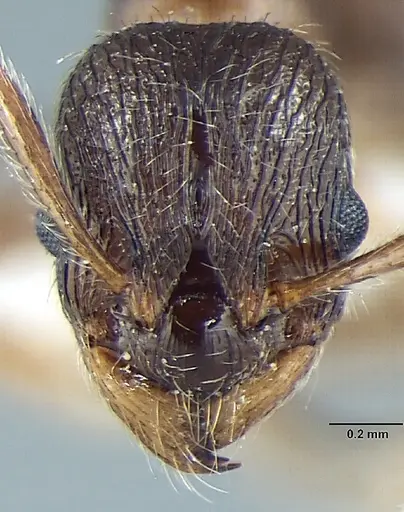
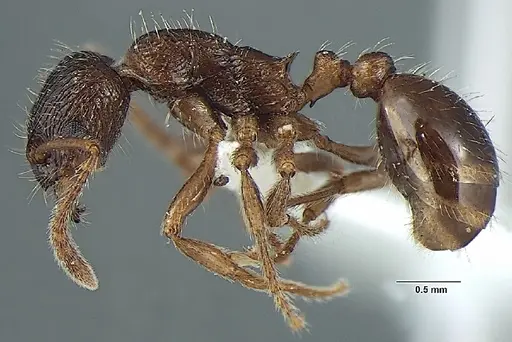
This species belongs to the Myrmica rugosa group, specifically the rugosa complex. You can identify it by several key features: the head is longer than broad with parallel sides, the frontal carinae merge with rugae that extend to the occipital margin, and the scape has a smooth curve at the base without any lobe or carina [1]. The most distinctive feature compared to its close relative Myrmica rugosa is the much shorter propodeal spines, about 0.16mm maximum length versus 0.30mm in M. rugosa [1]. Workers also have notably long hairs on their scape and legs, which helps distinguish them from similar species. The body coloration is brown with golden-brown mandibles, antennae, and legs. Workers are relatively small, typical of the Myrmica genus [1].
Temperature Requirements
This species almost certainly requires cool conditions based on its 3600m alpine habitat [2]. We recommend keeping the nest at 15-20°C, which mimics the cold environment where temperatures rarely get warm. Room temperature (around 20°C) is typically suitable. You should avoid high temperatures, this species has adapted to cold conditions and temperatures above 25°C could stress or kill the colony. During summer, ensure the colony is not near heat sources. A slight temperature gradient allowing workers to choose cooler areas is ideal. In winter, they will need true cold hibernation conditions [2].
Humidity and Nesting
The natural habitat is a dry desert above the timber line [2], so this species prefers much drier conditions than most Myrmica. Keep the nest substrate dry to slightly moist, avoid creating damp, stagnant conditions that would promote mold. A test tube setup with a shallow water reservoir works well, the ants will use what they need without creating excess moisture. Provide a small outworld area where they can forage. Because they come from harsh alpine conditions, they are relatively tolerant of variable humidity, but consistently wet conditions should be avoided. Ventilation is important to prevent mold buildup [2].
Feeding
Like other Myrmica species, these ants are omnivorous with a preference for protein. Offer small insects (fruit flies, small crickets, mealworms) as a primary protein source. They will likely accept sugar water or honey as an energy source. Feed protein 2-3 times per week, and keep a sugar source available continuously. Remove uneaten prey after 24-48 hours to prevent mold. Given their high-altitude origin, they may have a slower metabolism, so don't overfeed. Start with small amounts and adjust based on how quickly the colony consumes food.
Diapause and Winter Care
This species almost certainly requires a winter hibernation period, based on the cold high-altitude conditions at 3600m [2]. Provide 3-4 months of cold conditions around 5-10°C during winter (typically November through February in the Northern Hemisphere). This can be achieved by moving the colony to an unheated garage, basement, or refrigerator. Do not feed during hibernation. Ensure the nest substrate remains slightly moist throughout winter, do not let it dry out completely. Failure to provide proper hibernation will weaken and likely kill the colony over time.
Colony Development and Growth
Only the worker caste has been documented for this species, no queens or males have been described in scientific literature [1]. This means colony founding behavior is unconfirmed, though based on related Myrmica species, founding is likely claustral (queen seals herself in and lives off stored fat). Colony growth rate is unknown but likely moderate to slow, consistent with cold-climate species. Expect the first workers (nanitics) to appear 6-10 weeks after founding at optimal temperatures, with development being slower than lowland species due to their cold-adapted nature. Maximum colony size is unknown, no wild colony data exists. Given their habitat constraints, colonies probably remain relatively small compared to tropical species.
Frequently Asked Questions
How do I care for Myrmica pseudorugosa ants?
Keep them cool at 15-20°C with low humidity. Their natural habitat is a dry desert above 3600m in the Pakistani Himalaya, so avoid warm, damp conditions. Provide protein (small insects) and sugar water. A test tube setup works well. Most importantly, they require a 3-4 month hibernation at 5-10°C each winter [2].
What temperature do Myrmica pseudorugosa need?
Keep them cool, aim for 15-20°C. This is a cold-adapted high-altitude species that will not do well in warm conditions. Room temperature is typically fine. Never expose them to temperatures above 25°C [2].
Do Myrmica pseudorugosa need hibernation?
Yes, almost certainly. This species comes from 3600m altitude in the Himalayan region and requires a cold winter dormancy of 3-4 months at 5-10°C. Failure to provide proper hibernation will weaken and eventually kill the colony [2].
Where is Myrmica pseudorugosa found?
This species is endemic to the Kaghan valley in Pakistan, specifically the Gittidas area at 3600 meters elevation. It is only known from this single location in the trans-Himalayan alpine zone [1][3].
How big do Myrmica pseudorugosa colonies get?
Colony size is unknown, no wild colony data exists. Based on similar high-altitude Myrmica species, colonies likely remain moderate in size, probably under a few hundred workers. They are not likely to become large colonies.
What do Myrmica pseudorugosa eat?
Like other Myrmica species, they are omnivorous. Feed small insects (fruit flies, small crickets, mealworms) as protein 2-3 times per week, and provide sugar water or honey continuously. Remove uneaten prey after 24-48 hours.
Is Myrmica pseudorugosa good for beginners?
No, this species is best suited for advanced antkeepers. It has very specific temperature and humidity requirements (must stay cool and dry), requires proper hibernation, and is extremely difficult to acquire since only the worker caste has been documented. The exact colony structure and development timeline are not well understood.
How long does it take for Myrmica pseudorugosa to develop from egg to worker?
Exact development time is unconfirmed, but based on related Myrmica species in cool conditions, estimate 6-10 weeks from egg to first worker. Development will be slower at cooler temperatures and faster at warmer temperatures within their safe range.
Do Myrmica pseudorugosa ants sting?
Yes, like other Myrmica species, they have a stinger and can sting when threatened. The sting is not dangerous to humans but may cause mild irritation.
Can I keep multiple Myrmica pseudorugosa queens together?
Colony structure is unconfirmed for this specific species. Most Myrmica species can be either monogyne or polygyne, so it's unknown. Without specific data, it is not recommended to combine unrelated queens. If you obtain a queen, keep her alone until workers emerge.
Report an Issue
The current care sheet is based fully on literature. See inconsistencies, or something that's incorrect? Please , it will be resolved after review from an admin. Contributing to the blogs tab also helps providing information, to make us be able to further improve the caresheets. Thank you for your support!
References

Эта инструкция по уходу лицензирована по CC BY-SA 4.0 .
Блоги сообщества
ANTWEB1008037
Посмотреть на AntWeb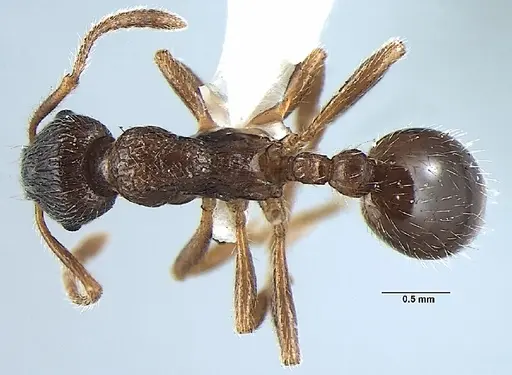
Литература
Загрузка карты распределения...Загрузка товаров...