
Myrmica arisana
- Науч. назв.
- Myrmica arisana
- Триба
- Myrmicini
- Подсемейство
- Myrmicinae
- Автор
- Wheeler, 1930
- Распространение
- Встречается в 0 странах
Введение
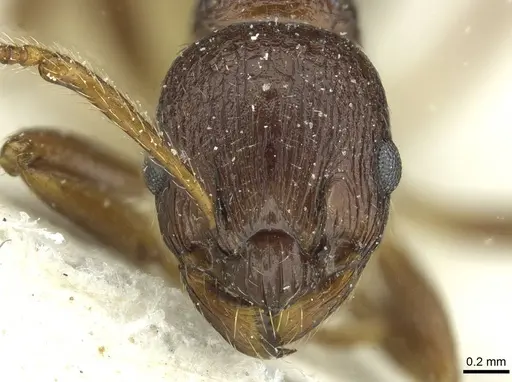
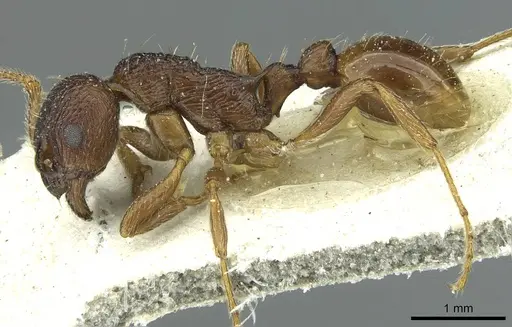
Myrmica arisana is a medium-sized Myrmica ant native to the mountains of central Taiwan. Workers are dark brown to blackish-brown with a yellowish-amber gaster and somewhat paler legs and antennae. They belong to the rubra species group, making them close relatives of Myrmica rubra and Myrmica ruginodis . These ants inhabit high-elevation habitats at 1700-2500m altitude, typically found under stones on south-facing banks by roadsides and in tree stumps at forest edges and glades. Colonies form large polycalic (multi-nest) networks spanning multiple connected stones. Workers are notably aggressive and will sting freely when disturbed.
Quick Summary
- Difficulty: Medium
- Origin & Habitat: Mountainous central Taiwan (Nantou, Chiayi provinces) at elevations of 1700-2500m. Found under stones on south-facing banks by roadsides and in tree stumps at forest edges and glades [3].
- Colony Type: Likely monogyne (single queen) with possible oligogyne (few queens). Forms large polycalic populations spanning multiple connected nests under stones. No mature queens were caught in extensive field surveys, suggesting the species is probably not especially polygynous [3].
- Size & Growth:
- Queen: ~5-7mm, inferred from genus typical size and close relation to M. rubra.
- Worker: ~4-6mm, inferred from genus patterns.
- Colony: Large polycalic colonies with hundreds of workers across multiple connected nests in the wild [3].
- Growth: Moderate, typical Myrmica development timeline at optimal temperature.
- Development: 6-10 weeks at optimal temperature (around 20-22°C). This is estimated based on typical Myrmica genus development. (Development time is inferred from related Myrmica species, direct observations for M. arisana are not available.)
- Antkeeping:
- Temperature: Keep nest area at 20-24°C. These are mountain ants from cool high-elevation habitats, so avoid overheating. Room temperature is often suitable. A gentle gradient allowing cooler areas (18-20°C) is beneficial.
- Humidity: Moderate to high humidity. Keep nest substrate consistently moist but not waterlogged. These ants naturally inhabit damp mountain banks under stones, the substrate should feel damp to the touch with some drier areas available.
- Diapause: Yes, Myrmica ants require a winter dormancy period. Provide 2-3 months at 5-10°C during winter months (roughly November-February in temperate regions). This mimics their natural high-elevation seasonal cycle.
- Nesting: Y-tong (AAC) nests or plaster nests work well. Provide narrow chambers scaled to their medium size. Naturalistic setups with flat stones over moist substrate also replicate their natural under-stone nesting. Keep nest dark as they prefer concealed chambers.
- Behavior: Workers are very aggressive and will sting freely when threatened, more defensive than many Myrmica species. They are active foragers that readily hunt small invertebrates and collect honeydew. They have good escape prevention needs due to their medium size and active nature. Colonies are polydomous (multi-nest) in nature, so they may benefit from connected outworlds as they grow. Males were observed leaving nests on August 11th, suggesting nuptial flights occur in mid-August [3].
- Common Issues: aggressive sting, handle with care and use gloves when servicing the colony, high-elevation origin means they are sensitive to overheating, keep away from direct heat sources, polycalic colony structure may require more space or connected nests as the colony grows, winter dormancy is essential, skipping diapause can weaken or kill the colony, wild-caught colonies may carry parasites that can devastate captive colonies, this species serves as a host for Phengaris atroguttata butterfly larvae, ensure food sources are properly cleaned
Housing and Nest Setup
Myrmica arisana does well in Y-tong (AAC) nests or plaster nests with narrow chambers scaled to their medium size. They naturally nest under stones in the wild, so a naturalistic setup with flat stones placed over moist soil or plaster also works well. The key is providing dark, concealed chambers that stay consistently moist. Because they form polycalic (multi-nest) colonies in nature, you might eventually connect multiple formicaria with tubing to give them more space. Test tube setups work for founding colonies, use a water reservoir tube for humidity and keep it in darkness. Avoid overheating by placing the nest in a cool area of your room, away from direct sunlight or heating elements. [3]
Feeding and Diet
Myrmica arisana is a generalist omnivore like other Myrmica species. Offer protein sources such as small insects (fruit flies, small crickets, mealworms), and provide sugar water, honey, or diluted sugar syrup as an energy source. They will also collect honeydew from aphids if available. Feed protein 2-3 times per week and keep sugar water constantly available. Remove uneaten prey after 24-48 hours to prevent mold. These are active foragers, so they will readily search out and consume prey items.
Temperature and Seasonal Care
These are high-elevation mountain ants from Taiwan, so they prefer cooler temperatures than many tropical species. Keep the nest area at 20-24°C, with cooler areas around 18°C available. Avoid temperatures above 28°C as this can stress or kill them. During winter (roughly November-February), provide a diapause period at 5-10°C, this is essential for colony health and mimics their natural seasonal cycle in the mountains. Place the colony in an unheated garage or refrigerator during winter dormancy. Do not feed during diapause but keep the substrate slightly moist. [3]
Behavior and Handling
Myrmica arisana workers are notably more aggressive than many Myrmica species, they sting freely when disturbed and will aggressively defend their nest. When servicing the colony, work slowly and carefully, and consider wearing gloves. They are active foragers and will readily explore their outworld during daytime. Their medium size and active nature mean escape prevention should be good, use fluon barriers and secure lids. Colonies can be polydomous, so they may benefit from having multiple connected foraging areas as they grow. [3]
Colony Development
A claustral queen will seal herself in a chamber and raise the first brood alone using stored fat reserves. The first workers (nanitics) will be smaller than normal workers. After the nanitics emerge, the colony enters a growth phase. Myrmica colonies typically grow moderately, expect 6-10 weeks from egg to first worker at optimal temperature. Growth rate is moderate, not as fast as some tropical species. Colonies can live for many years with a healthy queen producing workers seasonally.
Frequently Asked Questions
How long does it take for Myrmica arisana to produce first workers?
Expect 6-10 weeks from egg to first worker at optimal temperature (around 20-22°C). This is based on typical Myrmica genus development, specific timing for M. arisana has not been directly documented.
Do Myrmica arisana ants sting?
Yes, they sting freely and are notably more aggressive than many Myrmica species. Their sting can cause irritation and mild pain. Handle with care and use gloves when servicing the colony.
What temperature do Myrmica arisana ants need?
Keep them at 20-24°C. These are high-elevation mountain ants from Taiwan, so they prefer cooler conditions than tropical species. Avoid overheating above 28°C.
Do Myrmica arisana need hibernation?
Yes, they require a winter dormancy period. Provide 2-3 months at 5-10°C during winter (roughly November-February). This mimics their natural seasonal cycle in the mountains and is essential for colony health.
How big do Myrmica arisana colonies get?
In the wild, they form large polycalic colonies spanning multiple connected nests under stones, with hundreds of workers across the network. In captivity, expect a moderately large colony over several years.
Can I keep multiple Myrmica arisana queens together?
Field observations suggest they are probably not especially polygynous, likely monogyne or oligogyne (few queens). It is not recommended to combine unrelated foundress queens as this species has not been studied for pleometrosis behavior.
What do Myrmica arisana ants eat?
They are generalist omnivores. Offer small insects (fruit flies, small crickets, mealworms) as protein 2-3 times per week, and provide sugar water, honey, or diluted sugar syrup constantly. They will also collect honeydew from aphids.
Are Myrmica arisana good for beginners?
They are rated as medium difficulty. Their aggressive stinging behavior and specific temperature needs (cool mountain conditions) make them better suited for keepers with some experience. The requirement for winter dormancy also adds complexity.
What type of nest is best for Myrmica arisana?
Y-tong (AAC) nests or plaster nests with narrow chambers work well. They naturally nest under stones, so a naturalistic setup with flat stones over moist substrate also works. Provide dark, concealed chambers that stay consistently moist.
Why are my Myrmica arisana dying?
Common causes include: overheating (keep below 28°C), improper humidity (too dry or waterlogged), skipping winter diapause, parasites from wild-caught colonies, or stress from too frequent disturbance. Check temperature and ensure a proper winter dormancy period is provided.
Report an Issue
The current care sheet is based fully on literature. See inconsistencies, or something that's incorrect? Please , it will be resolved after review from an admin. Contributing to the blogs tab also helps providing information, to make us be able to further improve the caresheets. Thank you for your support!
References

Эта инструкция по уходу лицензирована по CC BY-SA 4.0 .
Блоги сообщества
CASENT0913066
Посмотреть на AntWeb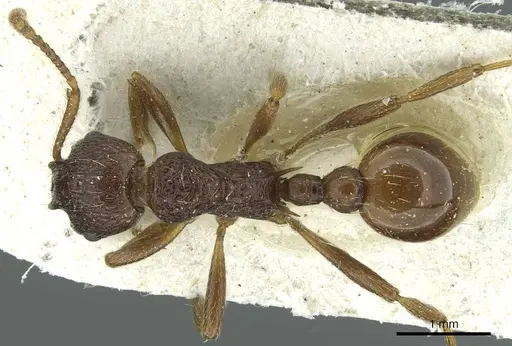
Литература
Загрузка карты распределения...Загрузка товаров...