
Meranoplus loebli
- Науч. назв.
- Meranoplus loebli
- Триба
- Crematogastrini
- Подсемейство
- Myrmicinae
- Автор
- Schödl, 1998
- Распространение
- Встречается в 0 странах
Введение
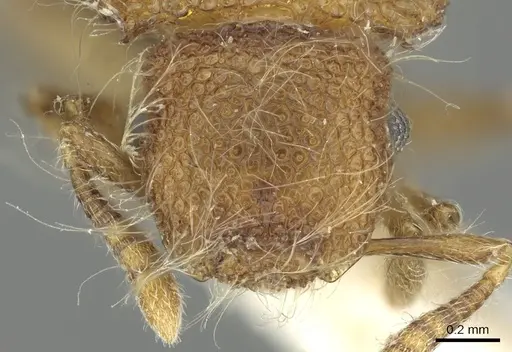
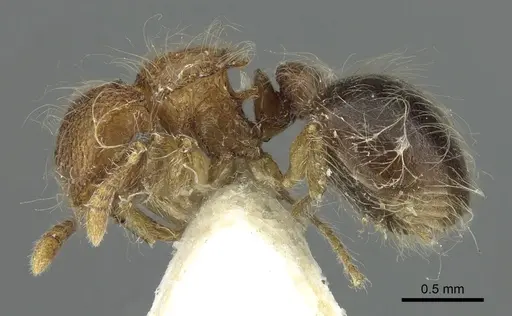
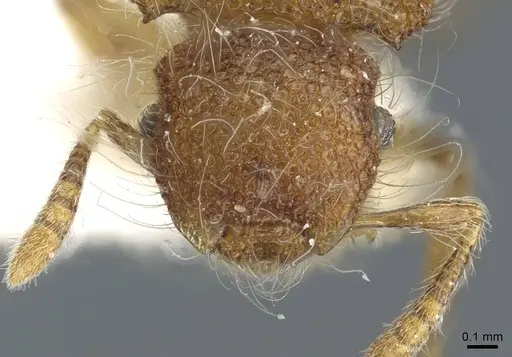
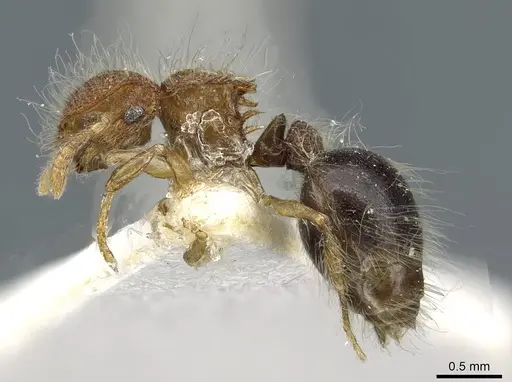
Meranoplus loebli is a small, distinctive ant species endemic to Sri Lanka. Workers measure 2.87-3.5mm in total length and are easily recognized by their unusually broad, leaf-like promesonotal shield that conspicuously overhangs the body laterally . Most specimens are bicolored with a dark brown gaster contrasting against a bright ferrugineous (rusty orange) head and alitrunk . The promesonotal shield features two large translucent windows (fenestrae) on each side, giving this species a unique appearance among Oriental Meranoplus . This species was described in 1998 by Stefan Schödl and remains poorly studied in captivity .
Quick Summary
- Difficulty: Unknown, this species has never been kept in captivity and no biological data exists
- Origin & Habitat: Meranoplus loebli is found only in Sri Lanka, where it inhabits lowland wet forest environments [4][5]. Type specimens were collected from multiple locations ranging from 250m elevation (Hasalaka) up to 2100m (Horton Plains), suggesting adaptability to different altitudes within the island [1].
- Colony Type: Colony structure is unconfirmed. The queen has never been described and nothing is known about colony organization in this species.
- Size & Growth:
- Antkeeping:
- Temperature: Unknown, no thermal studies exist. Based on Sri Lanka's tropical climate, room temperature (22-28°C) is likely suitable as a starting point.
- Humidity: Likely requires moderate to high humidity given its association with wet forests in Sri Lanka [4]. Keep nest substrate moist but not waterlogged.
- Diapause: Unknown, no seasonal data available. Sri Lanka does not experience harsh winters, so diapause may not be required.
- Nesting: No specific nesting data exists. Based on genus patterns, they likely nest in soil or rotting wood in forest floor habitats. A naturalistic setup with moist substrate or a Y-tong/plaster nest would be appropriate starting points.
- Behavior: Behavior is unstudied. Based on genus typical patterns, they are likely ground-nesting and may be generalist foragers. Escape risk is moderate given their small 3mm size, standard barrier precautions should suffice. No information on aggression or sting potency is available.
- Common Issues: no biological data exists, all care recommendations are speculative, colony size and growth rate are completely unknown, founding behavior is unconfirmed, humidity requirements are estimated from habitat associations, no information on whether they accept sugar or require live prey, queen has never been described, no info on colony type
Identification and Appearance
Meranoplus loebli is one of the most distinctive Meranoplus species in the Oriental region due to its unusually broad, leaf-like promesonotal shield [1]. Workers measure 2.87-3.5mm in total length. The promesonotal shield is conspicuously wider than long with a PMI of 178-191,meaning it's nearly twice as wide as long [2][1]. The lateral margins of this shield are foliaceous (leaf-like) and distinctly overhang the sides of the alitrunk and propodeum [1]. Each side features two large translucent fenestrae (window-like areas), one near the promesonotal suture and another in front of the posterior corner [1]. The anterior pronotal corners are produced into stout, forward-projecting teeth, while the posterior mesonotal corners have acute, backward-pointing projections [1]. Most specimens are bicolored with a dark brown gaster contrasting against a bright ferrugineous (rusty orange) head and alitrunk [1]. This color pattern and the distinctive shield shape make this species readily separable from all other Oriental Meranoplus [1].
Distribution and Habitat
This species is endemic to Sri Lanka, meaning it's found nowhere else on Earth [1]. The original type series was collected from multiple locations across central Sri Lanka, including Hasalaka at 250m elevation, Kandy at 600m, Peradeniya at 550m, and Horton Plains at 2100m [1]. This elevation range from 250m to 2100m suggests the species can adapt to various altitudes within the island. More recent surveys have recorded the species in lowland wet forest reserves in Sri Lanka [4][5]. The species code SL018 appears in biodiversity surveys of these forest areas [4][5]. The broad elevation range and presence in both lowland and highland areas indicates this ant is not restricted to a single microhabitat type within Sri Lanka's diverse landscapes.
What We Don't Know
It cannot be overstated how little is known about this species' biology. No scientific papers document the queen, colony structure, founding behavior, development timeline, diet preferences, or any aspect of their captive care. The queen has never been described, so we don't know her size or whether colonies are single-queen or multi-queen. We don't know if founding is claustral (queen seals herself in and lives off stored fat) or semi-claustral (queen must leave to forage). We don't know what they eat in the wild, though Meranoplus species are generally omnivorous. We don't know their temperature or humidity preferences beyond general habitat associations. This makes providing specific care advice impossible, everything below is speculative based on genus-level patterns and the species' likely origin in tropical Sri Lankan forests.
Tentative Care Recommendations
Given the complete absence of biological data, any care advice for Meranoplus loebli must be treated as highly speculative. Based on the species' origin in Sri Lanka's tropical forests and its small size (around 3mm), a conservative approach is warranted. For temperature, start with room temperature in the 22-28°C range, this covers typical tropical conditions. For humidity, the wet forest association suggests moderate to high humidity is appropriate, keep the nest substrate moist but not saturated. For nesting, a naturalistic setup with moist soil or a Y-tong/plaster nest with moisture chambers would be reasonable starting points. For feeding, offer a general ant diet: sugar water or honey as an energy source, and protein sources like small insects. Given their small size, prey items should be appropriately small. Start with conservative approaches and adjust based on colony behavior and survival.
Frequently Asked Questions
How do I keep Meranoplus loebli ants?
We don't know, no captive care information exists for this species. Based on its Sri Lankan origin and small size, a naturalistic setup with moist substrate or a Y-tong/plaster nest at 22-28°C with moderate humidity would be a reasonable starting point. This is entirely speculative.
What do Meranoplus loebli ants eat?
Unknown, no dietary studies exist for this species. Meranoplus genus members are generally omnivorous, so offering sugar water or honey and small protein sources like fruit flies or small mealworms would be appropriate to try.
How long does it take for Meranoplus loebli to develop from egg to worker?
Unknown, no development data exists for this species. Without any information, it's impossible to estimate timelines.
Are Meranoplus loebli ants good for beginners?
Unknown difficulty, this species has never been kept in captivity. There is no information on its care requirements, making it unsuitable for beginners who would be starting completely blind.
Do Meranoplus loebli ants sting?
Unknown, no information on sting potency or behavior exists. Given their small size (around 3mm), any sting would likely be mild even if present.
What is the colony size of Meranoplus loebli?
Unknown, no colony size data has been documented. Related Meranoplus species typically form small to moderate colonies, but nothing specific is known for this species.
Where is Meranoplus loebli found?
This species is endemic to Sri Lanka, found nowhere else on Earth. It has been recorded from lowland wet forests and locations ranging from 250m to 2100m elevation.
Can I keep multiple Meranoplus loebli queens together?
Unknown, colony structure has not been studied. We don't know if they are single-queen (monogyne) or multi-queen (polygyne) species. Without this basic information, combining queens is not recommended.
Does Meranoplus loebli need hibernation?
Unknown, no seasonal data exists. Sri Lanka is tropical with year-round warm temperatures, so diapause may not be required. However, this is entirely unconfirmed.
Why is Meranoplus loebli so hard to find information on?
This species was described in 1998 and remains one of the most poorly studied ants in the world. No research has been published on its biology, behavior, or captive care. It is endemic to a single island (Sri Lanka) and was only recently distinguished from related species.
Report an Issue
The current care sheet is based fully on literature. See inconsistencies, or something that's incorrect? Please , it will be resolved after review from an admin. Contributing to the blogs tab also helps providing information, to make us be able to further improve the caresheets. Thank you for your support!
References

Эта инструкция по уходу лицензирована по CC BY-SA 4.0 .
Блоги сообщества
CASENT0902032
Посмотреть на AntWeb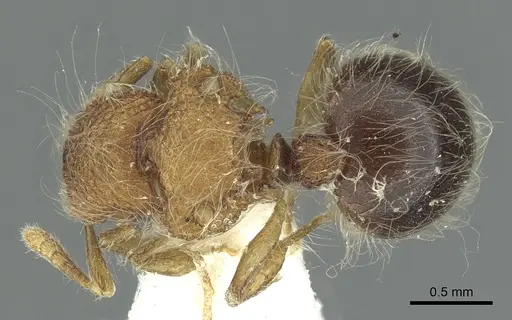
CASENT0911194
Посмотреть на AntWeb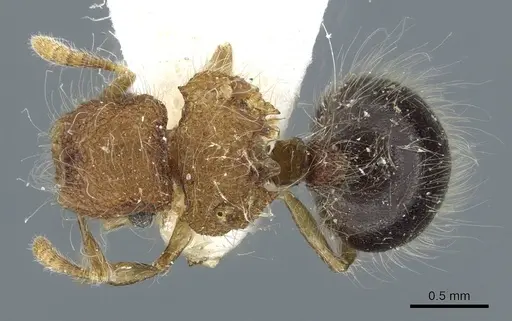
Литература
Загрузка карты распределения...Загрузка товаров...