
Leptanilla palauensis
- Науч. назв.
- Leptanilla palauensis
- Триба
- Leptanillini
- Подсемейство
- Leptanillinae
- Автор
- Smith, 1953
- Распространение
- Встречается в 0 странах
Введение
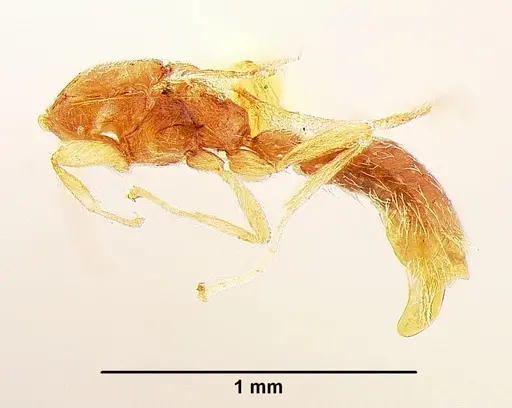
Leptanilla palauensis is one of the rarest ants in the world, known only from a single male specimen collected on Babeldaob Island in Palau . This is the only species in the subfamily Leptanillinae ever recorded from Oceania . The species was originally described in 1953 as Probolomyrmex palauensis, placed in the wrong subfamily entirely, before being transferred to Leptanilla in 1965 . Some taxonomists argue it may deserve its own genus due to unique genitalia structure, and genetic analysis has even suggested it might fall outside Leptanillinae entirely . No workers or queens have ever been documented - we know nothing about colony structure, nesting habits, diet, or development. This makes L. palauensis essentially a ghost species that has never been observed alive.
Quick Summary
- Difficulty: Expert
- Origin & Habitat: Babeldaob Island, Palau (Oceania). The exact habitat details are unknown since only a single male specimen has ever been collected [1].
- Colony Type: Unknown, only the male has ever been described. No workers, queens, or colony structure has been documented [1][2].
- Size & Growth:
- Queen: Unknown, no queens have ever been described [1]
- Worker: Unknown, no workers have ever been described [1]
- Colony: Unknown, colony size is unconfirmed [1]
- Growth: Unknown
- Development: Unknown, no development data exists for this species (Development timeline is unconfirmed since only a male specimen has ever been collected [2])
- Antkeeping:
- Temperature: Unknown, no temperature data exists for this species.
- Humidity: Unknown, no humidity data exists for this species.
- Diapause: Unknown, no seasonal data exists. Palau has a tropical climate with minimal temperature variation.
- Nesting: Unknown, no natural nesting observations exist. Leptanilla species typically nest in soil or rotting wood, but this is unconfirmed for L. palauensis [1].
- Behavior: Unknown, no behavioral observations exist for this species. Leptanilla ants are typically subterranean and rarely seen on the surface [1].
- Common Issues: this species has never been kept in captivity, there is no established care protocol., no workers or queens exist in any collection, the species is only known from a single preserved male., we do not know what they eat, how they nest, or basic colony structure., the single known specimen was collected decades ago and no additional specimens have been found., taxonomic placement remains uncertain, may warrant its own genus.
Why This Species Is So Elusive
Leptanilla palauensis represents one of the most poorly known ant species on Earth. The entire scientific knowledge rests on a single male specimen collected in Palau sometime before 1953 [1]. This is extraordinarily rare in ant taxonomy, most ant species have at least some worker descriptions, but L. palauensis exists only as a preserved male in a museum collection. The original misidentification as Probolomyrmex (a completely different subfamily) further delayed proper understanding [2]. Despite being transferred to Leptanilla in 1965,the species remains poorly understood, and no additional specimens have ever been found despite targeted searches [1]. This makes it impossible to provide any meaningful care guidance, we simply do not know what this ant looks like as a worker, how it lives, or whether it can be kept in captivity.
Taxonomic History and Confusion
The story of Leptanilla palauensis is a case study in taxonomic confusion. Marion R. Smith described it in 1953 as Leptanilla palauensis, placing it in the subfamily Proceratiinae, a completely different group of ants [3]. Taylor later transferred it to Leptanilla in 1965,but Petersen (1968) noted significant differences in genitalia structure that suggested it might deserve its own genus [3]. Modern phylogenetic analysis using genetic data places it outside Leptanillinae as sister to Martialis heureka, though this placement is weakly supported and morphologically unlikely [2]. The species was also once considered part of the genus Phaulomyrma, but that genus has since been synonymized with Leptanilla [4]. The taxonomic uncertainty reflects our fundamental lack of biological knowledge, without workers or queens to examine, we cannot definitively place this species.
What We Know About Related Species
Since we have no direct data on L. palauensis, any care advice must be inferred from related Leptanilla species, but even these are poorly studied. Leptanilla is a genus of tiny, subterranean ants found across the Old World [5]. They are rarely seen on the surface and nest in soil or rotting wood. The subfamily Leptanillinae is known for unusual morphological features, including the mandalus, a structure on the mandible that helps define the tribe [6]. Some Leptanilla species are known to be predators of other small arthropods, but this is unconfirmed for L. palauensis. The genus shows considerable variation in colony structure, with some species being single-queen and others multi-queen, but this is unknown for our species [5]. Any keeper attempting this species would essentially be pioneering entirely new husbandry methods.
The Challenge of Keeping Undescribed Species
Attempting to keep Leptanilla palauensis would be an exercise in pure experimentation, with no established protocol to follow. The fundamental problem is that we do not know what the workers look like, how many queens the colony has, what they eat, or how they develop. We do not even know if the species still exists in the wild, no additional specimens have been recorded since the original male was collected decades ago [1]. For comparison, other Leptanilla species are extremely difficult to maintain in captivity due to their specialized subterranean lifestyle and small size. They typically require high humidity, stable temperatures, and appropriate prey. However, without knowing even the most basic biology of L. palauensis, any attempt at husbandry would be guesswork at best. This species represents a frontier in ant keeping where the keeper would be discovering everything from scratch.
Frequently Asked Questions
Has Leptanilla palauensis ever been kept in captivity?
No, this species has never been kept in captivity. Only a single male specimen has ever been collected, and no workers or queens have ever been described. There is no established care protocol for this species.
What do Leptanilla palauensis workers look like?
We do not know. No workers have ever been described or collected. The species is known only from a single male specimen in a museum collection.
Where does Leptanilla palauensis live?
The species is known only from Babeldaob Island in Palau. The exact habitat is unknown since the collection circumstances of the original specimen are not detailed in scientific literature.
Can I keep Leptanilla palauensis as a pet ant?
It is effectively impossible to keep this species. No workers or queens exist in any ant collection or culture worldwide. The species is only known from a single preserved male specimen collected decades ago.
What does Leptanilla palauensis eat?
Unknown. We have no dietary information for this species. Related Leptanilla species are believed to be predators of small arthropods, but this is unconfirmed for L. palauensis.
How big do Leptanilla palauensis colonies get?
Unknown. Colony size data does not exist for this species since we have never observed a colony.
Do Leptanilla palauensis queens exist?
Unknown. No queens have ever been described or collected. The species is only known from a single male specimen.
Is Leptanilla palauensis endangered?
We do not know if the species still exists in the wild. No additional specimens have been collected since the original description, despite being the only known leptanilline from Oceania.
Why is Leptanilla palauensis so rare?
This species is known from only a single specimen because Leptanilla ants are extremely cryptic, subterranean, and rarely collected. They likely have small, hidden colonies that are difficult to detect. Additionally, Palau has received limited entomological survey work.
What temperature do Leptanilla palauensis ants need?
Unknown. No temperature data exists for this species.
Does Leptanilla palauensis need hibernation?
Unknown. No seasonal data exists. Palau has a tropical climate with minimal temperature variation, so they likely do not require a diapause period, but this is unconfirmed.
Are Leptanilla palauensis ants aggressive or do they sting?
Unknown. We have no behavioral observations for this species. Leptanilla ants are typically too small to sting humans effectively, but behavior is unconfirmed.
Report an Issue
The current care sheet is based fully on literature. See inconsistencies, or something that's incorrect? Please , it will be resolved after review from an admin. Contributing to the blogs tab also helps providing information, to make us be able to further improve the caresheets. Thank you for your support!
References

Эта инструкция по уходу лицензирована по CC BY-SA 4.0 .
Блоги сообщества
USNMENT00533045
Посмотреть на AntWeb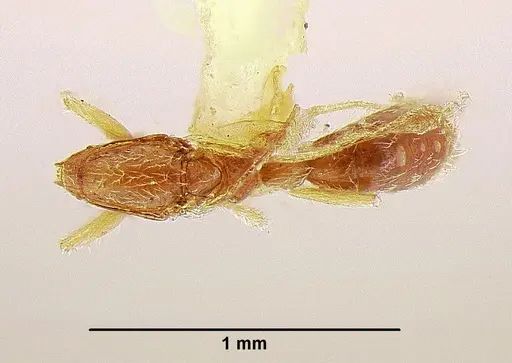
Литература
Загрузка карты распределения...Загрузка товаров...