
Leptanilla javana
- Науч. назв.
- Leptanilla javana
- Триба
- Leptanillini
- Подсемейство
- Leptanillinae
- Автор
- Wheeler & Wheeler, 1930
- Распространение
- Встречается в 0 странах
Введение
Leptanilla javana is an extremely rare subterranean ant species originally described as Phaulomyrma javana in 1930. It was formally synonymized with the genus Leptanilla in 2020 based on phylogenetic analysis of male genitalia characteristics . This species is known only from two specimens collected in 1907 in Jawa Barat (Bogor), Indonesia, making it one of the least-studied ants in the world . The genus Leptanilla belongs to the subfamily Leptanillinae, a group of tiny, pale ants that live almost entirely underground and are rarely encountered by collectors. These ants are predators, hunting small soil arthropods in their subterranean tunnels. Because only two museum specimens exist and no field observations have been documented, nearly all aspects of this species' biology remain unknown.
Quick Summary
- Difficulty: Unknown, Insufficient Data
- Origin & Habitat: Known only from Jawa Barat (Bogor), Indonesia, collected in March 1907 [1][2]. As a Leptanilla species, it likely inhabits tropical forest floor environments in rotting wood or soil chambers.
- Colony Type: Unconfirmed, no colony data exists
- Size & Growth:
- Queen: size data unavailable
- Worker: size data unavailable
- Colony: Unknown, no colony observations documented
- Growth: Unknown
- Development: Unknown, no development data exists (No data available for this species.)
- Antkeeping:
- Temperature: Inferred: Likely 24-28°C based on tropical Indonesian origin. Provide a warm, stable temperature in the mid-to-high 20s Celsius.
- Humidity: Inferred: Likely requires high humidity typical of tropical soil-dwelling ants. Keep substrate consistently moist but not waterlogged.
- Diapause: Unknown, no seasonal data exists for this species. Tropical ants often do not require formal hibernation but may have reduced activity periods.
- Nesting: Inferred: Likely nests in soil or rotting wood in humid, shaded microhabitats. A naturalistic setup with moist substrate or a Y-tong/plaster nest with high humidity would be appropriate.
- Behavior: Behavior is unconfirmed for this species. The genus Leptanilla is characterized by subterranean, predatory ants that rarely venture above ground. Workers are extremely small and pale, adapted for life in soil tunnels. Escape prevention is critical due to their minute size, they can squeeze through the tiniest gaps. They are likely timid and non-aggressive, focusing on hunting small soil arthropods rather than defending territory.
- Common Issues: no documented captive husbandry exists for this species, all care recommendations are genus-level estimates, extreme rarity means wild colonies have essentially never been observed or collected, escape prevention is critical due to their minute size, standard barriers may be insufficient, no information exists on acceptable foods, related species are predatory on small arthropods, no data on founding behavior, unknown if claustral or semi-claustral
Species Overview and Rarity
Leptanilla javana represents one of the most poorly documented ant species in the world. Known only from two slide-mounted specimens collected in 1907,virtually no biological information exists for this species [1][2]. The original description by Wheeler and Wheeler in 1930 established the genus Phaulomyrma based on wing veins and unusually large genitalia, but modern phylogenetic analysis using Bayesian inference confirmed it belongs within Leptanilla s. str. with high statistical support (BPP = 0.9531) [2]. The type locality is Bogor (formerly Buitenzorg) in Jawa Barat, Indonesia, a tropical lowland region. No molecular data has ever been obtained, and no additional specimens have been collected since 1907. This species serves as a reminder of how much ant biodiversity remains completely undocumented, particularly in tropical regions.
Taxonomy and Classification
This species has undergone taxonomic revision twice since its original description. Wheeler and Wheeler originally created the genus Phaulomyrma in 1930 to accommodate what they considered unique features, wing veins and unusually large genitalia [1]. The genus remained controversial, with Petersen (1968) noting Phaulomyrma and Leptanilla were nearly identical but hesitating to synonymize due to apparent genitalic uniqueness. Nearly a century later, Griebenow (2020) used Bayesian total-evidence phylogenetic inference to demonstrate that Leptanilla javana falls within Leptanilla s. str., specifically within the Eurasian-Australian clade (BPP = 0.9971) [1]. The species was formally transferred to Leptanilla, becoming Leptanilla javana. The genus Leptanilla belongs to the subfamily Leptanillinae, tribe Leptanillini, a group of minute, subterranean ants known for their reduced eyes and pale coloration.
Known Physical Characteristics
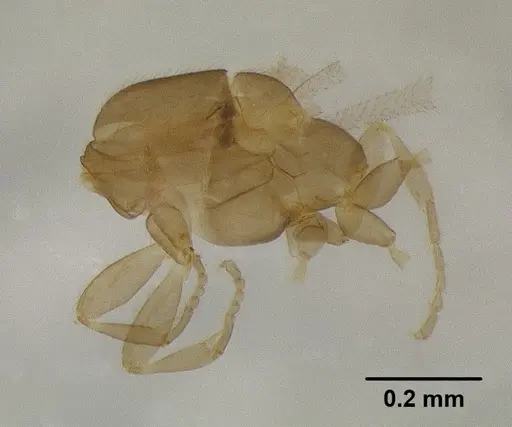
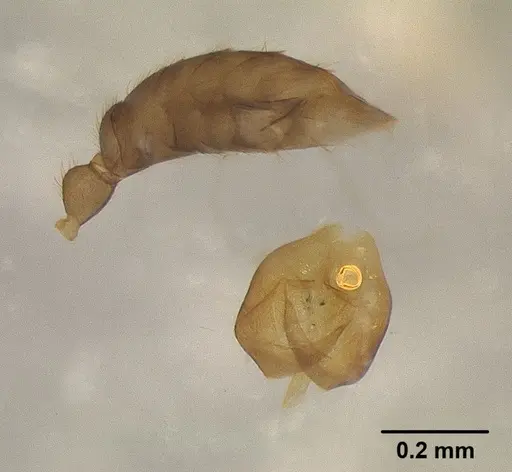
The only known specimens are two slide-mounted males collected in 1907,deposited at the Museum of Comparative Zoology in Cambridge, Massachusetts (MCZ 31142 and paralectotype) [1][2]. The male key characteristics include a mesopleural sulcus traversing most of the mesopleuron and abdominal sternite II without a ventral projection [3]. The sharply recurved styli indicate articulated gonopodites, consistent with the syndrome seen in dried male leptanillines with articulated gonopodites [1]. The volsellae condition resembles an undescribed Sicilian male morphospecies attributed to Leptanilla [1]. No worker or queen specimens have ever been described, and no photographs or images exist of living specimens. This extreme lack of morphological data further underscores how little is known about this species.
Inferred Care Requirements
Since no captive husbandry data exists for Leptanilla javana, all recommendations must be inferred from what is known about the genus Leptanilla and related leptanilline ants. These are tiny, subterranean ants that live in humid tropical environments. They are predators, hunting small soil arthropods including other ants, springtails, and soil mites. In captivity, you should likely offer small live prey such as springtails, micro-arthropods, and fruit fly larvae. Temperature should be kept in the 24-28°C range, reflecting their tropical Indonesian origin. Humidity should be high, with consistently moist substrate. Nesting likely consists of small chambers in rotting wood or soil, so a naturalistic setup or Y-tong/plaster nest with high humidity would be appropriate. However, these are entirely estimates, no confirmed protocols exist for keeping this species.
Challenges and Ethical Considerations
Leptanilla javana presents unique challenges that make it unsuitable for most antkeepers. First, no documented captive colonies exist, this species has never been successfully kept or bred in captivity. Second, no wild colonies have been observed or collected in over 115 years, meaning there is no source for founding colonies. Third, even if specimens were found, their minute size and subterranean habits would make collection extraordinarily difficult. For these reasons, Leptanilla javana should be considered a species of scientific interest rather than a candidate for captive husbandry. Antkeepers interested in rare or undocumented species would be better served by working with better-studied Leptanilla species where some biological information exists, or focusing on species with established captive protocols.
Frequently Asked Questions
Can I keep Leptanilla javana ants in captivity?
No. Leptanilla javana has never been documented in captivity, and no wild colonies have been observed since 1907. There is no source for founding colonies, and no care protocols exist. This species is not available in the antkeeping hobby and should be considered a scientific curiosity rather than a keepable species.
How big do Leptanilla javana colonies get?
Unknown. No colony observations have ever been documented for this species. Based on related Leptanilla species, colonies are likely small (under 100 workers), but this is purely speculative.
What do Leptanilla javana ants eat?
Unconfirmed. No feeding observations exist. The genus Leptanilla consists of predatory ants that hunt small soil arthropods. In captivity, related species typically accept small live prey such as springtails, micro-arthropods, and fruit fly larvae. Sugar sources are unlikely to be accepted.
Do Leptanilla javana ants sting?
Unknown. No documented sting observations exist. Most Leptanilla species are too small to penetrate human skin, but this specific species has not been studied.
What temperature do Leptanilla javana ants need?
Inferred. Likely 24-28°C based on their tropical Indonesian origin and typical Leptanilla preferences. No temperature data exists for this specific species.
Where does Leptanilla javana live?
Only known from Jawa Barat (Bogor), Indonesia, collected in March 1907. The exact habitat is unconfirmed, but Leptanilla species typically inhabit tropical forest floor environments in soil or rotting wood.
Is Leptanilla javana a good species for beginners?
No. This species is not available in the antkeeping hobby and has no documented captive care protocols. It is known only from two museum specimens collected over 115 years ago.
How do Leptanilla javana queens found colonies?
Unknown. Founding behavior has never been documented for this species. Related Leptanilla species are typically claustral (queen seals herself in and lives off stored fat), but this is unconfirmed for L. javana.
Does Leptanilla javana need hibernation?
Unknown. No seasonal data exists. As a tropical species from Indonesia, it likely does not require formal hibernation but may have periods of reduced activity.
Why is Leptanilla javana so rare?
This species is known only from two specimens collected in 1907, it has simply never been found again. This could reflect true rarity, inadequate sampling of its subterranean microhabitat, or both. The genus Leptanilla consists of cryptic, subterranean ants that are rarely encountered even by professional entomologists.
Report an Issue
The current care sheet is based fully on literature. See inconsistencies, or something that's incorrect? Please , it will be resolved after review from an admin. Contributing to the blogs tab also helps providing information, to make us be able to further improve the caresheets. Thank you for your support!
References

Эта инструкция по уходу лицензирована по CC BY-SA 4.0 .
Блоги сообщества
MCZTYPE31142
Посмотреть на AntWeb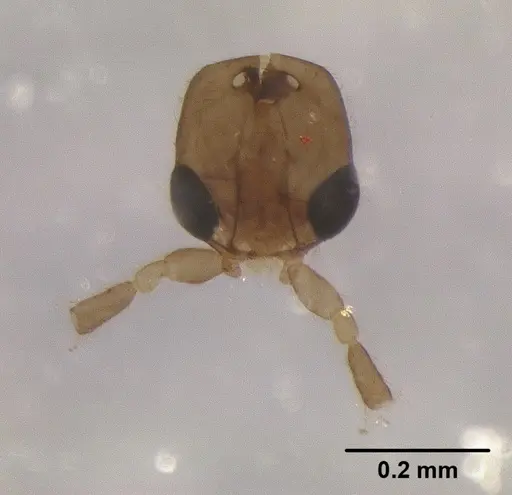
Литература
Загрузка карты распределения...Загрузка товаров...