
Dilobocondyla oswini
- Науч. назв.
- Dilobocondyla oswini
- Триба
- Crematogastrini
- Подсемейство
- Myrmicinae
- Автор
- Zettel & Bruckner, 2013
- Распространение
- Встречается в 0 странах
Введение
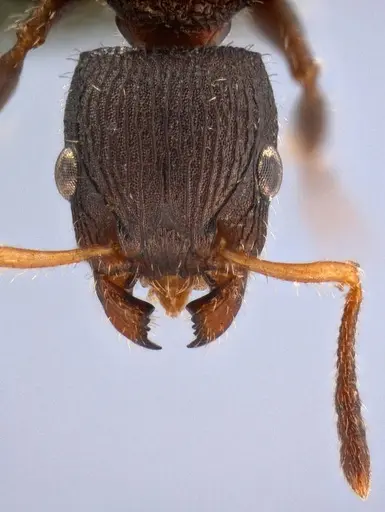
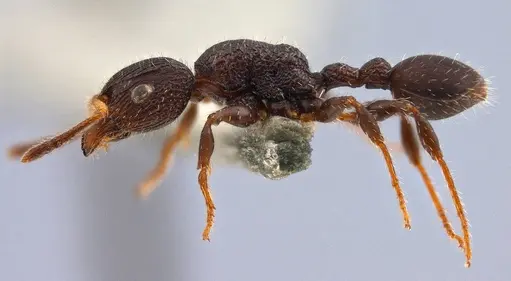
Dilobocondyla oswini is a small Myrmicinae ant species described in 2013 from Mindanao Island in the Philippines. Workers measure 4.3-4.4mm and are distinctively colored with a blackish-brown body and bright yellow antennae (specifically the scape). The head has slightly angular posterior corners and a nearly straight rear margin, with the clypeus showing 2-5 longitudinal ridges. The petiole is relatively stout compared to other Dilobocondyla species . This species remains extremely poorly studied - literally nothing is known about its biology in the wild. It was discovered only in the Kaamulan region of Bukidnon province at approximately 650 meters elevation on Mindanao . For antkeepers, this means you will be pioneering captive care for a species that has never been kept in captivity before. Expect a learning curve and be prepared to experiment with conditions.
Quick Summary
- Difficulty: Expert
- Origin & Habitat: Endemic to Mindanao Island, Philippines. The only known collection locality is in the Kaamulan area of Malaybalay, Bukidnon at approximately 650 meters elevation in the Philippine highlands [2]. The habitat is likely montane tropical forest given the elevation and location.
- Colony Type: Unknown. No colony structure data exists for this species.
- Size & Growth:
- Antkeeping:
- Temperature: Unknown for this species. Based on Mindanao being tropical and the collection elevation of 650m, aim for warm conditions around 24-28°C. Monitor colony activity and adjust accordingly.
- Humidity: Unknown. Based on the Philippine highlands location, moderate to high humidity is likely appropriate. Keep substrate consistently moist but not waterlogged.
- Diapause: Unknown, no seasonal data exists. Given the tropical location, diapause is unlikely but unconfirmed. Do not assume hibernation is needed.
- Nesting: Unknown. No natural nesting observations exist. Based on typical genus behavior and the humid highland habitat, they likely nest in soil or rotting wood. A moist Y-tong or plaster nest with good humidity retention would be a reasonable starting point.
- Behavior: Completely unstudied. No behavioral observations exist in scientific literature. Based on genus-level patterns, they are likely relatively docile and not aggressive. Workers are medium-small so escape prevention should be moderate, they cannot squeeze through standard test tube barriers but fine mesh is still recommended.
- Common Issues: no captive care information exists, you are essentially pioneering this species in captivity, growth and development timeline completely unknown, making colony management difficult, temperature and humidity requirements are unconfirmed, requiring experimentation, wild-caught colonies may have parasites or diseases with no documented treatment, no established feeding protocols, start with standard ant foods and observe acceptance
Species Discovery and Rarity
Dilobocondyla oswini was only described in 2013 by Zettel and Bruckner, making it one of the more recently discovered Philippine ant species. The type specimens were collected in March 2000 from a single location in the Kaamulan region of Bukidnon on Mindanao Island. This species has never been found anywhere else in the world, it appears to be endemic to this specific highland area of the Philippines [1][2]. For antkeepers, this means D. oswini is exceptionally rare in the hobby and may not be available at all. If you do obtain a colony, you are potentially the first person to ever keep this species in captivity.
Appearance and Identification
Workers of D. oswini are distinctive within the genus. They measure 4.3-4.4mm and have a uniformly dark brown body, but the antennae stand out with a bright yellow scape (the basal segment of the antenna). The head has slightly angular rear corners and an almost straight posterior margin. The clypeus (the face plate above the jaws) has 2-5 longitudinal ridges. The petiole (the narrow waist segment) is relatively stout, this is actually a key identification feature as the petiole index measures 177-180,which is higher than many related species [1][2]. Queens are slightly larger at 4.75mm and have three small ocelli (simple eyes) on the head [1].
Housing and Nesting
Since nothing is known about this species natural nesting preferences, you will need to experiment. The collection location at 650m elevation in Mindanao suggests a humid montane tropical environment. A Y-tong or plaster nest with good humidity retention would be a reasonable starting point. Keep the nest substrate consistently moist but avoid waterlogging. Provide a water tube for drinking access. Since the natural nesting site is unknown, consider offering multiple options, a moist soil area, a wooden section, and a more enclosed chamber, and observe where the ants prefer to nest.
Feeding and Diet
No feeding observations exist for this species. As a Myrmicinae ant, they likely have a typical omnivorous diet, proteins (insects), sugars (honeydew, nectar), and possibly seeds. Start with standard ant foods: sugar water or honey, small insects like fruit flies or pinhead crickets, and observe what they accept. Given their small size, prey items should be appropriately small. Offer protein twice weekly and keep sugar water available continuously. Remove uneaten food after 24-48 hours to prevent mold.
Temperature and Seasonal Care
No temperature preference data exists for D. oswini. Mindanao has a tropical climate, but the 650m elevation suggests it may be slightly cooler than lowland areas. Start around 24-26°C and observe colony behavior, if workers are clustered together and inactive, try slightly warmer, if they seem stressed and avoid the nest area, try slightly cooler. Do not assume this species needs hibernation, tropical ants from the Philippines typically do not enter diapause. Maintain stable temperatures without major fluctuations. A small heating cable on one side of the nest can create a gradient if your room temperature is below 24°C.
Challenges of Keeping Rarely Studied Species
D. oswini represents both an exciting opportunity and a significant challenge for antkeepers. Because absolutely no biological data exists for this species, you cannot rely on established care protocols. Every aspect, from founding behavior to colony size to dietary needs, will require observation and experimentation. Start with conservative estimates based on related species and adjust based on your colony response. Document your observations carefully, if you succeed in breeding this species, your records could become the first captive care information for D. oswini. This makes keeping rare species like this both challenging and potentially scientifically valuable.
Frequently Asked Questions
How long does it take for Dilobocondyla oswini to go from egg to worker?
This is completely unknown, no development data exists for this species.
What do Dilobocondyla oswini ants eat?
No feeding observations exist for this species. As a Myrmicinae, they likely accept standard ant foods: sugar water or honey, and small protein sources like fruit flies, pinhead crickets, or mealworms. Start with these basics and observe what they accept.
Do Dilobocondyla oswini ants need hibernation?
Unknown, no seasonal data exists. However, given this species comes from tropical Mindanao Island in the Philippines, hibernation is unlikely to be required. Do not assume diapause is needed without evidence.
How big do Dilobocondyla oswini colonies get?
Unknown, no colony size data exists for this species. Related Dilobocondyla species typically form small to moderate colonies, but D. oswini could be different.
Are Dilobocondyla oswini good for beginners?
No. This species is not recommended for beginners. No captive care information exists, you would be pioneering care for a species with completely unknown biology, temperature needs, and dietary requirements. This is an expert-level challenge.
Do Dilobocondyla oswini ants sting?
Unknown, no sting observations exist. Most Myrmicinae have stingers but are too small to penetrate human skin effectively. Based on their small size, any sting would likely be negligible or unnoticeable.
What temperature should I keep Dilobocondyla oswini at?
No specific temperature data exists. Based on the tropical highland location of Mindanao (650m elevation), aim for warm conditions around 24-28°C. Start at 24-26°C and adjust based on colony activity.
Can I keep multiple Dilobocondyla oswini queens together?
Unknown, no colony structure data exists for this species. Combining unrelated queens is not recommended since it has not been studied and could result in aggression.
What humidity do Dilobocondyla oswini ants need?
Unknown. Based on the humid highland habitat in the Philippines, moderate to high humidity is likely appropriate. Keep the nest substrate consistently moist but not waterlogged.
Is Dilobocondyla oswini aggressive?
No behavioral observations exist for this species. Based on typical genus behavior, they are likely relatively docile and not particularly aggressive toward keepers.
When will Dilobocondyla oswini produce alates (reproductives)?
Unknown, no reproductive data exists for this species. Nuptial flight timing, alate production, and reproductive behavior have not been documented.
Where can I get Dilobocondyla oswini ants?
This species is exceptionally rare. It is only known from a single location on Mindanao Island in the Philippines and has never been found elsewhere. It is unlikely to be available in the antkeeping hobby. If available at all, it would be from specialty breeders dealing with rare Philippine species.
Report an Issue
The current care sheet is based fully on literature. See inconsistencies, or something that's incorrect? Please , it will be resolved after review from an admin. Contributing to the blogs tab also helps providing information, to make us be able to further improve the caresheets. Thank you for your support!
References

Эта инструкция по уходу лицензирована по CC BY-SA 4.0 .
Блоги сообщества
ANTWEB1008116
Посмотреть на AntWeb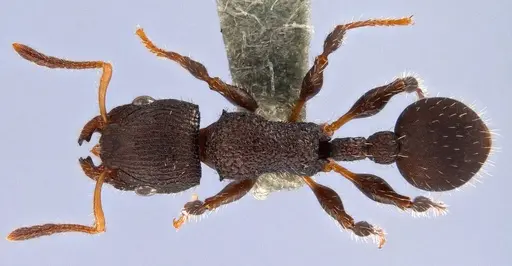
Литература
Загрузка карты распределения...Загрузка товаров...