
Diacamma caeruleum
- Науч. назв.
- Diacamma caeruleum
- Триба
- Ponerini
- Подсемейство
- Ponerinae
- Автор
- Laciny <i>et al.</i>, 2015
- Распространение
- Встречается в 0 странах
Введение
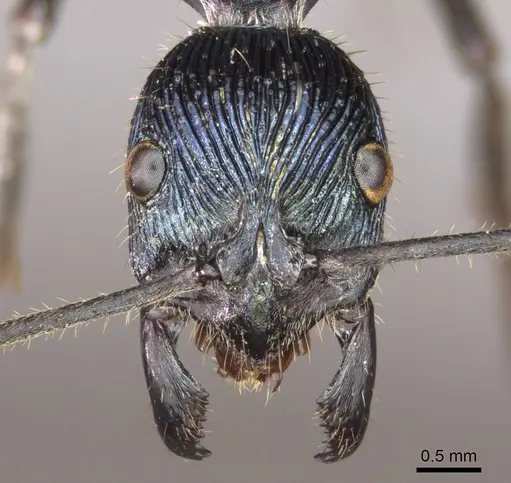
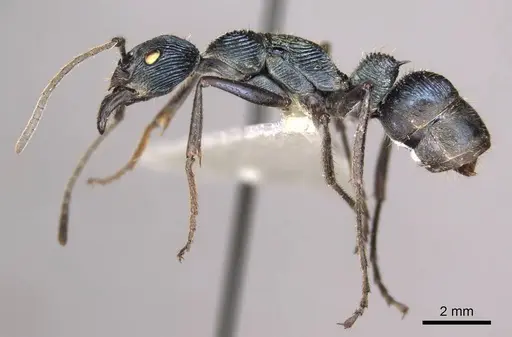
Diacamma caeruleum is a large ant species measuring 12-14mm in total length. Workers have a distinctive metallic blue shimmer covering their body, with blackish mandibles and legs. The trunk shows strong striation from the head to the first abdominal segment. This species belongs to the Diacamma rugosum group and is only known from Mindoro Oriental in the Philippines, specifically from a hilly area near Balete at 100-700m elevation . The blue iridescence immediately sets it apart from similar species like D. viridipurpureum and D. generali [AntWiki]. This species uses a gamergate system where reproductive workers (not winged queens) handle egg-laying duties. This is unusual among ants and means colonies don't rely on a single queen for reproduction [AntWiki].
Quick Summary
- Difficulty: Medium
- Origin & Habitat: Endemic to Mindoro Oriental in the Philippines, specifically found near Balete (28km south of Calapan) at elevations of 100-700m in hilly areas [1]. This is a tropical island environment with warm temperatures year-round.
- Colony Type: Queenless, no distinct queen caste, reproduction by gamergates (reproductive workers).
- Queen Status: Queenless Colony
- Special: Gamergates
- Size & Growth:
- Queen: Queenless species, reproduction by gamergate (reproductive worker) instead of a distinct queen caste.
- Worker: 12.3-14.0mm total length [1].
- Colony: Unknown for this specific species. Related Diacamma species typically form colonies of several hundred workers [2].
- Growth: Unknown, no development data exists for this species.
- Development: Unconfirmed, no direct observations of development exist for this species. (No published development data exists for this species.)
- Antkeeping:
- Temperature: Keep at tropical temperatures. Being from Mindoro Island in the Philippines, they likely need warm conditions year-round.
- Humidity: Moderate to high humidity. Provide a moist nest substrate that does not dry out completely.
- Diapause: No, being a tropical species, they do not require hibernation.
- Nesting: Natural nesting habits are undocumented. Related Diacamma species often nest in soil or under stones in forested areas.
- Behavior: Diacamma caeruleum is a predatory Ponerine ant with a potent sting. Workers are active foragers that hunt small invertebrates. They have relatively small eyes but are visually oriented and can be aggressive when defending the nest. Their large size and powerful sting mean they can deliver a painful sting, handle with caution. They are escape artists despite their size, ensure enclosures have tight-fitting lids [1][2].
- Common Issues: no development data means you cannot track if growth is normal or slow, this makes troubleshooting difficult, tropical species may struggle in air-conditioned rooms or cool climates without supplemental heating, the potent sting means this species is not suitable for handling by children or those with insect venom allergies, escape prevention is important, these large ants can still squeeze through gaps in lid fittings, gamergate system means colony reproduction depends on worker replacement, if all gamergates die, the colony may fail
Appearance and Identification
Diacamma caeruleum is a large ant species, with workers reaching 12-14mm in total length. The most striking feature is the strong blue metallic shimmer covering their body, this iridescence gives them their name 'caeruleum' (Latin for blue). Their mandibles and legs are blackish, creating a beautiful contrast with the blue body. The trunk shows coarse striation running from the cheeks to the first abdominal segment. They have relatively small eyes, and the head is short with strongly convex sides. Long standing setae are abundant on the body, while fine appressed hairs are reduced [1].
Social Structure and Reproduction
Unlike most ant species, Diacamma caeruleum uses a gamergate system for reproduction. Instead of a winged queen that mates and establishes a colony alone, reproduction is handled by specialized workers called gamergates. These are workers that have become reproductive and can lay fertilized eggs. When the dominant gamergate dies or is removed, another worker will develop reproductive capabilities to take over. This system is found throughout the Diacamma genus and is one of the most interesting aspects of keeping these ants [2].
For antkeepers, this means you do not need to catch a queen, instead, you can start with a group of workers, and one will eventually become the gamergate. It also means colony reproduction in captivity is possible without capturing a wild queen. However, if your gamergate dies and no replacement develops, the colony will eventually die out [2].
Housing and Nest Setup
Due to their large size, Diacamma caeruleum needs appropriately sized housing. A Y-tong nest or a well-designed formicarium with large chambers works best. They need consistent moisture in the nest, Ponerine ants generally prefer humid conditions. A test tube setup with a water reservoir works well for founding groups or small colonies.
The outworld should be spacious enough for foraging. Because they are predatory, they will hunt down prey items rather than just collecting sugar. Provide a foraging area where you can offer prey and watch the hunting behavior. Escape prevention is important, use tight-fitting lids.
Feeding and Diet
As a Ponerine ant, Diacamma caeruleum is primarily predatory. They hunt and kill small invertebrates rather than collecting honeydew or scavenging. Offer small live prey such as fruit flies, small crickets, mealworms, or other appropriately sized insects. Prey should be small enough for workers to subdue.
Sugar sources may be accepted occasionally, but protein-rich prey should form the bulk of their diet. Feed prey items several times per week, adjusting based on colony size and consumption. Remove uneaten prey after 24-48 hours to prevent mold. Fresh water should always be available.
Temperature and Seasonal Care
Being from tropical Mindoro Island in the Philippines, Diacamma caeruleum requires warm temperatures year-round. Keep the nest area in the warm range. A small heating cable or heat mat on one side of the nest can help maintain temperatures, especially in cooler climates or air-conditioned rooms.
No diapause or hibernation is needed, this is a tropical species that remains active year-round with consistent warmth. Avoid temperature drops below room temperature, as this could stress or kill the colony.
Handling and Safety
Diacamma caeruleum has a potent sting and should be handled with caution. Unlike many small ants whose stings cannot penetrate human skin, this large Ponerine can deliver a painful sting. The sting is primarily for hunting prey and defending the nest, they are not aggressive toward humans but will sting if threatened or handled roughly.
For antkeepers, this means: avoid free-handling, use gentle techniques when moving colonies, and consider using tools rather than your hands when working with the nest. This species is not suitable for antkeepers who want to handle their ants frequently or for households with young children who might try to touch them [2].
Frequently Asked Questions
How long does it take for Diacamma caeruleum to produce first workers?
The egg-to-worker timeline is unconfirmed for this species, as no published development data exists.
Do Diacamma caeruleum ants need a queen?
No, they use a gamergate system where reproductive workers handle egg-laying instead of a true queen. You can start a colony with a group of workers, and one will eventually become the reproductive. If your gamergate dies, another worker may take over, but there is no guarantee.
Can I keep multiple Diacamma caeruleum colonies together?
Not recommended. While they do not have true queens, colonies are territorial and will fight. Each colony should be housed separately with its own outworld and nest space.
What do Diacamma caeruleum eat?
They are predatory ants that hunt small invertebrates. Feed appropriately sized live prey such as fruit flies, small crickets, mealworms, or other insects several times per week. Sugar water may be occasionally accepted but should not replace protein prey.
Does Diacamma caeruleum need hibernation?
No, being a tropical species from the Philippines, they do not require hibernation or winter dormancy. Keep them warm year-round.
Are Diacamma caeruleum ants dangerous?
Yes, they have a potent sting. These large Ponerine ants can deliver a painful sting if threatened or handled roughly. They are not suitable for antkeepers who want to handle their ants frequently or for households with young children.
How big do Diacamma caeruleum colonies get?
The maximum colony size is unknown for this specific species, but related Diacamma species typically reach several hundred workers. Their gamergate system means colony growth may be slower than species with true queens.
When should I move Diacamma caeruleum to a formicarium?
Start them in a test tube setup or small container. Once the colony reaches a decent size and you see consistent activity, you can move them to a larger nest or formicarium. They need space to forage and hunt prey.
Why is my Diacamma caeruleum colony declining?
Common causes include: low temperatures, insufficient humidity, lack of adequate prey, or loss of the gamergate. Check all parameters and ensure prey is being offered regularly. If the gamergate has died with no replacement, the colony will eventually fail.
Can I breed Diacamma caeruleum in captivity?
Yes, because they use a gamergate system, colony reproduction is possible without capturing wild queens. If your colony is healthy and has a functioning gamergate, new workers will be produced. However, the gamergate system makes captive breeding less straightforward than species with true queens.
Report an Issue
The current care sheet is based fully on literature. See inconsistencies, or something that's incorrect? Please , it will be resolved after review from an admin. Contributing to the blogs tab also helps providing information, to make us be able to further improve the caresheets. Thank you for your support!
References

Эта инструкция по уходу лицензирована по CC BY-SA 4.0 .
Блоги сообщества
CASENT0915965
Посмотреть на AntWeb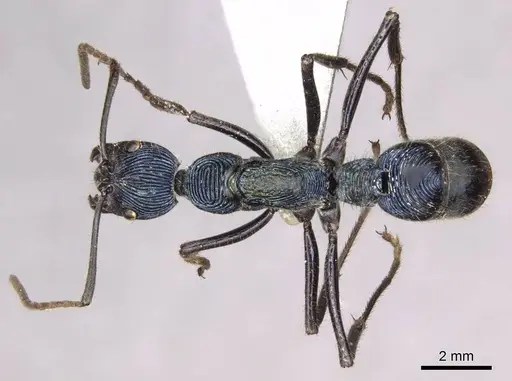
Литература
Загрузка карты распределения...Загрузка товаров...