
Crematogaster travancorensis
- Науч. назв.
- Crematogaster travancorensis
- Триба
- Crematogastrini
- Подсемейство
- Myrmicinae
- Автор
- Forel, 1902
- Распространение
- Встречается в 0 странах
Введение
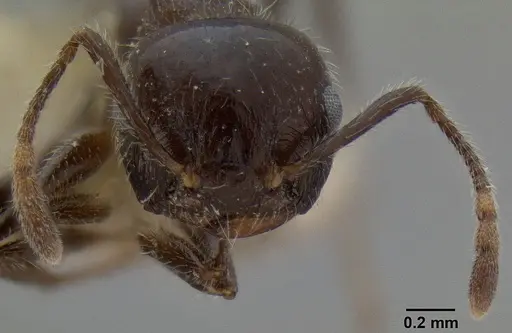
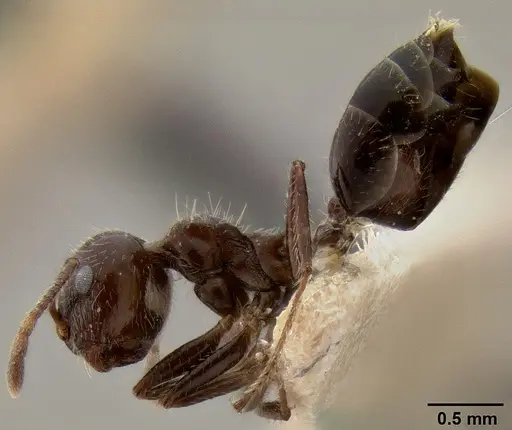
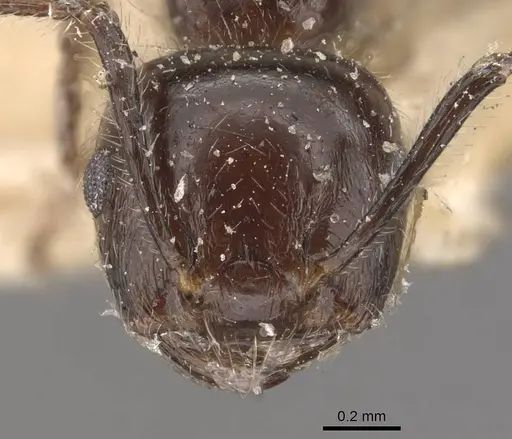
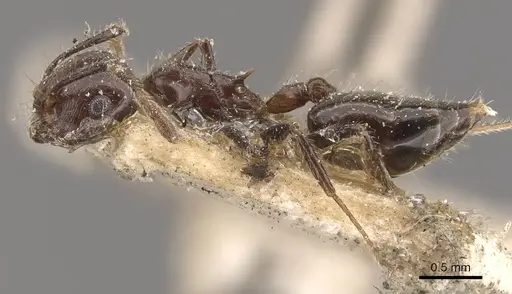
Crematogaster travancorensis is a small acrobat ant native to India and southern China. Workers measure 3-4.1mm and have a distinctive dark brown to black coloration with a broader-than-long head and notably long propodeal spines . These ants get their common name from their defensive behavior - when threatened, they raise their abdomen over their head like a cartwheel. Workers have 11-segmented antennae with a 3-segmented club and are covered in semi-erect to erect pubescence . This species has been recorded across multiple Indian states including Kerala, Manipur, Meghalaya, and West Bengal, with recent distribution records expanding to include Madhya Pradesh . This species shows ecological flexibility - workers have been documented tending aphids (Cinara sp.) on pine trees, collecting honeydew similar to other Crematogaster species . The genus is known for nesting in rotting wood or under bark in forested habitats.
Quick Summary
- Difficulty: Medium
- Origin & Habitat: Native to the Indomalayan region, specifically India (Kerala, Manipur, Meghalaya, West Bengal, and recently Madhya Pradesh) and southern China. Found in forested habitats where they nest in rotting wood, under bark, or in hollow stems [3][2].
- Colony Type: Colony structure has not been specifically documented for this species. Based on typical Crematogaster patterns, colonies are likely single-queen.
- Size & Growth:
- Queen: Size data unavailable, inferred from Crematogaster genus (~6-9mm)
- Worker: 3-4.1mm [1][2]
- Colony: Colony size not documented in available research
- Growth: Moderate, based on typical Crematogaster development
- Development: Development time is unconfirmed for this species (Development time is inferred from related Crematogaster species. Warmer temperatures within safe range accelerate development.)
- Antkeeping:
- Temperature: Keep nest area around 24-28°C. This species comes from tropical/subtropical regions of India where temperatures remain warm year-round. A heating cable on one side of the nest can create a gentle gradient if room temperature falls below 24°C.
- Humidity: Moderate to high humidity preferred, aim for 60-80%. These forest-dwelling ants prefer damp but not waterlogged conditions. Keep the nest substrate consistently moist but allow some drier areas for workers to regulate their own humidity.
- Diapause: No, this species originates from tropical India where temperatures remain warm year-round. They do not require a true hibernation period, though activity may slow slightly during cooler months.
- Nesting: In nature they nest in rotting wood, under bark, and in hollow stems, typical behavior for forest-dwelling acrobat ants. In captivity, a Y-tong (AAC) nest, plaster nest, or naturalistic setup with wood pieces works well. They prefer tight, enclosed chambers that mimic their natural nesting sites in decaying timber.
- Behavior: Workers are moderately active and can be defensive when their nest is disturbed. They exhibit the characteristic acrobat behavior, raising the abdomen over the head when threatened, which gives them their common name. This species uses a smear defense mechanism where venom is wiped onto enemies rather than piercing flesh. Workers are foragers and have been observed tending aphids for honeydew in the wild [2]. They are not particularly aggressive toward keepers but will defend their colony vigorously. Escape risk is moderate due to their small size, use standard barrier methods.
- Common Issues: colonies may decline if kept too dry, monitor substrate moisture regularly, slow founding phase means new keepers may lose patience and disturb founding queens too often, small colony size in early stages makes them vulnerable to stress, minimize disturbances, nest temperature fluctuations can stress colonies, use a thermometer to monitor, aphid-tending behavior means they may ignore sugar water initially, protein-rich foods are more important
Nest Preferences and Setup
Crematogaster travancorensis naturally nests in rotting wood, under bark, and in hollow stems, typical behavior for forest-dwelling acrobat ants. In captivity, you can use a Y-tong (AAC) nest, plaster nest, or a naturalistic setup with pieces of decaying wood. They prefer tight, enclosed chambers that provide security, avoid large open spaces. The nest should have passages sized appropriately for their 3-4.1mm workers. Place the nest in a quiet area away from direct sunlight and vibrations. An outworld (foraging area) connected to the nest allows workers to travel between the nest and food sources. Because they are moderate climbers, ensure the outworld has smooth barrier edges to prevent escapes. [2]
Feeding and Diet
In the wild, Crematogaster travancorensis workers have been documented tending aphids (Cinara sp.) on pine trees, collecting the honeydew these aphids produce [2]. This indicates they are opportunistic foragers that exploit sugar sources from homopteran insects. In captivity, offer a varied diet: protein sources like small insects (fruit flies, pinhead crickets, mealworms), and sugar sources like diluted honey water or sugar water. Since they naturally tend aphids, they may accept sugar water readily, but protein is important for brood development. Feed small amounts initially and remove uneaten food after 24-48 hours to prevent mold. During the founding stage, the queen does not forage, she relies entirely on stored fat reserves to raise her first workers (claustral founding). Once workers emerge, they will begin foraging.
Temperature and Seasonal Care
This species originates from tropical and subtropical regions of India, so they prefer warm conditions year-round. Keep the nest area at 24-28°C for optimal brood development. Temperatures below 20°C may slow activity and development significantly. You can use a heating cable placed on top of the nest (never underneath where it could dry out the substrate) to maintain warmth if your room temperature is cooler. Unlike temperate species, they do not require a winter diapause period. However, avoid overheating, temperatures above 32°C can be harmful. A simple thermometer in the ant room helps monitor conditions. If you notice workers clustering near the heating element, the temperature may be too low, if they avoid the nest area entirely, it may be too warm.
Behavior and Defense
Crematogaster ants are named for their distinctive defensive behavior, when threatened, workers can raise their abdomen over their head like a cartwheel, allowing them to aim their defensive secretions at predators. This species has notably long propodeal spines which may play a role in defense displays [2]. Workers are moderately aggressive in defense of their nest but not particularly prone to biting. They are active foragers and will explore their outworld in search of food. Workers communicate through chemical trails, you may observe them forming trails to food sources once they discover them. This species is not known for being particularly escape-prone compared to much smaller ants, but standard barrier methods (Fluon on smooth surfaces, tight-fitting lids) should still be used.
Colony Growth and Development
A newly mated queen will seal herself in a small chamber (claustral founding) and lay eggs without leaving to forage. She relies on her stored fat reserves to survive and feed the first brood. This founding phase can take several months depending on temperature, warmer conditions within the safe range speed development. The first workers (nanitics) are typically smaller than mature workers. Once workers emerge, the colony enters a growth phase as the queen continues laying eggs and workers take over foraging and nest maintenance. Growth rate is moderate, colonies typically reach several hundred workers over the first year under good conditions. The key to successful founding is patience: avoid disturbing the queen during this critical period, as vibrations and light can cause her to abandon or consume her brood.
Frequently Asked Questions
How long does it take for Crematogaster travancorensis to produce first workers?
Exact development time is unconfirmed for this species. Based on related Crematogaster species, expect first workers (nanitics) to emerge in several months after the queen lays eggs, assuming temperatures around 24-28°C. The timeline depends on temperature, warmer conditions within the safe range accelerate development.
What do Crematogaster travancorensis ants eat?
They accept both protein and sugar sources. Offer small insects like fruit flies, pinhead crickets, or mealworms as protein. For sugars, diluted honey water or sugar water works well. In the wild, they tend aphids for honeydew, so sugar sources are likely accepted. Remove uneaten food after 24-48 hours to prevent mold.
Do Crematogaster travancorensis ants need hibernation?
No, they do not require hibernation. This species comes from tropical India where temperatures remain warm year-round. They can remain active throughout the year if kept warm. However, activity may naturally slow during cooler months.
What size colony do Crematogaster travancorensis reach?
Colony size is not specifically documented for this species. Based on typical Crematogaster patterns, colonies likely reach several hundred workers over time. They are not among the largest ant species.
Are Crematogaster travancorensis good for beginners?
This species is rated as medium difficulty. They are more forgiving than some tropical species but require warm temperatures year-round. The main challenges are maintaining proper humidity and being patient during the slow founding phase. If you have experience with other Crematogaster or Myrmicinae species, this is a reasonable choice.
What temperature do Crematogaster travancorensis need?
Keep nest temperatures around 24-28°C. This matches their natural habitat in tropical India. A heating cable on the nest can help maintain warmth if your room temperature is cooler. Avoid temperatures below 20°C or above 32°C.
Do Crematogaster travancorensis ants sting?
Crematogaster ants can raise their abdomen over their head as a defensive display, but they are not considered dangerous to humans. Their small size and defensive secretions pose minimal threat to keepers. Standard handling precautions apply.
When should I move Crematogaster travancorensis to a formicarium?
Wait until the colony has at least 20-30 workers before moving to a formicarium. Test tube setups work well for founding colonies. Once the test tube becomes crowded or the colony is actively foraging, you can transition to a proper nest. A Y-tong or plaster nest works well for this species.
Can I keep multiple Crematogaster travancorensis queens together?
This species is not documented as polygynous. Combining unrelated queens is not recommended as they would likely fight. In the wild, colonies typically have a single queen (monogyne). If you catch a founding queen, house her alone until workers emerge.
Why is my Crematogaster travancorensis colony declining?
Common causes include: too dry substrate (keep it consistently moist), temperatures outside their 24-28°C range, disturbance during founding (queens are sensitive to vibrations), or poor nutrition (ensure protein is available). Check these parameters first and adjust accordingly.
Report an Issue
The current care sheet is based fully on literature. See inconsistencies, or something that's incorrect? Please , it will be resolved after review from an admin. Contributing to the blogs tab also helps providing information, to make us be able to further improve the caresheets. Thank you for your support!
References

Эта инструкция по уходу лицензирована по CC BY-SA 4.0 .
Блоги сообщества
CASENT0171188
Посмотреть на AntWeb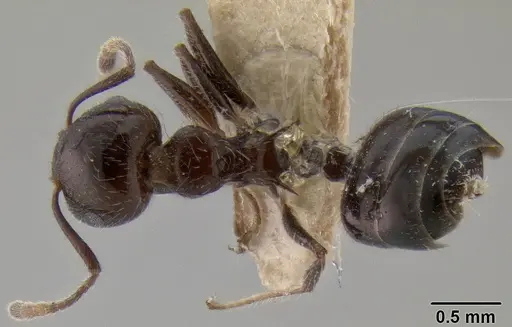
CASENT0908648
Посмотреть на AntWeb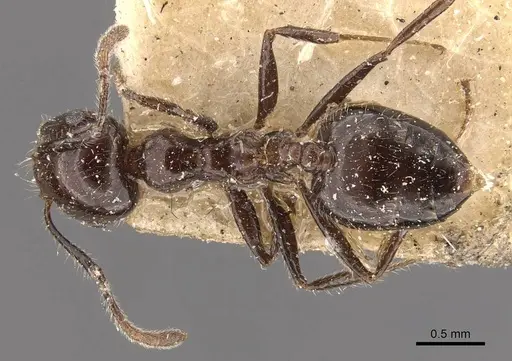
Литература
Загрузка карты распределения...Загрузка товаров...