
Crematogaster bouvardi
- Науч. назв.
- Crematogaster bouvardi
- Триба
- Crematogastrini
- Подсемейство
- Myrmicinae
- Автор
- Santschi, 1920
- Распространение
- Встречается в 0 странах
Введение
Crematogaster bouvardi is a tiny ant species native to Southeast Asia, found in South Vietnam, North Thailand, and Laos . They belong to the Crematogaster treubi group and can be identified by their distinct deep metanotal groove - a clear groove between the middle and rear body sections . Like all Crematogaster species, they have a 2-segmented antennal club and can raise their abdomen over their head when threatened, giving them the nickname 'acrobat ants' . This species remains poorly studied in the wild, with no published observations on their biology, colony structure, or captive care requirements . What we know comes from taxonomic descriptions of museum specimens. Based on their tropical distribution in Southeast Asian forests, they likely prefer warm, humid conditions similar to other Crematogaster species from this region.
Quick Summary
- Difficulty: Unknown, biology unstudied
- Origin & Habitat: Tropical forests of South Vietnam, North Thailand, and Laos (Indomalaya Region) [1][3]
- Colony Type: Unconfirmed, no published data on colony structure or queen number
- Size & Growth:
- Queen: Size data unavailable, no queen measurements published
- Worker: Size data unavailable, only head measurements (HW 0.76-0.85mm) are published, not full body length [1]
- Colony: Unknown, no colony size data published
- Growth: Unknown
- Development: Unknown, no development data published (Development time is unconfirmed for this species)
- Antkeeping:
- Temperature: Infer from habitat: aim for 24-28°C (warm tropical conditions). Provide a gentle gradient so ants can choose their preferred temperature [2]
- Humidity: Infer from tropical forest habitat: keep substrate consistently moist but not waterlogged. Provide humidity 70-85% range. Mist occasionally and use a water reservoir in the nest [2]
- Diapause: Unlikely, tropical species from Southeast Asia does not typically require winter dormancy. However, some reduction in activity during cooler months may occur [2]
- Nesting: No specific natural nesting data. Based on genus patterns, they likely nest in rotting wood, under bark, or in hollow stems. In captivity, a Y-tong (AAC) nest or plaster nest with small chambers works well. Keep chambers appropriately scaled to their tiny size [2]
- Behavior: Like all Crematogaster, they will raise their abdomen over their head when threatened, this is their signature 'acrobat' defense display. They may bite if handled. Escape prevention is critical due to their very small size, use fine mesh barriers and tight-fitting lids. They are likely active foragers that search for sugar sources and small prey. No specific aggression data available for this species [2]
- Common Issues: tiny size means escapes are likely without fine mesh barriers, no published care guidelines, keepers must experiment with conditions, unknown founding behavior, may require specific conditions to establish colonies, wild-caught colonies may have parasites given lack of captive breeding data, slow colony growth is common in founding colonies, patience required
Appearance and Identification
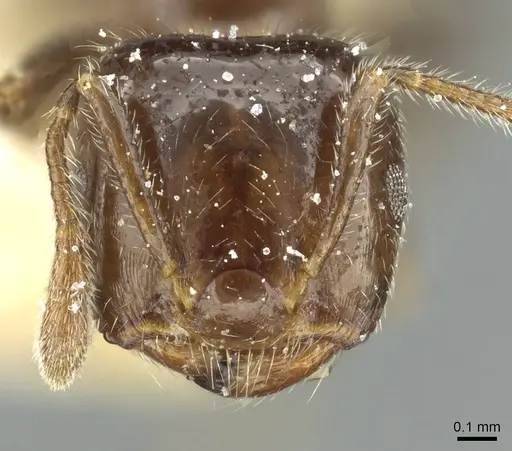
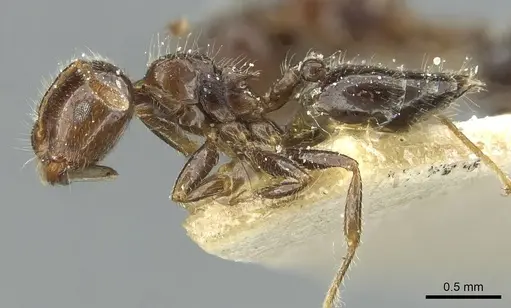
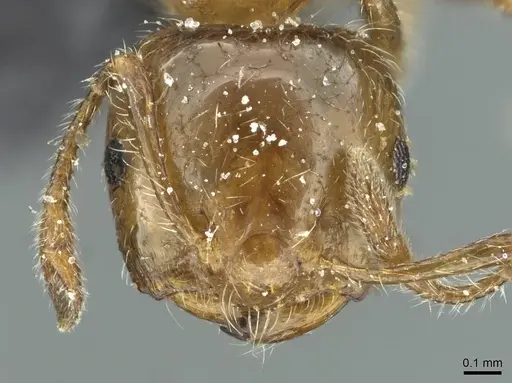
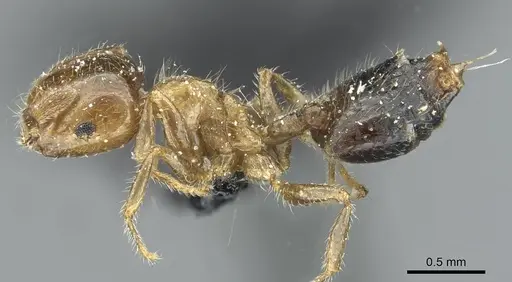
Crematogaster bouvardi workers are tiny ants. They have a dark body with the characteristic Crematogaster feature of being able to raise their abdomen over their head like an acrobat. The most reliable identification feature is their deep metanotal groove, a clear groove running horizontally between the mesosoma (middle section) and the propodeum (rear section) [1]. Their eyes are flush with the head capsule rather than protruding, and they have a 2-segmented antennal club [1]. The scape (first antenna segment) does not reach the back of the head and has standing setae (stiff hairs) [1]. These are small, delicate ants that require careful handling and excellent escape prevention.
Distribution and Habitat
This species is known from three countries in Southeast Asia: South Vietnam (the type locality at Lang Bian), North Thailand, and Laos (specifically Xiang Mouang province) [1][3][4]. They inhabit the Indomalaya region, which consists of tropical and subtropical forests. The climate is warm year-round with high humidity. Based on this, their care should mimic tropical forest floor conditions, warm, humid, and with access to both moist areas and slightly drier spots for regulation. No specific microhabitat data (like nesting under stones vs in rotting wood) has been published [1].
Temperature and Heating
Since this species comes from tropical Southeast Asia, they need warm conditions. Aim for a temperature range of 24-28°C in the nest area. You can achieve this with a heating cable or heating mat placed on one side of the nest to create a temperature gradient. Place the heating element on top of the nest (not underneath) to avoid evaporating moisture too quickly. Room temperature may be sufficient if your home stays in the low-to-mid 20s°C range. Monitor colony behavior, if workers cluster consistently near the heated area, increase slightly, if they avoid it, reduce heat. Unlike temperate species, they do not require a diapause (winter rest) period [2].
Humidity and Water
Tropical forest ants need high humidity. Keep the nest substrate consistently moist but never waterlogged, the substrate should feel damp to the touch. A good approach is using a test tube setup with a water reservoir, or a Y-tong/plaster nest with a water chamber. Aim for roughly 70-85% humidity. Provide a gradient by having some areas slightly drier so ants can self-regulate. Mist the outworld occasionally but avoid excess condensation inside the nest. The key is consistency, sudden swings between dry and wet can stress colonies [2].
Feeding and Diet
No specific feeding observations exist for this species, but Crematogaster are typically omnivorous. They likely feed on honeydew (a sugary substance aphids produce), nectar from flowers, and small insects. In captivity, offer sugar water or honey as a constant energy source. For protein, provide small live prey appropriate to their tiny size, fruit flies, pinhead crickets, or small mealworms. Feed protein 1-2 times per week and keep sugar available constantly. Remove uneaten prey after 24 hours to prevent mold [2].
Nesting and Housing
No natural nesting observations exist for this species, but Crematogaster typically nest in rotting wood, under bark, or in hollow plant stems. For captivity, Y-tong (AAC) nests work well for small Crematogaster species. The chambers should be appropriately sized for their tiny workers, narrow passages and small chambers prevent escapes and help them feel secure. Test tube setups are also suitable for founding colonies. Because of their very small size, escape prevention is critical, use fine mesh (at least 0.5mm) on any ventilation holes and ensure all lids fit tightly [2].
Colony Establishment and Growth
No published data exists on founding behavior for this species. The queen may seal herself in a small chamber and live off stored fat reserves until her first workers emerge. First workers (nanitics) will be smaller than normal workers. Colony growth will be slow initially, founding colonies often take months to establish. Patience is essential. Do not disturb the queen during founding, vibrations and light can cause abandonment. Once established, growth typically accelerates as more workers are produced [2].
Behavior and Defense
Crematogaster bouvardi has the characteristic defense behavior of all Crematogaster species, when threatened, they raise their abdomen over their head, almost touching their head with the tip. This gives them the common name 'acrobat ants.' They may also bite if handled roughly. They are likely active foragers that search for food rather than waiting for it to come to them. Workers communicate using chemical trails to guide nestmates to food sources. Due to their tiny size, they are excellent climbers and can scale smooth surfaces easily, this makes escape prevention especially important. They are not aggressive toward humans but will defend their nest if threatened [2].
Frequently Asked Questions
How long does it take for Crematogaster bouvardi to produce first workers?
The exact timeline is unknown as this species has not been studied in captivity. Development time is unconfirmed for this species.
What do Crematogaster bouvardi ants eat?
No specific feeding data exists for this species, but they likely accept sugar sources (honey, sugar water) and small protein prey (fruit flies, tiny crickets, springtails). Feed sugar constantly and protein 1-2 times weekly. Remove uneaten food promptly.
Do Crematogaster bouvardi ants need hibernation?
No, this is a tropical species from Southeast Asia. They do not require a diapause period. However, they may show reduced activity during cooler months if your home temperature drops.
What temperature do Crematogaster bouvardi ants need?
Based on their tropical habitat, aim for 24-28°C. A heating cable or mat on one side of the nest creates a gradient. Room temperature in the low-to-mid 20s°C is often sufficient.
How big do Crematogaster bouvardi colonies get?
Colony size data has not been published. Colony size is unknown for this species.
Are Crematogaster bouvardi good for beginners?
This species is not recommended for beginners due to lack of published care information. Their tiny size also makes escape prevention challenging. If you're experienced with small tropical ants, they can be kept, but be prepared to experiment with conditions.
Can I keep multiple Crematogaster bouvardi queens together?
No data exists on colony structure for this species. Combining unrelated queens is not recommended since this has not been documented and could result in fighting.
Do Crematogaster bouvardi ants sting?
Crematogaster species can bite and may have a small stinger, but their small size means they rarely penetrate human skin. Their main defense is raising their abdomen, the 'acrobat' display, rather than stinging.
What size nest do Crematogaster bouvardi need?
Use small chambers and narrow passages scaled to their tiny worker size. A Y-tong (AAC) nest or small plaster nest works well. Test tubes are suitable for founding colonies.
Why is my Crematogaster bouvardi colony dying?
Without published care data, colony failures are difficult to diagnose. Common issues include: too low humidity (tropical species need moist conditions), temperature too low (keep warm), poor escape prevention (tiny ants escape easily), or stress from disturbance during founding. Ensure sugar is available constantly and protein is offered regularly.
When should I move Crematogaster bouvardi to a formicarium?
Wait until the colony has at least 20-30 workers and the test tube setup shows condensation needs frequent refilling. For this tiny species, a small Y-tong or plaster nest is more appropriate than large formicariums.
Is Crematogaster bouvardi invasive anywhere?
No, this species is native to Southeast Asia (Vietnam, Thailand, Laos) and has not been documented as invasive in other regions.
Report an Issue
The current care sheet is based fully on literature. See inconsistencies, or something that's incorrect? Please , it will be resolved after review from an admin. Contributing to the blogs tab also helps providing information, to make us be able to further improve the caresheets. Thank you for your support!
References

Эта инструкция по уходу лицензирована по CC BY-SA 4.0 .
Блоги сообщества
CASENT0912735
Посмотреть на AntWeb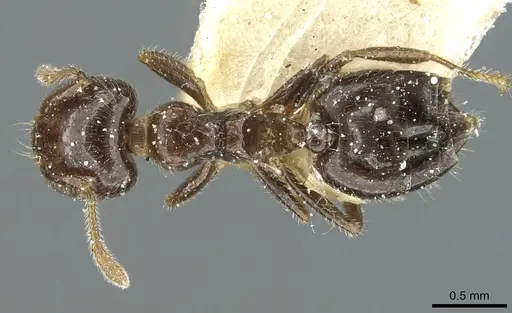
CASENT0912736
Посмотреть на AntWeb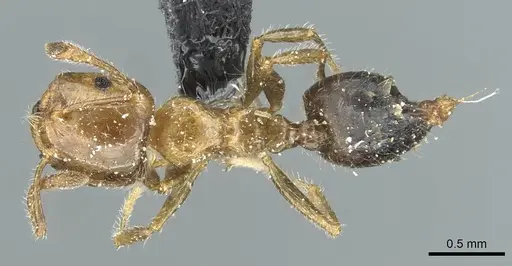
Литература
Загрузка карты распределения...Загрузка товаров...