
Colobopsis stricta
- Науч. назв.
- Colobopsis stricta
- Триба
- Camponotini
- Подсемейство
- Formicinae
- Автор
- Jerdon, 1851
- Распространение
- Встречается в 0 странах
Введение
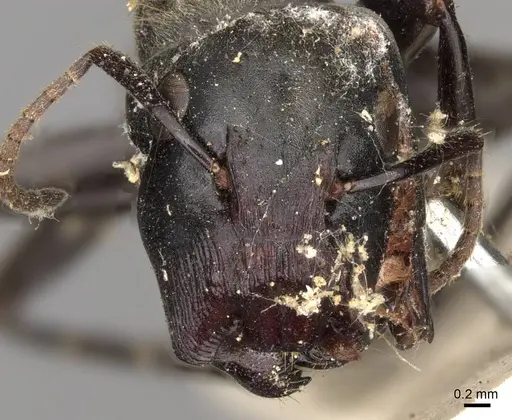
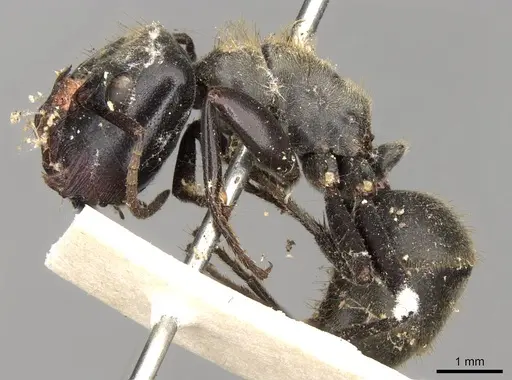
Colobopsis stricta is a large ant species native to South and Southeast Asia. Workers have a massive head with a truncated front, reaching 11-12 mm in length, while minors are slightly smaller at 9-9.5 mm . Queens are robust at 12.5 mm . The body is black with a greenish sheen, and the abdomen has a soft greyish pile . This species is endemic to India but also found in Borneo and Myanmar . They nest in pre-existing cavities like rotting wood or hollow stems . The most notable feature is the major workers' specialized head, which they use to plug nest entrances as a defense mechanism .
Quick Summary
- Difficulty: Medium
- Origin & Habitat: Found in India (including Kerala, Meghalaya, Jammu & Kashmir), Borneo, Malaysia, and Myanmar [1][3]. They live in tropical environments, nesting in pre-existing cavities like rotting wood or hollow stems [2].
- Colony Type: Colony structure is unconfirmed, but based on Colobopsis genus patterns, likely single-queen colonies.
- Size & Growth:
- Queen: 12.5 mm [2]
- Worker: Majors: 11-12 mm, minors: 9-9.5 mm [1][2]
- Colony: Maximum colony size is unknown, but related species reach several hundred workers.
- Growth: Moderate.
- Development: Estimated 6-8 weeks at optimal temperature. (Development time is inferred as species-specific data is not available.)
- Antkeeping:
- Temperature: Keep warm, roughly 24-28°C, based on tropical species needs.
- Humidity: Keep nest substrate consistently moist but not waterlogged.
- Diapause: No, as a tropical species.
- Nesting: Prefer wood or wood-like materials for nesting [2].
- Behavior: Colobopsis stricta is generally calm. Major workers use their truncated heads to plug nest entrances for defense [2]. They are moderate foragers and accept standard ant foods. Escape risk is low due to size, but use barrier tape as precaution.
- Common Issues: cold drafts can stress or kill colonies due to tropical warmth requirements., colonies may be slow to establish during founding stage., wild-caught colonies may carry parasites., larger colonies need more space, upgrade nest before crowding., major workers are fragile during handling.
Housing and Nest Setup
Colobopsis stricta does well in Y-tong or plaster nests. They prefer wood-like materials for nesting [2]. Nest chambers should be appropriately sized for colony growth. Provide a water tube for humidity. Use barrier tape for escape prevention, as majors can plug entrances but minors may escape.
Feeding and Diet
They are omnivorous, accepting sugar sources like honey water and protein foods like insects. Feed insects twice weekly and keep sugar water constantly available. Remove uneaten prey after 24 hours to prevent mold.
Temperature and Seasonal Care
As a tropical species, keep at 24-28°C year-round. Use a heating cable on one side of the nest to create a gradient. Avoid temperatures below 20°C. No hibernation is needed.
Colony Development and Growth
Founding behavior is unconfirmed, but if claustral, the queen seals herself in and raises first workers alone. Do not disturb during founding stage. Workers emerge in 6-8 weeks at optimal temperature. Colony growth is moderate, with major workers appearing as the colony expands.
Unique Behaviors and Defense
Major workers have a truncated head that they use to plug nest entrances, acting as living doors for defense [2]. This is a passive mechanism and not aggressive toward keepers. The colony is generally peaceful.
Frequently Asked Questions
How long does it take for Colobopsis stricta to have first workers?
Expect 6-8 weeks from egg to first worker at optimal temperature (24-28°C). The queen will seal herself in and raise the first brood alone, do not disturb her during this time.
What do Colobopsis stricta ants eat?
They are omnivorous. Offer sugar water or honey constantly, and feed protein (insects like mealworms, crickets) 2-3 times per week. Remove uneaten prey after a day.
Do Colobopsis stricta ants need hibernation?
No. They are a tropical species and do not require hibernation. Keep them warm year-round at 24-28°C.
What size colony does Colobopsis stricta reach?
Specific data is not available, but related Colobopsis species typically reach several hundred workers. Growth is moderate, expect several months to a year for a significant colony.
Are Colobopsis stricta good for beginners?
They are medium difficulty. The main challenges are their tropical warmth requirements and slower colony establishment. If you can maintain consistent warmth and are patient, they are rewarding to keep.
Can I keep multiple Colobopsis stricta queens together?
Colony structure is unconfirmed, but based on genus patterns, they are likely single-queen colonies. Introducing multiple queens may result in fighting.
What nest type is best for Colobopsis stricta?
A Y-tong or plaster nest works well. They prefer wood-like nesting materials and need moderate humidity [2]. Avoid overly wet or dry conditions.
Report an Issue
The current care sheet is based fully on literature. See inconsistencies, or something that's incorrect? Please , it will be resolved after review from an admin. Contributing to the blogs tab also helps providing information, to make us be able to further improve the caresheets. Thank you for your support!
References

Эта инструкция по уходу лицензирована по CC BY-SA 4.0 .
Блоги сообщества
CASENT0906981
Посмотреть на AntWeb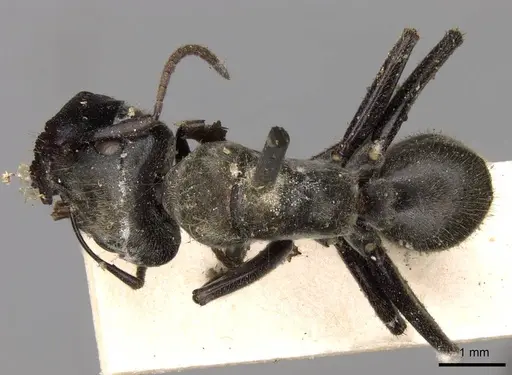
Литература
Загрузка карты распределения...Загрузка товаров...