
Colobopsis nigrifrons
- Науч. назв.
- Colobopsis nigrifrons
- Триба
- Camponotini
- Подсемейство
- Formicinae
- Автор
- Mayr, 1870
- Распространение
- Встречается в 0 странах
Введение
Colobopsis nigrifrons is a medium-sized ant species endemic to the islands of Tonga in the South Pacific. Queens measure approximately 9mm in total length and have a striking appearance - their body is shiny red with black markings on the head (frons and vertex) and abdomen, while the legs are entirely yellow . This species was originally described by Mayr in 1870 and is found only in Tonga, particularly on Tongatapu, 'Eua, and Ha'apai island groups . In their natural habitat, these ants build nests in tree trunks and rotten branches .
Quick Summary
- Difficulty: Medium
- Origin & Habitat: Endemic to Tonga (Tongatapu, 'Eua, Ha'apai islands) in the South Pacific. They nest in tree trunks and rotten branches in tropical forest environments [4][2][3].
- Colony Type: Colony structure is unconfirmed. Based on typical Colobopsis (formerly Camponotus subgenus) patterns, likely single-queen colonies.
- Size & Growth:
- Queen: 9mm [1]
- Worker: Size data unavailable, workers have not been described in available literature
- Colony: Unknown, no colony size data available
- Growth: Moderate, inferred from typical Camponotus growth patterns
- Development: Development timeline is unconfirmed for this species. Based on typical Camponotus patterns, expect 6-8 weeks from egg to first worker at optimal temperatures. (Direct development data unavailable, estimates based on related Camponotus species)
- Antkeeping:
- Temperature: Keep warm and stable, roughly low-to-mid 20s°C. As a tropical species from Tonga, they require warm conditions year-round.
- Humidity: Provide a humidity gradient, keep the nest substrate consistently moist but not waterlogged. Their natural nesting in rotting wood suggests they prefer damp conditions.
- Diapause: No, as a tropical species from Tonga, they do not require hibernation. Keep temperatures stable year-round.
- Nesting: Naturalistic setups work well, they nest in wood in the wild, so cork nests, wood/formicarium setups, or Y-tong nests with wood inserts are appropriate. They prefer tight-fitting chambers scaled to their size.
- Behavior: Not specifically documented, but Colobopsis species are typically less aggressive than many Camponotus. Workers are likely moderate-sized and may have the ability to plug their nest entrances with their heads (a characteristic Colobopsis defense behavior). Escape prevention should be moderate, standard formicarium barriers should suffice for this medium-sized species.
- Common Issues: tropical species requires warm temperatures year-round, cold drafts can be harmful, limited information means care is based on genus-level inference rather than species-specific research, natural nesting in wood requires appropriate nest materials, test tubes alone may not be ideal, humidity balance is important, too dry causes desiccation, too wet promotes mold, wild-caught colonies from Tonga may face quarantine/import restrictions
Origin and Natural Habitat
Colobopsis nigrifrons is a rare species found only in the islands of Tonga, making it a true endemic. The species was described by Gustav Mayr in 1870 and has been recorded from Tongatapu, 'Eua, and Ha'apai island groups [2][3]. In their natural environment, these ants build nests in tree trunks and rotting branches [4], which is typical behavior for the Colobopsis genus. This nesting preference means they are arboreal or semi-arboreal, living in dead wood rather than underground colonies. The tropical climate of Tonga (warm year-round, moderate to high humidity) shapes their care requirements.
Appearance and Identification
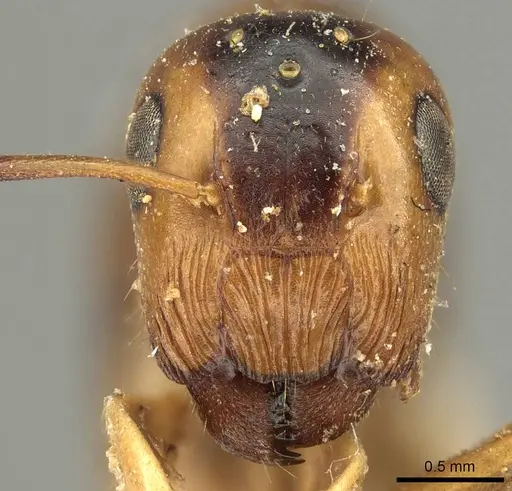
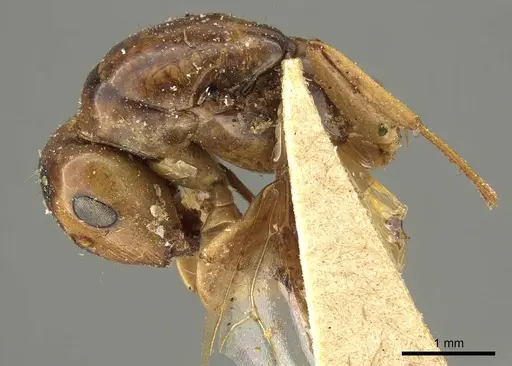
Queens of Colobopsis nigrifrons are approximately 9mm in total length and have a distinctive color pattern that makes them relatively easy to identify [1]. Their body is described as shiny red, with the mandibles being ferruginous (rust-colored). The frons (front of the head) and vertex (top of the head) are black, as is the abdomen. The legs are entirely yellow, which is a notable identifying feature [1]. Workers of this species have not been described in detail in the available literature. The genus Colobopsis is known for workers that can plug nest entrances with their specially shaped heads, though this specific behavior has not been documented for C. nigrifrons.
Nest Setup and Housing
Based on their natural nesting behavior in tree trunks and rotten branches, Colobopsis nigrifrons should be provided with nest materials that mimic wood. Cork nests, wooden formicarium setups, or Y-tong nests with wood inserts work well for this species. They prefer tight-fitting chambers rather than large open spaces. A naturalistic setup with dead wood or cork bark pieces can simulate their natural environment. Ensure the nest material is not too dry, these ants prefer moderately damp conditions. A water tube should always be available for drinking access, as wooden nests can dry out faster than test tubes. [4]
Temperature and Climate Care
As a tropical species endemic to Tonga, Colobopsis nigrifrons requires warm temperatures year-round. Keep the nest area in the low-to-mid 20s°C range, which matches their natural tropical environment. Unlike temperate ant species, they do not require hibernation or cooling periods. A small heating cable placed on one side of the nest can help maintain optimal temperatures, especially in cooler climates. Avoid placing the colony near air conditioning vents, open windows with cold drafts, or any area where temperatures might fluctuate dramatically. Stable warmth is key to keeping these ants healthy and active.
Feeding and Diet
While specific dietary studies for C. nigrifrons are not available, Colobopsis and related Camponotus species are typically omnivorous. They accept sugar sources (honey water, sugar water) and protein sources (insects like mealworms, crickets, fruit flies). In the wild, they would likely tend aphids for honeydew and hunt small invertebrates. Offer a varied diet with protein prey several times per week and a constant sugar water or honey source. Remove uneaten prey after 24 hours to prevent mold issues. Their tropical origin suggests they may have higher moisture requirements, ensure fresh water is always available.
Colony Development and Growth
Specific development timelines for Colobopsis nigrifrons have not been documented. Based on typical Camponotus patterns, expect the queen to seal herself in a chamber and remain there while she raises the first brood. First workers (nanitics) typically emerge in 6-8 weeks under optimal warm conditions. The queen will have stored enough fat reserves to survive without foraging during this founding period. After the first workers emerge, colony growth is initially slow but accelerates as the colony reaches several dozen workers. Maximum colony size is unknown for this species but related Camponotus species often reach several hundred to a few thousand workers.
Frequently Asked Questions
How long does it take for Colobopsis nigrifrons to produce first workers?
Direct data is not available, but based on typical Camponotus development patterns, expect 6-8 weeks from egg to first worker at optimal warm temperatures. The queen seals herself in and raises the first brood alone using stored fat reserves.
What temperature do Colobopsis nigrifrons ants need?
Keep them warm at low-to-mid 20s°C year-round. As a tropical species from Tonga, they do not tolerate cool temperatures and do not require hibernation. A heating cable on one side of the nest can help maintain stable warmth.
Can I keep Colobopsis nigrifrons in a test tube?
While test tubes work for many ants, this species naturally nests in wood, so cork nests or wooden formicarium setups better match their natural preferences. However, a test tube with a water reservoir can work for founding colonies if wood-based options are not available.
Are Colobopsis nigrifrons good for beginners?
This species is rated as Medium difficulty. While not the most challenging ant to keep, the limited species-specific information means care is based on genus-level inference. Their tropical warmth requirements are straightforward but must be maintained consistently year-round.
What do Colobopsis nigrifrons eat?
They are omnivorous like most Camponotus species. Offer protein prey (mealworms, crickets, fruit flies) several times per week and a constant sugar source (honey water or sugar water). Ensure fresh water is always available.
How big do Colobopsis nigrifrons colonies get?
Maximum colony size is not documented in available literature. Based on related Camponotus species, colonies likely reach several hundred to a few thousand workers over several years.
Do Colobopsis nigrifrons need hibernation?
No. As a tropical species from Tonga, they do not require hibernation or cooling periods. Keep temperatures stable and warm year-round.
Where is Colobopsis nigrifrons found in the wild?
This species is endemic to Tonga, found only on Tongatapu, 'Eua, and Ha'apai island groups. It is a local endemic found only in Tonga or only in Tonga and Samoa.
What type of nest is best for Colobopsis nigrifrons?
Cork nests, wooden formicarium setups, or Y-tong nests with wood inserts best match their natural nesting in tree trunks and rotten branches. They prefer tight chambers scaled to their medium size.
Report an Issue
The current care sheet is based fully on literature. See inconsistencies, or something that's incorrect? Please , it will be resolved after review from an admin. Contributing to the blogs tab also helps providing information, to make us be able to further improve the caresheets. Thank you for your support!
References

Эта инструкция по уходу лицензирована по CC BY-SA 4.0 .
Блоги сообщества
CASENT0915601
Посмотреть на AntWeb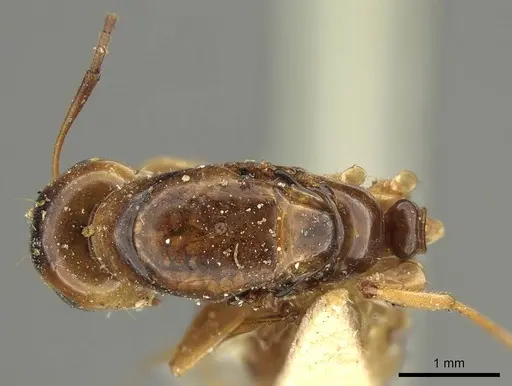
Литература
Загрузка карты распределения...Загрузка товаров...