
Colobopsis desecta
- Науч. назв.
- Colobopsis desecta
- Триба
- Camponotini
- Подсемейство
- Formicinae
- Автор
- Smith, 1860
- Распространение
- Встречается в 0 странах
Введение
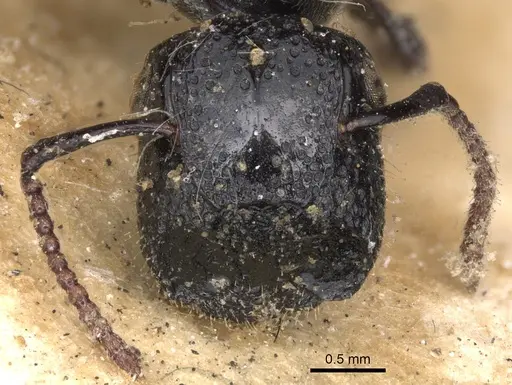
Colobopsis desecta is a small to medium-sized ant species native to New Guinea and surrounding islands in the Asia-Pacific region. Queens measure approximately 9-10mm with a distinctive jet black, shiny appearance. The head is notably wider than the thorax and truncate (flattened) at the front, while the petiole is thickened and truncated at the top . This species belongs to the genus Colobopsis, commonly known as 'cork ants' due to their unique defensive behavior where specialized soldiers plug nest entrances with their uniquely shaped heads. These ants are arboreal, typically nesting in hollow plant stems, twigs, and rotting wood in tropical forest environments.
Quick Summary
- Difficulty: Medium
- Origin & Habitat: Native to New Guinea and surrounding islands in the Moluccan-Micronesian region. In nature, they nest in hollow plant stems, twigs, and rotting wood in tropical forest habitats [2][1].
- Colony Type: Colony structure is not documented in available scientific literature. Based on typical Colobopsis patterns, colonies likely have a single queen with distinct worker castes including specialized soldiers.
- Size & Growth:
- Queen: Approximately 9-10mm [1], converted from historical measurement (4.5 lines).
- Worker: Size data unavailable, worker measurements are not documented in available research.
- Colony: Maximum colony size is not documented in available research.
- Growth: Growth rate has not been studied.
- Development: Development timeline is unconfirmed for this species. (No species-specific development data exists.)
- Antkeeping:
- Temperature: Keep at 24-28°C. Tropical species require warm, stable conditions.
- Humidity: Keep moderately humid at 60-80%. Provide a water tube for drinking access.
- Diapause: Unlikely, as a tropical species from New Guinea, they probably do not require true hibernation.
- Nesting: Provide a naturalistic setup with hollow twigs, stems, or cork-style nesting material. Y-tong (AAC) nests or plaster nests with narrow chambers work well.
- Behavior: Colobopsis desecta is generally docile. The genus is known for its 'cork ant' behavior where soldiers use their specially adapted plug-shaped heads to seal nest entrances. They are arboreal and likely spend most of their time in elevated nest sites. Escape risk is moderate, use standard barrier methods. They likely feed on honeydew from aphids and scale insects, plus small insects.
- Common Issues: tropical species are sensitive to temperature drops below 20°C, keep consistently warm, limited available research means many care requirements are estimated from genus patterns rather than species-specific studies, colonies may be slow to establish, patience is needed during founding phase, arboreal nesting means they need appropriate vertical space and suitable nest materials, wild-caught colonies may carry parasites or diseases that can cause captive failures
Appearance and Identification
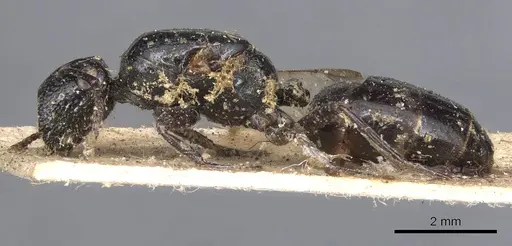
Colobopsis desecta is a distinctive species with queens reaching approximately 9-10mm in length. The entire body is jet black and highly shining, giving these ants a glossy appearance. The most notable morphological feature is the head, which is wider than the thorax and distinctly truncate (flattened) at the anterior (front) end. The petiole (waist segment) is described as incrassate (thickened) and truncate at the top [1]. Workers of this species would have the typical Colobopsis soldier caste with the characteristic plug-shaped head used for nest defense, though worker measurements are not documented in available research.
Natural Distribution and Habitat
This species is native to the New Guinea region, with documented distribution including Dory in New Guinea and surrounding islands in what was historically referred to as the Moluccan-Micronesian region [2][1]. In their natural tropical habitat, Colobopsis species are arboreal or semi-arboreal, nesting in hollow plant stems, dead twigs, and rotting wood. They prefer humid forest environments where vegetation provides suitable nesting cavities. This species has not been documented as invasive in any region.
Nesting and Colony Structure
Based on typical Colobopsis genus behavior, C. desecta likely nests in natural plant cavities such as hollow stems, twigs, and decaying wood in tropical forest settings. The genus is famous for its 'cork ant' behavior where specialized soldier workers have uniquely shaped heads that perfectly fit the nest entrance, allowing them to plug the opening as a defensive mechanism. Colony structure likely includes a single reproductive queen with multiple worker castes including minor workers and major soldiers.
Feeding and Diet
Like other Colobopsis species, these ants are likely omnivorous with a preference for honeydew collected from aphids and scale insects tended on plants. They also likely hunt small insects and arthropods for protein. In captivity, they should accept sugar water or honey as an energy source, plus small live prey such as fruit flies, pinhead crickets, or small mealworms. Offer protein foods 2-3 times per week and keep a constant sugar water supply.
Temperature and Care Requirements
As a tropical species from New Guinea, Colobopsis desecta requires warm, stable temperatures between 24-28°C. Avoid temperatures below 20°C as this species is not adapted to cool conditions. A heating cable on one side of the nest can create a temperature gradient, allowing ants to regulate their exposure to warmth. Humidity should be maintained at 60-80%, these ants prefer moderately humid conditions but not saturated environments. Provide a water tube for drinking access. Since they are arboreal nesters, consider providing vertical space and appropriate nesting materials like cork or hollow stems.
Defense Mechanism
Like other Formicinae ants, Colobopsis desecta lacks a functional sting. The primary defense mechanism is spraying formic acid from the acidopore while biting. This is the default defense for the subfamily Formicinae, though species-specific defensive behaviors may vary.
Frequently Asked Questions
How long does it take for Colobopsis desecta to produce first workers?
The exact development timeline is unconfirmed for this species. Based on typical tropical Formicinae development, expect approximately 6-10 weeks from egg to first worker at optimal temperature (24-28°C). This is an estimate, actual timing may vary.
What do Colobopsis desecta ants eat?
They likely accept honeydew/sugar sources and small insects. In captivity, offer sugar water or honey as a constant energy source, plus protein-rich foods like small crickets, fruit flies, or mealworms 2-3 times weekly.
What temperature do Colobopsis desecta ants need?
Keep them warm at 24-28°C. This tropical species is sensitive to cool temperatures and should be kept away from drafts or air conditioning. Avoid temperatures below 20°C.
Do Colobopsis desecta ants need hibernation?
Unlikely, as a tropical species from New Guinea, they probably do not require true hibernation. They may reduce activity during cooler periods but a full diapause is not necessary.
Are Colobopsis desecta ants good for beginners?
This species is rated as Medium difficulty. While generally docile, limited species-specific care information is available, making it slightly more challenging than well-documented beginner species. Experience with tropical ants is helpful.
What size do Colobopsis desecta colonies reach?
Maximum colony size is not documented in available research.
What type of nest is best for Colobopsis desecta?
Use a naturalistic setup with cork-style nesting material, hollow stems, or a Y-tong (AAC) nest with narrow chambers. These arboreal ants prefer enclosed spaces that mimic their natural plant cavity nesting sites.
Can I keep multiple Colobopsis desecta queens together?
Colony structure is not well documented for this species. Based on typical Colobopsis patterns, single-queen colonies are most common. Combining unrelated queens is not recommended without documented evidence of pleometrosis acceptance.
Where is Colobopsis desecta found in the wild?
This species is native to New Guinea and surrounding islands in the Asia-Pacific region. They live in tropical forests and nest in hollow plant stems, twigs, and rotting wood [2][1].
Report an Issue
The current care sheet is based fully on literature. See inconsistencies, or something that's incorrect? Please , it will be resolved after review from an admin. Contributing to the blogs tab also helps providing information, to make us be able to further improve the caresheets. Thank you for your support!
References

Эта инструкция по уходу лицензирована по CC BY-SA 4.0 .
Блоги сообщества
CASENT0901917
Посмотреть на AntWeb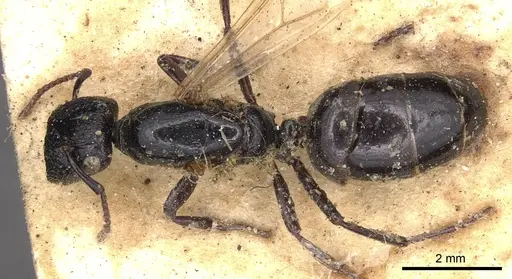
Литература
Загрузка карты распределения...Загрузка товаров...